

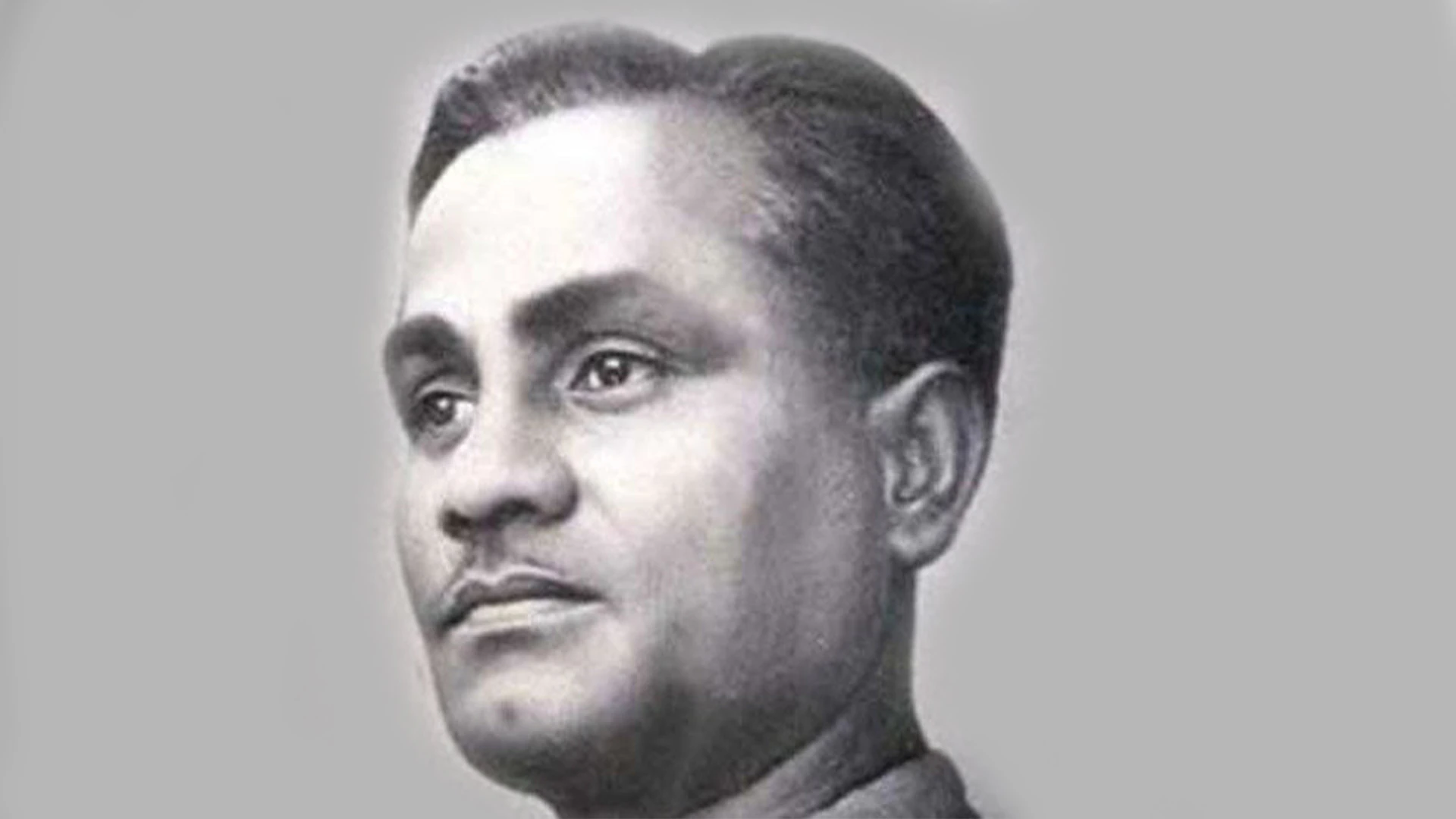
The Life, Career, Achievements and Legacy of India’s Legendary Hockey Player
Major Dhyan Chand (29 August 1905 – 3 December 1979) was one of the greatest field hockey players in the history of the sport and one of India’s most celebrated sporting icons. Renowned for his extraordinary ball control, goal-scoring ability and remarkable understanding of the game, he became popularly known as “The Wizard of Hockey.”
His career coincided with India’s golden era in Olympic hockey. He was a member of the Indian teams that won three consecutive Olympic gold medals—in 1928, 1932 and 1936.
His birthday, 29 August, is celebrated in India as National Sports Day.


🇮🇳 Quick Facts About Major Dhyan Chand
| Category | Details |
|---|---|
| Full name | Dhyan Chand Singh |
| Popular name | Major Dhyan Chand |
| Born | 29 August 1905 |
| Birthplace | Allahabad, United Provinces, British India (present-day Prayagraj, Uttar Pradesh) |
| Died | 3 December 1979 |
| Age at death | 74 |
| Sport | Field hockey |
| Position | Forward |
| Nickname | The Wizard / The Magician of Hockey |
| Olympic gold medals | 3 |
| Olympic Games | 1928, 1932, 1936 |
| Military service | Indian Army |
| Major honour | Padma Bhushan, 1956 |
| National Sports Day | 29 August |
| Memorial | Major Dhyan Chand National Stadium, New Delhi |
👦 Early Life
Dhyan Chand was born on 29 August 1905 in Allahabad, now known as Prayagraj, in Uttar Pradesh.
His father, Sameshwar Dutt Singh, served in the British Indian Army and played hockey. Because of his father’s military career, the family moved to different places during Dhyan Chand’s childhood.
Dhyan Chand did not initially appear destined to become one of India’s greatest sporting heroes. His childhood was shaped largely by the movements and circumstances of a military family.
His younger brother, Roop Singh, would also become an outstanding international hockey player.
🏑 How Did Dhyan Chand Get His Name?
His original name was Dhyan Singh.
He joined the British Indian Army as a young man and developed his hockey skills while serving there.
According to the widely told story behind his nickname, he used to practice hockey late at night under the moon because his military duties occupied much of his daytime.
The Hindi word “Chand” means moon, and he became known as Dhyan Chand.
While the exact details of the nickname’s origin are sometimes told differently, the name Dhyan Chand became permanently associated with Indian hockey.
🎖️ Dhyan Chand and the Indian Army
Dhyan Chand joined the British Indian Army in 1922, when he was about 16 years old.
The Army provided him with opportunities to play hockey and develop his extraordinary skills.
Military hockey competitions helped him gain recognition, and his performances eventually brought him into the Indian national hockey setup.
His sporting career and military service remained closely connected for much of his life.
🌟 The Rise of a Hockey Legend
Dhyan Chand’s greatest strength was his exceptional ball control.
He could:
- Dribble past defenders with extraordinary precision
- Control the ball at high speed
- Change direction quickly
- Create scoring opportunities
- Read the movements of teammates
- Score from difficult positions
- Maintain remarkable composure under pressure
Opponents sometimes found his skills almost impossible to understand.
His performances became so extraordinary that stories circulated that his hockey stick was somehow “magnetic.”
There is no evidence that his stick possessed anything unusual, of course. His ability came from years of practice, extraordinary technique, coordination and an exceptional understanding of the game.
🥇 1928 Amsterdam Olympics
Dhyan Chand’s international breakthrough came at the 1928 Amsterdam Olympic Games.
India entered the hockey tournament as a strong team, and Dhyan Chand quickly became one of its major stars.
India won the gold medal without losing a match.
Dhyan Chand finished as one of the tournament’s leading goal scorers, establishing himself as an international hockey sensation.
This was India’s first Olympic gold medal in hockey.
🥇 1932 Los Angeles Olympics
Dhyan Chand returned for the 1932 Olympic Games in Los Angeles.
India once again dominated the hockey tournament and won the gold medal.
One of the most remarkable matches came against the United States, when India won 24–1.
Dhyan Chand scored 8 goals in that match, while his brother Roop Singh also played a major role.
India finished the tournament undefeated and successfully defended its Olympic title.
🥇 1936 Berlin Olympics
The 1936 Berlin Olympics became the defining moment of Dhyan Chand’s career.
He was selected as captain of the Indian hockey team.
The tournament was held in Nazi Germany, with Adolf Hitler’s regime using the Olympics as an international propaganda spectacle.
India reached the hockey final against Germany.
🇮🇳 India vs Germany — Olympic Final
On 15 August 1936, India defeated Germany 8–1 in the final.
Dhyan Chand scored three goals.
His performance helped India secure its third consecutive Olympic hockey gold medal.
The victory became one of the most celebrated moments in Indian sporting history.
🏑 A Famous Story from the 1936 Olympics
One popular story claims that Adolf Hitler was so impressed by Dhyan Chand’s performance that he offered him a high-ranking position in the German military and asked him to become a German citizen.
This story is widely repeated in Indian popular culture, but historians have found no reliable evidence that Hitler actually made such an offer.
What is certain is that Dhyan Chand’s performance in Berlin was extraordinary and attracted enormous attention.
This distinction is important when presenting his biography accurately.
🥇 Dhyan Chand’s Three Olympic Gold Medals
| Olympic Games | Year | Result |
|---|---|---|
| Amsterdam | 1928 | 🥇 Gold |
| Los Angeles | 1932 | 🥇 Gold |
| Berlin | 1936 | 🥇 Gold |
These three consecutive Olympic victories established Dhyan Chand as one of the defining figures of India’s golden age of hockey.
🌍 International Tours
Dhyan Chand represented India on several international tours and played against teams across Europe, Asia and elsewhere.
His performances helped establish India as the world’s leading hockey nation during the period between the two World Wars.
Indian hockey teams became famous for their:
- Precise passing
- Close ball control
- Fast attacking play
- Tactical intelligence
- Individual skill
Dhyan Chand was at the centre of this style.
⚽ His Playing Style
Dhyan Chand was primarily an attacking player.
His game was characterized by intelligence rather than brute force.
His major strengths included:
Ball control
He could keep the ball remarkably close to his stick while moving at speed.
Dribbling
He was able to move around defenders using subtle changes of direction.
Passing
He understood where teammates would be before they reached the position.
Goal scoring
He had an extraordinary ability to finish attacking moves.
Game awareness
Perhaps most importantly, he understood the entire flow of the match.
🪄 Why Was He Called “The Wizard”?
Dhyan Chand became famous for his almost magical control of the hockey ball.
His nickname “The Wizard” reflects the way spectators viewed his play.
Some stories claim that opposing teams even had his stick examined because they believed something unusual must have been responsible for his ball control.
Whether such stories are completely accurate or not, they illustrate the extraordinary reputation he developed.
🏆 Career Achievements
Among Dhyan Chand’s greatest achievements were:
- 🥇 Olympic gold — 1928
- 🥇 Olympic gold — 1932
- 🥇 Olympic gold — 1936
- 🏑 Captain of India’s 1936 Olympic team
- 🇮🇳 Major figure in India’s golden era of hockey
- 🌍 International recognition as one of hockey’s greatest players
- 🎖️ Long military career
- 🏅 Padma Bhushan, awarded in 1956
🇮🇳 Retirement from International Hockey
Dhyan Chand continued playing for many years after the 1936 Olympics.
Eventually, age and changing circumstances brought his playing career to an end.
However, his involvement with hockey did not end when he stopped playing.
He became involved in coaching and training, helping younger generations of Indian hockey players.
🧑🏫 Dhyan Chand as a Coach
After his playing career, Dhyan Chand continued contributing to Indian hockey.
He served as a coach and mentor and helped develop young players.
His knowledge of the game was based on decades of elite-level experience.
For him, hockey was not simply about individual brilliance. He understood the importance of:
- Teamwork
- Passing
- Positioning
- Discipline
- Fitness
- Practice
- Tactical awareness
🏅 Honours and Recognition
🇮🇳 Padma Bhushan
In 1956, the Government of India awarded Dhyan Chand the Padma Bhushan, one of India’s highest civilian honours.
It recognized his extraordinary contribution to Indian sport.
🏟️ Major Dhyan Chand National Stadium
The major hockey stadium in New Delhi formerly known as the National Stadium was renamed the Major Dhyan Chand National Stadium in his honour.
It remains one of India’s best-known sporting venues.
📅 National Sports Day
India celebrates National Sports Day on 29 August, Dhyan Chand’s birthday.
The observance was introduced in 2012.
The day is intended to:
- Promote sports
- Encourage physical fitness
- Recognize athletes
- Encourage young sporting talent
- Celebrate India’s sporting achievements
- Remember legendary sports personalities
Dhyan Chand’s name gives the day a particularly powerful historical connection.
🏆 Major Dhyan Chand Khel Ratna Award
India’s highest sporting honour has also carried Dhyan Chand’s name.
In 2021, the Rajiv Gandhi Khel Ratna Award was renamed the Major Dhyan Chand Khel Ratna Award.
The award recognizes outstanding sporting achievements at the highest level.
This renaming further cemented Dhyan Chand’s position as one of India’s most important sporting icons.
🕯️ Death
Major Dhyan Chand died on 3 December 1979 in New Delhi at the age of 74.
His death marked the passing of one of the greatest figures in Indian sporting history.
However, his influence on Indian hockey has continued long after his death.
👨👦 Dhyan Chand’s Family and Sporting Legacy
Dhyan Chand’s family also produced accomplished hockey players.
His brother Roop Singh was a celebrated member of India’s Olympic hockey teams and played alongside Dhyan Chand.
His son Ashok Kumar also became an international hockey player and represented India at the Olympic Games.
The family’s contribution helped create a remarkable hockey legacy spanning generations.
📊 Dhyan Chand’s Legacy
| Area | Contribution |
|---|---|
| 🏑 Indian hockey | Helped establish India as a dominant hockey nation |
| 🥇 Olympics | Three consecutive gold medals |
| 🇮🇳 National identity | Became a symbol of Indian sporting excellence |
| 🎓 Coaching | Helped pass hockey knowledge to later generations |
| 🏅 Awards | Received Padma Bhushan |
| 📅 National Sports Day | His birthday is observed on 29 August |
| 🏟️ Stadium | Major Dhyan Chand National Stadium named in his honour |
| 🏆 Sports award | Major Dhyan Chand Khel Ratna bears his name |
🤔 Did Dhyan Chand Score 400+ Goals?
You may often see claims online that Dhyan Chand scored more than 400 goals during his international or overall career.
Such figures should be treated carefully because hockey records from his era were not maintained with the same standardized statistical systems used today.
There is no universally agreed official career-goal total comparable to modern professional statistics.
What is beyond dispute is his enormous impact and his extraordinary record at the Olympic Games.
🏑 Dhyan Chand vs Modern Hockey
Dhyan Chand played a very different form of hockey from today’s game.
During his era:
- Hockey was played primarily on natural grass.
- Equipment was considerably different.
- Tactical systems were less specialized.
- Players had different protective equipment.
- The modern artificial-turf game did not exist.
Despite these differences, his technical abilities remain remarkable.
His legacy is therefore not simply based on statistics but on the quality and influence of his play.
🌟 Why Dhyan Chand Remains an Inspiration
Dhyan Chand’s story offers lessons that go beyond hockey.
Discipline
He developed his abilities through relentless practice.
Humility
Despite becoming internationally famous, he was remembered as a relatively modest personality.
Teamwork
His success was inseparable from the achievements of his teammates.
Patriotism
During an era when India was still under British rule, Indian sporting success carried enormous symbolic importance.
Perseverance
His sporting career developed gradually through military service and persistent effort.
Excellence
He demonstrated what can happen when natural talent is combined with disciplined training.
💬 Famous Stories and Myths About Dhyan Chand
Several stories about Dhyan Chand have become part of Indian sporting folklore.
🪄 The “magnetic stick”
One popular story says that authorities or opponents suspected his hockey stick had a magnet because the ball appeared to remain attached to it.
This is best understood as sporting folklore, rather than a documented historical event.
🇩🇪 The Hitler story
The story that Hitler offered Dhyan Chand a position in the German Army is also widely repeated but lacks reliable documentary evidence.
🏑 The goalpost story
Another popular anecdote claims that Dhyan Chand complained that the goalpost was too small after failing to score, after which measurements supposedly showed that the goalpost was narrower than expected.
Again, this is a famous anecdote rather than a firmly documented historical fact.
These stories are entertaining, but a good biography should distinguish documented achievements from legends that developed around his extraordinary reputation.
🌍 Dhyan Chand’s Place in World Hockey
Dhyan Chand belongs to the small group of athletes whose names became synonymous with their sport.
Just as:
- Pelé became associated with football,
- Michael Jordan became associated with basketball,
- Don Bradman became associated with cricket,
Dhyan Chand became synonymous with Indian hockey.
His influence extended beyond India because he helped demonstrate the extraordinary technical quality of Indian hockey to international audiences.
🏑 Major Dhyan Chand: A Timeline
| Year | Milestone |
|---|---|
| 1905 | Born on 29 August in Allahabad |
| 1922 | Joined the British Indian Army |
| 1926 | Participated in an Indian Army hockey tour |
| 1928 | Won Olympic gold at Amsterdam |
| 1932 | Won Olympic gold at Los Angeles |
| 1936 | Captained India to Olympic gold at Berlin |
| 1956 | Received Padma Bhushan |
| 1979 | Died on 3 December |
| 2012 | India began observing National Sports Day on his birthday |
| 2021 | Khel Ratna renamed Major Dhyan Chand Khel Ratna Award |
🏅 10 Interesting Facts About Major Dhyan Chand
- He was born on 29 August 1905.
- His original name was Dhyan Singh.
- He served in the Indian Army.
- His brother Roop Singh was also a great hockey player.
- He won three consecutive Olympic gold medals.
- He captained India at the 1936 Berlin Olympics.
- He was popularly known as “The Wizard of Hockey.”
- He received the Padma Bhushan in 1956.
- His birthday is celebrated as National Sports Day in India.
- India’s highest sporting honour is named the Major Dhyan Chand Khel Ratna Award.
🌟 The Enduring Legacy of the Wizard
Major Dhyan Chand’s story is much larger than the story of a hockey player.
He belonged to an era when Indian hockey reached extraordinary heights on the world stage. His three Olympic gold medals helped establish a tradition that inspired generations of Indian athletes.
His greatest legacy, however, may be the idea of sporting excellence that his name represents.
He demonstrated that greatness comes from the combination of talent, practice, discipline, teamwork and passion.
More than four decades after his death, young hockey players in India still hear his name as a symbol of what the sport can achieve.
🏑 Major Dhyan Chand — The Wizard of Hockey
Born: 29 August 1905
Died: 3 December 1979
Olympic Gold: 1928 • 1932 • 1936
National Sports Day: 29 August
His stick may have been made of wood, but his skill turned it into an instrument of sporting magic.
Leave a Reply