

Nelsapy – General Knowledge Quiz Series
Introduction
Scientists have played a remarkable role in shaping human civilization. Through curiosity, observation, experimentation, and dedication, they have expanded our understanding of the universe, nature, medicine, mathematics, technology, and human life.
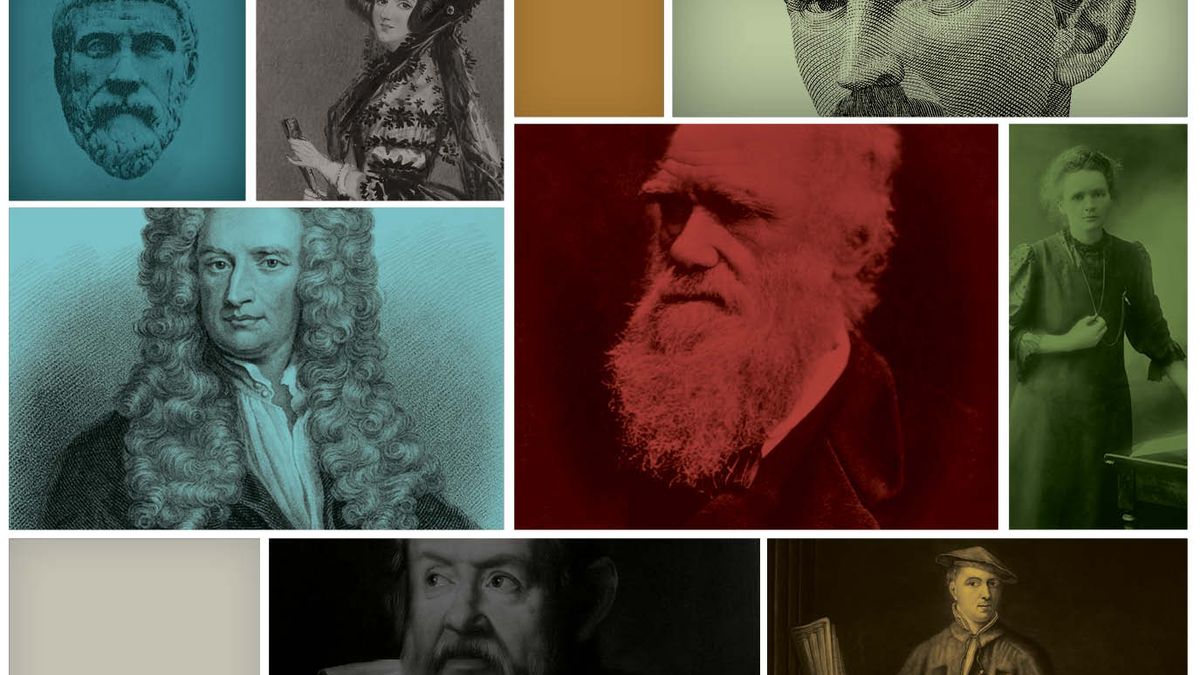
From Isaac Newton and Albert Einstein to Marie Curie, Charles Darwin, C. V. Raman, and A. P. J. Abdul Kalam, great scientists have transformed the world through their discoveries and inventions.
This collection of 125 General Knowledge Questions About Famous Scientists covers scientists from different countries and historical periods, including their discoveries, inventions, research, and contributions to humanity.
Instructions:
- Answer all 125 questions.
- Each question carries one mark.
- Try answering without referring to books or the internet.
- The complete answer key is provided at the end.
Section 1: Famous Physicists
1. Who is known as the father of modern physics?
2. Who formulated the three laws of motion?
3. Who developed the theory of relativity?
4. Who discovered the law of universal gravitation?
5. Who is known for the equation E = mc²?
6. Who discovered the electromagnetic induction?
7. Who is known as the father of electromagnetism?
8. Who discovered the electron?
9. Who discovered the neutron?
10. Who proposed the uncertainty principle?
11. Who developed the quantum theory?
12. Who discovered X-rays?
13. Who discovered radioactivity?
14. Who discovered the positron?
15. Who conducted the famous gold foil experiment that revealed the nuclear structure of the atom?
Section 2: Famous Chemists
16. Who is known as the father of modern chemistry?
17. Who developed the modern periodic table?
18. Who discovered oxygen?
19. Who discovered hydrogen?
20. Who discovered radium and polonium?
21. Who discovered phosphorus?
22. Who developed the theory of chemical structure and proposed the ring structure of benzene?
23. Who is known for developing the Haber process for ammonia synthesis?
24. Who developed the process of vulcanization of rubber?
25. Who discovered the element helium in the Sun’s spectrum?
26. Who discovered the element fluorine?
27. Who developed the first widely accepted atomic theory in modern chemistry?
28. Who discovered the noble gas argon along with William Ramsay?
29. Who is known for the discovery of the chemical element germanium?
30. Who discovered the element polonium?
Section 3: Famous Biologists and Natural Scientists
31. Who is known as the father of biology?
32. Who developed the theory of evolution by natural selection?
33. Who discovered the laws of heredity through experiments on pea plants?
34. Who discovered the cell in 1665?
35. Who first observed bacteria and other microorganisms using a microscope?
36. Who is known as the father of modern taxonomy?
37. Who discovered penicillin?
38. Who discovered the process of phagocytosis?
39. Who is known as the father of modern genetics?
40. Who discovered the structure of DNA along with Francis Crick?
41. Who provided crucial X-ray diffraction evidence for the structure of DNA?
42. Who is famous for her research on chimpanzees in Tanzania?
43. Who developed the theory of evolution alongside Charles Darwin?
44. Who is known for pioneering research in marine biology and environmental protection through her book Silent Spring?
45. Who discovered the role of chromosomes in heredity through his research on fruit flies?
Section 4: Famous Medical Scientists
46. Who developed the first successful smallpox vaccine?
47. Who discovered insulin along with Charles Best and other researchers?
48. Who developed the first successful rabies vaccine?
49. Who is known as the father of modern antiseptic surgery?
50. Who discovered the ABO blood group system?
51. Who discovered the malaria parasite?
52. Who discovered the tuberculosis bacterium?
53. Who developed the first successful polio vaccine?
54. Who developed the first effective measles vaccine?
55. Who discovered the relationship between mosquitoes and malaria transmission?
56. Who is known as the father of modern bacteriology?
57. Who pioneered the use of ether as a surgical anesthetic?
58. Who discovered the Rh blood factor along with Alexander Wiener?
59. Who discovered the hormone insulin?
60. Who developed the first widely used antibiotic, penicillin, from his observation of mould?
Section 5: Famous Astronomers and Space Scientists
61. Who proposed the heliocentric theory of the solar system?
62. Who discovered the four largest moons of Jupiter?
63. Who discovered the planet Uranus?
64. Who discovered the planet Neptune through astronomical observation based on mathematical predictions?
65. Who formulated the three laws of planetary motion?
66. Who is known as the father of observational astronomy?
67. Who discovered the planet Pluto?
68. Who proposed the Big Bang theory in its early scientific form?
69. Who discovered the expanding universe through observations of distant galaxies?
70. Who discovered the first pulsar along with her research supervisor’s team?
71. Who developed the theory of black holes based on Einstein’s equations of general relativity?
72. Who was the first person to measure the distance to a star using stellar parallax?
73. Who discovered the first exoplanet orbiting a Sun-like star along with Didier Queloz?
74. Who is known as the father of modern observational cosmology?
75. Who discovered the first asteroid, Ceres?
Section 6: Famous Indian Scientists
76. Who is known as the father of the Indian space programme?
77. Which Indian scientist won the Nobel Prize in Physics in 1930 for discovering the Raman Effect?
78. Who is known as the Missile Man of India?
79. Who was the first Indian woman to receive a PhD in science?
80. Who developed the Bose-Einstein statistics?
81. Which Indian physicist made important contributions to quantum mechanics and mathematical physics and received the Padma Vibhushan?
82. Who is known for pioneering India’s Green Revolution?
83. Who is known as the father of India’s nuclear programme?
84. Which Indian mathematician made significant contributions to number theory and mathematical analysis despite having little formal university education?
85. Who developed the concept of the Saha ionization equation?
86. Which Indian scientist discovered the phenomenon of Bose-Einstein condensation theoretically along with Albert Einstein?
87. Who is known for his pioneering work in agricultural science and plant breeding in India?
88. Who developed the first Indian satellite, Aryabhata, under his leadership?
89. Which Indian scientist is famous for his contributions to fluid mechanics and mathematical physics?
90. Who was the first Indian woman to win the Nobel Prize in Science?
Section 7: Famous Women Scientists
91. Who was the first woman to win a Nobel Prize?
92. Which woman scientist won Nobel Prizes in two different scientific fields?
93. Who discovered the pulsar in 1967?
94. Who is known for her pioneering research in radioactivity and the discovery of radium?
95. Who developed the first computer algorithm for Charles Babbage’s Analytical Engine?
96. Which scientist made important contributions to understanding the structure of DNA through X-ray crystallography?
97. Who is known for her contributions to primatology and chimpanzee research?
98. Who developed the first widely used vaccine against cervical cancer through her research on human papillomavirus (HPV)?
99. Which American mathematician made important contributions to NASA’s spaceflight calculations and was portrayed in the film Hidden Figures?
100. Who is known for her research on the relationship between climate change and atmospheric carbon dioxide?
Section 8: Famous Mathematicians and Computer Scientists
101. Who is known as the father of mathematics?
102. Who developed the Cartesian coordinate system?
103. Who introduced logarithms?
104. Who independently developed calculus along with Isaac Newton?
105. Who is known for the Pythagorean theorem?
106. Who developed Boolean algebra?
107. Who is regarded as the first computer programmer?
108. Who is known as the father of modern computer science?
109. Who proposed the concept of the Turing machine?
110. Who developed the World Wide Web?
111. Who is known for the mathematical concept of zero in ancient India?
112. Who developed the famous Fibonacci sequence?
113. Who is known for the incompleteness theorems in mathematical logic?
114. Who developed the first mechanical computer design known as the Analytical Engine?
115. Who is known as the father of statistics?
Section 9: Modern Scientists and Nobel Prize Winners
116. Who discovered graphene along with Konstantin Novoselov?
117. Who discovered the Higgs boson experimentally through the ATLAS and CMS experiments?
118. Who won the Nobel Prize in Physics for the discovery of gravitational waves?
119. Which scientists developed the CRISPR-Cas9 gene-editing technology?
120. Who discovered the structure of penicillin?
121. Which scientist is famous for developing the theory of relativity and winning the Nobel Prize for explaining the photoelectric effect?
122. Who developed the first successful mRNA-based COVID-19 vaccine with the BioNTech team?
123. Which two scientists received the 2023 Nobel Prize in Chemistry for the discovery and development of quantum dots?
124. Which scientist is famous for discovering the cosmic microwave background radiation along with Robert Wilson?
125. Who was the first woman to receive the Nobel Prize in Physics?
Answer Key
ANSWERS TO ALL 125 QUESTIONS
| No. | Answer |
|---|---|
| 1 | Albert Einstein |
| 2 | Isaac Newton |
| 3 | Albert Einstein |
| 4 | Isaac Newton |
| 5 | Albert Einstein |
| 6 | Michael Faraday |
| 7 | James Clerk Maxwell |
| 8 | J. J. Thomson |
| 9 | James Chadwick |
| 10 | Werner Heisenberg |
| 11 | Max Planck |
| 12 | Wilhelm Conrad Röntgen |
| 13 | Henri Becquerel |
| 14 | Carl Anderson |
| 15 | Ernest Rutherford |
| 16 | Antoine Lavoisier |
| 17 | Dmitri Mendeleev |
| 18 | Joseph Priestley |
| 19 | Henry Cavendish |
| 20 | Marie Curie and Pierre Curie |
| 21 | Hennig Brand |
| 22 | Friedrich August Kekulé |
| 23 | Fritz Haber |
| 24 | Charles Goodyear |
| 25 | Pierre Janssen and Norman Lockyer |
| 26 | Henri Moissan |
| 27 | John Dalton |
| 28 | Lord Rayleigh and William Ramsay |
| 29 | Clemens Winkler |
| 30 | Marie Curie and Pierre Curie |
| 31 | Aristotle |
| 32 | Charles Darwin |
| 33 | Gregor Mendel |
| 34 | Robert Hooke |
| 35 | Antonie van Leeuwenhoek |
| 36 | Carl Linnaeus |
| 37 | Alexander Fleming |
| 38 | Élie Metchnikoff |
| 39 | Gregor Mendel |
| 40 | James Watson and Francis Crick |
| 41 | Rosalind Franklin and Raymond Gosling |
| 42 | Jane Goodall |
| 43 | Alfred Russel Wallace |
| 44 | Rachel Carson |
| 45 | Thomas Hunt Morgan |
| 46 | Edward Jenner |
| 47 | Frederick Banting and Charles Best, with J. J. R. Macleod and James Collip |
| 48 | Louis Pasteur |
| 49 | Joseph Lister |
| 50 | Karl Landsteiner |
| 51 | Alphonse Laveran |
| 52 | Robert Koch |
| 53 | Jonas Salk |
| 54 | John Enders and his research team |
| 55 | Ronald Ross |
| 56 | Robert Koch |
| 57 | William T. G. Morton |
| 58 | Karl Landsteiner and Alexander Wiener |
| 59 | Frederick Banting and Charles Best, with their research team |
| 60 | Alexander Fleming |
| 61 | Nicolaus Copernicus |
| 62 | Galileo Galilei |
| 63 | William Herschel |
| 64 | Johann Galle |
| 65 | Johannes Kepler |
| 66 | Galileo Galilei |
| 67 | Clyde Tombaugh |
| 68 | Georges Lemaître |
| 69 | Edwin Hubble |
| 70 | Jocelyn Bell Burnell |
| 71 | Karl Schwarzschild |
| 72 | Friedrich Bessel |
| 73 | Michel Mayor and Didier Queloz |
| 74 | Edwin Hubble |
| 75 | Giuseppe Piazzi |
| 76 | Vikram Sarabhai |
| 77 | C. V. Raman |
| 78 | A. P. J. Abdul Kalam |
| 79 | Kamala Sohonie |
| 80 | Satyendra Nath Bose |
| 81 | Meghnad Saha |
| 82 | M. S. Swaminathan |
| 83 | Homi J. Bhabha |
| 84 | Srinivasa Ramanujan |
| 85 | Meghnad Saha |
| 86 | Satyendra Nath Bose |
| 87 | M. S. Swaminathan |
| 88 | U. R. Rao |
| 89 | G. N. Ramachandran |
| 90 | Mother Teresa was the first Indian citizen to win a Nobel Prize, but not in science; no Indian woman has yet won a Nobel Prize in a scientific category |
| 91 | Marie Curie |
| 92 | Marie Curie |
| 93 | Jocelyn Bell Burnell |
| 94 | Marie Curie |
| 95 | Ada Lovelace |
| 96 | Rosalind Franklin |
| 97 | Jane Goodall |
| 98 | Ian Frazer and Jian Zhou |
| 99 | Katherine Johnson |
| 100 | Eunice Newton Foote |
| 101 | Archimedes |
| 102 | René Descartes |
| 103 | John Napier |
| 104 | Gottfried Wilhelm Leibniz |
| 105 | Pythagoras |
| 106 | George Boole |
| 107 | Ada Lovelace |
| 108 | Alan Turing |
| 109 | Alan Turing |
| 110 | Tim Berners-Lee |
| 111 | Brahmagupta |
| 112 | Leonardo Fibonacci |
| 113 | Kurt Gödel |
| 114 | Charles Babbage |
| 115 | Ronald Fisher |
| 116 | Andre Geim and Konstantin Novoselov |
| 117 | ATLAS and CMS research collaborations at CERN |
| 118 | Rainer Weiss, Barry Barish and Kip Thorne |
| 119 | Jennifer Doudna and Emmanuelle Charpentier |
| 120 | Dorothy Crowfoot Hodgkin |
| 121 | Albert Einstein |
| 122 | Uğur Şahin and the BioNTech team |
| 123 | Moungi Bawendi, Louis Brus and Alexei Ekimov |
| 124 | Arno Penzias |
| 125 | Marie Curie |
Concluding Comment
Great scientists remind us that knowledge has no boundaries. Their discoveries have changed the course of history, improved human health, expanded our understanding of the universe, and opened new possibilities for future generations.
The achievements of scientists such as Newton, Einstein, Curie, Darwin, Raman, Bose, Ramanujan, and Kalam demonstrate that curiosity, hard work, creativity, and determination can make an extraordinary difference to the world.
Science is not simply about discovering facts; it is about asking questions, challenging assumptions, and continuously searching for truth.
Note for the Public
This collection is prepared for educational and general knowledge purposes. Some discoveries and scientific achievements involved several researchers working together. Historical credit is therefore presented using commonly accepted attributions. Readers are encouraged to explore the lives and original contributions of these scientists in greater detail.
Keep questioning. Keep discovering. Let science illuminate the future!
Explore more educational articles, GK quizzes, science facts, and learning resources on Nelsapy.
Leave a Reply