

General Knowledge Questions and Answers – History
Introduction
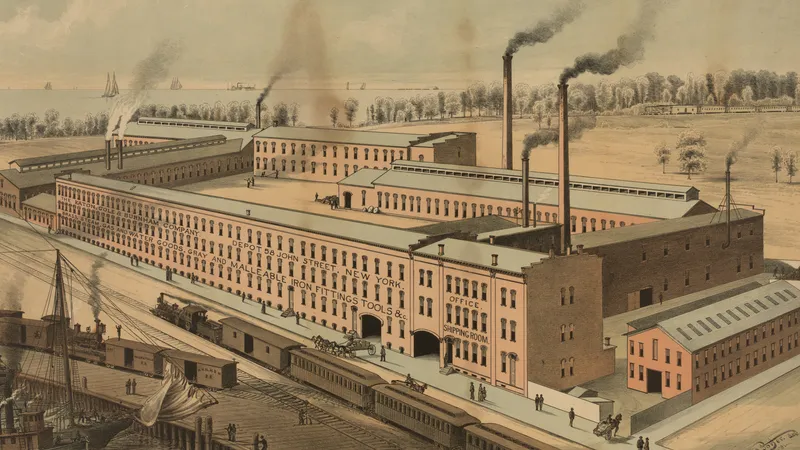
The Industrial Revolution was one of the most significant turning points in world history. Beginning in Britain during the second half of the 18th century, it transformed societies from predominantly agricultural economies into industrial and manufacturing-based economies. It introduced revolutionary inventions, machines, factories, steam-powered transportation, and new methods of production.
The Industrial Revolution spread from Britain to Europe, North America, and other parts of the world. It brought enormous economic growth and technological progress while also creating challenges such as poor working conditions, child labour, urban overcrowding, and environmental pollution.
This GK collection contains more than 100 questions covering the origins, inventions, important personalities, industries, transportation, social changes, and consequences of the Industrial Revolution.
Part 1: Basic Knowledge About the Industrial Revolution
- In which country did the Industrial Revolution begin?
- During which century did the Industrial Revolution begin?
- Around which decade did the Industrial Revolution begin?
- Which country was the leading industrial power during the early Industrial Revolution?
- What was the main feature of the Industrial Revolution?
- Which economic activity dominated before the Industrial Revolution?
- What type of production gradually replaced traditional hand production?
- Which industry played a leading role in the early Industrial Revolution?
- Which natural resource became particularly important as an industrial fuel?
- Which source of energy powered many early industrial machines?
- What was the main workplace for industrial production during the Industrial Revolution?
- What is the term for the movement of people from rural areas to cities?
- Which economic system expanded significantly during the Industrial Revolution?
- What is mass production?
- Which period is commonly associated with the First Industrial Revolution?
Part 2: Important Inventions and Discoveries
- Who is credited with inventing the spinning jenny?
- In which year was the spinning jenny invented?
- Who invented the water frame?
- What was the primary purpose of the water frame?
- Who invented the spinning mule?
- In which year was the spinning mule developed?
- Who improved the steam engine and made it commercially practical?
- Who developed the flying shuttle?
- In which year was the flying shuttle invented?
- Who invented the power loom?
- What was the main purpose of the power loom?
- Who developed the cotton gin?
- In which year was the cotton gin patented?
- Who invented the first commercially successful steamboat in the United States?
- Who developed the first successful practical steam locomotive?
- What was the name of George Stephenson’s famous locomotive that won the Rainhill Trials?
- In which year did the Rainhill Trials take place?
- Who invented the safety lamp used by miners?
- What was the purpose of the Davy safety lamp?
- Who developed the Bessemer process?
Part 3: Important Personalities
- Who is known as the father of the Industrial Revolution in Britain?
- Who was Richard Arkwright?
- Who was James Hargreaves?
- Who was Samuel Crompton?
- Who was James Watt?
- Who was George Stephenson?
- Who was Robert Stephenson?
- Who was Edmund Cartwright?
- Who was Eli Whitney?
- Who was Henry Bessemer?
- Who was Abraham Darby?
- What was Abraham Darby famous for?
- Who developed the puddling and rolling process for iron production?
- Who was John Kay?
- Who was Thomas Newcomen?
Part 4: The Textile Industry
- Which industry was at the forefront of the early Industrial Revolution?
- Which raw material was particularly important to the British textile industry?
- What was the main purpose of the spinning jenny?
- How did the water frame differ from the spinning jenny?
- What was the spinning mule capable of producing?
- Which invention mechanised the process of weaving cloth?
- What was the flying shuttle used for?
- Which English city became famous for its cotton textile industry?
- Which British city became an important centre of textile manufacturing?
- What was the factory system?
- How did mechanised textile production affect the cost of manufactured cloth?
- What was the role of cotton mills during the Industrial Revolution?
- Which country supplied large quantities of raw cotton to British textile mills?
- What was the domestic system of production?
- How did the factory system change traditional textile production?
Part 5: Steam Power, Coal and Iron
- Why was coal important during the Industrial Revolution?
- Which industry supplied machinery and construction materials for industrial development?
- What was coke used for in iron production?
- Who successfully used coke instead of charcoal in iron smelting at Coalbrookdale?
- What was the significance of the steam engine?
- Which earlier inventor developed a steam-powered atmospheric engine?
- What was the main purpose of Thomas Newcomen’s steam engine?
- What improvement did James Watt make to the steam engine?
- What is a steam condenser?
- Which fuel was commonly used to power steam engines?
- What was the importance of iron bridges during the Industrial Revolution?
- What is the significance of the Iron Bridge in Shropshire, England?
- In which year was the famous Iron Bridge completed?
- What was the Bessemer process used for?
- Which metal became increasingly important in railway construction and industrial machinery?
Part 6: Transportation and Communication
- Which invention revolutionised land transportation during the Industrial Revolution?
- Who is widely regarded as a pioneer of railway locomotive development?
- Which railway is often recognised as the first major public intercity railway using steam locomotives?
- In which year did the Liverpool and Manchester Railway open?
- What was the main purpose of the railway network?
- Which famous locomotive was designed by George Stephenson for the Liverpool and Manchester Railway?
- Who developed an early commercially successful steamboat service in the United States?
- What was the importance of canals during the Industrial Revolution?
- Which canal connected the Atlantic Ocean and the Great Lakes through the Hudson River?
- What was the main advantage of steam-powered ships?
- Who invented the telegraph system that transformed long-distance communication?
- Who developed the practical electric telegraph in Britain?
- Which communication technology allowed messages to be transmitted over long distances using electrical signals?
- What was the significance of the railway timetable?
- How did railways contribute to the growth of industrial cities?
Part 7: Social and Economic Changes
- What was urbanisation?
- Why did many people move from villages to industrial towns?
- What was child labour?
- Why were children employed in factories and mines?
- What were the typical working conditions in many early factories?
- What was the average working day like for many industrial workers during the early Industrial Revolution?
- What was a tenement?
- What problems resulted from rapid urbanisation?
- What was the working class?
- What was the middle class?
- What is capitalism?
- Who wrote The Wealth of Nations?
- In which year was The Wealth of Nations published?
- Who wrote The Communist Manifesto along with Friedrich Engels?
- In which year was The Communist Manifesto published?
Part 8: Labour Movements and Reforms
- What was the Luddite movement?
- Why did some textile workers destroy machinery during the Industrial Revolution?
- What was the Factory Act of 1833 designed to regulate?
- Which British legislation restricted working hours for women and children in textile factories in 1847?
- What was the Ten Hours Act of 1847?
- What were trade unions?
- Why were workers’ rights movements established?
- What was the Chartist movement?
- What was the main objective of the Chartist movement?
- What was the Mines Act of 1842?
- How did industrialisation contribute to the growth of trade unions?
- What was the purpose of labour reforms?
Part 9: Spread of the Industrial Revolution
- Which country was the first to industrialise after Britain?
- During which century did industrialisation spread widely across Europe?
- Which German region became an important industrial centre?
- Which country experienced rapid industrialisation during the 19th century following the Meiji Restoration?
- In which year did the Meiji Restoration take place?
- Which American region became a major centre of industrial development?
- Which industry helped drive industrialisation in the United States?
- What role did immigration play in American industrial growth?
- Which country became a major industrial power in the late 19th century?
- What was the Second Industrial Revolution?
- Which new energy sources became increasingly important during the Second Industrial Revolution?
- Which industry expanded rapidly with the development of electricity?
- What role did steel production play in modern industrial development?
Part 10: Consequences and Historical Significance
- How did the Industrial Revolution change agriculture?
- What was the impact of industrialisation on international trade?
- How did the Industrial Revolution influence global population growth?
- What was the environmental impact of industrialisation?
- How did factory production change the availability of consumer goods?
- What was the relationship between industrialisation and imperialism?
- How did industrialisation contribute to the growth of modern capitalism?
- What was the impact of the Industrial Revolution on traditional crafts?
- How did industrialisation change the role of women in the workforce?
- What was the significance of technological innovation during the Industrial Revolution?
- How did the Industrial Revolution contribute to the development of modern cities?
- What was the long-term impact of railways on international commerce?
- How did industrialisation influence education and technical training?
- Why is the Industrial Revolution considered a major turning point in human history?
- What is the difference between the First and Second Industrial Revolutions?
Answer Key
Part 1: Basic Knowledge
- Great Britain
- 18th century
- Around the 1760s
- Great Britain
- The transition from hand production to machine-based manufacturing
- Agriculture
- Machine production
- Textile industry
- Coal
- Water power and steam power
- Factory
- Urbanisation
- Capitalism
- Production of large quantities of goods using standardised methods
- Late 18th and early 19th centuries
Part 2: Inventions and Discoveries
- James Hargreaves
- Around 1764
- Richard Arkwright
- Spinning cotton thread using water power
- Samuel Crompton
- 1779
- James Watt
- John Kay
- 1733
- Edmund Cartwright
- Mechanised weaving
- Eli Whitney
- 1794
- Robert Fulton
- George Stephenson
- Rocket
- 1829
- Humphry Davy
- To reduce the risk of explosions in coal mines
- Henry Bessemer
Part 3: Important Personalities
- Richard Arkwright
- Inventor and industrialist associated with the water frame
- Inventor of the spinning jenny
- Inventor of the spinning mule
- Scottish engineer who greatly improved the steam engine
- British civil and mechanical engineer and railway pioneer
- British civil engineer and son of George Stephenson
- Inventor of the power loom
- American inventor of the cotton gin
- Inventor of the Bessemer steelmaking process
- English ironmaster and industrial pioneer
- Using coke in iron smelting
- Henry Cort
- Inventor of the flying shuttle
- Developer of an early commercially successful steam engine
Part 4: Textile Industry
- Textile industry
- Cotton
- To spin multiple threads simultaneously
- The water frame used water power, while the spinning jenny was initially hand-powered
- Strong and fine cotton yarn
- Power loom
- To speed up weaving
- Manchester
- Manchester
- A system of manufacturing in centralised workplaces using machinery
- It generally reduced production costs
- They produced large quantities of textiles
- The United States
- A system in which goods were produced in homes or small workshops
- It centralised production and mechanised manufacturing
Part 5: Steam Power, Coal and Iron
- It provided fuel for steam engines and industrial furnaces
- Iron industry
- As a fuel and reducing agent in iron smelting
- Abraham Darby I
- It provided reliable mechanical power for factories, mines and transportation
- Thomas Newcomen
- Pumping water out of mines
- He introduced a separate condenser, improving efficiency
- A device that condenses steam back into water
- Coal
- They enabled stronger and more durable structures
- It was one of the earliest major iron bridges
- 1779
- Mass-producing steel from molten pig iron
- Iron
Part 6: Transportation and Communication
- Steam locomotive and railway
- George Stephenson
- Liverpool and Manchester Railway
- 1830
- To transport passengers and goods efficiently
- Rocket
- Robert Fulton
- They enabled the cheaper transportation of heavy goods
- Erie Canal
- Faster and more reliable water transportation
- Samuel Morse
- Charles Wheatstone and William Fothergill Cooke
- Electric telegraph
- It helped organise railway services and coordinate train movements
- They improved transport, trade and access to employment
Part 7: Social and Economic Changes
- The growth of towns and cities as people move from rural areas
- To find employment in factories and industries
- The employment of children in work, often under harsh conditions
- They were inexpensive labour and could perform certain small tasks
- Long hours, low wages, dangerous machinery and poor ventilation
- Often 12–16 hours a day in early factories
- A crowded residential building divided into small rented apartments
- Overcrowding, pollution, poor sanitation and disease
- People who earn wages through manual or industrial labour
- People engaged in business, professional work and commercial activities
- An economic system based on private ownership and investment for profit
- Adam Smith
- 1776
- Karl Marx
- 1848
Part 8: Labour Movements and Reforms
- A movement of workers who opposed certain industrial changes and machinery
- They feared machines would threaten their jobs and wages
- Child labour and working conditions in factories
- Factory Act of 1847
- It limited the working hours of women and young people in textile mills
- Organisations formed by workers to protect their interests
- To demand better wages, safer workplaces and shorter working hours
- A British working-class political reform movement
- To secure political reforms, including broader voting rights
- Legislation that prohibited women and young children from working underground in mines
- Industrial workers organised collectively to demand better conditions
- To protect workers from exploitation and improve working conditions
Part 9: Spread of the Industrial Revolution
- Belgium
- 19th century
- Ruhr region
- Japan
- 1868
- The northeastern United States
- Textile and manufacturing industries
- Immigrants provided labour for expanding industries
- Germany and the United States
- A later phase of industrialisation marked by steel, electricity, chemicals and new technologies
- Electricity and petroleum
- Electrical manufacturing and engineering
- It enabled stronger machinery, railways, bridges and buildings
Part 10: Consequences and Historical Significance
- It introduced agricultural machinery and improved farming productivity
- It expanded international trade and commercial networks
- Improved production, food distribution and living conditions contributed to population growth
- Air and water pollution, deforestation and increased carbon emissions
- It made many goods more widely available and generally less expensive
- Industrial powers sought raw materials, markets and strategic resources overseas
- It expanded private investment, factory ownership and industrial enterprise
- Many traditional crafts faced competition from machine-made products
- More women entered paid industrial and factory employment, often under difficult conditions
- It accelerated scientific progress, productivity and technological development
- It encouraged urban growth and the expansion of infrastructure
- It made the transportation of goods faster, cheaper and more reliable
- It increased the demand for literacy, engineering and technical skills
- It transformed economies, societies, technology and everyday life
- The First focused mainly on steam power, textiles, coal and iron; the Second featured electricity, steel, chemicals, petroleum and mass production
Conclusion
The Industrial Revolution fundamentally changed the course of human civilisation. It transformed manufacturing, transportation, communication, agriculture, commerce and everyday life. Although it created serious social and environmental challenges, it also laid the foundations for the modern industrial world.
Understanding the Industrial Revolution helps us appreciate how technological innovations shape societies, influence economies and change the way people live and work.
Editorial Note: The Industrial Revolution was not simply a period of inventions and machines. It was a profound transformation in human society, bringing both remarkable progress and significant challenges. Its lessons remain relevant as the world experiences new technological changes through automation, artificial intelligence and digital innovation.
Leave a Reply