

Introduction
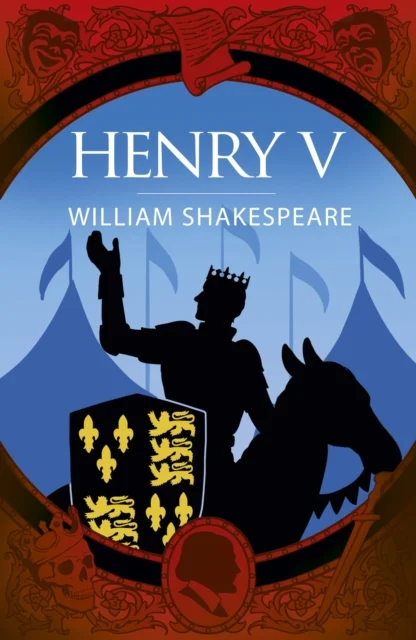
Henry V is one of William Shakespeare’s greatest history plays and one of the most inspiring works in English literature. Written around 1599, the play dramatizes the remarkable transformation of King Henry V of England from a seemingly carefree prince into one of England’s greatest warrior-kings. Centered on the famous Battle of Agincourt (1415) during the Hundred Years’ War, Henry V celebrates courage, leadership, patriotism, justice, and the responsibilities of kingship.
Unlike Shakespeare’s tragedies, Henry V is not a story of personal downfall but one of growth, determination, and national triumph. At the same time, Shakespeare avoids presenting war as mere glory. Alongside stirring speeches and heroic victories, he portrays the suffering, moral dilemmas, and human cost of conflict, making the play both inspirational and deeply reflective.
For more than four centuries, Henry V has remained one of Shakespeare’s most frequently performed history plays. Its famous speeches continue to inspire soldiers, political leaders, students, and readers around the world.
Historical Background
Henry V is the fourth and final play in Shakespeare’s Henriad, following:
- Richard II
- Henry IV, Part 1
- Henry IV, Part 2
- Henry V
The play chronicles the reign of the historical King Henry V (1386–1422), who ruled England from 1413 to 1422. Shakespeare drew much of his material from Raphael Holinshed’s Chronicles as well as earlier historical writings.
The central historical event is the Battle of Agincourt, fought on 25 October 1415, where Henry’s outnumbered English army achieved a remarkable victory over the French. Although Shakespeare celebrates this triumph, he also raises important questions about war, justice, and political responsibility.
Written during the reign of Queen Elizabeth I, the play reflected growing English nationalism and concerns about succession, leadership, and military strength.
Setting
The play moves across several locations in:
- England
- Southampton
- The English Channel
- Harfleur in France
- The French countryside
- The battlefield of Agincourt
- The French royal court
Its broad geographical scope reflects the international nature of Henry’s military campaign.
Plot Summary
The Claim to France
The play opens with the Archbishop of Canterbury and the Bishop of Ely discussing Henry’s claim to the French throne.
They persuade the king that, through his ancestry, he possesses a legitimate right to rule France.
When French ambassadors arrive, the Dauphin (the French crown prince) mockingly sends Henry a gift of tennis balls, suggesting that the young king is better suited to childish games than warfare.
Deeply insulted, Henry resolves to invade France.
The Southampton Conspiracy
Before departing, Henry discovers a conspiracy against his life involving three noblemen:
- Cambridge
- Scroop
- Grey
Feigning ignorance, Henry allows them to condemn another man for treason before revealing their own guilt.
The conspirators are arrested and executed.
This episode demonstrates Henry’s wisdom, decisiveness, and commitment to justice.
The Siege of Harfleur
Henry’s army crosses the English Channel and lays siege to the French town of Harfleur.
Before the assault, Henry delivers one of Shakespeare’s most famous speeches:
“Once more unto the breach, dear friends, once more.”
His passionate words inspire his weary soldiers to renewed courage.
Harfleur eventually surrenders, allowing the English campaign to continue.
The March to Agincourt
Disease, exhaustion, and constant fighting greatly weaken Henry’s army.
Despite these hardships, Henry presses onward.
The vastly superior French forces prepare to confront the English near the village of Agincourt.
On the night before battle, Henry disguises himself and walks among his soldiers.
Listening to their fears and concerns, he reflects privately upon the heavy responsibilities of kingship.
He realizes that although a king enjoys honor and authority, he also bears the immense burden of responsibility for the lives of his people.
The St. Crispin’s Day Speech
On the morning of 25 October 1415, Henry’s small army faces overwhelming odds.
Many soldiers despair.
Henry responds with perhaps the most celebrated speech in English drama:
“We few, we happy few, we band of brothers.”
Rather than lamenting their small numbers, Henry argues that those who survive will forever share the honor of participating in this glorious victory.
His speech transforms fear into determination.
The Battle of Agincourt
Against extraordinary odds, the English defeat the far larger French army.
Several factors contribute to their victory:
- The muddy battlefield slows the heavily armored French knights.
- English longbowmen devastate the advancing enemy.
- Henry’s disciplined leadership maintains morale and order.
The English suffer remarkably few casualties.
Henry attributes the victory not to military skill alone but to divine providence.
He forbids boasting and commands that all glory be given to God.
Peace and Marriage
Following the victory, negotiations begin between England and France.
Henry courts Princess Katherine of France with sincerity and humility.
Although awkward at times because of language differences, their conversation is filled with warmth and gentle humor.
Henry’s marriage to Katherine symbolizes the reconciliation of the two kingdoms.
The play concludes with the signing of the Treaty of Troyes, recognizing Henry as heir to the French throne.
A brief epilogue reminds the audience that Henry’s early death would eventually lead to renewed conflict during the reign of his son, Henry VI.
Major Characters
King Henry V
Henry is Shakespeare’s model of ideal kingship.
Wise, courageous, disciplined, compassionate, and deeply conscious of his responsibilities, he inspires both loyalty and admiration.
Unlike the carefree Prince Hal of the earlier plays, Henry has matured into a ruler capable of balancing justice with mercy and courage with humility.
His leadership remains one of the finest portrayals of political authority in literature.
Katherine of France
Princess Katherine is intelligent, modest, and gracious.
Her marriage to Henry represents peace and reconciliation between two long-warring nations.
Her gentle humor adds warmth to the play’s conclusion.
The Dauphin
The Dauphin is arrogant and overconfident.
His mockery of Henry reveals his inability to recognize genuine leadership.
His misjudgment contributes to the French defeat.
Fluellen
Fluellen is a Welsh officer whose loyalty, courage, and strict adherence to military discipline provide both wisdom and comic relief.
He represents the diversity of the English army.
Pistol
Pistol is a boastful but cowardly soldier.
His comic adventures expose the gap between empty bravado and genuine heroism.
Bardolph
Bardolph, once a companion of Prince Hal, is executed for stealing from civilians during the campaign.
Henry orders the execution despite their former friendship, demonstrating that justice must prevail over personal loyalty.
Chorus
The Chorus introduces each act, apologizing for the limitations of the stage and inviting the audience to imagine vast armies, great battles, and royal courts.
Its speeches elevate the play’s epic atmosphere.
Major Themes
Leadership
Leadership is the central theme of the play.
Henry leads by personal example.
He shares the hardships of his soldiers, inspires courage, and accepts responsibility for difficult decisions.
Shakespeare presents leadership as service rather than privilege.
Courage
The play celebrates physical bravery while also emphasizing moral courage.
Henry’s willingness to face danger alongside his soldiers earns their respect.
True courage, Shakespeare suggests, is grounded in duty rather than personal glory.
Kingship
Henry constantly reflects upon the obligations of a ruler.
He understands that authority carries immense responsibility.
The play contrasts genuine kingship with mere possession of power.
Patriotism
The unity of English soldiers from different regions symbolizes national solidarity.
Despite their varied backgrounds, they fight together for a common purpose.
War
Although the play contains stirring speeches, Shakespeare also depicts war’s hardships:
- Disease
- Hunger
- Death
- Moral dilemmas
- Civilian suffering
Thus, Henry V balances patriotic celebration with sober reflection.
Honor
Honor motivates many characters.
For Henry, however, honor is inseparable from justice, humility, and responsibility.
Divine Providence
Henry repeatedly acknowledges God’s sovereignty.
After Agincourt, he refuses to claim personal glory, insisting that victory belongs to God alone.
Symbols
The Crown
The crown symbolizes both authority and responsibility.
Henry recognizes that kingship demands sacrifice as well as privilege.
The Longbow
The English longbow symbolizes discipline, preparation, and intelligent strategy overcoming superior numbers.
St. Crispin’s Day
The feast of St. Crispin and St. Crispinian becomes a lasting symbol of courage, brotherhood, and shared sacrifice.
Famous Quotations
Among the play’s most memorable lines are:
“Once more unto the breach, dear friends, once more.”
Henry encourages his soldiers during the siege of Harfleur.
“We few, we happy few, we band of brothers.”
Perhaps the greatest speech about courage and comradeship in English literature.
“Every subject’s duty is the king’s; but every subject’s soul is his own.”
Henry reflects on personal responsibility.
“All things are ready, if our minds be so.”
Henry emphasizes the importance of determination.
“The fewer men, the greater share of honour.”
Henry transforms numerical weakness into a source of inspiration.
Literary Significance
Henry V is widely regarded as Shakespeare’s masterpiece of historical drama. It combines political insight, military action, philosophical reflection, and poetic brilliance into a compelling portrait of leadership under extraordinary circumstances.
The play has profoundly influenced political thought, military leadership, and national identity. Henry’s speeches are frequently quoted by leaders, soldiers, educators, and public speakers because of their enduring power to inspire courage and unity.
Scholars continue to debate whether Shakespeare intended the play primarily as a celebration of war or as a subtle critique of its human costs. This ambiguity contributes to its lasting richness and relevance.
Adaptations
Henry V has inspired numerous stage and screen adaptations, including:
- Laurence Olivier’s celebrated 1944 film, produced during the Second World War as a powerful expression of national morale.
- Kenneth Branagh’s acclaimed 1989 adaptation, which presents a grittier and more realistic portrayal of warfare.
- The 2012 television adaptation in The Hollow Crown series starring Tom Hiddleston.
The play remains a favorite of theatre companies around the world.
Lessons from Henry V
The play offers enduring lessons:
- Great leaders inspire by example rather than by command alone.
- Courage grows through unity and shared purpose.
- Justice must prevail over personal favoritism.
- True honor requires humility and responsibility.
- Victory should never lead to arrogance.
- Peace is the highest goal, even after successful warfare.
- National strength depends upon wise and moral leadership.
Legacy
More than four centuries after its first performance, Henry V remains one of Shakespeare’s greatest history plays and one of literature’s finest studies of leadership. Through the remarkable journey of King Henry, Shakespeare explores the qualities that distinguish a true ruler: wisdom, courage, justice, humility, and unwavering commitment to the common good.
While the play celebrates one of England’s greatest military victories, it also reminds readers that the true measure of greatness lies not merely in triumph on the battlefield but in the moral character of those who wield power. Rich in unforgettable speeches, compelling characters, and profound reflections on duty and honor, Henry V continues to inspire readers, audiences, leaders, and scholars across the world, securing its place among the crowning achievements of William Shakespeare’s literary genius.
Leave a Reply