

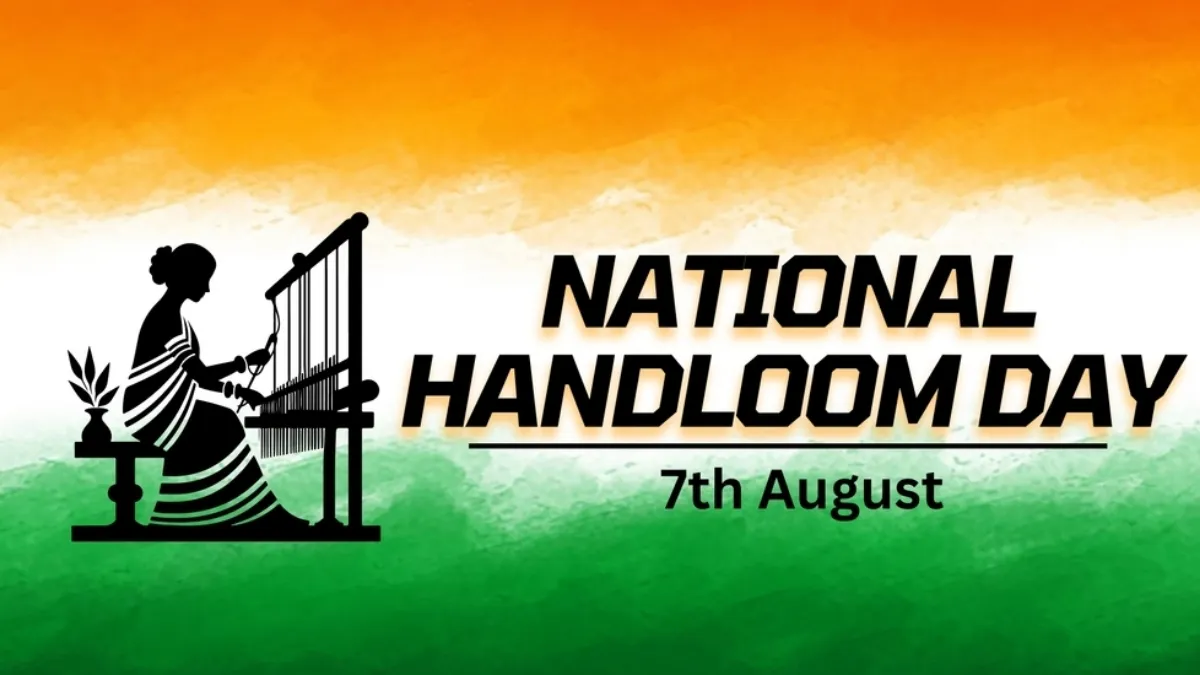
India’s handloom tradition is one of the oldest and most vibrant textile cultures in the world. Woven with skill, patience, and artistry, handloom fabrics are more than just clothing—they are expressions of history, culture, identity, and sustainable craftsmanship. Every year on August 7, India celebrates National Handloom Day to honor the country’s rich handloom heritage and recognize the invaluable contribution of millions of weavers to the nation’s economy and cultural legacy.
From the elegant Banarasi silk sarees of Uttar Pradesh to the colorful Pochampally Ikat of Telangana, from the luxurious Pashmina shawls of Kashmir to the traditional Kasavu of Kerala, India’s handloom industry showcases extraordinary diversity and artistic excellence. National Handloom Day is a tribute to these timeless traditions and the artisans who keep them alive.
What is National Handloom Day?
National Handloom Day is observed annually on 7 August across India to promote awareness about the importance of the handloom sector and to encourage people to support indigenous textiles by choosing handwoven products.
The Government of India officially inaugurated National Handloom Day in 2015 to commemorate the Swadeshi Movement, which was launched on 7 August 1905. The movement encouraged Indians to boycott foreign-made goods and promote locally produced products, particularly handwoven textiles, as symbols of self-reliance and national pride.
Why August 7?
The date holds immense historical significance because it marks the anniversary of the launch of the Swadeshi Movement at the Town Hall in Calcutta (now Kolkata) in 1905, following the Partition of Bengal by the British colonial administration.
The movement inspired Indians to:
- Boycott imported British textiles.
- Support local artisans and weavers.
- Promote indigenous industries.
- Strengthen economic independence.
- Foster national unity during the freedom struggle.
Handloom became a powerful symbol of India’s quest for self-reliance and freedom.
The Rich History of Indian Handlooms
India’s handloom tradition dates back more than 5,000 years to the Indus Valley Civilization. Archaeological discoveries reveal evidence of cotton spinning and weaving, indicating that textile production was already highly advanced.
Throughout history:
- Ancient India exported fine cotton and silk fabrics to Rome, Egypt, and Southeast Asia.
- Indian muslin from Bengal became famous for its extraordinary softness and fineness.
- Royal courts patronized skilled weavers, creating luxurious fabrics adorned with gold and silver threads.
- Traditional weaving techniques evolved differently across regions, giving rise to hundreds of unique textile traditions.
Even after centuries of change, many ancient weaving methods continue to be practiced today.
Importance of the Handloom Sector
The handloom industry is one of India’s largest traditional industries and plays a vital role in rural livelihoods.
Employment
The sector provides direct and indirect employment to millions of weavers and allied workers, making it one of the country’s largest sources of non-farm rural employment.
Women Empowerment
A significant proportion of handloom workers are women who contribute to weaving, spinning, dyeing, embroidery, and finishing processes.
Cultural Preservation
Each handwoven textile reflects the traditions, customs, and artistic identity of a particular region or community.
Sustainable Production
Handlooms consume far less energy than mechanized textile production, making them environmentally friendly and supporting sustainable fashion.
Economic Contribution
The sector contributes to exports, domestic markets, tourism, and the preservation of traditional skills.
Famous Handloom Traditions of India
India’s diverse geography has given rise to numerous celebrated handloom traditions.
Banarasi Silk (Uttar Pradesh)
Renowned for intricate zari work, Banarasi sarees are treasured for weddings and ceremonial occasions.
Kanchipuram Silk (Tamil Nadu)
These luxurious silk sarees are known for vibrant colors, durability, and rich temple-inspired motifs.
Pochampally Ikat (Telangana)
Created using the intricate tie-and-dye resist technique, Pochampally textiles are admired worldwide.
Chanderi (Madhya Pradesh)
Lightweight and elegant, Chanderi fabrics blend silk and cotton with delicate patterns.
Patola (Gujarat)
Double Ikat Patola sarees are among the most complex and expensive handwoven textiles in the world.
Sambalpuri Ikat (Odisha)
Known for geometric patterns and traditional motifs woven directly into the fabric.
Muga Silk (Assam)
Produced from the rare Muga silkworm, this golden silk is unique to Assam and prized for its natural sheen and durability.
Kasavu (Kerala)
The iconic white or cream saree with a golden border is traditionally worn during festivals such as Onam and Vishu.
Pashmina (Jammu & Kashmir)
Handwoven from the fine undercoat of Himalayan goats, authentic Pashmina shawls are celebrated for their exceptional softness and warmth.
Mahatma Gandhi and the Handloom Movement
No discussion of Indian handlooms is complete without Mahatma Gandhi.
Gandhi made the charkha (spinning wheel) a symbol of India’s freedom struggle. He encouraged every Indian to spin yarn and wear Khadi, promoting self-reliance while reducing dependence on imported textiles.
His message was simple yet powerful:
“The message of the spinning wheel is much wider than its circumference.”
Khadi became a symbol of dignity, simplicity, and economic independence.
Challenges Facing the Handloom Industry
Despite its rich heritage, the handloom sector faces several challenges:
- Competition from inexpensive machine-made textiles.
- Rising raw material costs.
- Limited access to modern markets.
- Declining interest among younger generations in pursuing weaving as a livelihood.
- Counterfeit products marketed as handmade.
- Need for better digital marketing and e-commerce opportunities.
Addressing these challenges requires coordinated support from governments, businesses, designers, and consumers.
Government Initiatives
Several initiatives aim to strengthen the handloom sector:
- National Handloom Day celebrations.
- Handloom Mark certification for genuine handwoven products.
- India Handloom Brand to promote quality assurance.
- Financial assistance and welfare schemes for weavers.
- Skill development and design innovation programs.
- Digital platforms and exhibitions to expand market access.
These efforts seek to preserve traditional craftsmanship while improving the livelihoods of artisans.
Why Supporting Handloom Matters
Choosing handloom products helps:
- Preserve centuries-old artistic traditions.
- Support rural artisans and their families.
- Promote sustainable and eco-friendly fashion.
- Encourage local economies.
- Protect India’s cultural heritage.
- Reduce the environmental footprint associated with mass-produced textiles.
Every handwoven fabric tells a story of patience, creativity, and human craftsmanship.
How to Celebrate National Handloom Day
Here are meaningful ways to observe the day:
- Wear handloom clothing to work, school, or community events.
- Purchase authentic handwoven products from local artisans or certified outlets.
- Learn about the textile traditions of your state or region.
- Visit handloom exhibitions, museums, or craft fairs.
- Share information about India’s weaving heritage on social media.
- Encourage younger generations to appreciate and preserve traditional crafts.
Interesting Facts About Indian Handlooms
- India has one of the world’s largest and most diverse handloom sectors.
- Many weaving techniques have been passed down through families for generations.
- Handloom weaving generally consumes much less electricity than power-loom production.
- Several Indian textiles enjoy Geographical Indication (GI) status, recognizing their unique regional origin and craftsmanship.
- Every handwoven piece is unique, often bearing subtle variations that reflect the artisan’s individual skill.
Frequently Asked Questions (FAQs)
Why is National Handloom Day celebrated on August 7?
It commemorates the launch of the Swadeshi Movement on 7 August 1905, which promoted indigenous industries and handwoven textiles during India’s freedom struggle.
When was National Handloom Day started?
The Government of India instituted National Handloom Day in 2015.
What is the difference between handloom and power loom?
Handloom fabrics are woven manually on a loom operated by skilled artisans, while power looms use electrically powered machinery for large-scale production.
Why is handloom considered sustainable?
Handloom weaving generally uses less energy, creates lower carbon emissions, and supports local, small-scale production compared with industrial textile manufacturing.
How can consumers support handloom weavers?
By purchasing authentic handloom products, promoting local artisans, learning about traditional textiles, and choosing sustainable fashion options.
Conclusion
National Handloom Day is a celebration of India’s enduring weaving traditions, the artistry of its craftsmen, and the cultural values woven into every thread. It reminds us that handloom is not merely a textile industry—it is a living heritage that connects generations, empowers rural communities, and reflects the soul of India.
As consumers become more conscious of sustainability and ethical fashion, supporting handloom products is both a tribute to India’s remarkable craftsmanship and an investment in a more inclusive and environmentally responsible future.
“Every handwoven fabric carries not only threads of cotton or silk but also the dreams, dedication, and heritage of the artisan who created it.”
Leave a Reply