

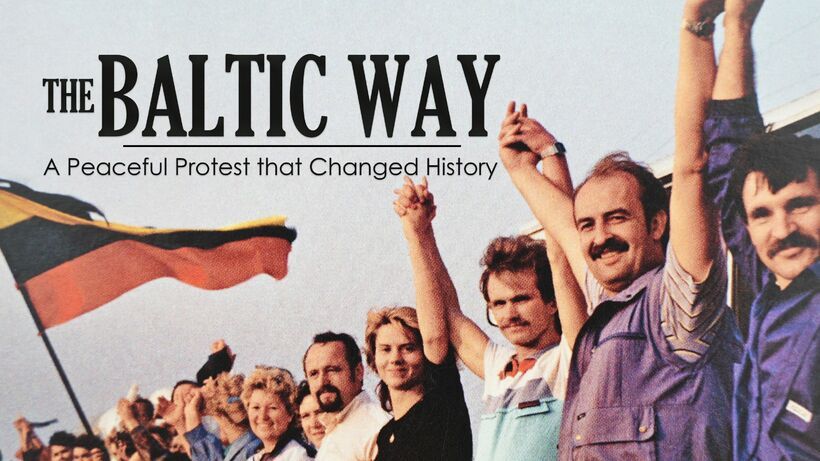
The Baltic Way, also called the Baltic Chain or Chain of Freedom, was one of the most remarkable peaceful demonstrations of the 20th century. On 23 August 1989, approximately two million people in Estonia, Latvia and Lithuania joined hands to form a human chain of roughly 600–700 kilometres, linking the capitals of Tallinn, Riga and Vilnius. (UNESCO)
The demonstration demanded recognition of the historical circumstances that had brought the Baltic states under Soviet rule and called for restoration of their independence. It became a powerful symbol of non-violent resistance, national self-determination and solidarity. UNESCO later inscribed documentary materials relating to the Baltic Way on its Memory of the World Register. (UNESCO)


1. The Historical Background
To understand the Baltic Way, it is necessary to go back to 23 August 1939.
On that day, Nazi Germany and the Soviet Union signed the Molotov–Ribbentrop Pact, formally a non-aggression agreement between the two powers. A secret protocol divided parts of Eastern Europe into German and Soviet spheres of influence.
The agreement had enormous consequences for Poland and the Baltic region. UNESCO’s historical documentation explains that the pact and its secret clauses contributed to the subsequent occupation of Estonia, Latvia and Lithuania by the Soviet Union. (UNESCO)
The Baltic states before World War II
Estonia, Latvia and Lithuania had established independent states following World War I.
For these nations, independence was therefore not an entirely new political aspiration in 1989. They were seeking the restoration of states that had existed independently before Soviet occupation.
2. Soviet Occupation
In 1940, the Soviet Union occupied and incorporated Estonia, Latvia and Lithuania.
The Baltic peoples experienced decades of Soviet rule accompanied by political repression, deportations, restrictions on national political activity and extensive changes to their societies.
The Soviet government maintained that the Baltic states had become part of the Soviet Union legally. Many Estonians, Latvians and Lithuanians rejected this interpretation and regarded the incorporation as an occupation resulting from the geopolitical arrangements of 1939–1940.
The issue of historical legitimacy became especially important during the political awakening of the late 1980s. European Parliament documents have likewise described the 1940 incorporation of the Baltic states in the context of the Molotov–Ribbentrop Pact and its consequences. (European Parliament)
3. The Rise of Gorbachev and Glasnost
A major change occurred after Mikhail Gorbachev became leader of the Soviet Union in 1985.
He introduced reforms commonly associated with:
- Glasnost — greater openness
- Perestroika — restructuring
- Greater political discussion
- Limited democratization
- Economic reforms
These policies were not originally designed to dissolve the Soviet Union.
However, greater openness allowed people to discuss subjects that had previously been dangerous or forbidden.
In the Baltic republics, people increasingly began openly discussing:
- Soviet occupation
- Deportations
- National identity
- Environmental problems
- Economic conditions
- Historical documents
- The Molotov–Ribbentrop Pact
- National independence
The opening of political space helped transform previously marginalized dissident activity into mass political movements. (EUISS)
4. The Baltic National Movements
Three major popular movements emerged:
🇪🇪 Estonia
Rahvarinne — Popular Front of Estonia
🇱🇻 Latvia
Popular Front of Latvia
🇱🇹 Lithuania
Sąjūdis — Lithuanian Reform Movement
These organizations mobilized enormous numbers of ordinary citizens.
Their activities included:
- Public demonstrations
- Cultural events
- Historical commemorations
- Political campaigns
- Elections
- Calls for greater autonomy
- Demands for sovereignty and independence
The cooperation between these three movements eventually produced the Baltic Way. UNESCO specifically identifies the three movements as the organizers of the 1989 human chain. (UNESCO)
5. Why Was 23 August 1989 Chosen?
The choice of date was deliberate.
23 August 1989 was exactly 50 years after the signing of the Molotov–Ribbentrop Pact.
The Baltic movements wanted the world to remember the secret agreement and its consequences.
Their message was essentially:
“Remember what happened in 1939, recognize the injustice of Soviet domination, and recognize the Baltic peoples’ right to determine their own future.”
The demonstration therefore connected history with contemporary political action.
It was simultaneously:
- A memorial
- A political protest
- A demonstration of national unity
- A demand for independence
- A statement of non-violent resistance
6. The Baltic Way: 23 August 1989
On the afternoon/evening of 23 August 1989, people gathered across Estonia, Latvia and Lithuania.
They stood along roads connecting:
Tallinn → Riga → Vilnius
Participants joined hands, creating a continuous human chain across the three countries.
UNESCO describes it as approximately 600 kilometres long, while other institutional sources give figures around 650–700 kilometres, depending on how the route is measured. (UNESCO)
The demonstration involved well over one million people, with many estimates putting participation at around two million. (UNESCO)
7. What Happened During the Demonstration?
The event was remarkably peaceful.
People:
- Held hands
- Sang national songs
- Carried national flags
- Displayed banners
- Prayed
- Remembered victims of Soviet repression
- Protested against the consequences of the 1939 pact
- Expressed support for national independence
The atmosphere was one of enormous emotional solidarity.
People who had lived under Soviet rule for decades publicly demonstrated their national identity on an unprecedented scale.
8. The Route
The human chain connected the three Baltic capitals.
Tallinn 🇪🇪
The northern end was in Estonia.
Riga 🇱🇻
The chain passed through Latvia’s capital and across the Daugava River.
Vilnius 🇱🇹
The southern end was in Lithuania.
The route created a physical representation of political unity.
Three nations were effectively saying:
We stand together.
UNESCO’s documentary collection preserves photographs and documents showing this extraordinary human chain. (UNESCO)
9. Why Was the Baltic Way So Powerful?
The Baltic Way was powerful for several reasons.
✋ It was non-violent
There was no armed uprising.
Instead, people used:
- Their presence
- Their bodies
- Their voices
- Their national symbols
- Their solidarity
as instruments of political protest.
🤝 It united three nations
Estonians, Latvians and Lithuanians had distinct languages, cultures and historical experiences.
Yet they recognized a common political objective.
📜 It connected past and present
The demonstrators were protesting the consequences of a secret agreement signed half a century earlier.
🌍 It attracted international attention
Images of hundreds of thousands of people standing together became powerful international symbols.
10. The Soviet Government’s Response
The Soviet authorities faced a difficult situation.
A violent crackdown against such a massive peaceful demonstration could have produced enormous political consequences.
The Baltic movements had also become increasingly difficult to suppress because they had acquired genuine mass support.
The Baltic Way demonstrated that Soviet control could be challenged through organized civil resistance and mass participation.
It also showed that the Baltic independence movements were no longer small dissident circles.
They represented a substantial portion of society.
11. The Political Impact
The Baltic Way did not itself immediately make Estonia, Latvia and Lithuania independent.
Instead, it became an important milestone in a rapidly developing independence movement.
The demonstration strengthened:
- Popular confidence
- Cooperation between the three Baltic movements
- International awareness
- Demands for sovereignty
- Public discussion of Soviet rule
- Momentum toward independence
Estonia, Latvia and Lithuania subsequently moved toward formal restoration of independence during 1990–1991.
12. Lithuania Moves First
Lithuania took a particularly dramatic step.
On 11 March 1990, Lithuania declared the restoration of its independence.
This made Lithuania the first Soviet republic to make such a declaration. (European Parliament)
The Soviet leadership attempted to pressure the Lithuanian government to reverse course.
The confrontation eventually became extremely serious.
13. The January 1991 Crisis in Lithuania
The struggle intensified in January 1991.
Soviet forces attempted to assert control over strategic locations in Lithuania.
At the Vilnius TV Tower, civilians gathered to defend the country’s independence.
Soviet troops attacked, and 14 civilians were killed and many others injured.
Rather than ending the independence movement, the violence strengthened international sympathy for Lithuania and hardened public resistance.
14. Estonia and Latvia
Estonia and Latvia also pursued restoration of independence.
Both republics declared the restoration of independence in 1991.
The final breakthrough came after the failed August 1991 coup attempt in Moscow.
As Soviet central authority rapidly weakened, the Baltic republics moved decisively toward independence.
On 6 September 1991, the Soviet Union formally recognized the independence of Estonia, Latvia and Lithuania. (European Parliament)
15. The Collapse of the Soviet Union
The Baltic independence movements were part of the much larger political transformation that brought about the dissolution of the Soviet Union.
By the end of 1991, the USSR itself ceased to exist.
The Baltic states therefore achieved a remarkable historical outcome:
A peaceful mass movement that began as a demand for historical recognition and national rights ultimately contributed to the restoration of three independent states.
16. The Baltic Way and the Singing Revolution
The Baltic Way is closely associated with what is often called the Singing Revolution.
Music, choirs, folk songs and national festivals became important forms of cultural expression.
In societies where political expression had been heavily restricted, cultural activities provided a way for people to express:
- National identity
- Historical memory
- Solidarity
- Hope
- Resistance
The Baltic independence movements therefore combined political activism with cultural revival.
17. The Baltic Way as a Model of Non-Violent Resistance
One of the most important lessons of the Baltic Way is the power of organized non-violence.
The demonstrators did not defeat the Soviet system through military force.
Instead, they demonstrated:
mass participation + unity + organization + cultural identity + non-violence.
This made the Baltic Way an important example in the history of peaceful civil resistance.
18. The Role of Ordinary People
The Baltic Way was not simply a movement of political leaders.
Ordinary citizens played the central role.
Participants included:
- Children
- Students
- Workers
- Farmers
- Teachers
- Professionals
- Elderly people
- Families
- Religious communities
- Artists
- Intellectuals
The enormous participation showed that the independence question had become a mass social movement.
19. International Reaction
The Baltic Way attracted considerable international attention.
Photographs and reports of the human chain demonstrated the scale of popular opposition to Soviet rule.
The event helped make the Baltic question more visible internationally and strengthened the argument that the Baltic peoples had a legitimate claim to political self-determination.
The European Parliament later recognized the historical importance of the demonstration and described it as an unprecedented protest involving approximately two million people. (European Parliament)
20. Baltic Cooperation After Independence
The spirit of cooperation created by the Baltic Way did not disappear after independence.
On 12 May 1990, Estonia, Latvia and Lithuania signed a Declaration on Unity and Cooperation, helping establish a renewed framework for cooperation among the three countries. (Foreign Ministry of Estonia)
Later, cooperation developed through:
- The Baltic Assembly
- Baltic Council of Ministers
- Diplomatic cooperation
- Economic cooperation
- Security cooperation
- European integration
Since 2004, membership in the European Union and NATO became major areas of cooperation. (Foreign Ministry of Estonia)
21. The Baltic States Join the European Union and NATO
A major long-term consequence of the independence movement was the Baltic states’ integration into Western institutions.
In 2004:
🇪🇪 Estonia
🇱🇻 Latvia
🇱🇹 Lithuania
joined both:
- European Union
- NATO
This represented a dramatic transformation from Soviet republics to independent European democracies integrated into major European and transatlantic institutions.
22. The Baltic Way and European Memory
The date 23 August has acquired a broader European significance.
The European Union recognizes 23 August as the European Day of Remembrance for Victims of All Totalitarian and Authoritarian Regimes, connecting the date to remembrance of victims of Nazi and Stalinist totalitarianism.
The European Parliament has explicitly connected this remembrance with the Baltic Way and the 1939 Molotov–Ribbentrop Pact. (European Parliament)
23. UNESCO Recognition
The Baltic Way is also part of humanity’s documentary heritage.
In 2009, UNESCO included the documentary heritage of the Baltic Way in the Memory of the World Register.
The collection includes carefully selected documents relating to the 600-kilometre human chain and its historical context.
UNESCO describes the event as a unique peaceful demonstration that united three nations in their drive for freedom. (UNESCO)


24. Historical Significance
The Baltic Way is significant because it brought together several major themes of modern European history.
National self-determination
The three Baltic peoples asserted their right to determine their own political future.
Non-violent resistance
The demonstration showed how peaceful mass mobilization could challenge a powerful authoritarian system.
Historical memory
The protest demanded recognition of the consequences of the Molotov–Ribbentrop Pact.
International solidarity
Three nations united around a common cause.
Collapse of Soviet power
The Baltic independence movements became part of the wider chain of events leading to the dissolution of the Soviet Union.
25. The Baltic Way in Historical Perspective
The Baltic Way can be viewed as part of the extraordinary events of 1989, a year that transformed Europe.
Other major developments included:
- Fall of the Berlin Wall
- Democratic revolutions in Central and Eastern Europe
- Collapse of communist governments
- Growing independence movements within the Soviet Union
- Increased political openness under Gorbachev
The Baltic Way was therefore not an isolated event.
It was part of a much larger European democratic awakening.
26. The Human Dimension
Perhaps the most remarkable aspect of the Baltic Way is its simplicity.
There were no tanks.
There was no battlefield.
There was no conventional army.
There were simply people holding hands.
Yet that human chain communicated an extraordinarily powerful political message.
The physical connection between Tallinn, Riga and Vilnius represented something larger:
Three nations connected by history, memory, identity and a shared desire for freedom.
27. A Timeline of the Baltic Way
| Year/Date | Event |
|---|---|
| 23 Aug. 1939 | Molotov–Ribbentrop Pact signed |
| 1940 | Soviet Union occupies and incorporates the Baltic states |
| 1985 | Mikhail Gorbachev becomes Soviet leader |
| 1986–87 | Glasnost and political openness expand |
| 1988 | Baltic popular movements gain mass support |
| 23 Aug. 1989 | Baltic Way human chain takes place |
| 11 Mar. 1990 | Lithuania declares restoration of independence |
| 1990–91 | Estonia and Latvia pursue restoration of independence |
| Jan. 1991 | Soviet forces attack Lithuanian sites; civilians are killed |
| Aug. 1991 | Failed coup in Moscow accelerates Soviet collapse |
| 6 Sep. 1991 | USSR recognizes Baltic independence |
| Dec. 1991 | Soviet Union dissolves |
| 2004 | Estonia, Latvia and Lithuania join EU and NATO |
| 2009 | Baltic Way documentary heritage enters UNESCO Memory of the World Register |
28. The Legacy of the Baltic Way
More than three decades later, the Baltic Way remains an important national symbol in Estonia, Latvia and Lithuania.
It is remembered as evidence that:
Unity can overcome fear.
It also remains a powerful example of how historical memory can become a force for political change.
The three countries did not erase their individual identities. Instead, they demonstrated that different nations can cooperate without surrendering their distinct cultures and identities.
29. Lessons from the Baltic Way
The Baltic Way offers several enduring lessons.
1. Unity gives strength
Three relatively small nations gained international attention because they acted together.
2. Peaceful protest can be powerful
Non-violent demonstrations can become historically transformative when they involve large numbers of citizens.
3. History matters
Understanding historical events can shape contemporary political movements.
4. Ordinary citizens can change history
The Baltic Way was ultimately created by hundreds of thousands of ordinary people.
5. Freedom requires courage
Participants knew that public opposition to Soviet authority carried risks.
6. Cultural identity can survive political oppression
Languages, songs, traditions and historical memories helped preserve national identity.
🌟 Conclusion
The Baltic Way of 23 August 1989 was much more than a human chain.
It was a living declaration of freedom.
From Tallinn to Riga to Vilnius, millions of people joined hands to remember a dark chapter of European history and to demand a different future. Their peaceful action became one of the most powerful demonstrations of national solidarity in modern European history. (UNESCO)
Within two years, Estonia, Latvia and Lithuania had restored their independence. Within fifteen years, they had joined both the European Union and NATO. The political transformation was part of the broader collapse of Soviet power, but the Baltic Way remains one of its most memorable peaceful expressions. (Foreign Ministry of Estonia)
Its enduring message can be summarized simply:
Leave a Reply