

The Air Campaign That Changed the Course of the Second World War
Introduction
The Battle of Britain was one of the most decisive military campaigns of the Second World War. Fought primarily in the skies over the United Kingdom between July and October 1940, it marked the first major military campaign conducted entirely by air forces. The battle pitted the Royal Air Force (RAF) against the German Luftwaffe, as Nazi Germany sought to gain control of British airspace in preparation for a planned invasion of Britain.
The victory of the RAF prevented Adolf Hitler from launching Operation Sea Lion, the planned invasion of Britain. More importantly, it ensured that Britain remained free, providing a base for the eventual Allied liberation of Europe. The courage of RAF pilots, ground crews, radar operators, and civilian volunteers became a symbol of determination and resilience. British Prime Minister Winston Churchill famously praised the fighter pilots with the words:
“Never in the field of human conflict was so much owed by so many to so few.”
The Battle of Britain remains one of history’s greatest examples of courage, innovation, and national unity in the face of overwhelming odds.


Background
The Fall of France
In the spring of 1940, Nazi Germany launched a rapid military offensive across Western Europe. Denmark, Norway, Belgium, Luxembourg, and the Netherlands fell quickly, and France surrendered on 22 June 1940. Britain now stood alone against Germany in Western Europe.
With France defeated, Hitler believed Britain would either negotiate peace or be vulnerable to invasion. However, Churchill rejected any suggestion of surrender and vowed to continue the fight.
Operation Sea Lion
Hitler’s plan to invade Britain was known as Operation Sea Lion. Before German troops could cross the English Channel, Germany needed to eliminate the RAF and secure air superiority over southern England. Without control of the skies, an amphibious invasion would be extremely risky.
The Luftwaffe was therefore tasked with destroying Britain’s air defenses.
The Opposing Forces
The Royal Air Force (RAF)
The RAF’s Fighter Command, led by Air Chief Marshal Hugh Dowding>, defended Britain with a relatively small but highly effective force.
Its principal fighter aircraft were:
- Supermarine Spitfire – Fast, agile, and especially effective against German fighters.
- Hawker Hurricane – Less glamorous than the Spitfire but robust and responsible for destroying many German bombers.
Although the RAF had fewer aircraft than Germany, it benefited from fighting over home territory. Downed British pilots often returned to duty, while German airmen shot down over Britain were captured.
The German Luftwaffe
The Luftwaffe, commanded by Hermann Göring, was the most experienced air force in Europe. It had achieved spectacular success during the invasions of Poland, France, and the Low Countries.
Its main aircraft included:
- Messerschmitt Bf 109 fighter
- Messerschmitt Bf 110 heavy fighter
- Heinkel He 111 bomber
- Dornier Do 17 bomber
- Junkers Ju 88 bomber
- Junkers Ju 87 Stuka dive bomber
Despite its numerical superiority, the Luftwaffe faced challenges operating far from its bases.
Britain’s Secret Weapon: Radar
One of Britain’s greatest advantages was the Chain Home radar network. Radar stations along the coast detected incoming German aircraft long before they reached Britain.
Combined with an efficient command-and-control system, this allowed RAF commanders to:
- Track enemy formations.
- Direct fighters to the right locations.
- Avoid wasting fuel and aircraft.
- Concentrate forces where needed most.
This integrated air-defense system was one of the most advanced in the world and played a crucial role in Britain’s victory.
Phases of the Battle
1. Attacks on Shipping (July 1940)
The battle began with German attacks on British merchant shipping and naval convoys in the English Channel. The aim was to weaken Britain’s supply lines and lure RAF fighters into combat.
2. Assault on RAF Airfields (August 1940)
The Luftwaffe shifted its focus to RAF airfields, aircraft factories, and radar stations. Fighter Command came under severe pressure.
Airfields in southern England suffered repeated attacks. Pilots flew multiple missions each day, often with little rest.
Despite heavy losses, Britain’s defense system continued to function.
3. The Turning Point
In late August 1940, German bombs accidentally fell on London.
Britain responded by bombing Berlin.
Infuriated, Hitler ordered the Luftwaffe to shift its attacks from RAF bases to British cities.
This decision proved to be one of Germany’s greatest strategic mistakes.
The RAF gained valuable time to repair damaged airfields, replace aircraft, and train new pilots.
4. The Blitz Begins


Beginning on 7 September 1940, Germany launched sustained bombing raids against London and other cities in what became known as the Blitz.
The bombings targeted:
- Residential neighborhoods
- Factories
- Ports
- Railways
- Warehouses
Although thousands of civilians were killed and many homes destroyed, British morale remained remarkably resilient.
Battle of Britain Day
The climax of the campaign came on 15 September 1940, now celebrated as Battle of Britain Day.
The Luftwaffe launched two massive daylight attacks against London.
RAF fighters intercepted the incoming formations and inflicted heavy losses. German commanders realized that achieving air superiority would be extremely difficult.
This day is widely regarded as the decisive turning point of the battle.
Operation Sea Lion Cancelled
Unable to destroy the RAF or dominate British skies, Hitler indefinitely postponed Operation Sea Lion.
Although bombing raids continued for months, Germany abandoned plans for a full-scale invasion of Britain.
This represented Hitler’s first major military defeat of the war.
The Role of “The Few”
RAF Fighter Command included pilots from many nations, including:
- United Kingdom
- Poland
- Canada
- Australia
- New Zealand
- South Africa
- Czechoslovakia
- Belgium
- France
Many Polish pilots, having escaped occupied Europe, became some of the highest-scoring fighter aces during the campaign.
Churchill’s famous tribute—“the Few”—honored these pilots whose courage helped save Britain.
Women in the Battle
Women made indispensable contributions through organizations such as the Women’s Auxiliary Air Force (WAAF).
Their duties included:
- Radar operation
- Aircraft plotting
- Communications
- Maintenance
- Intelligence
- Administration
Without their work, Britain’s integrated air-defense system would not have functioned as effectively.
Civilian Courage
The Battle of Britain was fought not only in the air but also on the ground.
British civilians:
- Endured nightly bombing.
- Sheltered in Underground stations.
- Volunteered as firefighters and rescue workers.
- Rebuilt damaged communities.
Their resilience became a defining feature of Britain’s wartime identity.
Technology and Innovation
Several technological advantages helped Britain:
- Radar detection
- Efficient command-and-control network
- Rapid aircraft production
- High-quality fighter aircraft
- Effective repair and maintenance systems
These innovations compensated for Britain’s numerical disadvantages.
Casualties
During the Battle of Britain:
- The RAF lost more than 1,000 aircraft.
- Thousands of British aircrew were killed, wounded, or captured.
- Germany lost approximately 1,900 aircraft and many experienced aircrew.
Civilian casualties increased significantly with the onset of the Blitz.
Why Britain Won
Several factors contributed to Britain’s success:
- Radar and early warning systems gave the RAF critical advance notice of attacks.
- Strong leadership under Air Chief Marshal Hugh Dowding and his commanders ensured efficient use of limited resources.
- Home advantage allowed British pilots to return quickly to combat, while German crews lost over Britain were often captured.
- Advanced command-and-control coordinated radar, observers, and fighter squadrons effectively.
- Hitler’s decision to shift attacks from RAF airfields to cities allowed Fighter Command to recover.
- High morale among both military personnel and civilians sustained Britain’s resistance.
- Industrial capacity enabled Britain to repair and replace aircraft at a crucial pace.
Historical Significance
The Battle of Britain had far-reaching consequences:
- It prevented a German invasion of Britain.
- It marked Nazi Germany’s first major strategic setback.
- It preserved Britain as the principal Allied base in Western Europe.
- It demonstrated that air superiority was essential for modern warfare.
- It boosted Allied morale and showed that Nazi Germany could be resisted.
- It helped shape the future development of integrated air defense systems.
The survival of Britain ultimately made possible later operations such as the Allied invasion of Normandy in 1944.
Legacy
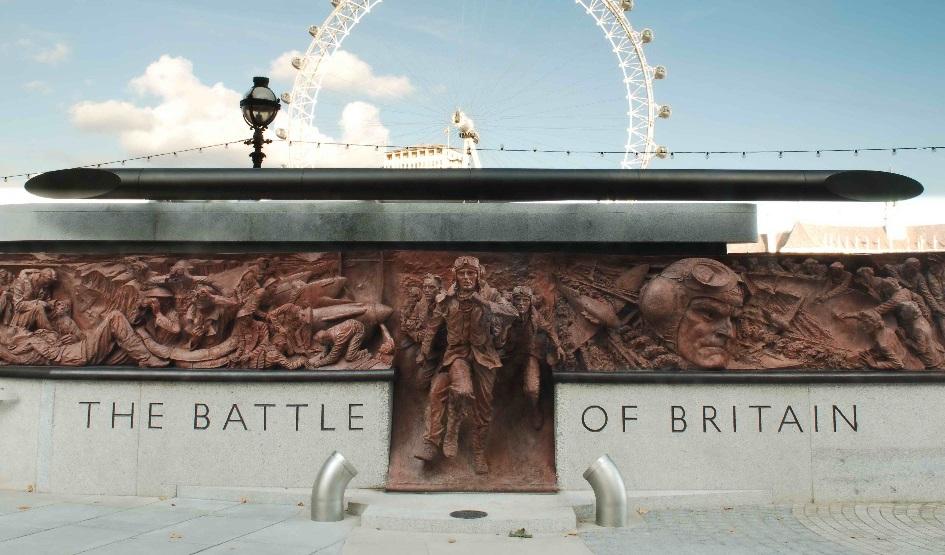
Today, the Battle of Britain is commemorated through memorials, museums, and annual remembrance ceremonies. The Battle of Britain Memorial honors the airmen who fought in the campaign, while restored Spitfires and Hurricanes continue to fly at commemorative events, reminding new generations of the sacrifices made in defense of freedom.
The battle also remains a case study in military strategy, technological innovation, and leadership, illustrating how determination, effective planning, and national unity can overcome seemingly superior forces.
Conclusion
The Battle of Britain was much more than an aerial contest between two air forces. It was a struggle for the survival of a nation and a pivotal moment in world history. Against formidable odds, the Royal Air Force, supported by radar operators, ground crews, women in auxiliary services, and resilient civilians, successfully defended the United Kingdom from Nazi Germany’s assault.
By denying the Luftwaffe control of the skies, Britain thwarted Hitler’s invasion plans and ensured that the fight against tyranny would continue. The courage of “the Few,” combined with technological innovation and steadfast national resolve, changed the course of the Second World War. More than eight decades later, the Battle of Britain continues to stand as a powerful symbol of resilience, sacrifice, and the enduring defense of freedom.
Leave a Reply