

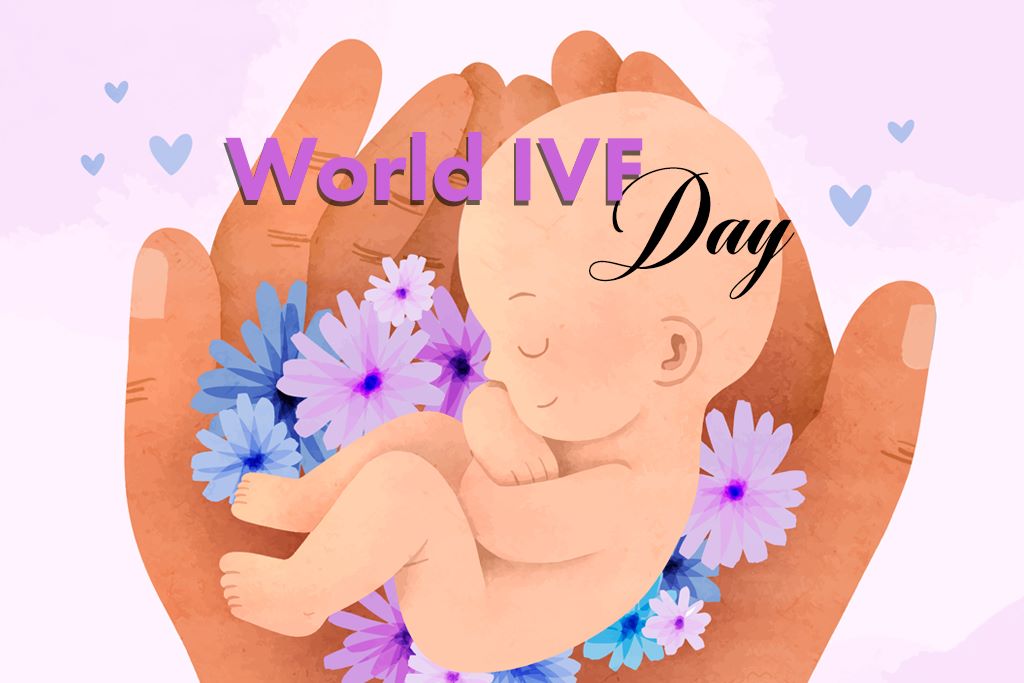
Celebrating Hope, Science, and the Gift of Parenthood
World IVF Day, observed annually on July 25, commemorates one of the greatest milestones in modern medical science—the birth of Louise Joy Brown on July 25, 1978, the world’s first baby conceived through In Vitro Fertilization (IVF). Her birth in Oldham, England, revolutionized reproductive medicine and opened the doors of hope for millions of couples struggling with infertility.
Today, more than 12 million babies have been born worldwide through IVF and other assisted reproductive technologies (ART), making World IVF Day not only a celebration of scientific achievement but also a tribute to the resilience, courage, and dreams of families who have walked the difficult journey of infertility.
What Is World IVF Day?
World IVF Day is dedicated to:
- Raising awareness about infertility.
- Educating the public about assisted reproductive technologies.
- Celebrating scientific advancements in fertility medicine.
- Supporting individuals and couples facing fertility challenges.
- Recognizing the contributions of doctors, embryologists, nurses, researchers, and counselors working in reproductive healthcare.
The observance also encourages society to replace stigma with compassion and understanding, acknowledging that infertility is a medical condition rather than a personal failure.
The Meaning of IVF
IVF (In Vitro Fertilization) literally means “fertilization in glass.”
Unlike natural conception, where fertilization occurs inside the woman’s fallopian tube, IVF involves fertilizing an egg with sperm in a carefully controlled laboratory environment. The resulting embryo is then transferred into the uterus to establish pregnancy.
Although commonly called a “test-tube baby” procedure, modern IVF uses sophisticated laboratory equipment rather than actual test tubes.
The History Behind World IVF Day
The journey toward IVF success required decades of research.
British physiologist Dr. Robert Edwards devoted much of his career to understanding human reproduction. Together with gynecologist Dr. Patrick Steptoe, who pioneered laparoscopic egg retrieval, Edwards developed techniques that eventually made IVF possible.
Their years of experimentation finally resulted in the birth of Louise Brown on July 25, 1978.
Louise’s birth captured global attention. While some initially questioned the ethics of the procedure, history has shown that IVF became one of the most important medical breakthroughs of the twentieth century.
For his pioneering work, Robert G. Edwards received the 2010 Nobel Prize in Physiology or Medicine.
Understanding Infertility
Infertility is generally defined as the inability to conceive after:
- 12 months of regular, unprotected intercourse (for women under 35)
- 6 months (for women aged 35 or older)
Infertility affects both men and women.
Common causes in women
- Ovulation disorders
- Polycystic Ovary Syndrome (PCOS)
- Blocked fallopian tubes
- Endometriosis
- Premature ovarian insufficiency
- Uterine abnormalities
- Age-related decline in egg quality
Common causes in men
- Low sperm count
- Poor sperm motility
- Abnormal sperm morphology
- Hormonal disorders
- Genetic conditions
- Varicocele
- Previous infections or injuries
Sometimes the cause remains unexplained despite extensive testing.
How IVF Works
The IVF process consists of several carefully coordinated stages.
1. Ovarian Stimulation
The woman receives hormone injections to stimulate the ovaries to produce multiple mature eggs rather than the single egg normally released each month.
Doctors closely monitor follicle development through ultrasound scans and blood tests.
2. Egg Retrieval
Once the eggs mature, they are collected using a minor surgical procedure guided by ultrasound.
This procedure usually takes about 20–30 minutes and is performed under light anesthesia or sedation.
3. Sperm Collection
A semen sample is obtained from the male partner or donor.
The healthiest sperm are selected for fertilization.
4. Fertilization
Eggs and sperm are combined in the laboratory.
Sometimes a single sperm is directly injected into an egg using Intracytoplasmic Sperm Injection (ICSI), especially in cases of severe male infertility.
5. Embryo Culture
The fertilized eggs develop into embryos over 3–5 days.
Embryologists carefully monitor their growth and quality.
6. Embryo Transfer
One or occasionally two embryos are transferred into the uterus through a thin catheter.
The procedure is usually painless and does not require anesthesia.
7. Pregnancy Test
Approximately two weeks later, a blood test determines whether implantation has occurred and pregnancy has been achieved.
Who Can Benefit from IVF?
IVF may be recommended for:
- Blocked or damaged fallopian tubes
- Severe male-factor infertility
- Endometriosis
- Ovulation disorders
- Unexplained infertility
- Genetic disorders requiring embryo testing
- Women with diminished ovarian reserve
- Same-sex couples
- Single individuals wishing to become parents
Advances in IVF Technology
Modern fertility medicine has progressed tremendously.
ICSI
A single sperm is injected directly into the egg, improving outcomes in severe male infertility.
Embryo Freezing
Cryopreservation allows embryos to be stored safely for future use.
Egg Freezing
Women can preserve fertility before cancer treatment or delay childbearing for personal or medical reasons.
Blastocyst Culture
Embryos are grown for five to six days before transfer, often improving implantation rates.
Preimplantation Genetic Testing (PGT)
Embryos can be screened for certain genetic abnormalities before implantation.
Time-Lapse Embryo Imaging
Continuous monitoring helps embryologists select embryos with the greatest developmental potential.
Artificial Intelligence
AI-assisted embryo assessment is increasingly being explored to support embryo selection and improve clinical decision-making.
Success Rates
IVF success depends on several factors, including:
- Woman’s age
- Egg quality
- Sperm quality
- Underlying cause of infertility
- Embryo quality
- Uterine health
- Lifestyle factors
Women under 35 generally have higher success rates than older age groups, although individual outcomes vary widely.
Emotional Challenges
Infertility is not only a medical issue but also an emotional journey.
Many couples experience:
- Anxiety
- Depression
- Financial stress
- Feelings of isolation
- Relationship strain
- Grief after unsuccessful treatment cycles
Support from counselors, family members, healthcare professionals, and support groups can play an important role in helping individuals cope during treatment.
Ethical Considerations
IVF raises important ethical discussions in areas such as:
- Embryo storage and disposal
- Donor eggs and donor sperm
- Surrogacy
- Genetic testing
- Multiple embryo transfer
- Access and affordability
Different countries regulate IVF according to their legal, cultural, and ethical frameworks.
The Catholic Perspective on IVF
The Catholic Church deeply values every human life from the moment of conception and expresses profound compassion toward couples experiencing infertility. At the same time, the Church teaches that In Vitro Fertilization is morally problematic because it separates procreation from the marital act and often involves the creation, selection, freezing, or loss of embryos, each regarded as a unique human life deserving full dignity.
Church documents such as Donum Vitae (1987) and Dignitas Personae (2008) encourage approaches that respect both the dignity of human life and the integrity of marriage. They also support ethical medical treatments that assist natural conception without replacing the marital act. The Church calls Christian communities to accompany infertile couples with compassion, prayer, and practical support, recognizing the profound suffering that infertility can bring.
Common Myths About IVF
Myth: IVF always results in twins.
Fact: Modern IVF often recommends transferring a single embryo, reducing the chance of multiple pregnancies.
Myth: IVF babies are unhealthy.
Fact: Millions of children conceived through IVF have grown into healthy adults. While certain risks exist, most IVF pregnancies result in healthy births.
Myth: IVF guarantees pregnancy.
Fact: IVF improves the chances of conception but does not guarantee success.
Myth: Infertility is only a woman’s problem.
Fact: Male factors contribute to infertility in a significant proportion of cases, and both partners should be evaluated.
World IVF Day Activities
Hospitals, fertility clinics, and health organizations observe the day through:
- Public awareness campaigns
- Educational seminars
- Free fertility consultations
- Health screening camps
- Patient success stories
- Scientific conferences
- Social media campaigns promoting infertility awareness
Inspiring Quotes
“Every child begins with hope.”
“Science has made miracles possible, but love is what makes a family.”
“Infertility is a diagnosis, not a definition.”
“Hope grows stronger when compassion meets innovation.”
Conclusion
World IVF Day is a celebration of one of medicine’s most remarkable achievements and a reminder of the hope that scientific progress can bring to families longing for children. Since the birth of Louise Brown in 1978, IVF has transformed reproductive healthcare and helped millions experience the joy of parenthood.
At the same time, the observance invites society to approach infertility with greater empathy and understanding. It encourages informed discussions about reproductive health, ethical considerations, and the importance of supporting those whose journey to parenthood may be long and emotionally demanding.
Whether viewed through the lens of science, medicine, ethics, or faith, World IVF Day ultimately highlights the enduring human desire to nurture new life and the importance of treating every person and every human life with dignity, compassion, and respect.
Leave a Reply