

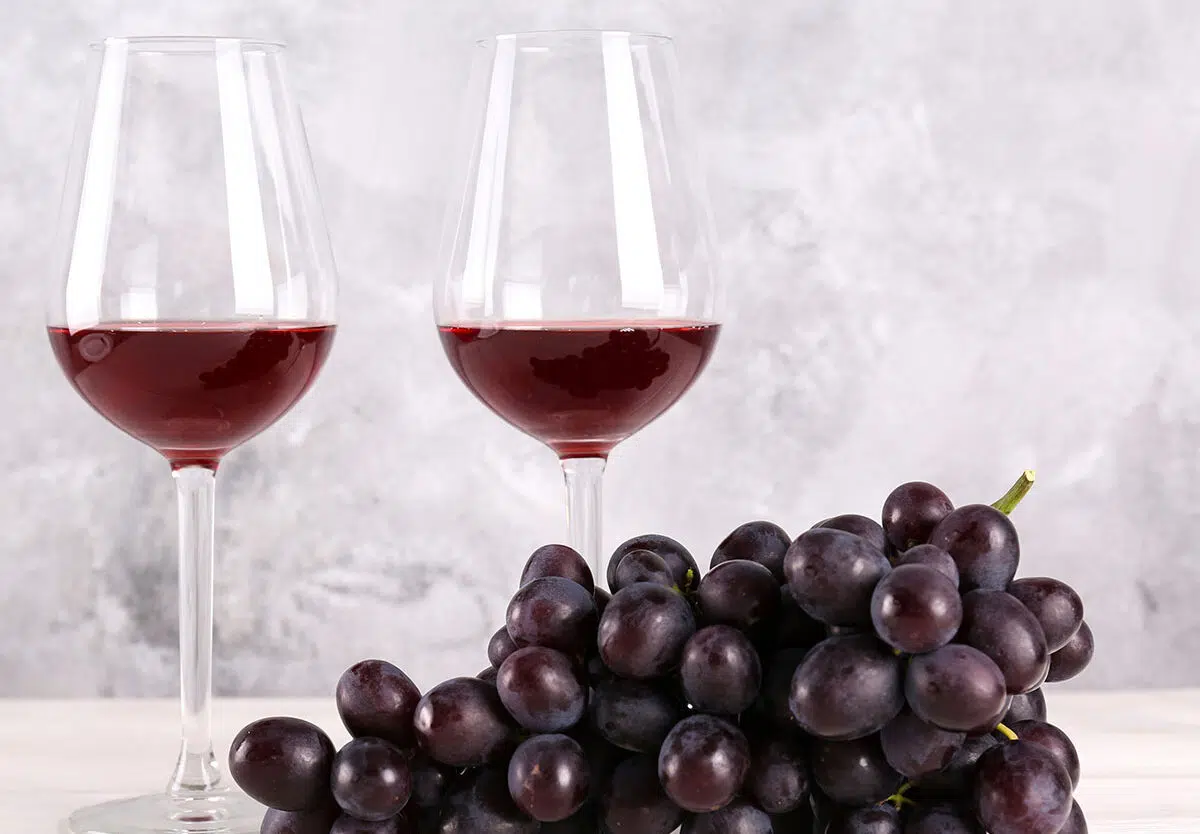
Celebrating One of the World’s Most Famous Wine Grapes
International Cabernet Sauvignon Day is observed annually on September 3, celebrating one of the world’s best-known and most widely planted wine-grape varieties. The occasion provides an opportunity to explore the history, geography, science, culture and enduring popularity of Cabernet Sauvignon.
Cabernet Sauvignon is particularly associated with Bordeaux, France, but today it is cultivated in wine-growing regions across the globe. UC Davis describes it as one of the most important wine-grape cultivars in the world. (Foundation Plant Services)
Note: September 3 is widely promoted as Cabernet Sauvignon Day, but unlike internationally designated UN observances, it is a wine-industry and popular-culture observance rather than an official United Nations international day.
🍇 What Is Cabernet Sauvignon?
Cabernet Sauvignon is a dark-skinned grape variety of Vitis vinifera used primarily to make red wine.
It is renowned for producing wines that can be:
- Deeply colored
- Full-bodied
- Tannic
- Aromatic
- Rich in dark-fruit flavors
- Suitable for aging
- Excellent both as a varietal wine and as a blending component
The grape has become particularly famous for its role in the great red wines of Bordeaux. UC Davis notes that Cabernet Sauvignon has been cultivated in France for centuries and became well established in Bordeaux’s Médoc and Graves areas by the 18th century.
🏰 The Mysterious Origins of Cabernet Sauvignon
For centuries, the precise origins of Cabernet Sauvignon were uncertain.
Its history was eventually clarified through modern genetic science.
In 1997, researchers John Bowers and Carole Meredith at the University of California, Davis, used DNA fingerprinting to demonstrate that Cabernet Sauvignon is the offspring of two Bordeaux grape varieties:
🍷 Cabernet Franc × Sauvignon Blanc = Cabernet Sauvignon
This was a remarkable discovery because Cabernet Franc is a red grape, while Sauvignon Blanc is a white grape.
Researchers concluded that the Cabernet Sauvignon vine probably arose from a spontaneous crossing between the two varieties, probably sometime in the 17th century. (UC Davis)
This discovery solved a centuries-old mystery about one of the world’s most famous wine grapes.
🧬 A 400-Year-Old Genetic Story
The story became even more fascinating with modern research.
A 2025 UC Davis study reported that Cabernet Sauvignon still carries molecular traces of its ancestry centuries after its origin. Because grapevines are commonly propagated through cuttings rather than seeds, today’s vines are genetically extremely similar to their historic ancestors, apart from mutations. (UC Davis)
In other words, the Cabernet Sauvignon growing in vineyards today retains an extraordinary biological connection with the grape that emerged centuries ago.
🌍 Where Is Cabernet Sauvignon Grown?
Cabernet Sauvignon has spread far beyond its French homeland.
Major growing regions include:
🇫🇷 France
Especially Bordeaux, where Cabernet Sauvignon is fundamental to many classic red blends.
🇺🇸 United States
Particularly:
- Napa Valley
- Sonoma County
- Washington State
- California’s Central Coast
California played a particularly important role in establishing Cabernet Sauvignon as a premium wine variety outside France.
🇨🇱 Chile
Chile has become internationally famous for Cabernet Sauvignon, benefiting from diverse climates and vineyard conditions.
🇦🇺 Australia
Cabernet Sauvignon is important in regions such as:
- Coonawarra
- Margaret River
- Barossa Valley
🇦🇷 Argentina
Although Argentina is especially famous for Malbec, Cabernet Sauvignon is also widely cultivated.
🇿🇦 South Africa
Cabernet Sauvignon is an important variety in several South African wine regions.
🇮🇹 Italy
It is widely grown in several Italian regions, particularly Tuscany, where it became an important component of internationally recognized wines.
Cabernet Sauvignon is now grown on every continent except Antarctica, according to UC Davis. (UC Davis)
🍷 What Does Cabernet Sauvignon Taste Like?
The exact flavor depends heavily on climate, soil, vineyard practices, winemaking and aging.
Common characteristics include:
🍒 Fruit
- Blackcurrant
- Blackberry
- Black cherry
- Plum
- Dark berries
🌿 Herbal notes
- Mint
- Eucalyptus
- Green herbs
- Cedar
🌶️ Spice
- Black pepper
- Baking spices
- Cocoa
- Tobacco
🪵 Aging characteristics
Oak aging can contribute notes such as:
- Vanilla
- Cedar
- Toast
- Smoke
- Chocolate
Young Cabernet Sauvignon can be strongly tannic and structured. With appropriate aging, its tannins can soften and its aromas become more complex.
🌱 Why Is Cabernet Sauvignon So Popular?
Several characteristics have contributed to its global success.
1. Strong natural structure
Cabernet Sauvignon generally produces wines with significant tannin and acidity, qualities that can support aging.
2. Thick skins
The grape has relatively thick skins, contributing to deep color and tannin.
3. Long ripening period
Cabernet Sauvignon is a late-budding and late-ripening variety. This can be advantageous in some cooler climates because later budbreak can reduce certain spring-frost risks. (Foundation Plant Services)
4. Adaptability
It can perform successfully in numerous wine-growing regions, although climate and vineyard conditions strongly influence its quality.
5. Aging potential
High-quality Cabernet Sauvignon wines can develop considerable complexity over time.
6. Excellent blending ability
Cabernet Sauvignon is one of the great blending grapes. In Bordeaux, it is commonly combined with varieties such as:
- Merlot
- Cabernet Franc
- Petit Verdot
- Malbec
The combination allows winemakers to balance structure, fruit, aroma and texture.
🇫🇷 Cabernet Sauvignon and Bordeaux
Cabernet Sauvignon’s identity is inseparable from Bordeaux.
The grape became particularly important on Bordeaux’s Left Bank, including the Médoc and Graves.
The gravelly soils of these areas proved particularly suitable for the variety. UC Davis notes that Cabernet Sauvignon and Merlot became dominant varieties in Bordeaux, although their preferred soils and locations differ.
Many of the world’s most celebrated red wines are Bordeaux blends in which Cabernet Sauvignon plays a central role.
🇺🇸 Cabernet Sauvignon and California
Cabernet Sauvignon also has a fascinating history in California.
French Bordeaux varieties were imported into California during the 19th century. UC Davis records early Cabernet Sauvignon plantings and subsequent research into the variety’s performance in California.
The grape eventually became particularly associated with Napa Valley, helping establish California as one of the world’s great producers of premium Cabernet Sauvignon.
The famous 1976 Judgment of Paris wine competition further transformed the international reputation of California wine, with a California Cabernet Sauvignon from Stag’s Leap Wine Cellars winning the red-wine competition.
🧪 Cabernet Sauvignon and Science
Cabernet Sauvignon has also become an important subject of scientific research.
The 1997 DNA study by Bowers and Meredith demonstrated its parentage. UC Davis subsequently became a major center for research into grape genetics, viticulture and wine science. (PubMed)
More recent genomic research has investigated the grape’s genetic characteristics and potential implications for understanding how perennial crops respond to environmental stresses such as heat and drought. (UC Davis)
Thus, Cabernet Sauvignon is not merely a cultural icon—it is also an important subject in plant genetics, agriculture and viticulture.
🍽️ Cabernet Sauvignon and Food
Cabernet Sauvignon’s body, acidity and tannins make it particularly suitable for rich foods.
Common pairings include:
- Grilled steak
- Roast beef
- Lamb
- Beef stew
- Burgers
- Roast vegetables
- Mushroom dishes
- Hard cheeses
- Rich pasta dishes
The tannins can work particularly well with protein-rich foods.
For responsible enjoyment, wine should be consumed only by adults of legal drinking age and in accordance with local laws and health guidance.
🌎 Cabernet Sauvignon Around the World
One of the most remarkable things about Cabernet Sauvignon is how differently it expresses itself in different regions.
Bordeaux often emphasizes structure, savory complexity and aging potential.
Napa Valley is famous for powerful, fruit-forward examples.
Chile is known for distinctive Cabernet Sauvignon from regions such as Maipo Valley.
Australia produces styles ranging from powerful to elegant, depending on region.
South Africa offers its own interpretations influenced by local climate and soils.
This regional diversity is one of the reasons wine enthusiasts can spend a lifetime exploring Cabernet Sauvignon.
🏆 Cabernet Sauvignon and the World of Fine Wine
Cabernet Sauvignon has become almost synonymous with premium red wine.
It is found in:
- Historic Bordeaux estates
- Napa Valley wineries
- Boutique vineyards
- International wine collections
- Restaurant wine lists
- Wine competitions
- Wine education programs
Its reputation rests on a combination of history, structure, longevity, adaptability and distinctive flavor.
UC Davis calls it one of the world’s most important wine-grape cultivars and notes its long association with Bordeaux. (Foundation Plant Services)
🔬 15 Interesting Facts About Cabernet Sauvignon
- Cabernet Sauvignon is a red wine grape variety.
- It belongs to the species Vitis vinifera.
- Its historic association is strongest with Bordeaux, France.
- It was growing in Bordeaux by at least the 17th century. (PubMed)
- Its parents are Cabernet Franc and Sauvignon Blanc.
- Its parentage was confirmed through DNA fingerprinting in 1997. (UC Davis)
- The crossing was probably spontaneous, rather than the result of deliberate breeding. (UC Davis)
- Cabernet Sauvignon is a late-ripening grape.
- Its thick skins contribute to its color and tannic structure.
- It is one of the principal varieties used in Bordeaux blends.
- It is extensively grown in California.
- It is also important in Chile, Australia, South Africa, Argentina and Italy.
- UC Davis reports that it is cultivated on every continent except Antarctica. (UC Davis)
- Grapevines are commonly propagated through cuttings, meaning modern Cabernet Sauvignon vines retain a close genetic connection to historic vines. (UC Davis)
- Cabernet Sauvignon is celebrated for wines that can combine fruit, tannin, acidity, complexity and aging potential.
📅 How to Celebrate International Cabernet Sauvignon Day
For adults who choose to drink alcohol, the day can be an opportunity to explore the grape responsibly.
🍇 Learn
Read about the history of Cabernet Sauvignon and its Bordeaux origins.
🌎 Explore different regions
Compare examples from different wine-producing regions and learn how climate affects the grape.
🧀 Pair it with food
Explore classic food pairings such as steak, lamb, mushrooms or mature cheeses.
🧬 Discover the science
Learn about the 1997 DNA discovery that revealed Cabernet Sauvignon’s surprising parentage.
📚 Visit a vineyard or wine museum
A vineyard visit can provide insight into grape cultivation, harvesting and winemaking.
🥂 Enjoy responsibly
For adults of legal drinking age, moderation and responsible consumption should always be part of the celebration.
🌿 Cabernet Sauvignon and the Future
The future of Cabernet Sauvignon will increasingly involve climate, water availability, disease resistance and sustainable viticulture.
Climate change presents challenges for grape-growing regions because temperature, drought and extreme weather can affect ripening and wine quality. Modern genetic and viticultural research is therefore exploring ways to understand and improve the resilience of perennial crops.
Recent UC Davis research into Cabernet Sauvignon’s molecular characteristics could contribute to broader understanding of how grapevines retain biological responses to environmental stress. (UC Davis)
🍷 The Enduring Legacy of Cabernet Sauvignon
From an apparently accidental crossing of Cabernet Franc and Sauvignon Blanc centuries ago, Cabernet Sauvignon has become one of the defining grapes of the international wine world.
Its journey is remarkable:
Bordeaux vineyard → mysterious grape → DNA discovery → global cultivation → modern genomic research
Its story combines agriculture, genetics, geography, history, culture and human craftsmanship.
That makes International Cabernet Sauvignon Day more than an occasion to appreciate a famous red wine. It is also an opportunity to appreciate the extraordinary history of a plant variety that has traveled from the vineyards of southwestern France to vineyards around the world.
International Cabernet Sauvignon Day — September 3
Celebrating the grape, the vineyard, the science, the heritage and the people behind one of the world’s most famous wines. 🍇🍷


Leave a Reply