

Honouring the Men and Women Who Keep the World Supplied
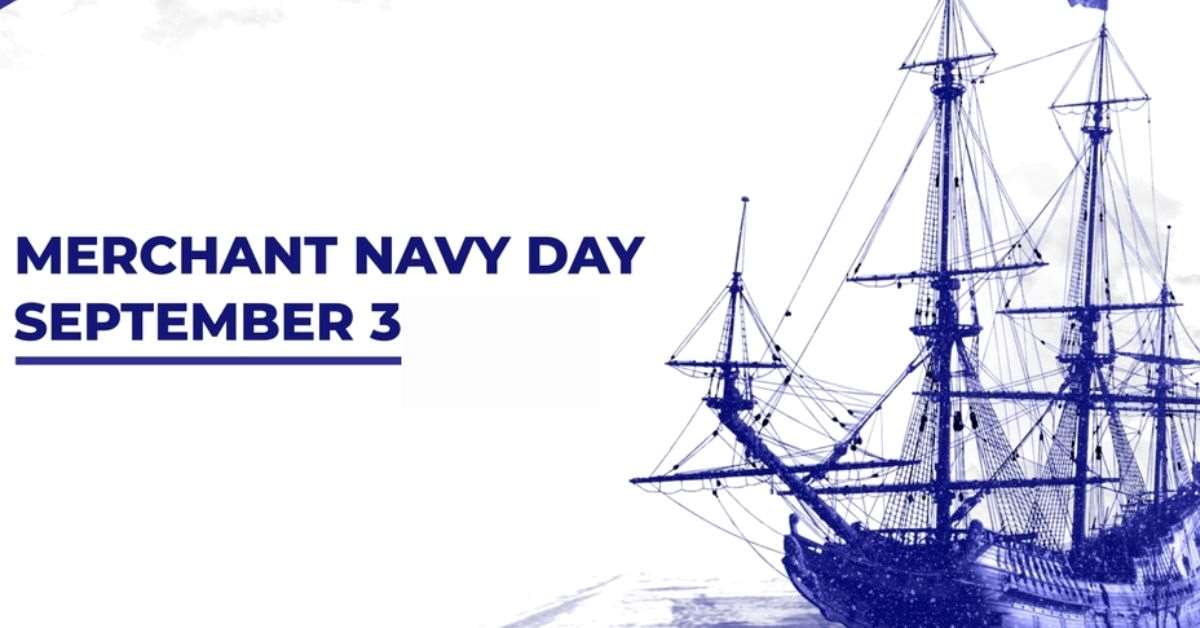
Merchant Navy Day is observed annually on September 3, particularly in the United Kingdom and Commonwealth countries, to honour the men and women of the Merchant Navy and remember those who lost their lives serving aboard merchant ships, especially during wartime.
Although merchant mariners are civilians rather than members of a country’s armed forces, their work has often placed them directly in the path of war. During the two World Wars, merchant ships carried food, fuel, ammunition, troops, raw materials and other essential supplies across dangerous seas.
Merchant Navy Day therefore commemorates both maritime service and sacrifice.
🌊 What Is the Merchant Navy?
The term Merchant Navy refers broadly to the commercial shipping fleet of a country and the civilian mariners who operate it.
Unlike a navy, whose principal purpose is military defence, merchant ships are involved in transporting goods and people.
They carry:
- Food and agricultural products
- Petroleum and other fuels
- Coal and minerals
- Machinery
- Manufactured goods
- Vehicles
- Containers
- Raw materials
- Humanitarian supplies
Modern international trade depends enormously on commercial shipping. Much of the world’s merchandise travels by sea because ships can transport enormous quantities of cargo over long distances.
📅 Why Is Merchant Navy Day Celebrated on September 3?
September 3 has a particularly important connection with the Merchant Navy because it was on September 3, 1939, that Britain entered the Second World War.
On that very day, the British passenger liner SS Athenia was torpedoed by the German submarine U-30 in the Atlantic Ocean.
The ship was carrying passengers from Britain, Canada and the United States, among others. More than 100 people died.
The sinking demonstrated almost immediately the dangers that civilian shipping would face during the new war.
Merchant ships would subsequently become vital targets and many merchant mariners would lose their lives while keeping Britain’s supply lines open.
⚓ Merchant Mariners in the First World War
The Merchant Navy played a crucial role during World War I (1914–1918).
Britain was heavily dependent on imported food, fuel and raw materials. Merchant ships brought these necessities across the Atlantic and other sea routes.
German submarines attempted to disrupt these supply lines through U-boat warfare.
Merchant ships therefore faced:
- Torpedo attacks
- Mines
- Surface attacks
- Storms
- Long voyages
- Enemy aircraft
- Submarine warfare
Thousands of merchant seafarers lost their lives.
Their contribution demonstrated that modern warfare depended not only on soldiers on battlefields but also on people keeping essential supply networks functioning.
🌍 The Merchant Navy in World War II
The role of merchant mariners became even more critical during World War II.
Britain was an island nation and depended heavily on ships to bring supplies from overseas.
Merchant vessels transported:
🍞 Food
Britain needed enormous quantities of imported food to sustain its population.
⛽ Fuel
Oil and other fuels were essential for ships, aircraft, tanks, trucks and industry.
⚙️ Raw materials
Industrial production depended upon imported materials.
🪖 Military supplies
Merchant ships carried equipment, ammunition and other supplies required by Allied forces.
👥 Personnel
Some merchant vessels also transported troops and military personnel.
Without the merchant shipping system, Britain’s ability to continue the war would have been severely compromised.
🚢 The Battle of the Atlantic
One of the greatest dangers faced by merchant mariners was the Battle of the Atlantic.
From 1939 to 1945, German U-boats attempted to cut Britain’s maritime supply routes.
Their objective was straightforward:
Sink enough Allied merchant shipping to prevent Britain from receiving the supplies it needed.
Convoys became an essential defensive strategy.
Merchant ships travelled in groups escorted by warships, reducing their vulnerability to submarine attacks.
Despite these measures, the losses were enormous.
Many merchant mariners sailed repeatedly into waters where they knew they could be attacked.
🕯️ Remembering Those Who Never Returned
Merchant Navy Day is fundamentally a day of remembrance.
Thousands of merchant seafarers died during the two World Wars.
Many were killed when their ships were:
- Torpedoed
- Mined
- Bombed
- Shelled
- Set on fire
Others died from exposure after ships sank in freezing waters.
Their sacrifices are commemorated at maritime memorials and war graves around the world.
One of the best-known British memorials is the Tower Hill Memorial in London, which commemorates merchant seamen and fishermen who died during the World Wars and have no known grave.
🇬🇧 The Red Ensign
One of the most recognizable symbols associated with Britain’s Merchant Navy is the Red Ensign.
It is a red flag bearing the Union Flag in the upper hoist corner.
The Red Ensign is traditionally flown by British merchant ships and is sometimes called the Red Duster.
On Merchant Navy Day, buildings and vessels may display the Red Ensign as a symbol of maritime service and remembrance.
🎖️ Merchant Navy Day and the Merchant Navy Medal
The service of merchant mariners has also been formally recognized through British honours.
The Merchant Navy Medal for Meritorious Service recognizes outstanding service by members of the Merchant Navy.
It reflects the continuing importance of the profession and the dedication required to work at sea.
⚓ Life as a Merchant Mariner
Merchant mariners often spend weeks or months away from their families.
Their work can involve:
- Long periods at sea
- Irregular working hours
- Difficult weather
- Heavy machinery
- Dangerous cargo
- Strict safety procedures
- International travel
- Separation from family
Modern ships are highly sophisticated workplaces requiring specialized knowledge.
Crew members may work as:
👨✈️ Deck officers
Responsible for navigation, cargo operations and deck management.
⚙️ Marine engineers
Responsible for engines, machinery and technical systems.
🧑🍳 Catering crew
Responsible for food and accommodation services.
🔧 Ratings and technical personnel
Perform essential maintenance, deck and operational duties.
Together they form the crew that keeps commercial shipping functioning.
🌐 The Merchant Navy in the Modern World
The role of merchant shipping has changed dramatically since the World Wars.
Today’s merchant fleet includes:
- Container ships
- Oil tankers
- LNG carriers
- Bulk carriers
- Car carriers
- Refrigerated ships
- General cargo vessels
- Passenger ships
- Specialized heavy-lift vessels
Modern shipping is increasingly automated and technologically sophisticated.
Ships use satellite navigation, digital communications, sophisticated engines, automated cargo systems and advanced safety equipment.
Yet the fundamental purpose remains the same:
Moving essential goods across the world’s oceans.
📦 Why Merchant Shipping Matters to the Global Economy
The global economy would be impossible without maritime transport on its current scale.
International shipping connects producers and consumers across continents.
For example:
Asia → Europe → Africa → Americas
Raw materials, food, energy products, manufactured goods and countless other commodities move through this global maritime network.
A disruption to major shipping routes can affect:
- Food supplies
- Energy prices
- Manufacturing
- Retail goods
- International trade
- Supply chains
The COVID-19 pandemic and subsequent supply-chain disruptions demonstrated how important maritime transport remains to modern civilization.
🇮🇳 Merchant Navy and India
India has a long maritime tradition stretching back thousands of years.
Today, Indian seafarers form an important part of the international maritime workforce.
Indian merchant mariners work aboard ships operated by companies around the world.
They serve as:
- Captains
- Navigators
- Engineers
- Deck officers
- Electro-technical officers
- Ratings
- Catering personnel
- Specialized maritime professionals
India’s maritime sector is therefore an important source of employment and plays a significant role in international shipping.
Merchant Navy Day can also provide an opportunity to recognize the contribution of Indian seafarers and maritime families to global commerce.
🌊 The Human Side of Merchant Navy Service
Behind every merchant ship is a human story.
A sailor may leave home knowing that the voyage could last months.
Families wait for phone calls and messages from ships thousands of kilometres away.
During wartime, families sometimes waited without knowing whether a loved one had survived a sinking.
Even in peacetime, seafarers face isolation, storms, fatigue and occupational hazards.
Merchant Navy Day reminds us that global trade is not simply about ships, ports and containers.
It is about people.
🕯️ How Merchant Navy Day Is Observed
In Britain and elsewhere, September 3 may include:
- Flag-raising ceremonies
- Memorial services
- Wreath-laying ceremonies
- Church services
- Maritime exhibitions
- Educational programmes
- Merchant Navy reunions
- Remembrance ceremonies
- Displaying the Red Ensign
Families of former merchant mariners may also use the day to remember relatives who served at sea.
🌟 15 Interesting Facts About the Merchant Navy
- Merchant Navy Day is observed on September 3.
- The date is closely connected with Britain’s entry into World War II in 1939.
- Merchant mariners are generally civilian seafarers, not naval personnel.
- Merchant ships transport enormous quantities of international trade.
- Merchant vessels played a critical role in both World Wars.
- German U-boats were a major threat to Allied merchant shipping during World War II.
- Convoys were used to protect merchant ships from submarine attacks.
- The Red Ensign is closely associated with the British Merchant Navy.
- Merchant ships carry food, fuel, raw materials and manufactured goods.
- Modern merchant ships can be among the largest vessels ever constructed.
- Merchant mariners may spend months away from their families.
- The profession requires specialized training and certification.
- Merchant shipping remains fundamental to the global economy.
- Merchant Navy memorials commemorate thousands of mariners who died at sea.
- Merchant Navy Day celebrates both service and sacrifice.
🕊️ Merchant Navy Day: A Day of Gratitude
It is easy to think of international trade as an abstract system of ports, containers, markets and supply chains.
Merchant Navy Day puts a human face on that system.
Every container ship, tanker or cargo vessel depends upon people who navigate, maintain, operate and protect the ship.
During wartime, merchant mariners risked their lives to ensure that essential supplies reached their destinations.
During peacetime, they continue to work long and demanding voyages connecting nations and economies.
⚓ A Message for Merchant Navy Day
On Merchant Navy Day, we remember the men and women who sailed the world’s oceans in service of their nations and humanity.
We remember those who crossed dangerous seas during wartime.
We remember those who never returned home.
We honour the courage of merchant mariners who carried food, fuel, medicines, equipment and other necessities when they were desperately needed.
And we thank today’s seafarers whose work keeps the global economy moving.
**We remember their sacrifice.
We honour their service.
We salute the seafarers of the Merchant Navy.**
September 3 — Merchant Navy Day ⚓🌊


Leave a Reply