

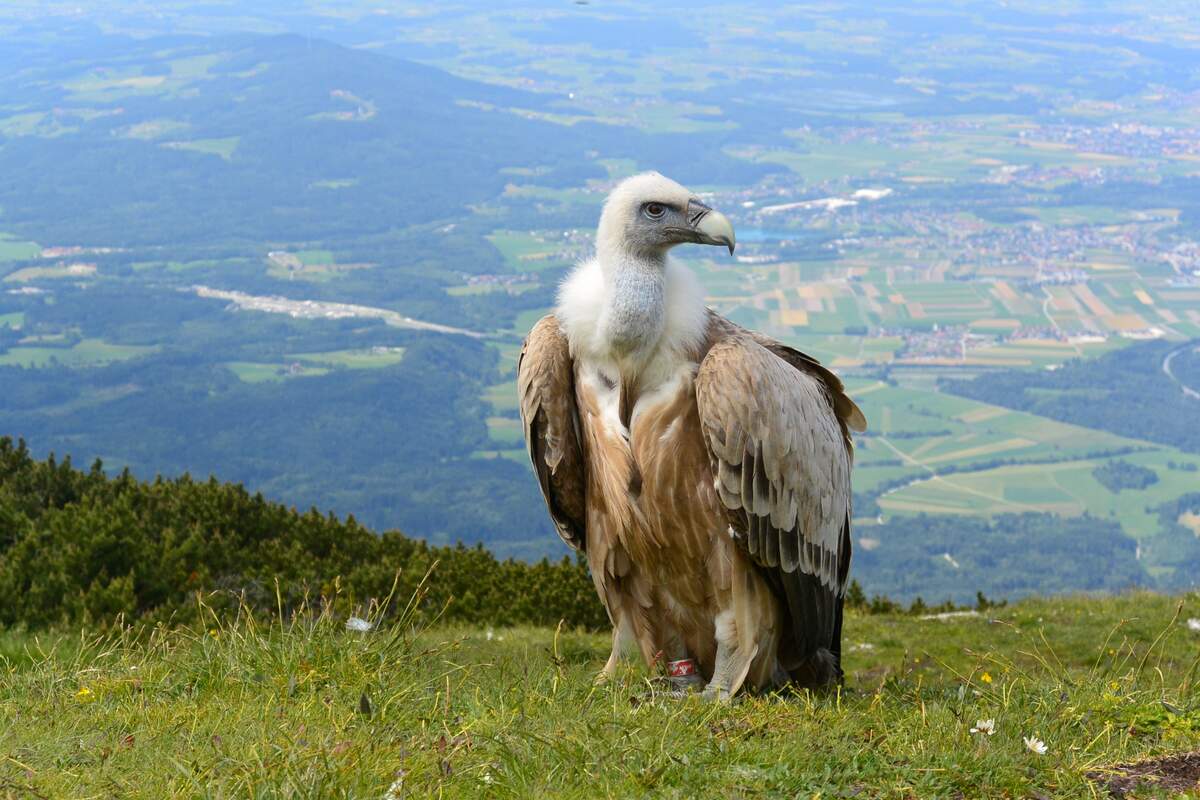
International Vulture Awareness Day (IVAD) is an annual global observance dedicated to increasing public awareness about vultures, their ecological importance, the threats they face, and the urgent need for their conservation.
It is observed on the first Saturday of September every year. In 2026, International Vulture Awareness Day falls on September 5.
Vultures are sometimes associated with death and decay, but ecologically they are among nature’s most important clean-up crews. By rapidly consuming animal carcasses, they help prevent the spread of disease and recycle nutrients back into ecosystems.


🌍 What Is International Vulture Awareness Day?
International Vulture Awareness Day brings together wildlife organizations, conservationists, zoos, researchers, governments, schools and nature lovers to celebrate vultures and educate people about their importance.
The day originated from cooperation between the Bird of Prey Programme of the Hawk Conservancy Trust in the United Kingdom and the Endangered Wildlife Trust’s Birds of Prey Programme in South Africa. It subsequently developed into an international conservation-awareness event.
The central message is simple:
Saving vultures means protecting healthy ecosystems and human communities.
🦅 Why Are Vultures Important?
Vultures perform a specialized ecological service that few other animals can provide as efficiently.
1. They clean up dead animals
Vultures specialize in feeding on carrion—the bodies of dead animals. Their excellent eyesight and ability to soar over large distances allow them to locate carcasses quickly.
A group of vultures can consume a carcass remarkably rapidly, leaving little organic material behind.
2. They reduce the spread of disease
This is perhaps their most important contribution.
Dead animals can harbor harmful microorganisms. Vultures’ digestive systems are extraordinarily adapted to consuming decaying meat, and their highly acidic stomachs can destroy many pathogens.
By removing carcasses from the environment, vultures can help limit the spread of diseases among wildlife, livestock and, indirectly, humans.
3. They recycle nutrients
Vultures return nutrients from dead animals to the ecosystem. In this way, they are an important part of nature’s recycling system.
4. They help keep ecosystems clean
Without scavengers, carcasses would remain in the environment for much longer. Vultures help keep landscapes cleaner and reduce the accumulation of rotting animal remains.
5. They save resources
Nature’s scavenging system is extremely efficient. Vultures can process animal remains without the need for artificial waste disposal, transportation or treatment.
🦅 Vultures Around the World
There are more than 20 species of vultures worldwide, broadly divided into Old World vultures of Africa, Europe and Asia and New World vultures of the Americas.
Some notable species include:
- White-rumped Vulture (Gyps bengalensis)
- Indian Vulture (Gyps indicus)
- Slender-billed Vulture (Gyps tenuirostris)
- Red-headed Vulture (Sarcogyps calvus)
- Egyptian Vulture (Neophron percnopterus)
- Griffon Vulture (Gyps fulvus)
- Cinereous Vulture (Aegypius monachus)
- Bearded Vulture (Gypaetus barbatus)
- Hooded Vulture (Necrosyrtes monachus)
- Lappet-faced Vulture (Torgos tracheliotos)
- Turkey Vulture (Cathartes aura)
- California Condor (Gymnogyps californianus)
The California Condor, although technically a vulture rather than a bird commonly called a “vulture,” is one of the world’s best-known examples of a species brought back from the brink of extinction through intensive conservation.
🇮🇳 Vultures and India
India has historically been home to enormous populations of vultures. They played a particularly important role around villages, towns and livestock-rearing communities.
Several species—including the White-rumped Vulture, Indian Vulture and Slender-billed Vulture—experienced catastrophic population declines beginning in the 1990s.
The principal cause was the veterinary drug diclofenac.
When vultures consumed the carcasses of livestock treated with diclofenac, the drug could cause acute kidney failure and death.
The discovery of this connection was one of the most important developments in modern Asian vulture conservation.
India subsequently prohibited veterinary diclofenac for livestock, and conservation programmes began focusing on vulture-safe drugs, captive breeding, habitat protection and public awareness.
💊 The Diclofenac Crisis
The Asian vulture crisis is one of the most dramatic wildlife population declines ever documented.
In the 1990s, researchers began noticing huge numbers of dead vultures across India, Pakistan and Nepal.
Scientists eventually identified veterinary diclofenac as the major cause.
The consequences were extraordinary.
Populations of several Gyps vultures declined by more than 95% in parts of South Asia.
The disappearance of vultures also created secondary ecological and public-health problems because carcasses that vultures would previously have consumed remained in the environment for longer.
This experience demonstrated an important conservation principle:
Protecting one species can also protect an entire ecological system.
🌿 Major Threats Facing Vultures
Vultures face different threats in different parts of the world.
💊 1. Poisoning
Poisoning is one of the greatest threats.
Poison may be deliberately used against predators such as lions, hyenas or jackals. Vultures feeding on poisoned carcasses can then die in large numbers.
💉 2. Veterinary drugs
Certain veterinary medicines can be fatal to vultures when the birds eat treated livestock carcasses.
⚡ 3. Electrocution
Power lines and electrical infrastructure can kill vultures through collisions or electrocution.
🏗️ 4. Habitat loss
Urbanization, agriculture, mining and other forms of development can destroy nesting and feeding habitats.
🚗 5. Road and infrastructure collisions
Vultures may be killed by vehicles or collide with infrastructure while feeding or flying.
🥩 6. Decline of food availability
Changes in livestock management, carcass disposal and land use can reduce the availability of safe food.
🪶 7. Illegal hunting and persecution
In some regions, vultures are killed for traditional beliefs, body parts or because of misconceptions about their role.
🌡️ 8. Climate and environmental changes
Changing climate conditions and alterations in ecosystems can affect food availability, breeding and migration.
🔬 Incredible Vulture Adaptations
Vultures have evolved remarkable characteristics that allow them to perform their ecological role.
👁️ Exceptional eyesight
Many vultures can spot carcasses from enormous distances while soaring high above the ground.
🦠 Powerful immune systems
Their bodies are adapted to dealing with microorganisms that would be dangerous to many other animals.
🧪 Highly acidic stomachs
Their digestive systems can break down highly decomposed food and destroy many pathogens.
🪽 Extraordinary flying ability
Vultures use thermals—columns of rising warm air—to soar with remarkably little energy expenditure.
Some species can travel enormous distances while searching for food.
🪶 Bare heads and necks
Many vultures have relatively bare heads and necks, which helps reduce contamination when feeding inside carcasses.
🦅 Vultures Are Not “Dirty Birds”
One of the objectives of International Vulture Awareness Day is to challenge negative stereotypes.
Vultures are often portrayed as ugly, dangerous or disgusting birds.
In reality, they are highly specialized animals performing an essential ecological service.
Their feeding behavior may look unpleasant to humans, but it is extremely valuable to nature.
What looks like death to us is recycling in nature.
🌳 Vulture Conservation
Successful conservation requires cooperation between governments, scientists, farmers, veterinarians and local communities.
Important measures include:
- Protecting nesting and roosting sites
- Preventing deliberate poisoning
- Promoting vulture-safe veterinary medicines
- Monitoring wild populations
- Establishing vulture conservation zones
- Captive breeding and reintroduction
- Protecting feeding areas
- Making power infrastructure safer
- Educating local communities
- Strengthening wildlife laws
- Conducting scientific research
🇮🇳 Vulture Conservation in India
India has developed several conservation initiatives to protect its declining vulture populations.
Among the important approaches are:
Vulture Safe Zones
These are landscapes where conservationists work with local communities and veterinarians to minimize the use of harmful veterinary drugs and create safer environments for vultures.
Captive breeding
Conservation breeding programmes have been established for critically threatened species such as the White-rumped, Indian and Slender-billed vultures.
Vulture restaurants
Some conservation programmes establish controlled feeding sites where vultures can obtain safe carcasses free from dangerous veterinary drugs.
These initiatives demonstrate how science and community participation can work together to protect endangered species.
📚 Interesting Facts About Vultures
- Vultures are found on every continent except Antarctica and Australia, although Australia has closely related scavenging birds rather than native true vultures.
- Vultures can fly for hours while using very little energy.
- Their excellent eyesight helps them locate food across huge areas.
- Some species have exceptionally powerful digestive systems.
- Vultures play an important role in controlling the accumulation of animal carcasses.
- Vultures are generally not predators; most species specialize in scavenging.
- Some vulture species have extremely large wingspans.
- The California Condor can have a wingspan approaching 3 metres.
- Several Asian vulture species experienced catastrophic declines because of veterinary diclofenac.
- Vultures can sometimes detect carcasses indirectly by observing the behavior of other scavengers.
- Some species travel hundreds or thousands of kilometres during seasonal movements.
- Vultures can form large communal roosts.
- Their bald or sparsely feathered heads are adaptations associated with their feeding habits.
- Vultures are among nature’s most effective carcass disposal specialists.
- Saving vultures can have benefits extending far beyond wildlife conservation.
🌎 How Can We Celebrate International Vulture Awareness Day?
Individuals and organizations can use the occasion to:
- Visit a wildlife sanctuary or conservation centre.
- Learn to identify local vulture species.
- Watch vultures responsibly in the wild.
- Read about endangered vulture species.
- Support legitimate conservation organizations.
- Teach children about scavengers and food webs.
- Share accurate information on social media.
- Participate in bird counts or citizen-science projects.
- Encourage responsible veterinary medicine.
- Speak against wildlife poisoning and persecution.
Schools can organize vulture-themed quizzes, drawing competitions, nature talks and bird-watching activities.
🕊️ A Message for International Vulture Awareness Day
Vultures may not have the beauty or popularity of peacocks, parrots or eagles, but their contribution to nature is extraordinary.
They are the silent sanitation workers of the wild.
When a vulture cleans a carcass, it is doing more than finding a meal. It is helping recycle nutrients, reducing the persistence of potentially harmful organisms and maintaining ecological balance.
Their conservation therefore isn’t simply about saving an unusual group of birds.
It is about protecting healthy ecosystems, biodiversity and human communities.
“Respect the scavenger, protect the ecosystem.”
🦅 International Vulture Awareness Day reminds us:
Every creature has a role in nature—and even the birds that feed on death can be essential to life.
Leave a Reply