

Nelsapy | General Knowledge | Indian Philosophy | Ancient Indian Literature
Introduction
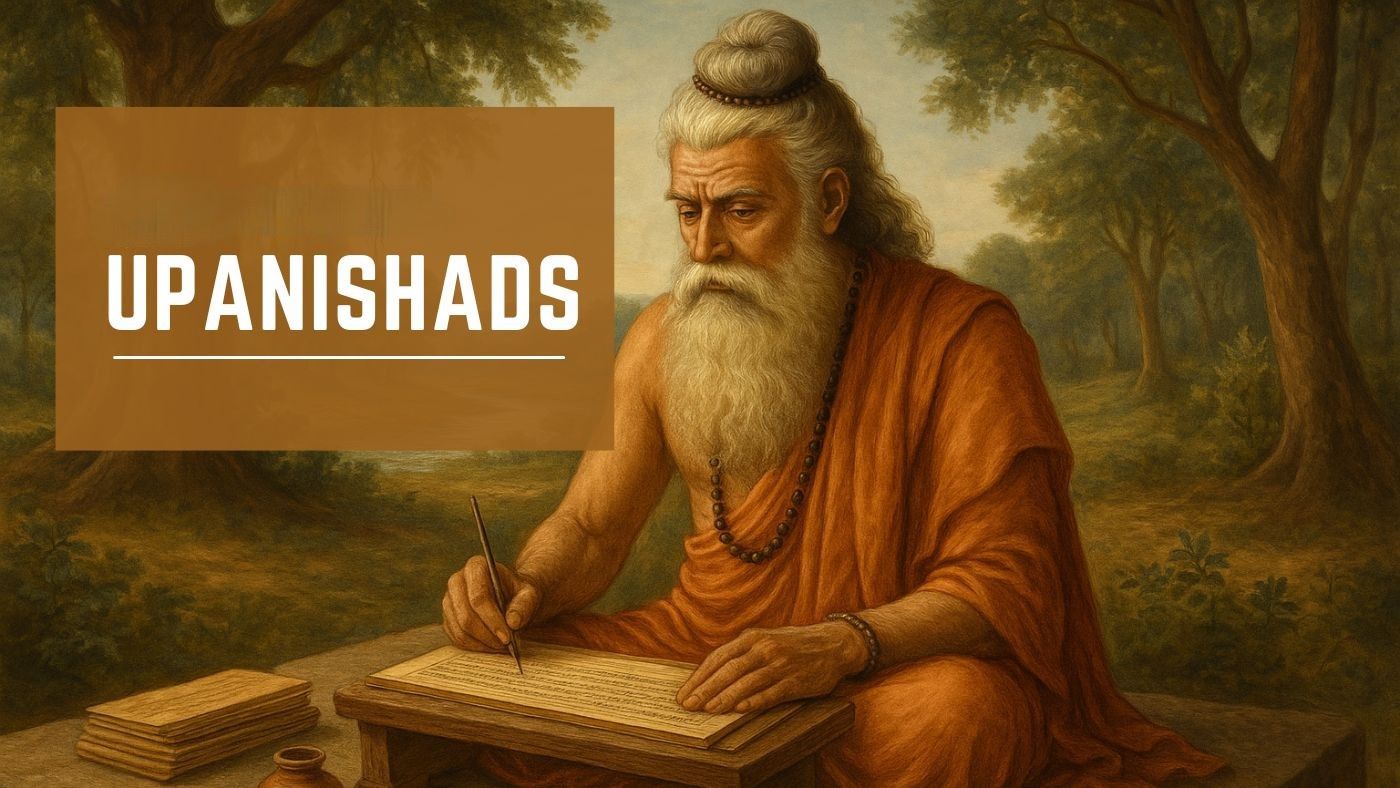
The Upanishads are among the most important philosophical and spiritual texts of ancient India. They form the concluding portions of the Vedas and are traditionally known as Vedanta, meaning the end or culmination of Vedic knowledge.
The Upanishads explore some of humanity’s deepest questions: Who am I? What is the nature of reality? What happens after death? What is the relationship between the individual soul and the Supreme Reality? What is the ultimate purpose of human existence?
Their central teachings include Brahman, Atman, karma, rebirth, meditation, liberation and self-realisation. They have profoundly influenced Hindu philosophy, spirituality, literature and religious thought.
This collection presents 220 GK questions about the Upanishads, covering their history, teachings, major texts, sages, philosophical concepts and cultural influence.
Instructions
- Read each question carefully.
- Try answering all questions before checking the answer key.
- There are no multiple-choice options.
- All answers are provided together at the end.
- Some traditional details and classifications differ among philosophical schools and scholarly interpretations.
220 GK Questions About the Upanishads
Section 1: General Knowledge and Background
- What are the Upanishads?
- To which ancient Indian religious tradition do the Upanishads belong?
- What is the literal meaning commonly associated with the word Upanishad?
- The Upanishads form the concluding portions of which ancient texts?
- What is the other name commonly given to the Upanishads?
- What does the term Vedanta mean?
- In which ancient language were the principal Upanishads composed?
- Approximately how many Upanishads are traditionally recognised?
- How many Upanishads are commonly regarded as the principal or major Upanishads?
- Which ancient Indian philosophical tradition is particularly associated with the Upanishads?
- What is the central subject of the Upanishads?
- Which four Vedas are associated with different groups of Upanishads?
- Are the Upanishads primarily ritual manuals or philosophical and spiritual teachings?
- What is the traditional designation of the Upanishads as part of Vedic literature?
- What is the primary spiritual goal discussed in the Upanishads?
Section 2: The Four Vedas and Their Upanishads
- How many Vedas are there?
- What are the four Vedas?
- Which Upanishad is associated with the Rigveda?
- Which Upanishad is associated with the Samaveda and begins with the word “Kena”?
- Which famous Upanishad belongs to the Shukla Yajurveda?
- Which Upanishad is associated with the Krishna Yajurveda and discusses the nature of the Self?
- Which Upanishad is associated with the Atharvaveda and discusses the syllable Om?
- Which Upanishad contains the famous dialogue between Nachiketa and Yama?
- Which Upanishad is traditionally associated with the Samaveda and discusses the importance of meditation?
- Which Upanishad contains the teaching “Tat Tvam Asi”?
- Which Upanishad begins with the words “Isha Vasyam Idam Sarvam”?
- Which Upanishad contains the story of Satyakama Jabala?
- Which Upanishad includes the dialogue between Uddalaka Aruni and his son Shvetaketu?
- Which Upanishad contains the dialogue between Yajnavalkya and Maitreyi?
- Which Upanishad discusses the five sheaths of human existence?
Section 3: The Principal Upanishads
- What is the name of the Upanishad that begins with the word Isha?
- What is the main subject of the Kena Upanishad?
- Which Upanishad is famous for the story of Nachiketa?
- What is the main theme of the Prashna Upanishad?
- Which Upanishad discusses the teachings of the sage Sanatkumara to Narada?
- Which Upanishad is famous for the dialogue between Yajnavalkya and Gargi?
- Which Upanishad contains the teaching about the two birds sitting on one tree?
- Which Upanishad discusses the three states of consciousness: waking, dreaming and deep sleep?
- Which Upanishad is particularly associated with the syllable Om and the nature of consciousness?
- Which Upanishad explains the five layers or sheaths of the human personality?
- Which Upanishad contains the dialogue between Indra and Virochana?
- Which Upanishad describes the creation of the universe through the teaching of the Self?
- Which Upanishad contains the famous teaching “Aham Brahmasmi”?
- Which Upanishad discusses the importance of meditation and knowledge of the Self?
- Which Upanishad is associated with the story of Bhrigu and his father Varuna?
- Which Upanishad discusses the concept of the Supreme Self in relation to the individual self?
- Which Upanishad contains the dialogue between Maitreyi and Yajnavalkya?
- Which Upanishad includes the story of Satyakama Jabala and his search for spiritual knowledge?
- Which Upanishad contains the teaching that the Self cannot be destroyed by weapons or fire?
- Which Upanishad is traditionally considered one of the oldest and most extensive Upanishads?
Section 4: Important Philosophical Concepts
- What is Brahman in Upanishadic philosophy?
- What does Atman mean?
- What is the relationship between Atman and Brahman in many Upanishadic teachings?
- What is Moksha?
- What is the meaning of the term Samsara?
- What does Karma mean?
- What is the meaning of the word Dharma?
- What is the concept of Maya in Indian philosophy?
- What does the term Avidya mean?
- What is Vidya?
- What is the meaning of the term Jnana?
- What is the spiritual significance of meditation in the Upanishads?
- What does the term Tapas mean?
- What is the meaning of the word Sannyasa?
- What is the concept of self-realisation?
- What is the ultimate reality according to many Upanishadic teachings?
- What does the term Sat-Chit-Ananda mean?
- What is the meaning of the Sanskrit term Neti Neti?
- What does the term Prana refer to?
- What is the meaning of the term Rta in ancient Indian thought?
Section 5: Famous Upanishadic Teachings and Mahavakyas
- What is the meaning of the Mahavakya “Tat Tvam Asi”?
- In which Upanishad is “Tat Tvam Asi” found?
- What does “Aham Brahmasmi” mean?
- In which Upanishad is “Aham Brahmasmi” found?
- What does “Prajnanam Brahma” mean?
- In which Upanishad is “Prajnanam Brahma” found?
- What does “Ayam Atma Brahma” mean?
- In which Upanishad is “Ayam Atma Brahma” found?
- How many principal Mahavakyas are traditionally recognised?
- Which sage taught “Tat Tvam Asi” to his son Shvetaketu?
- What is the meaning of “Satyam Eva Jayate”?
- In which Upanishad is “Satyam Eva Jayate” found?
- What does the phrase “Asato Ma Sadgamaya” mean?
- In which Upanishad is the prayer “Asato Ma Sadgamaya” found?
- What is the meaning of “Tamaso Ma Jyotirgamaya”?
- What is the meaning of “Mrityor Ma Amritam Gamaya”?
- Which Upanishad contains the famous peace invocation “Purnamadah Purnamidam”?
- What does “Purnamadah Purnamidam” express?
- What is the significance of the phrase “Sarvam Khalvidam Brahma”?
- Which Upanishad contains the teaching “Sarvam Khalvidam Brahma”?
Section 6: Important Sages and Teachers
- Who is the famous sage associated with the teachings of the Brihadaranyaka Upanishad?
- Who was Maitreyi?
- Who was Gargi?
- Who was Uddalaka Aruni?
- Who was Shvetaketu?
- Who was Nachiketa?
- Who was Yama in the Katha Upanishad?
- Who was Sanatkumara?
- Who was Narada?
- Who was Bhrigu?
- Who was Varuna in the Taittiriya Upanishad?
- Who was Pippalada?
- Which sage answered the six questions in the Prashna Upanishad?
- Who was Satyakama Jabala?
- Who was Janaka of Videha?
- Which sage is associated with the teaching of the Mandukya Upanishad?
- Who was Shandilya?
- Which sage is associated with the famous teaching “Neti Neti”?
- Who was Yajnavalkya’s wife who questioned him about immortality?
- Which sage is traditionally associated with the dialogue about the five elements and the nature of the Self in the Taittiriya Upanishad?
Section 7: The Katha Upanishad and Nachiketa
- What is the central story of the Katha Upanishad?
- Who was Nachiketa’s father?
- Why did Nachiketa visit the house of Yama?
- How many boons did Yama offer Nachiketa?
- What was Nachiketa’s first boon?
- What was his second boon?
- What did Nachiketa ask for in his third boon?
- Why did Yama initially hesitate to answer Nachiketa’s third question?
- What does the Katha Upanishad teach about the difference between Shreyas and Preyas?
- What does Shreyas mean?
- What does Preyas mean?
- What does the Katha Upanishad teach about the nature of the soul?
- What famous metaphor does the Katha Upanishad use to explain the human body and mind?
- In the chariot metaphor, what represents the intellect?
- In the chariot metaphor, what represents the mind?
Section 8: The Chandogya and Brihadaranyaka Upanishads
- Which Upanishad contains the teaching “Tat Tvam Asi”?
- Who taught this famous statement to Shvetaketu?
- What was the purpose of Uddalaka Aruni’s teaching to Shvetaketu?
- Which Upanishad contains the story of Indra and Virochana?
- What did Indra learn about the true Self?
- Which Upanishad contains the famous dialogue between Yajnavalkya and Maitreyi?
- What question did Maitreyi ask Yajnavalkya?
- What does the Brihadaranyaka Upanishad teach about the Self?
- Which Upanishad contains the teaching “Aham Brahmasmi”?
- Who questioned Yajnavalkya about the ultimate reality in the Brihadaranyaka Upanishad?
- What is the importance of Gargi’s questions?
- What is the meaning of the term Brihadaranyaka?
- Which Upanishad contains the teaching about the five elements and the five sheaths?
- Which Upanishad explains the importance of food as a source of life?
- What is the significance of the story of Satyakama Jabala?
Section 9: Om, Meditation and Consciousness
- What is the sacred syllable discussed extensively in the Upanishads?
- What are the three basic sounds traditionally associated with Om?
- What is the fourth state of consciousness called in the Mandukya Upanishad?
- What is the waking state called in Sanskrit?
- What is the dreaming state called in Sanskrit?
- What is the deep-sleep state called in Sanskrit?
- What is Turiya?
- Which Upanishad is the shortest among the principal Upanishads?
- Which Upanishad gives a detailed explanation of Om?
- What is the spiritual purpose of chanting Om?
- What is Dhyana?
- What is the meaning of Samadhi?
- What role does silence play in the contemplation of Om?
- What does the Mandukya Upanishad teach about the relationship between consciousness and the Self?
- What is the significance of the three states of consciousness?
Section 10: The Five Sheaths and the Nature of Human Existence
- Which Upanishad introduces the concept of the five sheaths?
- What are the five sheaths called in Sanskrit?
- What is Annamaya Kosha?
- What is Pranamaya Kosha?
- What is Manomaya Kosha?
- What is Vijnanamaya Kosha?
- What is Anandamaya Kosha?
- What does the word Kosha mean?
- What is the relationship between the five sheaths and the Atman?
- Which sage discovered the deeper meaning of Brahman through successive contemplation in the Taittiriya Upanishad?
- What did Bhrigu first identify as Brahman?
- What did Bhrigu understand after deeper contemplation?
- Why is food considered important in the Taittiriya Upanishad?
- What is the relationship between Prana and life?
- What does the Taittiriya Upanishad teach about the pursuit of knowledge?
Section 11: Philosophy, Schools and Interpretations
- What is Advaita Vedanta?
- Who is the most famous philosopher associated with Advaita Vedanta?
- What is Vishishtadvaita Vedanta?
- Who founded the philosophical school of Vishishtadvaita?
- What is Dvaita Vedanta?
- Who is associated with the Dvaita school of philosophy?
- What is the relationship between the Upanishads and Vedanta philosophy?
- Which philosopher wrote influential commentaries on the principal Upanishads?
- What is the meaning of Brahma Sutras?
- Who is traditionally credited with composing the Brahma Sutras?
- What is the importance of the Bhagavad Gita in Vedanta philosophy?
- What is the meaning of the term Prasthanatrayi?
- What are the three texts that form the Prasthanatrayi?
- What is the main difference between Advaita and Dvaita philosophy?
- What does the term Jivanmukta mean?
Section 12: Influence, History and Cultural Significance
- Which ancient Indian texts are considered the philosophical culmination of the Vedas?
- Who translated the Upanishads into Persian during the seventeenth century?
- Which Mughal prince was responsible for the Persian translation known as Sirr-i-Akbar?
- Which European philosopher was deeply influenced by the Latin translation of the Upanishads?
- What was the name of the Latin translation of the Upanishads that influenced European thinkers?
- Which nineteenth-century Indian reformer strongly promoted the study of the Upanishads?
- Who founded the Brahmo Samaj?
- Which Indian spiritual leader introduced Vedanta philosophy to a wider international audience in the nineteenth century?
- In which year did Swami Vivekananda deliver his famous address at the Parliament of the World’s Religions in Chicago?
- Which Indian philosopher wrote extensively about the philosophical importance of the Upanishads?
- Which Indian philosopher and president wrote the book The Principal Upanishads?
- What is the significance of the Upanishads in Hindu religious tradition?
- Why are the Upanishads important in the history of world philosophy?
- What is the relationship between the Upanishads and Indian meditation traditions?
- How have the Upanishads influenced modern spiritual thought?
Section 13: Additional Knowledge and Important Facts
- What is the difference between the Vedas and the Upanishads?
- What is the difference between a Samhita and an Upanishad?
- What is the relationship between the Brahmanas, Aranyakas and Upanishads?
- What is the traditional meaning of the term Shruti?
- Why are the Upanishads considered part of Shruti literature?
- What is the meaning of the term Rishi?
- What is the meaning of the term Guru?
- What is the meaning of the term Shishya?
- What is the significance of the Guru-Shishya tradition in the Upanishads?
- What is the importance of questions and dialogue in Upanishadic teaching?
- Which Upanishad contains six questions asked by six seekers?
- What is the significance of the name Prashna Upanishad?
- Which Upanishad contains the famous description of the Self as smaller than the smallest and greater than the greatest?
- What is the significance of the metaphor of two birds in the Mundaka Upanishad?
- Which Upanishad discusses the two types of knowledge, higher and lower?
- What are Para Vidya and Apara Vidya?
- What is the significance of the phrase “Lead me from darkness to light”?
- What is the ultimate goal of Upanishadic inquiry?
- Why are the Upanishads studied by students of philosophy and religion around the world?
- What is the most important message of the Upanishads for humanity?
Answer Key – Upanishads GK Questions
Answers 1–20
- Ancient Indian philosophical and spiritual texts that explore the nature of reality, the Self and ultimate knowledge.
- The Vedic tradition.
- Traditionally, sitting near a teacher to receive secret or profound instruction.
- The Vedas.
- Vedanta.
- The end or culmination of Vedic knowledge.
- Sanskrit.
- More than 200 are known; the traditional Muktika list contains 108.
- Ten or eleven are often treated as principal in different lists; a widely used classical group contains ten, while other traditions include more.
- Vedanta.
- The nature of Brahman, Atman, reality and liberation.
- Rigveda, Samaveda, Yajurveda and Atharvaveda.
- Philosophical and spiritual teachings, though they also preserve ritual and contemplative material.
- Shruti.
- Moksha or liberation through spiritual knowledge and realisation.
Answers 21–40
- Aitareya Upanishad.
- Kena Upanishad.
- Isha Upanishad.
- Katha Upanishad.
- Prashna Upanishad.
- Chandogya Upanishad.
- Shvetashvatara Upanishad.
- Mandukya Upanishad.
- Chandogya Upanishad.
- Taittiriya Upanishad.
- Isha Upanishad.
- The source of the power behind the mind, senses and life.
- Katha Upanishad.
- Six questions concerning creation, life, meditation and the Self.
- Chandogya Upanishad.
- Brihadaranyaka Upanishad.
- Mundaka Upanishad.
- Mandukya Upanishad.
- Mandukya Upanishad.
- Taittiriya Upanishad.
Answers 41–60
- Chandogya Upanishad.
- Aitareya Upanishad.
- Brihadaranyaka Upanishad.
- Katha Upanishad.
- Taittiriya Upanishad.
- Mandukya Upanishad.
- Brihadaranyaka Upanishad.
- Chandogya Upanishad.
- Katha Upanishad.
- Brihadaranyaka Upanishad.
- The ultimate, universal and absolute reality.
- The inner Self or spiritual essence of an individual.
- Many Upanishadic teachings describe their essential identity or profound relationship; philosophical schools interpret this differently.
- Liberation from the cycle of birth and death.
- The cycle of birth, death and rebirth.
- Action and its moral or spiritual consequences.
- Righteous duty, moral order and the right way of living.
- The principle of appearance or illusion in certain Indian philosophical interpretations.
- Ignorance or lack of true spiritual knowledge.
- Knowledge or true understanding, especially spiritual knowledge.
- Knowledge or wisdom.
- It helps the seeker understand the Self and attain spiritual realisation.
- Spiritual discipline, austerity or devoted effort.
- Renunciation of worldly attachments.
- Direct understanding of one’s true spiritual nature.
- Brahman.
- Existence, consciousness and bliss.
- “Not this, not this”; a method of indicating the Self by denying limited descriptions.
- Vital breath or life force.
- Cosmic order, truth and the principle of universal harmony.
Answers 61–90
- “That Thou Art” or “You are That.”
- Chandogya Upanishad.
- “I am Brahman.”
- Brihadaranyaka Upanishad.
- “Consciousness is Brahman.”
- Aitareya Upanishad.
- “This Self is Brahman.”
- Mandukya Upanishad.
- Four.
- Uddalaka Aruni.
- “Truth alone triumphs.”
- Mundaka Upanishad.
- “Lead me from the unreal to the real.”
- Brihadaranyaka Upanishad.
- “Lead me from darkness to light.”
- “Lead me from death to immortality.”
- Isha Upanishad and other Yajurvedic recitation traditions; it is commonly used as a peace invocation.
- The completeness and wholeness of ultimate reality.
- It expresses that all this is indeed Brahman.
- Chandogya Upanishad.
Answers 91–110
- Yajnavalkya.
- A learned woman and philosopher who questioned Yajnavalkya about the Self and immortality.
- A renowned woman philosopher who questioned Yajnavalkya about ultimate reality.
- A great sage and teacher, father of Shvetaketu.
- The son and student of Uddalaka Aruni.
- A young seeker who questioned Yama about death and the nature of the soul.
- The god of death.
- A revered sage who taught Narada about the higher knowledge of the Self.
- A divine sage known for wisdom, devotion and learning.
- A great sage who explored the nature of Brahman through contemplation.
- The deity Varuna, who teaches his son Bhrigu about Brahman.
- The sage who answers the six questions in the Prashna Upanishad.
- Pippalada.
- A sincere seeker who approached Sage Gautama for spiritual instruction.
- A philosopher-king of Videha and a patron of sages.
- The Mandukya Upanishad is not traditionally assigned to one clearly established historical author.
- A sage associated with the teaching of the Self and Brahman.
- Yajnavalkya.
- Maitreyi.
- Bhrigu.
Answers 111–125
- The dialogue between Nachiketa and Yama about death, the soul and immortality.
- Vajasravasa, also called Gautama in some versions.
- His father sent him to Yama after giving him away in a sacrificial declaration.
- Three boons.
- That his father would be peaceful and welcome him when he returned.
- Knowledge of the sacred fire sacrifice leading to heaven.
- Knowledge of what happens after death and whether the Self continues to exist.
- Because the question concerned a profound mystery that even the gods found difficult to understand.
- Shreyas leads to lasting good and spiritual welfare, while Preyas gives immediate pleasure.
- The good or beneficial path.
- The pleasant or immediately enjoyable path.
- The Self is eternal, unborn and beyond physical destruction.
- The chariot metaphor.
- The intellect is the charioteer.
- The mind is the reins.
Answers 126–140
- Chandogya Upanishad.
- Uddalaka Aruni.
- To teach him the nature of the Self and its relationship with ultimate reality.
- Chandogya Upanishad.
- That the true Self is not merely the physical body or its reflection.
- Brihadaranyaka Upanishad.
- She asked whether wealth could grant immortality and what truly leads to immortality.
- The Self is the deepest spiritual reality and cannot be understood merely through external objects.
- Brihadaranyaka Upanishad.
- Gargi.
- They explore the foundations of existence and the ultimate reality underlying the universe.
- “Great Forest.”
- Taittiriya Upanishad.
- Taittiriya Upanishad.
- It teaches that sincerity and truthfulness are essential qualities of a spiritual seeker.
Answers 141–155
- Om or Aum.
- A, U and M.
- Turiya.
- Jagrat.
- Svapna.
- Sushupti.
- The fourth state of consciousness, beyond the ordinary waking, dreaming and deep-sleep states.
- Mandukya Upanishad.
- Mandukya Upanishad.
- Spiritual contemplation and recognition of the deeper nature of reality.
- Meditation.
- A state of deep meditative absorption or spiritual integration.
- Silence represents the transcendent dimension beyond the audible syllables of Om.
- Consciousness is central to the experience of the Self, whose deepest nature transcends the ordinary states.
- They provide a framework for understanding human experience and the deeper consciousness beyond it.
Answers 156–170
- Taittiriya Upanishad.
- Annamaya, Pranamaya, Manomaya, Vijnanamaya and Anandamaya Koshas.
- The physical or food-based sheath.
- The vital-energy or life-breath sheath.
- The mental sheath.
- The intellectual or wisdom sheath.
- The bliss sheath.
- Sheath or covering.
- They are layers of human experience surrounding or obscuring the innermost Self; they are not themselves the ultimate Atman.
- Bhrigu.
- Food, or Annam.
- That Brahman is the ultimate source and ground of existence, explored through successive stages of contemplation.
- Food sustains life and is part of the cycle of creation and existence.
- Prana sustains bodily life and vital functions.
- Knowledge requires disciplined inquiry, contemplation and guidance from a teacher.
Answers 171–185
- The non-dual philosophy that teaches the ultimate identity of Atman and Brahman.
- Adi Shankaracharya.
- Qualified non-dualism, which teaches unity with real distinctions.
- Ramanujacharya.
- Dualism, which maintains a real distinction between God and individual souls.
- Madhvacharya.
- The Upanishads are foundational scriptural sources for Vedanta.
- Adi Shankaracharya.
- A foundational text of Vedanta that systematises the philosophical teachings of the Upanishads.
- Badarayana, traditionally identified with Vyasa.
- It provides a practical and philosophical exposition of spiritual duty, devotion and knowledge.
- The three authoritative foundations of Vedanta.
- The Upanishads, Bhagavad Gita and Brahma Sutras.
- Advaita teaches ultimate non-duality, while Dvaita maintains an eternal distinction between God and individual souls.
- A person who has attained liberation while still living.
Answers 186–200
- The Upanishads.
- Dara Shikoh.
- Dara Shikoh.
- Arthur Schopenhauer.
- Oupnek’hat.
- Raja Ram Mohan Roy.
- Raja Ram Mohan Roy.
- Swami Vivekananda.
-
- Sarvepalli Radhakrishnan.
- Sarvepalli Radhakrishnan.
- They are foundational philosophical and spiritual scriptures of Hinduism.
- They examine universal questions about existence, consciousness, knowledge and liberation.
- They provide philosophical foundations for meditation, contemplation and self-inquiry.
- They have inspired modern discussions of consciousness, universal spirituality, self-knowledge and the search for ultimate truth.
Answers 201–220
- The Vedas are the broader body of sacred literature; the Upanishads are their philosophical and contemplative portions.
- A Samhita is a collection of hymns or mantras, while an Upanishad focuses mainly on spiritual and philosophical inquiry.
- They are interconnected layers of Vedic literature: ritual texts, ritual explanations and contemplative teachings.
- That which is heard or revealed.
- They are traditionally regarded as revealed sacred knowledge transmitted through the Vedic tradition.
- A seer or inspired sage.
- A spiritual teacher.
- A student or disciple.
- It preserves the transmission of spiritual knowledge through personal instruction and dialogue.
- They encourage inquiry, reflection and the search for truth rather than unquestioning acceptance.
- Prashna Upanishad.
- Prashna means question; the text is structured around six questions asked by seekers.
- Katha Upanishad.
- One bird enjoys the fruits of the tree while the other witnesses without attachment; the image is used to explain the individual self and the witnessing Self.
- Mundaka Upanishad.
- Para Vidya is higher spiritual knowledge, while Apara Vidya is lower or worldly knowledge, including knowledge of the Vedas as texts.
- It expresses the spiritual journey from ignorance to knowledge and enlightenment.
- Realisation of the Self and the ultimate reality, leading to liberation.
- They offer profound insights into consciousness, ethics, reality, spirituality and human existence.
- The deepest truth of human existence is discovered through self-knowledge, wisdom and the realisation of ultimate reality.
Concluding Comment
The Upanishads invite humanity to look beyond the external world and discover the deeper truth within. Their teachings encourage us to move from ignorance to knowledge, from darkness to light, and from mortality towards spiritual understanding.
Their wisdom is not limited to one period, culture or community. Their questions about life, consciousness, truth and the purpose of existence remain relevant even today.
The central message of the Upanishads is that true wisdom begins when we seek to understand not merely the world around us, but also the deepest reality within ourselves.
Editorial Note
This quiz is intended for students, teachers, competitive examination candidates and readers interested in Indian philosophy and ancient literature. The answers are based on widely accepted traditional teachings and standard interpretations of the principal Upanishads. Different philosophical schools may interpret certain concepts differently.
For deeper study, readers may explore the Isha, Kena, Katha, Prashna, Mundaka, Mandukya, Taittiriya, Aitareya, Chandogya and Brihadaranyaka Upanishads.
Nelsapy – Knowledge for Everyone.
Leave a Reply