

Introduction
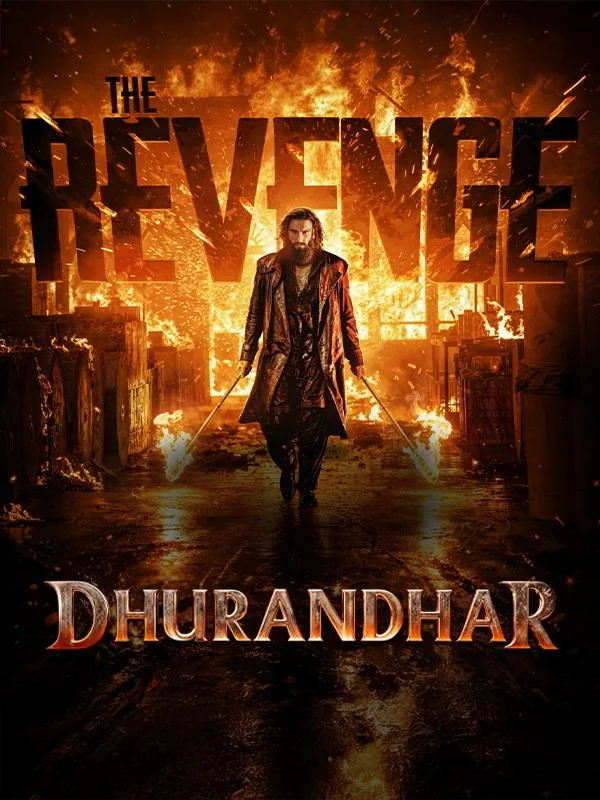
Dhurandhar: The Revenge, popularly known as Dhurandhar 2, is one of the major Indian action thriller films of 2026. Directed by Aditya Dhar and starring Ranveer Singh in the lead role, the movie continues the story of the undercover Indian operative introduced in the first instalment, Dhurandhar (2025).
Released on 19 March 2026, the film expands the world of espionage, international crime networks, political power, revenge and national security. It combines action, suspense, emotional drama and political themes to create a large-scale cinematic experience.
The sequel focuses more deeply on the background and transformation of its central character, Jaskirat Singh Rangi, who operates under the identity of Hamza Ali Mazari in Pakistan. His dangerous mission takes him further into the criminal and political networks of Karachi.
With an impressive ensemble cast, ambitious direction, intense action sequences and a powerful central performance, Dhurandhar: The Revenge has become an important talking point in contemporary Indian cinema.
1. Movie Details
Movie Title: Dhurandhar: The Revenge
Popular Name: Dhurandhar 2
Release Date: 19 March 2026
Director: Aditya Dhar
Writer: Aditya Dhar
Producers: Aditya Dhar, Lokesh Dhar and Jyoti Deshpande
Production Companies: B62 Studios and Jio Studios
Presenter: Jio Studios
Genre: Action, Spy Thriller, Crime Drama and Political Thriller
Original Language: Hindi
Other Released Languages: Tamil, Telugu, Kannada and Malayalam
Runtime: Approximately 3 hours and 49 minutes
Music and Background Score: Shashwat Sachdev
Cinematography: Vikash Nowlakha
Editor: Shivkumar V. Panicker
Certification: A
2. Main Cast and Characters
The film features several prominent actors from Indian cinema.
- Ranveer Singh – Hamza Ali Mazari / Jaskirat Singh Rangi
- Sanjay Dutt – SP Chaudhary Aslam
- R. Madhavan – Ajay Sanyal
- Arjun Rampal – Major Iqbal
- Sara Arjun – Yalina Jamali
- Rakesh Bedi – Jameel Jamali
- Danish Pandor – Uzair Baloch
- Saumya Tandon – Ulfat
- Bimal Oberoi – Shirani
- Manav Gohil – Sushant Bansal
The ensemble cast adds considerable depth to the film, with different characters representing intelligence operations, criminal networks, political influence and personal relationships.
3. Story and Plot
Dhurandhar: The Revenge continues the story of Jaskirat Singh Rangi, an Indian operative who works under the assumed identity of Hamza Ali Mazari.
The film explores the circumstances that lead to Jaskirat’s transformation and his involvement in a dangerous intelligence mission. His journey takes him into the criminal underworld of Lyari and Karachi, where he gradually establishes his influence and becomes an important figure in the local power structure.
The sequel also provides a deeper understanding of Jaskirat’s past, personal suffering and the experiences that shape his character. These elements give the story a more emotional dimension than a conventional action thriller.
As Hamza becomes increasingly powerful, his mission becomes more complicated. He must maintain his identity, manage dangerous relationships, deal with rival groups and continue working towards the larger objectives of the intelligence operation.
The story explores themes of loyalty, betrayal, revenge, sacrifice, national security and the psychological challenges of living under a false identity.
The film moves between personal history, criminal rivalries, political developments and intelligence operations. Its dramatic confrontations and unexpected revelations gradually lead towards a powerful climax.
The sequel is not simply a continuation of the first film. It attempts to explain the transformation of its central character and bring his personal and professional journeys together.
4. Direction and Screenplay
Aditya Dhar deserves considerable appreciation for attempting to create a large-scale Indian espionage thriller with an ambitious narrative.
His direction combines action, political drama, emotional storytelling and suspense. The film maintains a serious atmosphere and creates a world in which power, violence and intelligence operations are closely connected.
One of the interesting aspects of the screenplay is its exploration of the protagonist’s past. Rather than concentrating entirely on action, the film attempts to explain the motivations and personal experiences behind his transformation.
However, the lengthy runtime is one of the film’s major challenges. Some sequences could have been shortened, and certain portions affect the overall pace.
The screenplay also contains considerable political messaging. While this may appeal to some viewers, others may prefer a more balanced and less overtly political approach.
Nevertheless, Aditya Dhar demonstrates confidence in his filmmaking and delivers a sequel that attempts to expand the scale and ambition of the original story.
5. Ranveer Singh’s Performance
Ranveer Singh is undoubtedly the central attraction of Dhurandhar: The Revenge.
His portrayal of Jaskirat Singh Rangi and Hamza Ali Mazari demands different emotional expressions and personalities. He must portray an individual with a troubled past, an undercover operative, a powerful criminal-world figure and a man struggling with personal and professional responsibilities.
Ranveer handles these different dimensions with remarkable intensity.
His body language, facial expressions, dialogue delivery and action performance contribute to the strength of the character. Particularly impressive are the emotional scenes, where he demonstrates that his acting abilities extend beyond physical action and dramatic aggression.
He brings tremendous energy to the film and successfully carries much of its narrative responsibility.
The performance is one of the strongest reasons to watch the movie.
6. Supporting Cast Performances
R. Madhavan delivers an impressive performance as Ajay Sanyal. His character brings intelligence, strategic thinking and authority to the story.
Arjun Rampal contributes significantly through his menacing portrayal of Major Iqbal. His presence creates tension and provides a formidable opposition to the protagonist.
Sanjay Dutt brings his characteristic screen presence and authority to the role of SP Chaudhary Aslam.
Rakesh Bedi deserves special appreciation for his performance as Jameel Jamali. He adds personality and political drama to the narrative.
Sara Arjun provides an important emotional dimension through her portrayal of Yalina Jamali.
Danish Pandor and the other supporting actors also contribute to the film’s dramatic atmosphere.
The performances collectively strengthen the movie and make its fictional world more convincing.
7. Action, Cinematography and Visual Presentation
Action is one of the major attractions of the film.
The movie features large-scale confrontations, gun battles, violent encounters, explosions and dramatic action sequences. These scenes are designed to deliver an intense theatrical experience.
Vikash Nowlakha’s cinematography gives the film a distinctive visual identity. The urban environments, dramatic lighting, close-up shots and large-scale action sequences contribute to its overall atmosphere.
The production design and visual effects also help establish the film’s ambitious scale.
However, the film contains extremely graphic violence. Some scenes are disturbing and may not be suitable for viewers who dislike brutal action or excessive bloodshed.
The action is technically impressive, but a more restrained approach could have made certain sequences more effective.
8. Music and Background Score
Shashwat Sachdev is responsible for the music and background score.
The background music plays a significant role in building tension and enhancing the emotional impact of the narrative.
The film uses music to support its action sequences, dramatic confrontations and important emotional moments.
Aari Aari is among the prominent musical attractions, while other songs and background compositions contribute to the film’s overall atmosphere.
The music is an important technical strength, although some viewers may find the soundtrack less memorable than that of the first instalment.
9. Political Themes and National Security
One of the most discussed aspects of Dhurandhar: The Revenge is its political content.
The movie explores national security, intelligence operations, terrorism, political power, international relations and patriotism.
It presents its narrative through a strongly nationalistic perspective and portrays the challenges faced by intelligence operatives working in dangerous environments.
The film also incorporates references to real-world political events and developments. However, audiences should remember that this is a fictional commercial film, not a documentary or an independently verified account of intelligence operations.
Its characters, conversations, political interpretations and dramatic situations should be understood within the context of cinematic storytelling.
Some viewers may appreciate the film’s patriotic approach and political themes. Others may question its ideological perspective, representation of events or treatment of sensitive political subjects.
These different interpretations make the film particularly interesting from a social and cultural point of view.
10. Major Strengths of the Movie
- Ranveer Singh’s powerful central performance.
- Ambitious direction by Aditya Dhar.
- Impressive cinematography and production quality.
- Large-scale action sequences.
- Strong supporting performances.
- Effective background music and sound design.
- Emotional exploration of the protagonist’s past.
- Suspense, dramatic confrontations and unexpected developments.
- Strong theatrical presentation.
- An ambitious attempt to expand the Indian espionage thriller genre.
11. Major Weaknesses of the Movie
- The lengthy runtime may test the patience of some viewers.
- Certain portions of the screenplay feel stretched.
- The pacing is uneven in some sections.
- Excessive graphic violence may disturb sensitive viewers.
- Political messaging may not appeal to everyone.
- Some supporting characters could have received greater development.
- Certain dramatic sequences could have been edited more effectively.
12. Critical and Audience Reception
The film has generated considerable discussion among critics and audiences.
Several reviewers have appreciated Ranveer Singh’s performance, the ambitious direction, action choreography, cinematography and emotional intensity.
Other critics have expressed reservations about the lengthy runtime, excessive violence and political messaging.
Audience responses have generally been much more enthusiastic than some critical assessments. The film has also received a strong audience rating on major movie-review platforms.
This difference between critical and audience opinion demonstrates that cinema can be experienced differently depending on individual expectations, interests and perspectives.
The film’s scale, action and emotional drama have attracted audiences who enjoy large commercial thrillers.
13. Who Should Watch This Movie?
Dhurandhar: The Revenge may be particularly interesting for:
- Fans of Ranveer Singh.
- Lovers of Indian action and spy thrillers.
- Viewers interested in intelligence operations and political dramas.
- Audiences who enjoyed the first Dhurandhar film.
- People who appreciate large-scale action filmmaking.
- Viewers interested in stories involving revenge, loyalty and national security.
However, the film’s long duration and graphic violence should be considered before watching.
14. Overall Movie Review and Verdict
Dhurandhar: The Revenge is an ambitious Indian action thriller that combines espionage, revenge, political drama and emotional storytelling.
The greatest strength of the movie is Ranveer Singh’s performance. He brings intensity, energy and emotional depth to a demanding character.
Aditya Dhar’s direction, the supporting cast, cinematography, action choreography and background score contribute to the film’s impressive cinematic scale.
The film also raises interesting questions about national security, political power, personal sacrifice and the responsibilities of intelligence operatives.
Nevertheless, its excessive runtime, uneven pacing, graphic violence and strong political messaging prevent it from being a completely balanced cinematic experience.
Despite these limitations, the film offers considerable entertainment for audiences who enjoy intense action thrillers.
It is a noteworthy production in contemporary Indian commercial cinema and an ambitious continuation of the Dhurandhar franchise.
15. Nelsapy Movie Rating
Our editorial assessment:
Overall Rating: 8/10
Acting: 9/10
Direction: 8/10
Story and Screenplay: 7.5/10
Action: 9/10
Cinematography: 8.5/10
Music and Background Score: 8.5/10
Entertainment Value: 8.5/10
Final Verdict: A powerful action thriller with an outstanding central performance, impressive technical qualities and ambitious storytelling, although its length and excessive violence could have been better controlled.
Conclusion
Dhurandhar: The Revenge demonstrates the growing ambition of Indian cinema to produce large-scale action thrillers with international presentation and commercial appeal.
The film succeeds in creating a dramatic world of espionage, political power, criminal networks and personal revenge. Ranveer Singh’s performance gives the story its emotional and dramatic centre, while the supporting cast and technical departments contribute to its overall impact.
Although the movie has certain shortcomings, it remains an important cinematic release of 2026.
For lovers of action, espionage and intense dramatic storytelling, Dhurandhar: The Revenge is certainly worth considering.
Editorial Note – A Note for the Public
Films are an important form of entertainment, artistic expression and social communication. They can also influence public opinion and shape the way audiences understand history, politics, national identity and international relations.
While watching Dhurandhar: The Revenge, viewers should appreciate its filmmaking, acting, music and dramatic storytelling while maintaining a thoughtful perspective on its political and historical references.
A commercial film should not automatically be treated as a factual historical record or an authoritative account of international events. Fictional narratives, dramatic interpretations and verified historical facts are not necessarily the same.
Audiences are encouraged to think independently, examine different perspectives and distinguish cinematic entertainment from documented reality.
Good cinema should entertain us, inspire discussion and encourage critical thinking.
Nelsapy – Knowledge, Information and Ideas for Everyone.
Leave a Reply