

Introduction
The Ramayana is one of the greatest epics in Indian literature, culture and spiritual tradition. Its story of Rama, Sita, Lakshmana, Hanuman and Ravana has inspired generations of people through its powerful themes of love, sacrifice, courage, righteousness, devotion and the triumph of good over evil.
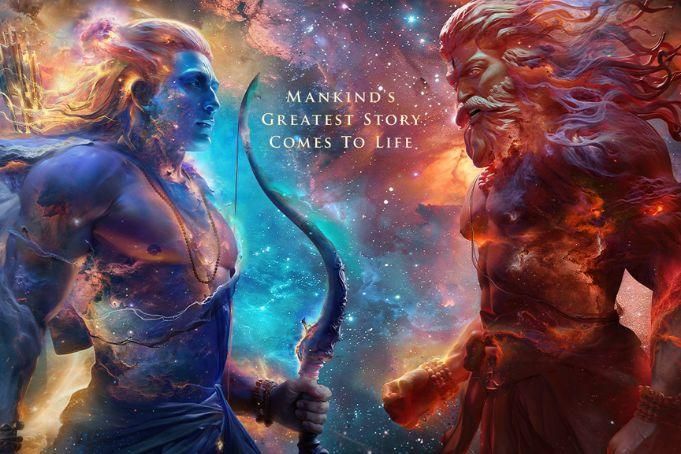
The cinematic adaptation of the Ramayana directed by Nitesh Tiwari has attracted enormous attention because of its ambitious scale, impressive cast, visual presentation and the immense cultural significance of the epic. The project aims to bring one of India’s most treasured stories to a modern cinematic audience while retaining the timeless values and emotional depth of the original narrative.
This review explores the film’s story, cast, performances, direction, music, visual effects, themes, expectations and its significance in Indian cinema.
1. Movie Details
- Movie Title: Ramayana: Part 1
- Genre: Mythological, Epic, Adventure, Drama
- Director: Nitesh Tiwari
- Producers: Namit Malhotra and Yash
- Screenplay: Shridhar Raghavan and Nitesh Tiwari
- Music: A. R. Rahman and Hans Zimmer
- Language: Hindi, with dubbed versions
- Release Date: November 5, 2026
- Format: 2D, 3D and premium theatrical formats
- Based on: The Ramayana, traditionally attributed to Maharishi Valmiki
The film is presented as the first part of a two-part cinematic adaptation of the Ramayana. It brings together a major cast, international technical talent and a large-scale production approach. BookMyShow+2
2. The Story of Ramayana
The Ramayana is the timeless story of Lord Rama, the prince of Ayodhya, whose life becomes a journey of duty, sacrifice, courage and righteousness.
Rama, the eldest son of King Dasharatha, is destined to inherit the throne of Ayodhya. However, palace circumstances and the promise made by his father lead him to leave the kingdom and live in exile for fourteen years. Accompanied by his wife Sita and his younger brother Lakshmana, Rama begins a life in the forest.
During their exile, the story takes a dramatic turn when Sita is abducted by Ravana, the powerful king of Lanka. Rama’s search for Sita leads him to meet Hanuman and the Vanara forces, who become his devoted allies.
The epic explores the struggle between righteousness and evil, the power of loyalty, the meaning of sacrifice and the importance of keeping one’s promises.
The cinematic adaptation draws upon this legendary narrative and seeks to present the world of Rama through modern filmmaking, visual storytelling and an expansive cinematic experience.
3. Major Cast and Characters
The principal cast and their roles
- Ranbir Kapoor as Rama: The central character of the epic, representing righteousness, compassion, courage, discipline and devotion to duty.
- Sai Pallavi as Sita: Rama’s wife, whose strength, dignity, faith and resilience are central to the Ramayana.
- Yash as Ravana: The powerful ruler of Lanka, a complex figure whose extraordinary abilities, ambition, pride and downfall form an important part of the epic.
- Ravi Dubey as Lakshmana: Rama’s devoted younger brother, known for his loyalty, courage and dedication.
- Sunny Deol as Hanuman: The great devotee of Rama, symbolising strength, humility, devotion and selfless service.
- Arun Govil as Dasharatha: The king of Ayodhya and father of Rama.
- Lara Dutta as Kaikeyi: One of the queens of Ayodhya whose demands change the course of Rama’s life.
- Shobana as Kaikesi: A character associated with Ravana’s family.
- Kajal Aggarwal as Mandodari: Ravana’s wife.
- Anupam Kher as Jatayu: The noble figure who attempts to protect Sita.
- Vivek Oberoi as Vidyutjiva: A character in the film’s expanded mythological narrative.
- Rakul Preet Singh as Surpanakha: A character whose encounter with Rama and Lakshmana contributes to the unfolding conflict.
The ensemble cast also includes several actors in supporting roles, bringing together performers from different parts of Indian cinema. BookMyShow+1
4. Ranbir Kapoor as Lord Rama
Ranbir Kapoor’s portrayal of Rama is among the most closely watched aspects of the film. Playing Rama is not simply a matter of portraying a heroic character; it involves presenting a figure deeply revered across religious, cultural and philosophical traditions.
Rama is remembered as a symbol of righteousness, self-control, moral responsibility, courage, compassion and leadership. The challenge for an actor is to portray these qualities without making the character emotionally distant or artificial.
The role requires a combination of physical presence, emotional restraint, expressions of tenderness, moments of determination and the ability to communicate the inner strength of a person committed to dharma.
Ranbir Kapoor’s casting in such a culturally significant role represents one of the film’s major creative decisions. The success of his portrayal ultimately depends on how convincingly the performance captures the human emotions and moral depth of Rama.
5. Sai Pallavi as Sita
Sita is one of the most important and emotionally powerful figures in the Ramayana. She is often remembered for her dignity, courage, patience, faith, resilience and moral strength.
Sai Pallavi brings a distinctive acting style to the role, and her casting has attracted considerable interest among audiences. The character requires emotional sensitivity, graceful expressions and the ability to portray strength without relying entirely on dramatic action.
Sita should not be viewed merely as a character who accompanies Rama. She is a central figure in the epic whose decisions, suffering, strength and dignity carry profound significance.
The portrayal of Sita is therefore one of the key elements that can determine the emotional success of this adaptation.
6. Yash as Ravana
Ravana is one of the most fascinating and complex characters in Indian mythology. He is portrayed as a powerful king, accomplished scholar, musician, warrior and devotee of Shiva, yet his arrogance, desire and abuse of power ultimately lead to his destruction.
Yash, widely known for his powerful screen presence, takes on the role of Ravana.
The character demands an imposing physical presence, commanding expressions, dramatic intensity and the ability to portray a personality that combines intelligence, ambition, pride and destructive arrogance.
Ravana is not simply a conventional villain. His character represents the tragic consequences of allowing ego, desire and power to overcome wisdom and moral restraint.
The portrayal of Ravana is one of the most important artistic challenges in the film.
7. Sunny Deol as Hanuman
Hanuman represents devotion, courage, strength, humility, discipline and selfless service. His devotion to Rama is one of the most celebrated aspects of the Ramayana.
Hanuman is not merely a powerful warrior. His greatness comes from the combination of extraordinary strength and complete humility. He uses his abilities in the service of a higher purpose.
Sunny Deol’s casting in this role brings expectations of powerful action, energetic screen presence and emotional intensity.
The character of Hanuman can offer some of the film’s most inspiring and memorable moments, particularly through his loyalty to Rama, his search for Sita and his extraordinary contribution to the battle against Ravana.
8. Direction by Nitesh Tiwari
Nitesh Tiwari is known for directing films that combine emotional storytelling with accessible cinematic narratives. His direction of the Ramayana is a particularly ambitious undertaking because the epic is deeply rooted in the imagination, traditions and religious beliefs of millions of people.
The challenge is not simply to recreate ancient kingdoms, forests, palaces, battles and mythological characters. The challenge is to make the story emotionally meaningful to modern audiences while respecting the source material.
A successful adaptation needs to balance:
- Faithfulness to the traditional narrative.
- Emotional depth and human relationships.
- Dramatic storytelling and cinematic pacing.
- Spectacular visuals without overwhelming the story.
- Respect for the spiritual and cultural significance of the epic.
The film’s direction must also maintain a balance between grandeur and simplicity. The Ramayana is filled with spectacular events, but its deepest impact comes from the relationships between Rama, Sita, Lakshmana, Hanuman and other characters.
The director’s greatest achievement would be to make the audience feel the emotions of the epic rather than merely witness its spectacle.
9. Music by A. R. Rahman and Hans Zimmer
A remarkable musical collaboration
The collaboration between A. R. Rahman and Hans Zimmer is one of the most distinctive aspects of the film’s production.
A. R. Rahman is internationally recognised for his musical creativity, emotional compositions, orchestration and ability to blend traditional Indian musical elements with contemporary sounds.
Hans Zimmer is known for powerful orchestral scores, dramatic musical structures and cinematic soundscapes.
The combination of these two composers creates considerable expectations for the film’s musical identity.
The Ramayana offers enormous possibilities for music:
- Spiritual and devotional themes.
- Rama’s journey and exile.
- Sita’s emotional experiences.
- Hanuman’s devotion and courage.
- The grandeur of Ayodhya and Lanka.
- Battle sequences.
- Moments of sacrifice, hope and victory.
A strong soundtrack can help transform a mythological film into an emotionally memorable cinematic experience.
Rather than relying only on loud orchestral music, the score should also create moments of silence, tenderness, contemplation and spiritual reflection.
10. Cinematography and Visual Presentation
The Ramayana is a story filled with extraordinary landscapes, ancient kingdoms, forests, rivers, mountains, palaces, temples and battlefields.
The visual presentation of these settings is one of the most important elements of the film.
The cinematic world of the Ramayana requires a distinctive visual identity. Ayodhya should convey the grandeur and cultural richness of an ancient kingdom. The forest exile should communicate both beauty and hardship. Lanka should appear powerful, magnificent and mysterious.
The film’s visual storytelling has the potential to bring the epic to life for audiences who have previously experienced it through books, television serials, devotional traditions and oral storytelling.
However, visual spectacle alone cannot make a film successful. The cinematography must serve the story, the characters and the emotions behind the events.
11. Visual Effects and Production Scale
The Ramayana is a challenging project for modern filmmaking because many of its scenes involve supernatural events, mythical creatures, vast armies, divine weapons, extraordinary landscapes and large-scale battles.
Visual effects are therefore essential to the film’s presentation.
The production involves major technical and visual-effects talent, including DNEG, which is associated with internationally recognised visual-effects work. The film has also been promoted in premium formats, including IMAX. YouTube+1
The expectations surrounding the visual effects are considerable.
The film needs to create convincing environments and believable characters while maintaining a sense of authenticity. The audience should feel immersed in the world of the epic rather than distracted by artificial-looking imagery.
The most effective visual effects are those that support the storytelling and allow the audience to experience the narrative naturally.
12. The Cultural and Spiritual Significance of Ramayana
The Ramayana is far more than a story of a prince, a kingdom and a war.
It is an epic that has shaped the cultural, religious, philosophical and artistic traditions of India and several other countries.
The story has been retold through literature, theatre, classical dance, folk traditions, music, television, painting, sculpture and cinema.
Its central themes include:
- Dharma: The importance of righteousness, moral responsibility and duty.
- Sacrifice: The willingness to sacrifice personal comfort for the greater good.
- Loyalty: The deep bonds between Rama, Lakshmana, Sita and Hanuman.
- Devotion: The extraordinary dedication of Hanuman to Rama.
- Leadership: The responsibilities and moral expectations of those who hold power.
- Justice: The struggle against injustice, oppression and wrongdoing.
- Self-control: The importance of discipline, humility and the control of desires.
- Good versus evil: The enduring struggle between righteousness and destructive forces.
The film’s importance may extend beyond entertainment because the Ramayana remains a living cultural tradition for millions of people.
13. What Makes This Film Different?
The Ramayana has been adapted many times in Indian cinema, television, theatre and other artistic forms. Therefore, a new adaptation faces the challenge of offering something distinctive.
The 2026 film’s ambition lies in its combination of:
- A large-scale cinematic production.
- An internationally recognised technical team.
- A prominent cast from Indian cinema.
- Modern visual-effects technology.
- A two-part storytelling approach.
- A major musical collaboration.
- A presentation designed for large theatrical screens.
The goal is to introduce the epic to new audiences while presenting a cinematic experience that can appeal to viewers familiar with the traditional story.
The film’s lasting value, however, will depend not only on its technical achievements but also on its storytelling, character development and emotional authenticity.
14. Audience Reception and Public Response
The film has generated substantial public interest, reflecting the popularity of the Ramayana and the anticipation surrounding its cinematic adaptation.
At the time of this article’s preparation, BookMyShow listings showed a strong audience rating of approximately 9.2/10, with a large number of votes. These ratings can change over time and should be considered audience-reported scores rather than a definitive measure of cinematic quality. BookMyShow+1
Audience responses to mythological films often reflect several different expectations:
- Respectful representation of revered characters.
- Strong storytelling and emotional engagement.
- Impressive visual presentation.
- Memorable performances.
- Authenticity in the depiction of cultural traditions.
- A meaningful connection to the original epic.
The film’s reception should ultimately be evaluated through a combination of audience feedback, professional criticism, storytelling quality and its overall cinematic impact.
Editorial transparency: This is a thematic and production-focused review based on publicly available film information and audience reception data, rather than a firsthand viewing assessment.
15. Strengths and Expectations
The major strengths and promising elements of the film include:
- The story: The Ramayana is one of the most powerful and enduring narratives in world literature.
- The cast: A prominent ensemble of actors brings considerable public interest to the project.
- The scale: The film aims to deliver a major cinematic experience.
- The music: The collaboration between A. R. Rahman and Hans Zimmer is an unusual and exciting creative combination.
- The visual possibilities: The epic offers enormous opportunities for cinematography, production design and visual effects.
- The cultural relevance: The Ramayana continues to inspire generations of readers, devotees and audiences.
16. Challenges Facing the Film
Despite the scale and ambition of the project, the film faces significant challenges.
1. Respecting the original epic
The Ramayana is deeply respected and interpreted in different ways across religious, regional and cultural traditions. A cinematic adaptation must handle the story with sensitivity.
2. Balancing spectacle and storytelling
Large-scale battles and visual effects should never overshadow the emotional depth of the characters.
3. Portraying revered characters
Rama, Sita, Hanuman and other characters carry enormous cultural significance. Their portrayal requires careful artistic judgment.
4. Avoiding excessive dramatization
The film must maintain a balance between creative freedom and the essential spirit of the epic.
5. Creating emotional impact
The Ramayana is remembered not only for its dramatic events but also for the emotions, relationships, moral dilemmas and spiritual lessons it conveys.
17. Final Verdict
Ramayana: Part 1 is an ambitious cinematic undertaking built around one of the most celebrated epics in Indian history and culture.
With Nitesh Tiwari at the helm, Ranbir Kapoor as Rama, Sai Pallavi as Sita, Yash as Ravana and Sunny Deol as Hanuman, the film brings together an impressive combination of talent and cinematic ambition.
The collaboration of A. R. Rahman and Hans Zimmer adds another dimension to the project’s expectations, while the production’s visual scale aims to bring the legendary world of the Ramayana to contemporary audiences.
Ultimately, the true success of this film will not be measured only by its visual effects, budget, box-office performance or audience ratings. Its greatest achievement would be to communicate the timeless values of the epic — righteousness, courage, love, sacrifice, devotion, humility and the triumph of good over evil.
If the film succeeds in combining spectacle with emotional depth and meaningful storytelling, it could become an important milestone in the modern cinematic retelling of the Ramayana.
Conclusion
The Ramayana is a timeless story that continues to transcend generations, cultures and geographical boundaries. Its lessons remain relevant in a world that still struggles with injustice, greed, pride, violence and the misuse of power.
A cinematic adaptation of such an epic carries both an opportunity and a responsibility. It has the opportunity to entertain millions, introduce the story to new audiences and create a memorable theatrical experience. At the same time, it carries the responsibility of respecting the cultural and spiritual traditions that have preserved the Ramayana for centuries.
The film’s ultimate legacy will depend on how effectively it brings the timeless spirit of the epic to the screen.
The Ramayana is not merely a tale of a war between Rama and Ravana. It is a story of the struggle within the human heart — between duty and desire, humility and pride, truth and deception, righteousness and wrongdoing.
That is the enduring power of the Ramayana.
Editorial Note:
This article is intended to provide readers with an overview, thematic analysis and editorial perspective on Ramayana: Part 1 (2026). Film details, cast information and audience ratings may change or vary across sources. The review does not claim to represent a firsthand viewing of the film.
Leave a Reply