

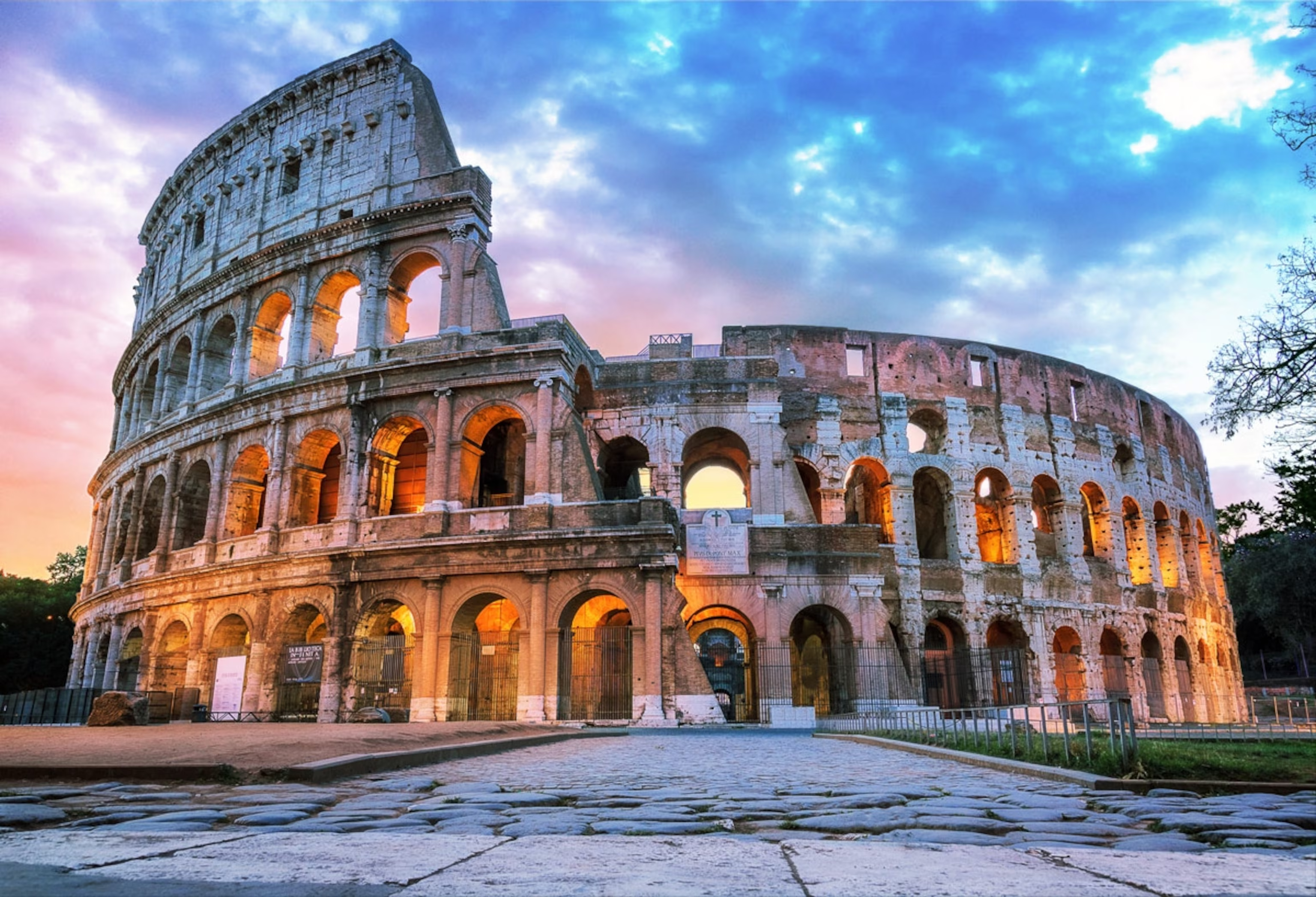
Ancient Rome was one of the most powerful civilizations in world history. From the legendary founding of Rome and the Roman Republic to the mighty Roman Empire, Roman civilization made lasting contributions to law, government, engineering, architecture, literature, military organization, and urban planning.
This collection of 120 General Knowledge (GK) questions is ideal for students, teachers, history enthusiasts, quiz competitions, and competitive exam preparation. All answers are provided at the end, allowing readers to test their knowledge before checking the answer key.
Section 1: Ancient Roman Civilization
- On which continent was ancient Rome located?
- Which modern-day country contains the city of Rome?
- According to Roman tradition, in which year was Rome founded?
- Which two legendary brothers are associated with the founding of Rome?
- Who was the legendary first king of Rome?
- Which river flows through the city of Rome?
- What was the language of ancient Rome?
- What was the Roman Forum used for?
- What was the name of the central hill associated with Rome’s earliest settlement?
- What was the traditional symbol of Rome?
- What does the Latin expression SPQR stand for?
- Which civilization strongly influenced early Roman art, religion, and customs?
- What was the name of the sea at the center of the Roman Empire?
- What was the principal occupation of many early Romans?
- What is the historical period of ancient Rome generally divided into?
Section 2: Roman Kings and the Republic
- According to Roman tradition, who was the last king of Rome?
- In which year did the Roman Republic traditionally begin?
- What system of government replaced the Roman monarchy?
- What was the Roman Senate?
- Who were the consuls in the Roman Republic?
- How many consuls were ordinarily elected each year?
- What were the two major social orders of early Roman society?
- Who were the patricians?
- Who were the plebeians?
- What were the Twelve Tables?
- What was the role of the Roman tribunes of the plebs?
- What was a dictator’s traditional role in the Roman Republic?
- Who was Cincinnatus in Roman tradition?
- What were the Punic Wars?
- Which North African city was Rome’s major rival during the Punic Wars?
Section 3: Famous Roman Leaders
- Who was Julius Caesar?
- In which year was Julius Caesar assassinated?
- On what date was Julius Caesar assassinated, traditionally known as the Ides of March?
- Who was the first Roman emperor?
- What was Augustus’s original name?
- Which Roman general defeated Mark Antony and Cleopatra at the Battle of Actium?
- Who was Marcus Aurelius?
- Which Roman emperor is associated with the construction of a famous wall in Britain?
- Who was Nero?
- Which emperor began the construction of the Colosseum?
- Which emperor completed the Colosseum’s main construction?
- Who was Constantine the Great?
- Which emperor divided the Roman Empire into eastern and western administrative halves as part of his reforms?
- Who was Trajan?
- Which Roman emperor is traditionally regarded as the last ruler of the Western Roman Empire?
Section 4: Roman Empire and Expansion
- What was the Pax Romana?
- Approximately when did the Pax Romana begin?
- Which Roman general conquered Gaul for Rome?
- Which island in the Mediterranean was the center of the ancient Carthaginian civilization?
- Which famous Carthaginian general crossed the Alps with elephants to fight Rome?
- What was the name of the famous Roman road that connected Rome with southern Italy?
- What was the primary purpose of Roman roads?
- Which regions of Europe were conquered by Rome during its expansion?
- Which Roman emperor conquered Dacia, corresponding largely to modern Romania?
- What was the Roman province of Britannia?
- Which emperor ordered the conquest of Britain in 43 CE?
- Which region was known as Hispania under Roman rule?
- What was the principal administrative language of the Western Roman Empire?
- What was the principal language of the Eastern Roman Empire in its later centuries?
- What was the approximate maximum territorial extent of the Roman Empire under Trajan?
Section 5: Roman Army and Warfare
- What was a Roman legion?
- What was a Roman legionary?
- What was the name of the short sword commonly used by Roman infantry?
- What was the pilum?
- What was a Roman military camp called?
- What was the name of the heavy rectangular shield used by many Roman legionaries?
- Who was Spartacus?
- What was the Third Servile War?
- Which Roman general played a major role in suppressing Spartacus’s revolt?
- What was the purpose of Roman military standards?
- What was the name of the elite personal guard of Roman emperors?
- What was a Roman triumph?
- Which famous Roman commander defeated Hannibal at the Battle of Zama?
- In which year did the Battle of Zama take place?
- What military formation was especially associated with Roman siege warfare and protection against projectiles?
Section 6: Roman Gods and Religion
- Who was Jupiter in Roman mythology?
- Which Roman goddess was associated with wisdom and strategic warfare?
- Who was Neptune?
- Which Roman goddess was associated with love and beauty?
- Who was Mars?
- Which Roman god was associated with commerce, travelers, and messengers?
- Who was Juno?
- Which Roman goddess was associated with the hearth and sacred fire?
- What was the Roman equivalent of the Greek god Apollo?
- Who was Janus?
- What was the Roman practice of honoring household spirits called in relation to the Lares?
- What were augurs responsible for interpreting?
- What was the Vestal Virgins’ principal religious duty?
- Which emperor is associated with the Edict of Milan, which granted religious toleration to Christians?
- Which emperor made Nicene Christianity the official imperial religion in 380 CE through the Edict of Thessalonica, alongside co-emperors?
Section 7: Roman Architecture and Engineering
- Which famous amphitheatre is located in Rome?
- What was the Colosseum primarily used for?
- What were Roman aqueducts designed to do?
- What was the Pantheon in Rome dedicated to or associated with?
- What is the most distinctive architectural feature of the Pantheon’s interior?
- What was the purpose of Roman baths?
- What were Roman arches used for?
- What was Roman concrete called in modern historical descriptions?
- Which famous Roman structure carried water across valleys using arches?
- What was a basilica used for in ancient Rome?
- What was the Circus Maximus primarily used for?
- Which Roman building technique helped create strong, vaulted interiors?
- What was the Appian Way?
- What were Roman public latrines?
- Which Roman city was buried by the eruption of Mount Vesuvius in 79 CE?
Section 8: Daily Life and Society
- What was the basic family unit in Roman society?
- What was the Latin term for the head of a Roman household?
- What was a Roman insula?
- What was a Roman domus?
- What type of clothing was commonly associated with male Roman citizens on formal occasions?
- What was the main staple food for many ordinary Romans?
- What was the Roman thermopolium?
- What was the purpose of gladiatorial contests?
- What was the role of slaves in the Roman economy?
- What was the Roman practice of distributing food or entertainment to gain public favor sometimes called?
Section 9: Roman Literature, Law, and Science
- Who wrote the Roman epic poem The Aeneid?
- Who was Cicero?
- Which Roman historian wrote The Annals and The Histories?
- Who was Pliny the Elder?
- What is the lasting importance of Roman law and government in world history?
Answer Key
Answers 1–15: Roman Civilization
- Europe.
- Italy.
- 753 BCE.
- Romulus and Remus.
- Romulus.
- The Tiber River.
- Latin.
- Political meetings, commerce, public speeches, legal proceedings, and civic activities.
- The Palatine Hill.
- The she-wolf, associated with the legend of Romulus and Remus.
- Senatus Populusque Romanus — “The Senate and People of Rome.”
- The Etruscan civilization, along with Greek culture.
- The Mediterranean Sea.
- Agriculture.
- The Roman Kingdom, Roman Republic, and Roman Empire.
Answers 16–30: Kings and Republic
- Lucius Tarquinius Superbus, or Tarquin the Proud.
- 509 BCE, according to Roman tradition.
- The Roman Republic.
- A political council that advised magistrates and played a central role in state affairs.
- The two chief elected magistrates who led the government and commanded armies.
- Two.
- Patricians and plebeians.
- Members of Rome’s hereditary aristocratic families.
- The broader body of Roman citizens outside the patrician order, though social divisions changed over time.
- Rome’s earliest famous written collection of laws.
- To protect plebeian interests and provide a check on certain government actions.
- To exercise extraordinary authority during a severe emergency, traditionally for a limited period.
- A Roman statesman celebrated in tradition for relinquishing extraordinary power and returning to private life.
- Three major wars fought between Rome and Carthage from 264 to 146 BCE.
- Carthage.
Answers 31–45: Roman Leaders
- A Roman general and statesman who played a decisive role in the Republic’s collapse.
- 44 BCE.
- 15 March.
- Augustus.
- Gaius Octavius, later known as Gaius Julius Caesar Octavianus.
- Octavian, later Augustus.
- A Roman emperor and Stoic philosopher who ruled from 161 to 180 CE.
- Hadrian.
- A Roman emperor who ruled from 54 to 68 CE.
- Vespasian.
- Titus.
- The emperor who founded Constantinople as a new imperial capital and supported Christianity.
- Diocletian.
- A Roman emperor under whom the empire reached its greatest territorial extent.
- Romulus Augustulus, deposed in 476 CE.
Answers 46–60: Empire and Expansion
- A long period of relative peace and stability within the Roman Empire.
- Approximately 27 BCE, with Augustus’s rise to power.
- Julius Caesar.
- Sicily was a major Mediterranean island contested by Rome and Carthage.
- Hannibal Barca.
- The Appian Way, or Via Appia.
- To move troops, officials, goods, and messages efficiently.
- Much of western and southern Europe, including Gaul, Hispania, and parts of Britain and the Balkans.
- Trajan.
- The Roman province covering much of what is now England and Wales.
- Claudius.
- The Iberian Peninsula, principally modern Spain and Portugal.
- Latin.
- Greek.
- Approximately 5 million square kilometres, depending on the method of calculation.
Answers 61–75: Army and Warfare
- A major organized unit of the Roman army.
- A soldier serving in a Roman legion.
- The gladius.
- A Roman throwing spear or javelin.
- A castrum.
- The scutum.
- A gladiator who led a major slave revolt against Rome.
- The large slave uprising against Rome led by Spartacus and others from 73 to 71 BCE.
- Marcus Licinius Crassus.
- To identify units, represent military authority, and serve as rallying points.
- The Praetorian Guard.
- A ceremonial procession celebrating a major military victory.
- Scipio Africanus.
- 202 BCE.
- The testudo, or “tortoise” formation.
Answers 76–90: Gods and Religion
- King of the gods and god of the sky and thunder.
- Minerva.
- God of the sea.
- Venus.
- God of war.
- Mercury.
- Queen of the gods, associated with marriage and women.
- Vesta.
- Apollo; the Romans adopted his Greek name.
- God associated with beginnings, endings, doorways, and transitions.
- Household worship and offerings to the Lares, protective household spirits.
- Signs and omens, especially the behavior and flight of birds.
- Maintaining the sacred fire of Vesta.
- Constantine I, together with Licinius, was associated with the agreement of 313 CE.
- Theodosius I, together with Gratian and Valentinian II, during whose reign the edict was issued.
Answers 91–105: Architecture and Engineering
- The Colosseum.
- Gladiatorial contests, animal hunts, and other public spectacles.
- To transport fresh water to towns and cities.
- A temple dedicated to the gods, with the precise original dedication debated.
- A vast domed roof with a central circular opening called the oculus.
- Bathing, exercise, relaxation, and social interaction.
- To support structures and distribute weight efficiently.
- Roman concrete, often associated with opus caementicium.
- A Roman aqueduct.
- Public business, legal proceedings, and civic administration.
- Chariot racing.
- Vaulting and domes, often built with concrete and masonry.
- A major Roman road linking Rome with southern Italy.
- Shared public toilet facilities.
- Pompeii; nearby Herculaneum was also buried in the eruption.
Answers 106–115: Daily Life and Society
- The family or familia.
- Paterfamilias.
- A multi-storey apartment building.
- A private urban house, often belonging to a wealthier family.
- The toga.
- Grain, particularly wheat, often consumed as bread or porridge.
- A shop or food outlet selling prepared meals and drinks.
- Public entertainment, ceremonies, and demonstrations of status and power.
- They worked in households, agriculture, mines, workshops, construction, and other sectors.
- Bread and circuses — panem et circenses.
Answers 116–120: Literature, Law, and Science
- Virgil.
- A Roman orator, lawyer, statesman, and philosophical writer.
- Tacitus.
- A Roman author and naturalist who wrote Natural History.
- Roman legal principles, civic institutions, republican ideas, engineering, and administrative practices influenced many later societies.
Conclusion
Ancient Rome transformed the Mediterranean world through its military strength, administrative systems, monumental architecture, road networks, legal traditions, and literary achievements. Its legacy remains visible today in modern legal systems, languages derived from Latin, urban infrastructure, and political institutions.
Public note: These 120 GK questions are suitable for school competitions, classroom activities, online quizzes, and self-study. Dates and traditional stories sometimes vary across historical sources. The answers distinguish well-established facts from legends where appropriate, but readers studying Roman history in depth should consult reputable historical references for additional context.
Leave a Reply