

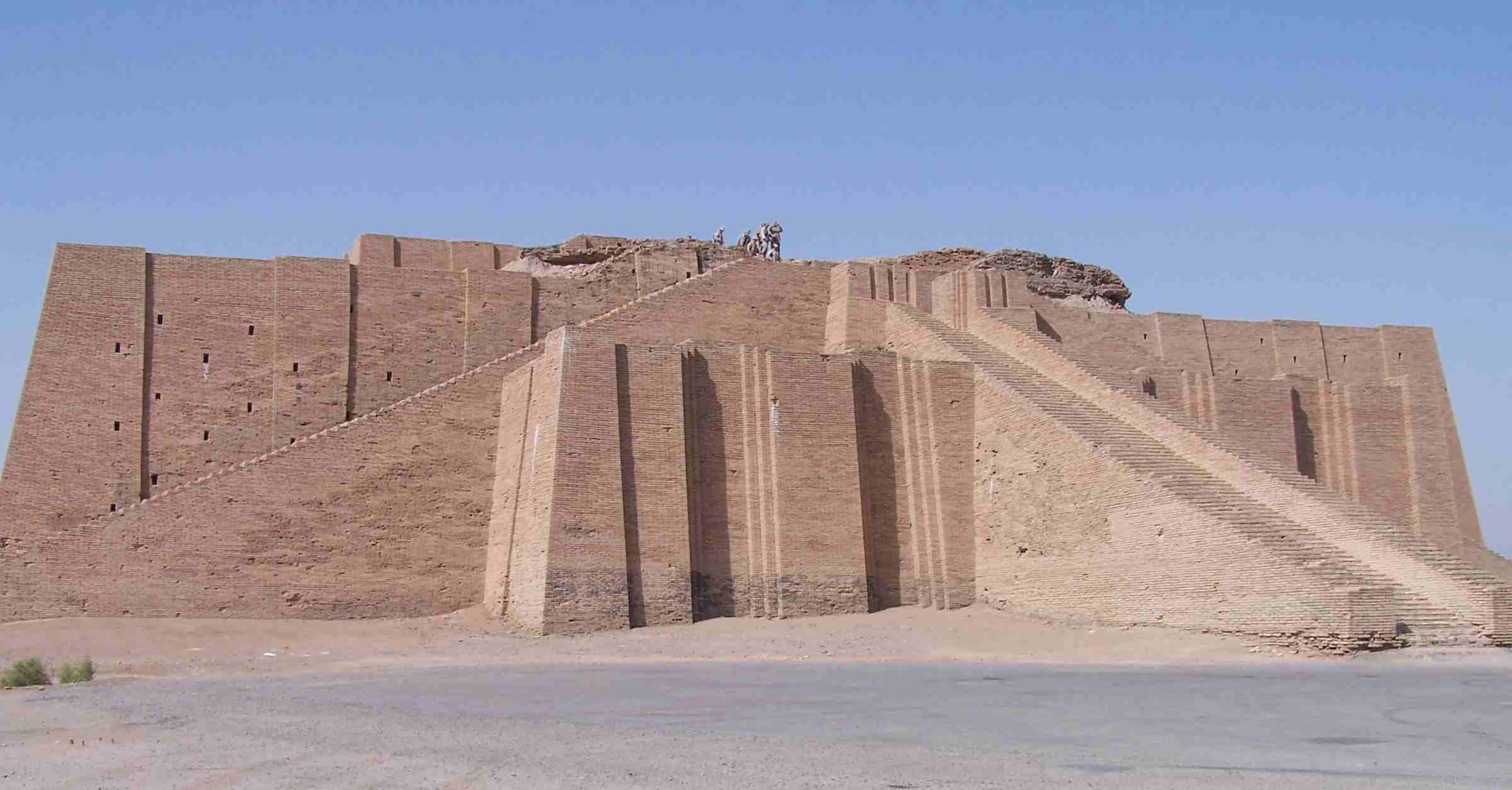
Mesopotamia is widely regarded as one of the cradles of civilization. Located between the Tigris and Euphrates rivers, it was home to some of the world’s earliest cities, writing systems, legal codes, empires, and mathematical traditions. The Sumerians, Akkadians, Babylonians, and Assyrians all contributed to its remarkable history.
This collection of 120 General Knowledge (GK) questions is designed for students, teachers, quiz competitions, competitive exam preparation, and history enthusiasts. The answer key is provided at the end so readers can test their knowledge first.
Section 1: Introduction to Mesopotamia
- What does the word Mesopotamia mean?
- Between which two major rivers was Mesopotamia located?
- In which modern-day region was most of ancient Mesopotamia situated?
- Which continent contains the historical region of Mesopotamia?
- Which ancient civilization is often associated with the world’s earliest cities?
- What was the name of the southern region of Mesopotamia where the Sumerians flourished?
- What was the northern part of Mesopotamia historically associated with?
- Why was Mesopotamia called the Fertile Crescent’s eastern region?
- What was the main occupation of most early Mesopotamian settlers?
- Why were the Tigris and Euphrates rivers important to Mesopotamian civilization?
- What type of climate characterizes much of southern Mesopotamia?
- What was the principal building material used for many Mesopotamian houses?
- What was irrigation used for in Mesopotamia?
- What is the approximate period in which the first cities emerged in southern Mesopotamia?
- Why is Mesopotamia considered one of the cradles of civilization?
Section 2: Sumerian Civilization
- Who were the Sumerians?
- Which ancient city is traditionally associated with the earliest development of cuneiform writing?
- What was the Sumerian writing system called?
- What was the principal purpose of early Sumerian writing?
- What was a Sumerian city-state?
- Name one important city-state of ancient Sumer.
- Which Sumerian city was associated with the legendary king Gilgamesh?
- What was a ziggurat?
- What was the main religious purpose of a ziggurat?
- Who was Gilgamesh?
- What is the Epic of Gilgamesh?
- Which Sumerian goddess was associated with love, fertility, and war?
- What was the name of the Sumerian sky god?
- Who was Enki in Sumerian mythology?
- What was the significance of the Sumerian invention of writing?
Section 3: Akkadian Empire
- Who founded the Akkadian Empire?
- What was the capital of the Akkadian Empire?
- Around which century BCE did Sargon of Akkad establish his empire?
- Why is Sargon of Akkad considered an important ruler?
- Which language was spoken by the Akkadians?
- What was the relationship between Sumerian and Akkadian culture?
- Who was Naram-Sin?
- What title did Naram-Sin famously use to express his elevated royal status?
- What happened to the Akkadian Empire after its period of power?
- Which neighboring highland people are often associated with the empire’s eventual collapse?
Section 4: Babylonian Civilization
- Which ancient city became the center of the Babylonian Empire?
- Who was Hammurabi?
- What is the Code of Hammurabi?
- In which century BCE did Hammurabi rule?
- What principle is commonly associated with the punishments in the Code of Hammurabi?
- Was the Code of Hammurabi the world’s first known written law code?
- Which Babylonian god was associated with justice and kingship?
- What was the Ishtar Gate?
- Which Babylonian king is traditionally associated with the construction of the Hanging Gardens of Babylon?
- Are the existence and location of the Hanging Gardens conclusively established by archaeological evidence?
- Which river flowed near the ancient city of Babylon?
- What was Babylon famous for during its periods of greatest power?
- Who was Nebuchadnezzar II?
- Which kingdom did Nebuchadnezzar II conquer in Jerusalem in the sixth century BCE?
- Which empire conquered Babylon in 539 BCE?
Section 5: Assyrian Civilization
- Which ancient city was a major center of the Assyrian Empire?
- What was the Assyrian Empire particularly famous for?
- Who was Ashurnasirpal II?
- Which Assyrian king established a famous royal library at Nineveh?
- What is the Library of Ashurbanipal known for?
- Which language was widely used in Assyrian administration and scholarship?
- What was the principal religious and political center of Assyria?
- Which Assyrian king conquered Egypt in the seventh century BCE?
- What happened to Nineveh in 612 BCE?
- Which peoples formed the coalition that destroyed Nineveh?
Section 6: Mesopotamian Gods and Religion
- Who was Anu in Mesopotamian mythology?
- Which god was associated with wisdom, freshwater, and crafts in Sumerian tradition?
- Who was Enlil?
- Which Babylonian god became the chief deity of Babylon?
- Who was Ishtar?
- Which Mesopotamian god was associated with the underworld and disease?
- Who was Shamash?
- Which goddess was associated with grain and agriculture in Sumerian tradition?
- What was the role of priests in Mesopotamian society?
- Why were temples important in Mesopotamian cities?
- What was divination in Mesopotamian religion?
- What was a ziggurat believed to represent in religious terms?
- What role did myths play in Mesopotamian society?
- What was the Mesopotamian view of the relationship between humans and the gods generally like?
- What were votive statues used for?
Section 7: Writing, Literature, and Education
- What was cuneiform writing?
- On what material were many Mesopotamian documents written?
- What tool was commonly used to make cuneiform impressions?
- What was the name for a trained writer in Mesopotamian society?
- Which famous literary work tells the story of a king seeking immortality?
- Who was Enkidu in the Epic of Gilgamesh?
- What is the story of the great flood in the Epic of Gilgamesh often compared with?
- What was the purpose of scribal schools?
- What language did many Mesopotamian scholars continue to study long after it ceased to be an everyday spoken language?
- Why are Mesopotamian clay tablets important to historians today?
Section 8: Science, Mathematics, and Technology
- What number system did Mesopotamian mathematicians commonly use?
- How many seconds are there in a minute, reflecting a convention influenced by the ancient sexagesimal system?
- How many degrees are there in a circle under the conventional system influenced by Babylonian mathematics?
- What was the significance of the Babylonian base-60 number system?
- What astronomical phenomena did Babylonian scholars carefully observe?
- Which ancient people developed sophisticated methods for predicting celestial events, including eclipses?
- What was the main purpose of the Mesopotamian calendar?
- How did Mesopotamians use mathematics in agriculture and construction?
- What invention helped transform transportation and craft production in ancient Mesopotamia?
- What was the significance of the plough in Mesopotamian agriculture?
Section 9: Daily Life, Trade, and Society
- What were the main crops grown in Mesopotamia?
- Which domesticated animals were important to Mesopotamian agriculture?
- What was the main source of clay used for pottery and tablets?
- Why was trade important to Mesopotamia?
- Which valuable natural resource was relatively scarce in southern Mesopotamia?
- What materials did Mesopotamian traders often import?
- What role did merchants play in Mesopotamian society?
- What was the main purpose of irrigation canals?
- What were the common occupations of Mesopotamian artisans?
- What was the role of the king in Mesopotamian society?
- What was the general social hierarchy in Mesopotamian city-states?
- What types of houses did ordinary Mesopotamians commonly inhabit?
- What was the importance of beer in Mesopotamian daily life?
- What were cylinder seals used for?
- How did rivers and canals help connect Mesopotamian settlements?
Section 10: Empires, History, and Legacy
- Which empire conquered Babylon in 539 BCE under Cyrus the Great?
- Who was Cyrus the Great?
- Which Macedonian ruler conquered Babylon in 331 BCE?
- What happened to Mesopotamia after the conquests of Alexander the Great?
- What are the most important contributions of Mesopotamian civilizations to world history?
Answer Key
Answers 1–15: Introduction to Mesopotamia
- “The land between the rivers.”
- The Tigris and Euphrates.
- Primarily modern Iraq, with parts extending into Syria, Turkey, and neighboring areas.
- Asia.
- The Sumerian civilization.
- Sumer.
- Assyria.
- It lay in the eastern portion of a fertile agricultural zone extending across parts of Southwest Asia.
- Agriculture.
- They supplied water, fertile sediments, transportation routes, and opportunities for irrigation.
- Hot and arid, with limited rainfall in many areas.
- Mudbrick.
- To supply crops with water.
- Around the fourth millennium BCE, particularly during the Uruk period.
- It developed early cities, writing, complex governments, organized religion, and specialized occupations.
Answers 16–30: Sumerian Civilization
- An ancient people who developed one of the earliest urban civilizations in southern Mesopotamia.
- Uruk is strongly associated with early cuneiform development.
- Cuneiform.
- Recording economic transactions, goods, and administrative information.
- An independent city and its surrounding territory with its own ruler and institutions.
- Ur, Uruk, Lagash, or Eridu.
- Uruk.
- A massive stepped temple platform.
- To support a temple associated with the city’s patron deity.
- A legendary king of Uruk and the central hero of an ancient epic.
- An ancient Mesopotamian epic exploring friendship, kingship, mortality, and the search for immortality.
- Inanna, later associated with Ishtar.
- An.
- A god associated with freshwater, wisdom, and crafts.
- It enabled the recording of laws, transactions, literature, and administrative information.
Answers 31–40: Akkadian Empire
- Sargon of Akkad.
- Akkad, whose precise location has not been securely identified.
- The twenty-fourth century BCE.
- He created one of the earliest known territorial empires in Mesopotamia.
- Akkadian, a Semitic language.
- Akkadian rulers adopted and adapted many Sumerian cultural, religious, and administrative traditions.
- A powerful Akkadian ruler and grandson of Sargon.
- “King of the Four Quarters,” a title expressing universal dominion.
- It weakened and eventually collapsed amid internal problems and external pressures.
- The Gutians are traditionally associated with its decline, though the causes were complex.
Answers 41–55: Babylonian Civilization
- Babylon.
- A Babylonian king famous for his law code and expansion of Babylonian power.
- A collection of laws and royal judgments inscribed on a stone monument.
- The eighteenth century BCE.
- The principle often summarized as “an eye for an eye,” although the penalties varied by status and circumstance.
- No. Earlier law collections, including the Code of Ur-Nammu, are known.
- Shamash was associated with justice; Marduk became Babylon’s chief god.
- A monumental, decorated ceremonial gateway to Babylon.
- Nebuchadnezzar II is traditionally associated with them, but their existence and location remain debated.
- No. Their location and even their association with Babylon remain disputed.
- The Euphrates River.
- Its monumental buildings, temples, royal power, scholarship, and influence over the region.
- A powerful Neo-Babylonian king who ruled from approximately 605 to 562 BCE.
- The Kingdom of Judah, including the conquest of Jerusalem in 586 BCE.
- The Persian Empire under Cyrus the Great.
Answers 56–65: Assyrian Civilization
- Nineveh, especially during the later Assyrian Empire.
- Its powerful army, imperial administration, siege warfare, and monumental palaces.
- A ninth-century BCE Assyrian king known for military campaigns and major building projects.
- Ashurbanipal.
- It preserved thousands of clay tablets, including important copies of literary and scholarly works.
- Akkadian, written in cuneiform; Aramaic was also widely used.
- Assur was the traditional religious center, while Nineveh became a major imperial capital.
- Esarhaddon conquered Egypt; his successor Ashurbanipal also campaigned there.
- It was captured and destroyed by a coalition of enemies in 612 BCE.
- Babylonians and Medes, with other groups involved in the broader conflict.
Answers 66–80: Gods and Religion
- The sky god and a senior deity in the Mesopotamian pantheon.
- Enki, known in Akkadian tradition as Ea.
- A major god associated with wind, authority, and the ordering of the world.
- Marduk.
- A goddess associated with love, fertility, warfare, and political power.
- Nergal.
- The sun god, associated with justice and judgment.
- Ashnan was associated with grain in Sumerian tradition.
- They performed rituals, maintained temples, interpreted signs, and managed religious property.
- They served as religious centers and often controlled substantial economic resources.
- The interpretation of signs believed to reveal divine intentions or future events.
- A sacred link between the earthly city and the divine realm.
- They explained the world, human destiny, divine power, kingship, and natural events.
- People were generally expected to honor the gods through worship, offerings, and proper rituals.
- They represented worshippers and were placed in temples as lasting symbols of devotion.
Answers 81–90: Writing and Literature
- A writing system using wedge-shaped impressions on clay.
- Clay tablets.
- A cut reed stylus.
- A scribe.
- The Epic of Gilgamesh.
- Gilgamesh’s companion and friend.
- Flood traditions found in other ancient Near Eastern texts and, in a broader comparative context, the biblical flood narrative.
- To train scribes in writing, mathematics, literature, and administration.
- Sumerian.
- They preserve records of laws, trade, literature, diplomacy, mathematics, and everyday life.
Answers 91–100: Science and Technology
- The sexagesimal, or base-60, system.
- 60 seconds.
- 360 degrees.
- It influenced timekeeping, angular measurement, and astronomical calculations.
- The movements of the Sun, Moon, planets, stars, and eclipses.
- Babylonian astronomers.
- To organize agricultural seasons, religious festivals, and civic activities.
- They measured fields, calculated quantities, planned buildings, and managed irrigation.
- The wheel, which developed in the region during the fourth millennium BCE.
- It increased the efficiency of preparing land and cultivating crops.
Answers 101–115: Daily Life and Society
- Barley, wheat, dates, and various vegetables.
- Sheep, goats, cattle, and donkeys.
- The alluvial soils deposited by the Tigris and Euphrates rivers.
- Southern Mesopotamia lacked many essential raw materials, making exchange important.
- Timber, stone, and many metals.
- Wood, stone, metals, and other materials unavailable locally.
- They exchanged goods, organized commercial networks, and connected distant communities.
- To carry river water to agricultural fields.
- Potters, metalworkers, weavers, carpenters, and stoneworkers.
- To govern, administer justice, lead armies, maintain irrigation and public works, and support temples.
- Kings and elites, priests and officials, merchants and artisans, farmers and laborers, and enslaved people, with considerable variation over time.
- Mudbrick houses, often built around a central courtyard.
- It was a common beverage and an important part of food culture and some religious offerings.
- To make impressions that authenticated documents, marked ownership, and sealed containers.
- They facilitated transportation, trade, communication, and the movement of agricultural goods.
Answers 116–120: Empires and Legacy
- The Persian Achaemenid Empire.
- The Persian ruler who founded the Achaemenid Empire and conquered Babylon in 539 BCE.
- Alexander the Great.
- It became part of the Hellenistic world and was subsequently ruled by successor kingdoms, including the Seleucid Empire.
- Early urbanization, writing, law codes, mathematics, astronomy, literature, irrigation, and organized government.
Conclusion
Mesopotamia made foundational contributions to human civilization. Its peoples developed early writing systems, built some of the first cities, created influential legal traditions, advanced mathematics and astronomy, and produced enduring literary works such as the Epic of Gilgamesh.
Public note: These 120 questions are suitable for school quizzes, classroom activities, history websites, and self-study. Mesopotamian history spans thousands of years, and some traditional accounts differ from archaeological evidence. For advanced study, consult reputable historical and archaeological resources on Sumer, Akkad, Babylonia, and Assyria.
Leave a Reply