

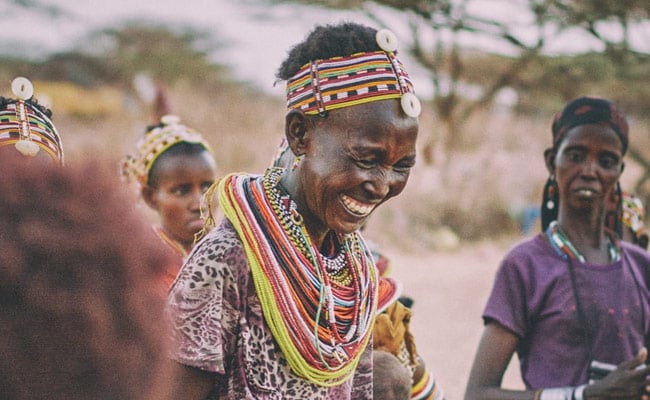
Celebrating Indigenous Cultures, Rights, Knowledge and Dignity
Every year on August 9, the world observes the International Day of the World’s Indigenous Peoples, a United Nations observance dedicated to recognizing the rights, cultures, traditions, languages and contributions of Indigenous peoples around the globe.
Indigenous peoples are the custodians of some of humanity’s oldest cultures and knowledge systems. They have maintained close relationships with their lands, forests, rivers, mountains and oceans for generations. Their traditional knowledge has contributed to agriculture, medicine, biodiversity conservation and sustainable ways of living.
Yet many Indigenous communities continue to face discrimination, poverty, displacement, loss of traditional lands, threats to their languages and cultures, and limited access to education, healthcare and economic opportunities.
The International Day of the World’s Indigenous Peoples therefore has a dual purpose: to celebrate Indigenous peoples and to draw attention to the challenges they continue to face.


What Is the International Day of the World’s Indigenous Peoples?
The International Day of the World’s Indigenous Peoples is observed annually on August 9.
The United Nations established the observance in 1994, following the recommendation of the UN Working Group on Indigenous Populations.
The date was chosen because the first meeting of the United Nations Working Group on Indigenous Populations took place in Geneva on August 9, 1982.
The day provides an opportunity to:
- Celebrate Indigenous cultures and traditions
- Promote Indigenous peoples’ human rights
- Protect Indigenous languages
- Recognize traditional knowledge
- Highlight challenges faced by Indigenous communities
- Encourage participation in decisions affecting Indigenous peoples
- Promote equality and social justice
- Strengthen international cooperation
Who Are Indigenous Peoples?
There is no single definition that captures every Indigenous community around the world.
Indigenous peoples are generally understood as communities that have historical continuity with societies that existed before the establishment or expansion of modern states and who maintain distinctive cultural, social, economic or political institutions.
They often have strong connections with particular territories and ecosystems.
Indigenous peoples are found on every inhabited continent.
They include hundreds of distinct peoples with their own:
- Languages
- Customs
- Religious and spiritual traditions
- Traditional governance systems
- Food practices
- Art and music
- Stories and oral traditions
- Relationships with nature
- Knowledge systems
They are therefore not one homogeneous group.
Their diversity is one of the most important aspects of Indigenous identity.
Indigenous Peoples Around the World
Indigenous communities exist in virtually every region of the world.
Among the many Indigenous peoples are:
Māori
The Māori are the Indigenous Polynesian people of Aotearoa New Zealand.
Aboriginal and Torres Strait Islander Peoples
Australia is home to hundreds of distinct Aboriginal nations and Torres Strait Islander peoples with ancient cultural traditions.
Inuit
The Inuit live across Arctic regions of Canada, Greenland and Alaska.
Sámi
The Sámi are Indigenous peoples of northern parts of Norway, Sweden, Finland and Russia.
Native American Peoples
The United States and Canada are home to numerous Indigenous nations and communities, each with distinctive histories and cultures.
First Nations
In Canada, many Indigenous peoples identify as First Nations, alongside Inuit and Métis peoples.
Amazonian Indigenous Peoples
The Amazon basin contains numerous Indigenous communities whose traditional knowledge is closely connected with the rainforest.
Adivasi Communities of India
India is home to a large and diverse population of Indigenous and tribal communities, commonly referred to as Adivasis in many social and cultural contexts.
These communities include peoples such as the Gond, Santhal, Bhil, Munda, Oraon, Khasi, Garo, Naga and many others.
Indigenous Peoples in India
India has one of the world’s largest and most diverse populations of Indigenous and tribal communities.
The Constitution of India officially recognizes many tribal communities as Scheduled Tribes.
According to the 2011 Census of India, Scheduled Tribes accounted for approximately 8.6% of India’s population.
India’s tribal communities are distributed across many regions, particularly:
- Central India
- Northeastern India
- Odisha
- Jharkhand
- Chhattisgarh
- Madhya Pradesh
- Maharashtra
- Gujarat
- Rajasthan
- Andhra Pradesh and Telangana
- Kerala
- Karnataka
- Tamil Nadu
- Andaman and Nicobar Islands
The communities differ enormously in language, traditions, social organization and ways of life.
Indigenous Peoples of Kerala
Kerala is also home to several tribal communities.
Among them are:
- Paniyas
- Kurichiyas
- Kurumbas
- Kattunayakans
- Adiyans
- Irulas
- Kadar
- Kanikkars
- Muthuvans
Many of these communities have traditionally lived in and around forests and mountainous areas.


The Wayanad region is particularly well known for its tribal population and cultural diversity.
Kerala’s Indigenous communities possess valuable traditional knowledge concerning forests, medicinal plants, agriculture, food, weather and local ecosystems.
Protecting these communities therefore also contributes to preserving Kerala’s cultural and ecological heritage.
Indigenous Knowledge and the Environment
One of the most important contributions of Indigenous peoples is their traditional ecological knowledge.
For generations, Indigenous communities have developed detailed understandings of:
- Plants
- Animals
- Soil
- Water
- Weather
- Forests
- Seasonal cycles
- Agriculture
- Traditional medicine
This knowledge is often transmitted orally from one generation to another.
In many places, Indigenous communities have developed sustainable practices that allow them to obtain food and resources while maintaining relationships with their ecosystems.
Modern environmental scientists increasingly recognize the importance of Indigenous knowledge in biodiversity conservation and climate adaptation.
Indigenous Peoples and Climate Change
Indigenous communities are often among those most affected by climate change.
Many Indigenous peoples depend directly on natural ecosystems for:
- Food
- Water
- Housing materials
- Agriculture
- Fishing
- Hunting
- Traditional medicines
- Livelihoods
Changes in temperature, rainfall, sea levels, forests and wildlife populations can therefore have profound effects on their lives.
At the same time, Indigenous peoples are not merely victims of climate change.
Their traditional knowledge can contribute to:
- Ecosystem restoration
- Forest conservation
- Sustainable agriculture
- Water management
- Biodiversity protection
- Climate adaptation
Their participation is therefore essential in developing effective environmental policies.
Indigenous Languages
Language is one of the strongest expressions of cultural identity.
Many Indigenous languages contain knowledge about:
- Plants
- Animals
- Landscapes
- Traditional medicine
- History
- Family relationships
- Spiritual traditions
- Local ecosystems
However, many Indigenous languages are endangered.
When a language disappears, a significant part of a community’s cultural heritage can also be lost.
The preservation and revitalization of Indigenous languages is therefore an important part of protecting cultural diversity.
Schools, community programs, digital archives and Indigenous-led language initiatives can all contribute to language preservation.
Indigenous Children and Education
Education is an important area of concern.
Indigenous children should have access to quality education while also having their cultural identity respected.
Education systems can support Indigenous communities by:
- Teaching Indigenous history
- Respecting traditional knowledge
- Supporting Indigenous languages
- Preventing discrimination
- Providing culturally appropriate educational materials
- Encouraging Indigenous participation in education policy
Education should not require children to abandon their cultural identity.
Instead, it can help them develop modern skills while remaining connected to their heritage.
Indigenous Women
Indigenous women frequently play crucial roles in preserving culture and transmitting knowledge between generations.
They may be guardians of:
- Traditional stories
- Languages
- Food traditions
- Medicinal knowledge
- Handicrafts
- Agricultural practices
- Family traditions
At the same time, Indigenous women may experience multiple forms of discrimination, including gender-based inequality and social exclusion.
Empowering Indigenous women is therefore essential for the well-being of entire communities.
Challenges Facing Indigenous Peoples
Despite their cultural richness and resilience, Indigenous peoples continue to face serious challenges.
1. Loss of Traditional Lands
Land is often central to Indigenous identity.
When communities lose access to traditional territories, the consequences can extend beyond economics to culture, spirituality and social life.
2. Discrimination
Indigenous peoples in many countries continue to experience discrimination because of their ethnicity, language or cultural practices.
3. Poverty
Some Indigenous communities experience disproportionately high levels of poverty and limited access to economic opportunities.
4. Limited Access to Healthcare
Remote geographical locations and inadequate infrastructure can make healthcare difficult to access.
5. Threats to Languages
Globalization and dominant-language education systems can contribute to language loss.
6. Cultural Erosion
Rapid social and economic change can put pressure on traditional practices and institutions.
7. Displacement
Infrastructure projects, mining, deforestation and other developments can sometimes threaten Indigenous communities’ traditional territories.
8. Climate Change
Environmental changes can threaten traditional livelihoods and cultural practices.
Indigenous Peoples and Human Rights
Indigenous rights are fundamentally human rights.
Important principles include the right to:
- Equality
- Cultural identity
- Language
- Education
- Health
- Participation
- Traditional lands and resources
- Freedom from discrimination
- Self-determination
One of the most important international instruments concerning Indigenous rights is the United Nations Declaration on the Rights of Indigenous Peoples (UNDRIP).
The declaration was adopted by the UN General Assembly in 2007.
It recognizes a broad range of collective and individual rights of Indigenous peoples.
The Right to Self-Determination
A central principle in Indigenous rights is self-determination.
This means Indigenous peoples have the right to participate in decisions concerning their political, economic, social and cultural future.
Policies affecting Indigenous communities should therefore not simply be imposed upon them.
Meaningful participation requires listening to Indigenous communities and respecting their own institutions, perspectives and priorities.
Indigenous Art and Culture
Indigenous cultures have contributed immensely to world civilization.
Their cultural expressions include:
- Traditional music
- Dance
- Painting
- Sculpture
- Weaving
- Pottery
- Jewelry
- Storytelling
- Architecture
- Poetry
- Oral history
Many Indigenous artistic traditions are closely connected with nature, spirituality and community identity.
Today, Indigenous artists are also using modern media, cinema, photography, literature and digital platforms to tell their stories.
Indigenous Traditional Medicine
Indigenous communities have developed extensive knowledge of medicinal plants and traditional healing practices.
Some modern medicines have roots in substances discovered through traditional knowledge and local plant use.
However, traditional knowledge must be treated respectfully.
Commercial exploitation of Indigenous knowledge without proper recognition, consent or benefit-sharing raises serious ethical questions.
Indigenous communities should have a meaningful role in decisions concerning the use of their traditional knowledge.
Indigenous Peoples and Biodiversity
Many areas inhabited or traditionally managed by Indigenous peoples contain remarkable biodiversity.
Forests, mountains, wetlands, islands and grasslands have been protected through traditional practices in numerous regions.
Indigenous stewardship can therefore contribute to:
Biodiversity conservation + Climate resilience + Sustainable livelihoods + Cultural preservation
This is one reason why Indigenous participation is increasingly important in global environmental discussions.
Why August 9 Matters
August 9 is not simply another international observance.
It is a reminder that the world’s cultural heritage belongs to all humanity.
Every Indigenous language represents a unique way of understanding the world.
Every traditional song carries memories.
Every craft can preserve generations of knowledge.
Every traditional ecological practice may contain lessons about living sustainably.
Every community has stories that deserve to be heard.
How Is the Day Observed?
Governments, schools, universities, Indigenous organizations and international institutions may mark the day through:
- Cultural festivals
- Seminars
- Exhibitions
- Traditional music and dance
- Public discussions
- Educational programs
- Film screenings
- Art exhibitions
- Language preservation programs
- Indigenous rights campaigns
- Environmental initiatives
The emphasis is increasingly placed on Indigenous-led participation, rather than simply presenting Indigenous cultures as objects of observation.
How Can We Celebrate the Day?
There are many meaningful ways to observe the International Day of the World’s Indigenous Peoples.
Learn about an Indigenous community
Read about an Indigenous people from your own country or another part of the world.
Learn a traditional story
Explore Indigenous oral traditions and literature.
Support Indigenous artists
Purchase authentic Indigenous artwork or handicrafts where ethical and appropriate.
Protect Indigenous languages
Learn about endangered languages and support preservation efforts.
Respect traditional knowledge
Recognize Indigenous communities as knowledge holders rather than simply sources of cultural material.
Support environmental conservation
Many Indigenous rights are closely connected with environmental protection.
Challenge stereotypes
Avoid treating Indigenous peoples as a single, uniform group.
Listen to Indigenous voices
Perhaps the most important action is simply to listen to Indigenous people speaking about their own experiences, aspirations and priorities.
Indigenous Youth and the Future
Young Indigenous people are increasingly using technology to preserve and promote their cultures.
Social media, podcasts, digital archives, online education and filmmaking allow Indigenous youth to communicate their stories to global audiences.
This creates exciting possibilities for cultural preservation.
Technology does not necessarily mean abandoning tradition.
It can become a tool for protecting and revitalizing tradition.
Indigenous Peoples and the Future of Humanity
The future of Indigenous communities is closely connected with the future of the planet.
As the world confronts:
- Climate change
- Biodiversity loss
- Water scarcity
- Deforestation
- Food insecurity
- Cultural homogenization
traditional Indigenous knowledge can offer valuable perspectives.
But Indigenous peoples should not be expected to carry the burden of solving global environmental problems alone.
They deserve rights, resources, recognition and equal participation.
Their knowledge should complement scientific research rather than be appropriated or romanticized.
Important Facts at a Glance
| Fact | Details |
|---|---|
| Observance | International Day of the World’s Indigenous Peoples |
| Date | August 9 |
| Established by | United Nations |
| First observed | 1995 |
| Date chosen because | First UN Working Group on Indigenous Populations meeting, 1982 |
| UN declaration on Indigenous rights | Adopted in 2007 |
| Main themes | Rights, culture, language, dignity and self-determination |
| Global focus | Indigenous peoples and communities worldwide |
A Message for the Younger Generation
The younger generation has an important role in preserving cultural diversity.
Young people can:
- Learn about Indigenous history.
- Respect different cultures.
- Reject stereotypes.
- Protect nature.
- Support endangered languages.
- Listen to Indigenous voices.
- Promote equality.
- Share accurate information online.
Cultural diversity should not be viewed as an obstacle to progress.
It is part of humanity’s wealth.
Conclusion
The International Day of the World’s Indigenous Peoples, observed every year on August 9, is a celebration of the extraordinary diversity, resilience and contributions of Indigenous peoples.
It reminds us that humanity is made up of thousands of cultures, languages, traditions and ways of understanding the world.
At the same time, the day calls attention to the challenges faced by Indigenous communities, including discrimination, land insecurity, poverty, language loss, cultural erosion and climate change.
The most meaningful way to observe this day is not merely to admire Indigenous traditions from a distance. It is to respect Indigenous rights, listen to Indigenous voices, protect cultural heritage and recognize Indigenous peoples as equal partners in shaping the future.
Indigenous cultures are not relics of the past.
They are living cultures with a present and a future.
Their languages, knowledge, stories and traditions enrich the shared heritage of humanity.
When we protect Indigenous cultures, we protect the diversity of human civilization itself.
Leave a Reply