

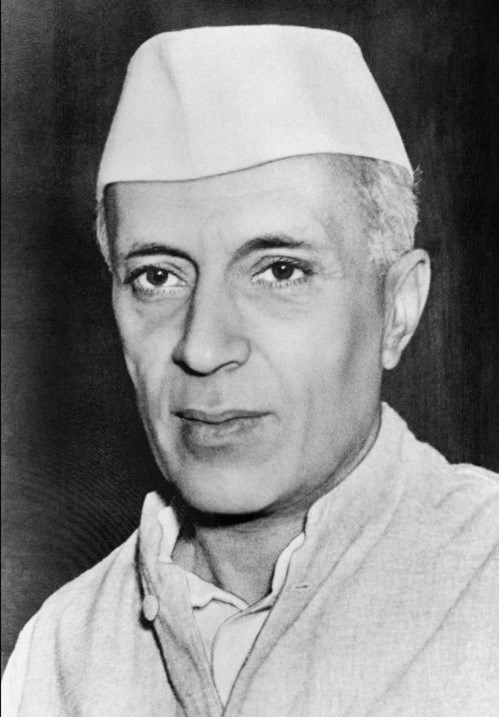
Few leaders have left as profound a mark on modern India as Jawaharlal Nehru. A statesman, freedom fighter, visionary, and nation-builder, Nehru played a pivotal role in India’s struggle for independence and guided the newly independent nation through its formative years. As India’s first Prime Minister, he laid the foundations of democratic governance, scientific progress, industrial development, and international diplomacy that continue to influence the country today.
Often referred to as the “Architect of Modern India,” Nehru’s leadership helped shape the political, economic, and social direction of the world’s largest democracy.
Early Life and Education
Jawaharlal Nehru was born on November 14, 1889, in Allahabad (now Prayagraj), into a wealthy and influential family. His father, Motilal Nehru, was a prominent lawyer and a leading figure in the Indian nationalist movement. His mother, Swarup Rani Nehru, provided a nurturing and culturally rich environment for the young Jawaharlal.
Nehru received his early education at home under private tutors. He later traveled to England, where he studied at the prestigious Harrow School and subsequently at Trinity College, Cambridge. After completing his studies, he trained in law at the Inner Temple and qualified as a barrister.
His years in England exposed him to liberal thought, science, history, and political philosophy, shaping the worldview that would later influence his leadership.
Entry into the Freedom Movement
After returning to India in 1912, Nehru began practicing law but soon became increasingly involved in politics. The growing nationalist movement and the leadership of Mahatma Gandhi deeply influenced him.
Nehru joined the Indian National Congress and quickly emerged as one of its most dynamic leaders. Inspired by Gandhi’s vision of nonviolent resistance, he participated in various campaigns against British colonial rule.
Throughout the struggle for independence, Nehru endured multiple imprisonments. In total, he spent nearly nine years in British prisons, using much of this time to read, write, and reflect on India’s future.
Leadership in the Independence Struggle
Nehru became one of the foremost leaders of the Indian freedom movement during the 1920s and 1930s.
In 1929, he was elected President of the Indian National Congress. Under his leadership, the Congress adopted the historic resolution of Purna Swaraj (Complete Independence), declaring that India would settle for nothing less than full freedom from British rule.
On January 26, 1930, the Indian tricolor was ceremonially hoisted as a symbol of this aspiration. This date would later become India’s Republic Day.
Nehru worked closely with Gandhi, Sardar Vallabhbhai Patel, Subhas Chandra Bose, and other nationalist leaders to mobilize millions of Indians in the struggle for self-rule.
India’s First Prime Minister
When India gained independence on August 15, 1947, Jawaharlal Nehru became the nation’s first Prime Minister.
At the stroke of midnight, he delivered his famous “Tryst with Destiny” speech in the Constituent Assembly, declaring:
“At the stroke of the midnight hour, when the world sleeps, India will awake to life and freedom.”
The speech remains one of the most celebrated addresses in modern history.
As Prime Minister, Nehru faced enormous challenges. India was emerging from colonial rule while simultaneously dealing with the trauma of Partition, communal violence, refugee crises, poverty, and economic underdevelopment.
Despite these difficulties, he remained committed to building a democratic, secular, and progressive nation.
Building Modern India
Strengthening Democracy
One of Nehru’s greatest achievements was his commitment to democratic governance.
At a time when many newly independent nations succumbed to authoritarian rule, India maintained free elections, an independent judiciary, a free press, and democratic institutions.
Nehru firmly believed that democracy was essential for India’s unity and development.
Scientific and Technological Advancement
Nehru understood that science and technology would play a crucial role in national development.
Under his leadership, institutions such as:
- Indian Institutes of Technology (IITs)
- Council of Scientific and Industrial Research (CSIR)
- Atomic Energy Commission of India
were strengthened or established.
He often referred to scientific institutions and large development projects as the “temples of modern India.”
Industrial Development
Nehru promoted industrialization through a mixed economy model that combined public and private sectors.
Major steel plants, dams, power projects, and manufacturing industries were developed during his tenure.
Important projects included:
- Bhakra Nangal Dam
- Hirakud Dam
- Bhilai Steel Plant
These projects laid the foundation for India’s economic growth.
Foreign Policy and Non-Alignment
Jawaharlal Nehru was also a respected international leader.
During the Cold War, when the world was divided between the United States and the Soviet Union, Nehru championed the policy of Non-Alignment. He believed that newly independent nations should maintain their independence and avoid becoming entangled in great-power rivalries.
Along with leaders such as Josip Broz Tito, Gamal Abdel Nasser, and Sukarno, he helped establish the Non-Aligned Movement.
This policy enhanced India’s standing on the global stage and positioned it as a voice for peace and decolonization.
Nehru and Children
Jawaharlal Nehru had a special affection for children, who lovingly called him “Chacha Nehru” (Uncle Nehru).
He believed that children represented the future of the nation and emphasized the importance of education and opportunities for young people.
In recognition of his love for children, India celebrates Children’s Day on November 14, his birthday.
Author and Thinker
Nehru was also a gifted writer and intellectual.
Among his most famous works are:
- The Discovery of India
- Glimpses of World History
- An Autobiography
These books reveal his deep interest in history, culture, politics, and civilization.
Challenges and Criticism
Like all major leaders, Nehru’s legacy is not without debate.
Some critics argue that certain economic policies slowed growth, while others point to foreign policy challenges, particularly the 1962 border conflict between India and China.
Nevertheless, even many of his critics acknowledge his immense contribution to establishing democratic institutions and laying the groundwork for India’s future development.
Death and Legacy
Jawaharlal Nehru passed away on May 27, 1964, after serving as Prime Minister for nearly seventeen years.
His death marked the end of an era in Indian politics.
Today, Nehru is remembered as one of the principal architects of independent India. His vision of a secular, democratic, and scientifically progressive nation continues to influence public life and policy.
Conclusion
Jawaharlal Nehru was more than India’s first Prime Minister; he was a visionary who helped transform a newly independent nation into a functioning democracy with ambitious goals for development and progress. Through his commitment to education, science, industry, and democratic values, he laid the foundations upon which modern India was built.
Whether viewed as a freedom fighter, statesman, thinker, or nation-builder, Nehru remains one of the most significant figures in Indian history. His life stands as a testament to the power of leadership, idealism, and dedication to public service.
“Citizenship consists in the service of the country.” — Jawaharlal Nehru
Leave a Reply