

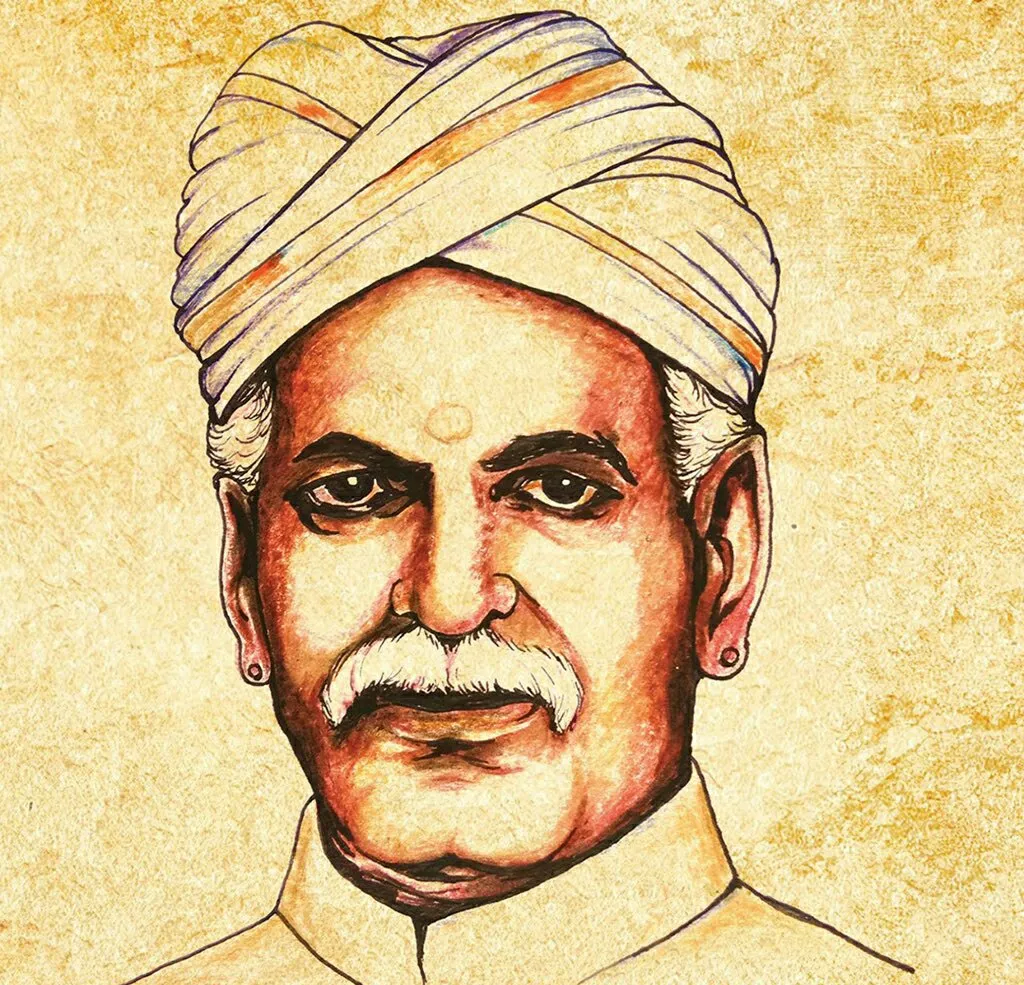
Mahatma Ayyankali (28 August 1863 – 18 June 1941) was one of the most important anti-caste leaders, social reformers, labour organizers and champions of education in Kerala. Born into the Pulaya community in Venganoor, Travancore, he challenged a social order that denied oppressed communities basic rights such as access to public roads, education, fair wages and social dignity.
He did not receive formal education himself, yet he became a powerful leader who understood that education, organization and collective action were essential for social liberation. His struggles helped transform the social and political landscape of Kerala. (Kerala Government)
His life is especially important in the history of the Kerala Renaissance and the development of Dalit rights movements in India.


Ayyankali at a Glance
| Category | Details |
|---|---|
| Full name | Ayyankali |
| Popular title | Mahatma Ayyankali |
| Born | 28 August 1863 |
| Birthplace | Venganoor, Travancore, present-day Thiruvananthapuram, Kerala |
| Community | Pulaya |
| Major role | Social reformer, Dalit leader, labour organizer and legislator |
| Major movement | Struggle for public-road access |
| Famous event | Villuvandi (bullock-cart) journey |
| Major organization | Sadhu Jana Paripalana Sangham |
| Education movement | Campaign for admission of oppressed-caste children to schools |
| Agricultural labour movement | 1907–08 |
| Legislative role | Member of the Sree Moolam Popular Assembly |
| Died | 18 June 1941 |
| Age at death | 77 |
The date 28 August 1863 is widely used in contemporary references and is observed as Ayyankali Jayanti. (CivilsDaily)
1. Who Was Ayyankali?
Ayyankali was born in Venganoor, near present-day Thiruvananthapuram, when Kerala society was characterized by severe caste hierarchy.
The Pulaya community and other oppressed communities faced restrictions affecting almost every aspect of daily life. They could be denied:
- Access to public roads
- Admission to schools
- Access to public spaces
- Equal employment opportunities
- Fair wages
- Social interaction with upper castes
- Freedom of movement
- Social dignity
Ayyankali personally experienced this discriminatory social system.
Instead of accepting it, he challenged it directly.
His struggle was fundamentally about a simple principle:
Every human being has the right to dignity, freedom, education and equality.
2. Childhood and Family Background
Ayyankali was born on 28 August 1863 in Venganoor in the princely state of Travancore.
He was born into the Pulaya community, one of the communities subjected to severe caste discrimination in nineteenth-century Kerala. Contemporary biographical sources identify his parents as Ayyan and Mala. (Wikipedia)
Like many children from oppressed communities at the time, Ayyankali did not receive the formal education available to privileged sections of society.
This would later become one of the central contradictions of his life:
He was denied education — and spent his life fighting to make education available to others.
3. Kerala Society During Ayyankali’s Childhood
To understand Ayyankali, it is necessary to understand the society in which he lived.
Caste was not simply a matter of social identity. It influenced:
- Where people could walk
- Where they could live
- What occupations they could perform
- What clothes they could wear
- Where they could study
- Where they could worship
- How close they could physically approach members of higher castes
Oppressed communities were often treated as “untouchable” and socially inferior.
The Kerala school curriculum describes the restrictions faced by depressed classes and records Ayyankali’s efforts to secure their right to use public roads, enter schools and obtain better working conditions. (Textbooks Archives)
It was against this background that Ayyankali’s activism emerged.
4. The Villuvandi Journey — 1893


One of the most famous episodes in Ayyankali’s life was his Villuvandi journey in 1893.
A villuvandi was a type of bullock cart.
At that time, oppressed communities faced restrictions on using certain public roads. Ayyankali deliberately purchased and rode a bullock cart through public roads in Venganoor.
This was a powerful act of civil resistance.
The road represented much more than transportation.
It represented:
Freedom of movement.
Access to public space.
Human dignity.
Equality before society.
Kerala’s school textbook describes the 1893 journey as a historic challenge to restrictions on the movement of oppressed communities. (Textbooks Archives)
Ayyankali’s action provoked opposition and physical attacks, but he refused to retreat.
5. Why the Villuvandi Protest Was Revolutionary
The significance of the bullock-cart journey lies in its symbolism.
Ayyankali could have quietly accepted the restrictions imposed upon his community.
Instead, he effectively declared:
Public roads belong to everyone.
He transformed an ordinary means of transportation into an instrument of protest.
The bullock cart became a symbol of:
- Resistance
- Freedom
- Self-respect
- Equality
- Civil rights
The event helped inspire broader resistance among oppressed communities in southern Kerala. (Scroll.in)
6. The Right to Education
Education became one of the central causes of Ayyankali’s life.
He understood something fundamental:
Without education, social equality would remain incomplete.
Children from oppressed communities were often denied admission to schools.
Ayyankali therefore began demanding that Dalit children be allowed to attend government schools.
His campaign was especially significant because he understood education not merely as literacy but as a pathway to:
- Self-respect
- Employment
- Social mobility
- Political awareness
- Economic independence
- Human dignity
Kerala’s SCERT textbook specifically describes Ayyankali as a reformer who recognized education as an investment capable of addressing social inequality. (Textbooks Archives)
7. The School at Venganoor
In 1904, Ayyankali established a school for children from oppressed communities at Venganoor.
The initiative met fierce resistance.
The school was eventually set on fire by opponents. (Textbooks Archives)
But the destruction of the school did not destroy the movement.
Instead, Ayyankali intensified his campaign.
This became one of the defining features of his leadership:
Resistance did not discourage him; it strengthened his determination.
8. The Ooruttambalam School Struggle
Another famous episode involved Ooruttambalam Government School and a young girl named Panchami.
Ayyankali sought to secure school admission for children from the Pulaya community, including girls.
The attempt to admit a Pulaya girl to school provoked violent opposition.
The Kerala Government has described the entry of Ayyankali and Panchami into school as an important event in the history of Kerala’s renaissance and education movement. (Kerala Government)
This episode symbolizes Ayyankali’s insistence that:
Education must not be restricted by caste.
9. The Agricultural Labour Strike — 1907–08


Perhaps Ayyankali’s most remarkable organizational achievement was the agricultural labour strike of 1907–08.
The agricultural workers of the time were predominantly drawn from oppressed communities.
They worked under difficult conditions and had little bargaining power.
Ayyankali organized agricultural labourers and called for a collective withdrawal of labour.
The demands included:
- Education for children
- Better working conditions
- Rest periods
- Better wages
- More humane treatment
- Social dignity
The strike was especially remarkable because education itself became a central labour demand.
The workers effectively said:
If our children cannot attend school, we will not continue working under the existing conditions.
The University of Calicut’s historical materials describe this as the first major agricultural labour strike in Kerala organized around social and economic demands. (SDE UOC)
10. Why the Agricultural Strike Was Important
Ayyankali demonstrated that oppressed agricultural workers could organize collectively.
This was significant because agricultural labourers were dependent on landlords for employment and survival.
By organizing them, Ayyankali helped transform them from:
isolated workers → organized workers
and from:
subjects of oppression → participants in social change.
The strike demonstrated the connection between:
education + labour rights + social equality.
11. Labour Rights
Ayyankali’s reform movement was not limited to caste.
He also fought for the rights of agricultural labourers.
Among the demands associated with his labour movement were:
- Better wages
- Rest time during work
- Cash wages instead of certain forms of payment in kind
- Fair treatment
- Dignity at work
Historical accounts describe the movement as pioneering because it asserted labour rights before the development of modern trade-union structures in Kerala. (kerala.com)
Thus, Ayyankali can also be considered an important early labour-rights leader.
12. Sadhu Jana Paripalana Sangham
To give institutional strength to his movement, Ayyankali founded the Sadhu Jana Paripalana Sangham (SJPS) in the early twentieth century; sources commonly date its establishment to 1905, while some educational histories give 1906–07. (kerala.com)
The organization worked for:
- Education
- Public-road access
- Social equality
- Better wages
- Labour rights
- Community organization
- Social dignity
The Sangham helped transform individual protests into an organized social movement.
13. Education and the Sadhu Jana Paripalana Sangham
The organization particularly emphasized education.
It supported campaigns for:
Admission of oppressed-caste children to schools
Establishment of schools
Government educational support
Removal of caste barriers in education
The organization therefore became an important vehicle through which Ayyankali’s educational vision was translated into organized action. (MIS Server)
14. The Kallumala Agitation


One of the important struggles associated with Ayyankali was the Kallumala agitation.
The term kallumala refers to a necklace made of stones traditionally worn by women from oppressed communities.
The ornament had come to symbolize the degraded social status imposed upon them.
Ayyankali encouraged women to reject this symbol of imposed inferiority.
Women publicly discarded their stone necklaces.
The Kerala SCERT textbook records that the discarded kallumalas accumulated into a large pile, symbolizing a rejection of imposed social status. (Textbooks Archives)
The movement was significant because it placed women’s dignity and bodily autonomy within the broader struggle against caste oppression.
15. Women’s Dignity
Ayyankali’s social reform movement included questions affecting women.
Caste oppression often imposed restrictions on women’s:
- Clothing
- Mobility
- Education
- Public participation
- Social dignity
His support for the rejection of the kallumala symbolized a demand that women should be able to determine their own dignity and appearance rather than submit to caste-based restrictions.
This makes Ayyankali’s movement important not only in Dalit history but also in the history of women’s social emancipation in Kerala.
16. Ayyankali and Sree Narayana Guru
Ayyankali and Sree Narayana Guru were two of the major figures of Kerala’s social renaissance.
They belonged to different social backgrounds and followed different approaches, but their objectives overlapped in important ways.
Both opposed:
- Caste discrimination
- Social inequality
- Ignorance
- Human degradation
Both emphasized:
- Education
- Self-respect
- Social reform
- Human dignity
Historical sources also record a relationship of mutual respect and support between Ayyankali and Guru. (kerala.com)
While Guru’s approach often combined spiritual philosophy and social reform, Ayyankali became especially prominent through direct mass mobilization and political action.
17. Entry into the Legislative Assembly
Ayyankali eventually entered the political sphere.
He was nominated to the Sree Moolam Popular Assembly (Sree Moolam Praja Sabha) of Travancore, where he represented the interests of oppressed communities.
Sources differ somewhat on the precise year of his nomination, citing 1910, 1911 or 1912 depending on whether they refer to nomination, appointment or the beginning of his participation. (KeralaPSCe-Helper)
His presence in the assembly was historically important.
A man who had once been denied access to public roads and schools had entered an institution where the affairs of the state were discussed.
It represented a dramatic change in political participation.
18. Ayyankali as a Legislator
As a representative, Ayyankali continued to advocate for the oppressed.
His concerns included:
- Education
- Government employment
- Agricultural labourers
- Housing
- Land
- Social equality
- Representation
- Welfare of disadvantaged communities
His legislative role demonstrated that social reform required both:
Grassroots mobilization
and
Political representation.
19. Ayyankali and the Travancore State
Ayyankali’s activism gradually forced the ruling authorities to respond to demands that had previously been ignored.
Educational access improved, and the position of oppressed communities in public life gradually changed.
The University of Calicut’s historical material notes significant advances in education and political representation during this period. (SDE UOC)
These changes did not happen overnight.
They were the result of years of agitation, organization, negotiation and resistance.
20. The Temple Entry Question
The question of access to Hindu temples was another major issue in Kerala’s caste history.
Ayyankali’s broader anti-caste movement contributed to the social environment in which demands for temple entry and religious equality gained strength.
The historic Temple Entry Proclamation of 1936, issued by the Travancore ruler Chithira Thirunal Balarama Varma, opened Hindu temples in Travancore to people of all castes.
Ayyankali’s movement should not be confused with being the sole cause of this proclamation; it was one important part of the much broader anti-caste and temple-entry movements of Kerala.
21. Ayyankali and Mahatma Gandhi
Mahatma Gandhi met Ayyankali during his visit to Kerala in the 1930s.
The meeting became an important episode in the history of India’s anti-untouchability movement.
Ayyankali’s stature had grown considerably by then, and his decades of work among oppressed agricultural labourers and communities were widely recognized.
Historical sources record Gandhi’s appreciation of Ayyankali’s work. (KeralaPSCe-Helper)
22. Ayyankali’s Leadership Style
Ayyankali’s leadership was distinctive.
He was:
Courageous
He personally challenged restrictions.
Fearless
He continued despite violent opposition.
Practical
He concentrated on concrete rights.
Organizational
He built institutions rather than relying only on individual protest.
Inclusive
He addressed education, labour, women and social dignity.
Politically strategic
He eventually used legislative institutions to advance reform.
His leadership combined direct action, mass organization and political negotiation.
23. Ayyankali and Self-Respect
One of the deepest themes in Ayyankali’s work was self-respect.
Caste oppression does not merely exploit people economically. It also attempts to convince them that they are inferior.
Ayyankali challenged that psychological dimension.
His actions told oppressed people:
You have the right to walk freely.
Your children have the right to study.
You deserve fair wages.
You have the right to participate in public life.
You have the right to dignity.
That message was as important as any specific reform.
24. Ayyankali and the Rights of Children
Ayyankali’s educational movement was particularly concerned with children.
He understood that discrimination could reproduce itself across generations.
If one generation remained uneducated, the next generation would inherit:
- Poverty
- Limited employment
- Social exclusion
- Dependence
- Lack of political awareness
Education could break that cycle.
Thus, the struggle for school admission was really a struggle for the future of an entire community.
25. Ayyankali’s Famous Educational Principle
A famous statement associated with his educational movement expresses the seriousness of his campaign:
“If our children are denied education, we will grow weeds all over the paddy fields.”
The meaning was clear.
Agricultural labourers would no longer accept a social system that demanded their labour while denying their children education.
This statement captures the extraordinary connection Ayyankali made between:
labour power + education + collective action.
The Kerala SCERT history text records this statement in its discussion of Ayyankali’s education movement. (Textbooks Archives)
26. Ayyankali as a Pioneer of Labour Rights
Ayyankali deserves an important place in the history of labour movements in Kerala.
His agricultural strike demonstrated that workers could organize around demands extending beyond wages.
His movement connected:
worker dignity
with
social equality
and
children’s education.
This was particularly innovative because the workers were using their economic importance to demand social rights.
27. Ayyankali and Political Representation
Another important contribution was his insistence that oppressed communities needed representation in political institutions.
It was not enough for others to speak about them.
They needed representatives who could speak for themselves.
His participation in the Sree Moolam Popular Assembly therefore had symbolic importance:
The oppressed were becoming political citizens.
28. Ayyankali’s Relationship with the Kerala Renaissance
The Kerala Renaissance was not the work of a single person.
It involved numerous movements and leaders.
Among the major figures were:
- Sree Narayana Guru
- Ayyankali
- Chattampi Swamikal
- Vakkom Moulavi
- Dr. Palpu
- Kumaran Asan
- Sahodaran Ayyappan
- V.T. Bhattathiripad
- and many others.
Ayyankali’s distinctive contribution was his organization of the oppressed agricultural and Dalit communities around practical demands for dignity, education and economic rights.
29. Ayyankali’s Major Contributions
His contributions can be grouped into several areas.
Social Equality
He challenged caste hierarchy and untouchability.
Freedom of Movement
He fought restrictions on public-road access.
Education
He demanded school admission for oppressed-caste children.
Labour Rights
He organized agricultural labourers.
Women’s Dignity
He supported movements challenging caste-based restrictions on women.
Political Representation
He became a representative in the Travancore legislature.
Community Organization
He established the Sadhu Jana Paripalana Sangham.
Self-Respect
He encouraged oppressed communities to reject imposed inferiority.
30. Ayyankali’s Major Movements — Quick Table
| Movement/Event | Approx. Year | Main Objective |
|---|---|---|
| Villuvandi Journey | 1893 | Freedom to use public roads |
| Education Campaign | Early 1900s | School access for oppressed children |
| School at Venganoor | 1904 | Education for oppressed children |
| Sadhu Jana Paripalana Sangham | 1905 | Organized social reform |
| Agricultural Labour Strike | 1907–08 | Education and labour rights |
| Legislative Representation | c. 1910–12 | Political voice for oppressed communities |
| Kallumala Agitation | Early 20th century | Women’s dignity and rejection of caste symbols |
Dates for some events vary among historical sources; the table uses commonly cited dates. (kerala.com)
31. Ayyankali’s Death
Ayyankali died on 18 June 1941, aged 77.
He had spent nearly five decades challenging caste discrimination and advocating for the rights of marginalized communities.
By the time of his death, Kerala had already undergone substantial social change compared with the society into which he had been born.
But his work was not finished.
The institutions and consciousness he helped create continued to influence subsequent generations.
32. His Historical Importance
Ayyankali’s historical significance lies in the fact that he transformed resistance from an individual act into a mass social movement.
His bullock-cart journey challenged restrictions on movement.
His school campaigns challenged educational exclusion.
His labour strike challenged economic exploitation.
His organization challenged social fragmentation.
His legislative role challenged political exclusion.
Taken together, these struggles represented a comprehensive demand:
Equality in public life.
33. Ayyankali’s Vision of Social Justice
Ayyankali’s vision can be summarized as:
Freedom of movement
↓
Access to education
↓
Fair employment
↓
Economic independence
↓
Political representation
↓
Social dignity
↓
Human equality
This makes his legacy relevant far beyond the particular community he represented.
34. Ayyankali and Modern India
Many of the issues Ayyankali fought for are now recognized as fundamental constitutional values.
The Indian Constitution guarantees principles including:
- Equality before the law
- Non-discrimination
- Abolition of untouchability
- Equality of opportunity
- Freedom and dignity
Ayyankali lived decades before the Constitution came into force, but his struggles anticipated many of these ideals.
His activism therefore forms an important part of the prehistory of social justice and democratic citizenship in modern India.
35. Ayyankali’s Relevance Today
Ayyankali’s message remains relevant wherever people face discrimination based on:
- Caste
- Social status
- Economic position
- Gender
- Education
- Birth
His life teaches several enduring lessons:
Education is a form of freedom.
Organization creates collective strength.
Economic rights are connected to social dignity.
Political representation matters.
Social reform requires courage.
Human dignity cannot depend upon birth.
36. Ayyankali’s Legacy in Kerala
Today, Ayyankali is remembered throughout Kerala through:
- Statues
- Memorials
- Educational institutions
- Government programs
- Public buildings
- Cultural programs
- Academic studies
- Commemorative events
The Kerala Government has officially recognized his contribution to the state’s educational and social renaissance, including renaming Ooruttambalam Government UP School as Ayyankali Panchami School in recognition of the historic educational struggle associated with Ayyankali and Panchami. (Kerala Government)
Ayyankali’s image has consequently become one of the enduring symbols of Kerala’s struggle against caste oppression.
37. Ayyankali Jayanti
Ayyankali Jayanti is observed on 28 August, commemorating his birth anniversary.
The day provides an opportunity to remember his contributions to:
- Dalit rights
- Education
- Labour rights
- Social equality
- Human dignity
- Kerala’s social renaissance
It is also an occasion to reflect on whether the principles for which he struggled have been fully realized.
38. Ayyankali in the Broader History of Dalit Movements
Ayyankali holds an important place in the history of Dalit resistance in India.
His approach developed within the specific social conditions of Travancore and Kerala, but his central demands were universal:
- Freedom
- Education
- Equality
- Labour rights
- Political participation
- Human dignity
His activism therefore forms part of the larger history of anti-caste movements in India.
39. Ayyankali and B. R. Ambedkar
Ayyankali and Dr. B. R. Ambedkar were contemporaries who worked in different regions and contexts.
Both recognized the central importance of:
- Education
- Political representation
- Self-respect
- Social equality
- Ending caste oppression
Their methods and political contexts were not identical, and they should not be treated as interchangeable figures.
Nevertheless, both belong to the wider history of anti-caste struggles and the demand for dignity and equality for oppressed communities.
40. Ayyankali’s Greatest Achievement
Perhaps Ayyankali’s greatest achievement was not any single reform.
It was the transformation of consciousness.
He helped oppressed people understand that:
They had rights.
They could organize.
They could protest.
Their children deserved education.
Their labour had value.
Their voices belonged in government.
Their dignity could not be determined by caste.
That transformation was fundamental to Kerala’s social change.
41. Ten Lessons from Ayyankali’s Life
1. Never accept injustice as destiny.
2. Education can break cycles of oppression.
3. Collective action can overcome social power imbalances.
4. Economic rights are part of human rights.
5. Political representation matters.
6. Self-respect is essential to freedom.
7. Social reform requires courage.
8. The rights of children determine the future of society.
9. Women’s dignity is inseparable from social justice.
10. A just society must reject discrimination based on birth.
42. Ayyankali — Timeline
1863 — Born at Venganoor.
1893 — Famous Villuvandi journey challenging restrictions on public roads.
Early 1900s — Intensified campaign for education and civil rights.
1904 — Established a school for oppressed children at Venganoor.
1905 — Sadhu Jana Paripalana Sangham founded, according to commonly cited accounts.
1907–08 — Agricultural labour strike.
Early 20th century — Kallumala agitation and campaigns for women’s dignity.
c. 1910–12 — Entered the Sree Moolam Popular Assembly as a representative of oppressed communities.
1920s–30s — Continued advocacy for education, labour rights and social equality.
1930s — Met Mahatma Gandhi.
1936 — Travancore Temple Entry Proclamation marked a major milestone in the wider anti-caste movement.
18 June 1941 — Ayyankali died.
43. Ayyankali and the Making of Modern Kerala
Modern Kerala is often celebrated for its achievements in:
- Literacy
- Education
- Public health
- Social development
- Political participation
- Human development
These achievements have many historical causes.
Ayyankali’s contribution was particularly important because he forced the question of social inclusion into the centre of Kerala’s transformation.
He insisted that development could not be meaningful if the most oppressed people remained excluded.
44. Conclusion
Mahatma Ayyankali was not simply a social reformer. He was a pioneer of social justice, education, labour rights and democratic participation in Kerala.
Born into a community subjected to severe caste discrimination, he could easily have remained a victim of the system.
Instead, he became one of its most determined challengers.
He rode a bullock cart through roads from which his community was excluded.
He demanded schools for children who were denied education.
When schools were attacked, he organized agricultural workers.
When workers were exploited, he demanded better conditions.
When women were subjected to humiliating caste customs, he supported their struggle for dignity.
When political institutions excluded oppressed communities, he entered the legislature and demanded representation.
His life demonstrates that social reform is not merely about changing laws. It is about changing attitudes, institutions and people’s understanding of their own dignity.
The story of Ayyankali is therefore the story of a man who transformed resistance into organization, organization into political action, and political action into social change.
His enduring message
Education is freedom.
Organization is strength.
Labour deserves dignity.
Every child deserves a school.
Every person deserves equal rights.
No human being should be considered inferior by birth.
For Kerala, Ayyankali remains one of the great architects of the social renaissance. For India, he stands as an enduring symbol of the struggle for equality, dignity, education and social justice. (Kerala Government)
Leave a Reply