

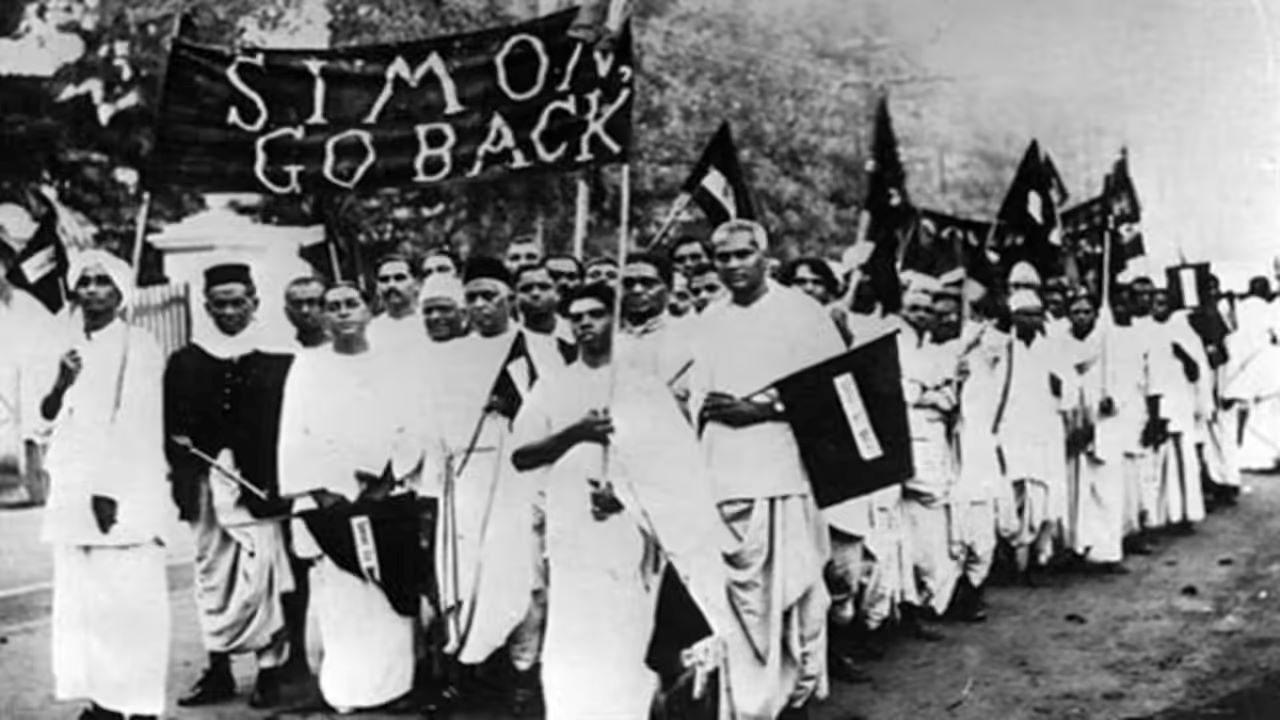
The Quit India Movement was one of the most significant mass movements in India’s struggle for independence from British rule. Launched in August 1942 under the leadership of Mahatma Gandhi and the Indian National Congress, the movement demanded an immediate end to British colonial rule in India.
The movement is remembered especially for Gandhi’s powerful call of “Do or Die” and the historic Quit India Resolution adopted on 8 August 1942 in Bombay (now Mumbai).
Every year, August 8 is observed in India as an important day to remember the beginning of this decisive phase of the freedom struggle. The movement demonstrated the determination of ordinary Indians—students, workers, farmers, women, political activists and countless others—to achieve independence.


What Was the Quit India Movement?
The Quit India Movement, also known as the August Movement or August Kranti, was a nationwide campaign launched by the Indian National Congress in August 1942 demanding an end to British rule.
The movement came at a critical moment in world history. The Second World War was raging, and Britain had involved India in the war without obtaining the consent of Indian political leaders or the Indian people.
Indian nationalists increasingly argued that a country fighting for democracy abroad could not justifiably deny democratic freedom to India.
The movement’s central demand was simple:
The British must leave India.
Gandhi gave the movement its most memorable slogan:
“Do or Die.”
He urged Indians to continue the struggle peacefully and courageously until India achieved freedom.
Why Did the Quit India Movement Begin?
Several political and historical developments contributed to the launch of the movement.
1. British Colonial Rule
India had been under British domination for generations. Although Indians had gained limited participation in government institutions over time, ultimate political authority remained with the British.
The Indian independence movement had already passed through several major stages, including the Swadeshi movement, Non-Cooperation Movement, Civil Disobedience Movement and the Salt March.
By 1942, many nationalists believed that the time had come for a final mass struggle.
2. The Second World War
When the Second World War began in 1939, the British government declared India to be at war with the Axis powers without consulting Indian political leaders.
The Indian National Congress strongly objected.
Congress ministries resigned in several provinces in protest.
The war also created severe economic pressures, shortages and uncertainty in India.
3. Failure of the Cripps Mission
In early 1942, the British government sent Sir Stafford Cripps to India with proposals intended to secure Indian cooperation during the war.
The proposals offered India the possibility of dominion status after the war and included provisions concerning the future constitutional structure.
However, Congress leaders found the proposals inadequate because they did not provide for immediate independence.
The negotiations failed.
The failure of the Cripps Mission convinced many Indian nationalists that Britain was unwilling to transfer real power while the war continued.
4. Growing Demand for Immediate Independence
The Indian independence movement had already been developing for decades.
By 1942, many Indians no longer wanted gradual constitutional reforms.
They wanted complete independence.
The political mood was increasingly impatient, and the Congress leadership decided that a major nationwide movement was necessary.
The Historic Meeting in Bombay
On 8 August 1942, the All India Congress Committee met at Gowalia Tank Maidan in Bombay, now known as August Kranti Maidan.
The Congress adopted the historic Quit India Resolution.


Mahatma Gandhi addressed the gathering and delivered one of the most famous calls of India’s freedom struggle:
“Do or Die.”
Gandhi’s message was that Indians must make a determined effort to achieve freedom and must not submit to fear.
The resolution called for the British to withdraw from India and for Indians to take responsibility for their own country’s future.
What Does “Do or Die” Mean?
Gandhi’s phrase “Do or Die” became the emotional slogan of the movement.
It did not mean that Indians should engage in indiscriminate violence.
Gandhi continued to advocate non-violence as the fundamental principle of the struggle.
The phrase expressed an extraordinary level of determination:
India would achieve freedom, or its people would sacrifice everything in the attempt.
The slogan quickly spread throughout the country.
The British Response
The British authorities reacted immediately.
In the early hours of 9 August 1942, Gandhi and many other senior Congress leaders were arrested.
Among those detained were prominent leaders including:
- Mahatma Gandhi
- Jawaharlal Nehru
- Sardar Vallabhbhai Patel
- Maulana Abul Kalam Azad
- Acharya J. B. Kripalani
- Sarojini Naidu and other Congress leaders
The Congress organization was declared illegal in many places and public meetings were restricted.
The British authorities hoped that by arresting the leadership, they could prevent the movement from spreading.
Instead, something unexpected happened.
The movement became increasingly decentralized and spontaneous.
A Movement Led by Ordinary People
One of the most remarkable features of the Quit India Movement was the participation of ordinary Indians.
With much of the Congress leadership imprisoned, local activists, students, workers and underground organizers took initiatives.
Protests spread across numerous parts of the country.
People organized:
- Demonstrations
- Strikes
- Boycotts
- Processions
- Underground communications
- Secret political activities
- Acts of civil disobedience
Railway lines, telegraph systems and government institutions sometimes became targets of sabotage.
These violent and destructive actions were contrary to Gandhi’s insistence on non-violence, but the movement as it unfolded included both non-violent protest and acts of violence.
The Role of Students
Students played an important role in the Quit India Movement.
Many young people participated in demonstrations, distributed nationalist literature and helped organize underground activities.
Schools and colleges in several regions became centers of political activism.
For many young Indians, the movement represented not merely a political campaign but a struggle for the future of their country.
The Role of Women
Women played a particularly important role in sustaining the movement.
One of the best-known figures was Aruna Asaf Ali.


On 9 August 1942, Aruna Asaf Ali famously hoisted the Congress flag at Gowalia Tank Maidan after many senior leaders had been arrested.
She subsequently became associated with the underground movement.
Other women also made major contributions, including:
- Usha Mehta, who helped operate the underground Congress Radio
- Matangini Hazra, who became a symbol of courage in Bengal
- Sucheta Kriplani, who was active in the freedom movement
- Numerous unnamed women who participated in protests, underground networks and local resistance
The movement demonstrated that India’s struggle for independence was not limited to male political leaders.
Usha Mehta and the Secret Congress Radio
One of the fascinating episodes of the Quit India Movement was the establishment of an underground radio station.
Usha Mehta, together with associates, helped operate what became known as Congress Radio.
It broadcast nationalist messages and information at a time when the British authorities were attempting to suppress news about the movement.
The radio became an important symbol of underground resistance.
Its broadcasts demonstrated how communication itself could become a powerful weapon in a struggle for freedom.
Parallel Governments
One of the most interesting developments during the Quit India Movement was the establishment of temporary parallel governments in some parts of India.
These local administrations emerged where British authority was weakened or challenged.
Notable examples included:
Ballia
In Ballia, Uttar Pradesh, a parallel administration emerged under Chittu Pandey.
Tamralipta Jatiya Sarkar
In the Tamluk area of Bengal, the Tamralipta Jatiya Sarkar was established.
It remained active for a considerable period and organized various local services and resistance activities.
Satara
In Satara, Maharashtra, the Prati Sarkar or “Parallel Government” developed under the leadership of figures including Nana Patil.
These examples demonstrated that the movement was not simply about protesting British rule; in some places, people attempted to create alternative structures of local self-government.
British Suppression
The British government responded with severe repression.
Thousands of people were arrested.
Police and military forces were deployed to suppress demonstrations and strikes.
There were shootings, lathi charges, arrests, censorship and collective punishments in various places.
The authorities also attempted to control newspapers and prevent the spread of information about the movement.
The exact number of deaths and arrests varies across historical accounts, but the repression was extensive.
Gandhi’s Detention and Fast
Mahatma Gandhi was imprisoned at the Aga Khan Palace in Pune.


While imprisoned, Gandhi continued to oppose British policies and defend the principles of the movement.
In February 1943, he undertook a 21-day fast while in detention.
His imprisonment became an international issue and increased pressure on the British government.
Tragically, Gandhi’s wife, Kasturba Gandhi, died at the Aga Khan Palace in February 1944 while Gandhi was still imprisoned there.
Her death was a profound personal loss for Gandhi and the wider national movement.
The Movement and Non-Violence
An important historical question is whether the Quit India Movement was entirely non-violent.
The answer is no.
Gandhi and the Congress leadership called for non-violent resistance.
However, after the mass arrests of leaders, the movement became decentralized. In many places, protesters engaged in attacks on railway lines, telegraph offices, police stations and other government infrastructure.
Some historians therefore distinguish between:
Gandhi’s intended strategy of non-violent mass resistance
and
the broader and often spontaneous movement that unfolded after the leadership was imprisoned.
Understanding this distinction is important when studying the movement historically.
The Role of the Indian National Congress
The Indian National Congress was the principal political organization behind the Quit India Movement.
Its leadership included some of the most influential figures of India’s independence struggle.
However, because the British arrested the leadership almost immediately, Congress was unable to operate openly for much of the movement.
Underground networks therefore became increasingly important.
What About Other Political Organizations?
Not every major Indian political organization supported the Quit India Movement in the same way.
The Muslim League, under Muhammad Ali Jinnah, did not support the Congress-led movement.
The Communist Party of India also opposed the Quit India call after Germany invaded the Soviet Union in 1941, as the Soviet Union became part of the Allied war effort.
The Hindu Mahasabha did not support the movement as Congress did.
These differences are important because India’s independence struggle involved many political organizations with different visions for India’s future.
Subhas Chandra Bose and the Quit India Movement
Subhas Chandra Bose and the Indian National Army (INA) followed a very different strategy from Gandhi and Congress.
Bose sought to defeat British rule with military assistance from Britain’s wartime enemies.
The INA fought alongside Japanese forces in Southeast Asia and later attempted to advance into northeastern India.
Although the INA campaign did not succeed militarily, its activities and the subsequent INA trials had a significant impact on Indian public opinion and on the morale of the British Indian armed forces.
The Quit India Movement and the INA represented different approaches to the same broad objective: ending British rule.
Quit India Movement in Different Parts of India
The movement was not uniform throughout India.
Different regions experienced different forms of resistance.
Maharashtra
Maharashtra became an important center of underground activity. Satara’s parallel government became one of the movement’s best-known examples.
Bengal
Bengal witnessed significant resistance, including the Tamralipta Jatiya Sarkar.
Uttar Pradesh
Places such as Ballia saw intense popular resistance and temporary challenges to colonial authority.
Bihar
Bihar became another important center of underground activities and mass protest.
Madras Presidency
The movement also affected areas of southern India, including parts of the Madras Presidency, where students, workers and political activists participated in protests.
Kerala
Kerala also witnessed demonstrations, student activism, strikes and resistance to British authority.
The movement therefore became a truly nationwide phenomenon, although its intensity varied considerably from region to region.
Why Was the Quit India Movement Important?
The Quit India Movement did not immediately force the British to leave India.
The British government successfully suppressed the open phase of the movement by using arrests and force.
Nevertheless, the movement had enormous historical importance.
1. It Demonstrated Mass Determination
The movement showed that Indian nationalism had reached a stage where large sections of the population were prepared to demand independence directly.
2. It Weakened the Legitimacy of British Rule
British authority increasingly appeared dependent on coercion rather than popular consent.
3. It Produced a New Generation of Leaders
Many young activists gained political experience through underground resistance.
4. It Demonstrated the Power of Ordinary Citizens
The movement was not confined to famous leaders.
Thousands of ordinary Indians participated.
5. It Became a Major Turning Point
Although independence did not come immediately, the Quit India Movement was one of the final major mass confrontations between Indian nationalism and British colonial rule.
Did the Quit India Movement Succeed?
This question requires a nuanced answer.
In the short term: No
The British authorities suppressed the movement. Most senior leaders were arrested, and open resistance was brought under control.
In the long term: It was highly significant
The movement demonstrated that British rule could no longer rely on the political cooperation of large sections of the Indian population.
Combined with developments during and after the Second World War—including the economic and military pressures on Britain, the INA episode and growing unrest among sections of the armed forces—the movement contributed to the changing political environment that ultimately led to independence.
India finally became independent on 15 August 1947.
Quit India Movement and Indian Independence
The Quit India Movement was not the sole reason for India’s independence.
The achievement of freedom resulted from many decades of struggle and many different forces.
These included:
- Early nationalist movements
- The Indian National Congress
- Gandhi’s mass movements
- Revolutionary organizations
- The contributions of Subhas Chandra Bose and the INA
- Workers’ and farmers’ movements
- Contributions of women
- Student activism
- Constitutional negotiations
- The economic impact of the Second World War
- Changing British political circumstances
- International developments
- Post-war unrest in the British Indian armed forces
The Quit India Movement should therefore be understood as one of the crucial chapters in a much larger freedom struggle.
Major Personalities Associated with the Movement
Mahatma Gandhi
The principal moral and political leader who gave the movement its call for immediate British withdrawal and the slogan “Do or Die.”
Jawaharlal Nehru
A major Congress leader who was imprisoned during the movement and later became India’s first Prime Minister.
Sardar Vallabhbhai Patel
A leading Congress organizer and nationalist leader who was also arrested following the launch of the movement.
Maulana Abul Kalam Azad
President of the Indian National Congress at the time of the Quit India Resolution.
Aruna Asaf Ali
Remembered for hoisting the Congress flag at Gowalia Tank Maidan on 9 August 1942 and for her subsequent underground activities.
Usha Mehta
Known for her role in operating the underground Congress Radio.
Jayaprakash Narayan
A prominent socialist leader who played an important role in underground resistance after escaping from prison.
Ram Manohar Lohia
Another important socialist leader involved in underground activities during the movement.
Matangini Hazra
A Bengali freedom fighter who was killed while participating in a protest march in 1942 and became a symbol of courage and sacrifice.
Important Dates of the Quit India Movement
| Date | Event |
|---|---|
| 8 August 1942 | All India Congress Committee adopts the Quit India Resolution in Bombay |
| 8 August 1942 | Gandhi gives the famous “Do or Die” call |
| 9 August 1942 | Gandhi and other major Congress leaders are arrested |
| August 1942 onward | Mass protests and underground resistance spread across India |
| 1942–1944 | Major phase of repression and underground activity |
| 1943 | Gandhi undertakes a 21-day fast while imprisoned |
| 1944 | Gandhi is released from detention on health grounds |
| 1947 | India achieves independence |
Fascinating Facts About the Quit India Movement
🇮🇳 It began in Bombay
The historic Quit India Resolution was passed at Gowalia Tank Maidan, now called August Kranti Maidan.
🇮🇳 The movement began after mass arrests
Within hours of the movement’s launch, much of the top Congress leadership was imprisoned.
🇮🇳 The movement continued without its leaders
Local activists and underground groups kept resistance alive despite the imprisonment of senior leaders.
🇮🇳 Women played major roles
Figures such as Aruna Asaf Ali and Usha Mehta became important symbols of resistance.
🇮🇳 Underground radio became a weapon
Congress Radio helped circulate nationalist messages despite British censorship.
🇮🇳 Parallel governments appeared
Local alternative administrations emerged in places including Satara, Ballia and Tamluk.
🇮🇳 “August Kranti” became another name
The movement is commonly known as the August Kranti, or August Revolution.
The Legacy of the Quit India Movement
More than eight decades after the movement began, its legacy remains deeply embedded in India’s national consciousness.
The movement is remembered for:
Courage — ordinary people confronted a powerful colonial government.
Sacrifice — thousands endured imprisonment, violence and hardship.
Unity — people from different social backgrounds participated.
Leadership — young activists took responsibility when senior leaders were imprisoned.
Determination — the demand for independence became increasingly uncompromising.
The movement also reminds modern India that freedom is not simply a historical achievement. It carries responsibilities.
Democracy requires participation.
Freedom requires responsibility.
Citizenship requires commitment.
Quit India Movement and the Meaning of Freedom Today
For people born in independent India, it can be difficult to imagine living under colonial rule.
The Quit India Movement provides an opportunity to reflect on the meaning of freedom.
Freedom means more than the absence of foreign rule.
It includes:
- Democratic participation
- Equality before the law
- Freedom of expression
- Social justice
- Religious and cultural freedom
- Human dignity
- Economic opportunity
- Responsibility toward fellow citizens
The generation that participated in the freedom struggle imagined an India where its people would determine their own destiny.
The responsibility of later generations is to protect and strengthen that freedom.
How Can We Remember Quit India Movement Day?
The anniversary can be observed meaningfully through:
- Reading about India’s freedom struggle
- Visiting historical sites
- Learning about lesser-known freedom fighters
- Organizing school and college programs
- Discussing India’s constitutional values
- Watching documentaries about the independence movement
- Reading biographies of freedom fighters
- Teaching younger generations about the sacrifices of the past
- Reflecting on the responsibilities of citizenship
Remembering history should not simply mean memorizing dates.
It should mean understanding why people struggled, what they sacrificed and what their struggle means today.
Conclusion
The Quit India Movement of 1942 occupies a special place in the history of India’s freedom struggle.
It was a bold demand for an end to British colonial rule at a moment when the world was engulfed in war. Gandhi’s “Do or Die” call inspired millions, while the arrest of the national leadership transformed the movement into a largely decentralized struggle involving students, workers, farmers, women and ordinary citizens across the country.
Although the British suppressed the movement, they could not suppress the determination of the Indian people to become free.
Five years later, on 15 August 1947, India finally achieved independence.
The story of Quit India is therefore not merely the story of a political resolution passed on one August evening. It is the story of courage, sacrifice, resistance and an unshakeable belief that a nation has the right to determine its own future.
As India remembers the historic events of August 1942, the message remains powerful:
Freedom is precious, and every generation has a responsibility to preserve it.
Quick Reference
Name: Quit India Movement
Also known as: August Movement / August Kranti
Launched: August 1942
Historic resolution: 8 August 1942
Place: Bombay, now Mumbai
Major leader: Mahatma Gandhi
Famous slogan: “Do or Die”
Principal demand: Immediate British withdrawal from India
Major feature: Mass and underground resistance
India’s independence: 15 August 1947
Leave a Reply