

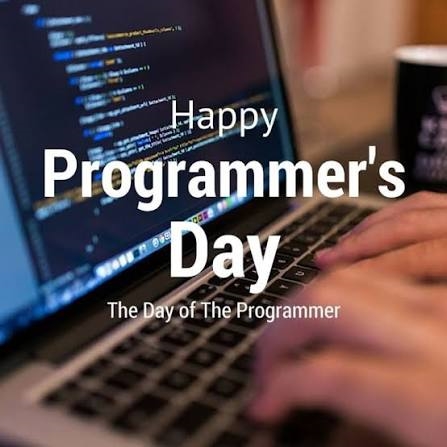
Programmer’s Day is an annual celebration honoring programmers, software developers and computer scientists whose work helps power the modern digital world. It recognizes the creativity, logic, problem-solving and persistence involved in designing the software and systems people use every day.
📅 When Is Programmer’s Day?
Programmer’s Day is traditionally celebrated on the 256th day of the year.
Because computers work extensively with binary numbers and powers of two, the number 256 has special significance in computing. It is:
2⁸ = 256
In a non-leap year, the 256th day falls on September 13.
In a leap year, it falls on September 12.
Therefore, September 13 is Programmer’s Day in most years, including 2026.
🧑💻 Why 256?
The choice of 256 is not accidental.
Early computer systems frequently worked with 8-bit values. An 8-bit binary number can represent 256 different values, from 0 through 255.
For programmers, therefore, 256 is a particularly familiar and meaningful number.
Programmer’s Day provides a playful connection between the calendar and the technical world:
The 256th day of the year = Programmer’s Day
💡 What Does a Programmer Do?
A programmer writes and maintains instructions that tell computers, phones and other digital devices what to do.
Programmers may work with languages such as:
- Python
- JavaScript
- Java
- C
- C++
- C#
- Go
- Rust
- Swift
- Kotlin
- PHP
- Ruby
- SQL
Their work can involve:
- Website development
- Mobile applications
- Artificial intelligence
- Cybersecurity
- Database systems
- Games
- Cloud computing
- Operating systems
- Robotics
- Scientific computing
- Business software
- Automation
🌐 Why Programmers Matter
Much of modern life depends on software.
When we:
📱 use a smartphone
🌐 browse the internet
🏦 transfer money online
🚗 use navigation
🛒 shop online
🎮 play a video game
📺 stream a movie
✈️ book a flight
🏥 access digital medical systems
🤖 interact with artificial intelligence
—we are using systems created and maintained by programmers and other technology professionals.
Programming has consequently become one of the fundamental skills behind the modern information society.
🧠 Programming Is More Than Coding
Programming is not simply about typing lines of code.
Good programmers need to develop:
1. Logical thinking
They break complicated problems into smaller, manageable pieces.
2. Creativity
There can be many different ways to solve the same programming problem.
3. Patience
A single misplaced character can sometimes cause an entire program to fail.
4. Attention to detail
Programming requires precision.
5. Problem-solving ability
Debugging involves identifying why something isn’t working and finding a solution.
6. Continuous learning
Programming languages, frameworks and technologies constantly evolve.
🐛 What Is Debugging?
One of the most important parts of programming is debugging.
A bug is an error or unexpected behavior in a computer program.
Debugging involves:
Finding the problem → Understanding the cause → Fixing the code → Testing the solution
The term “bug” has a famous historical connection to computing. In 1947, engineers working with the Harvard Mark II computer found an actual moth trapped in a relay. The moth was taped into the engineering log, helping popularize the story behind the expression “computer bug.”
👩💻 Women in Programming
Women have played major roles in the development of computing.
Ada Lovelace
Ada Lovelace (1815–1852) is widely regarded as one of the earliest computer programmers. While working on Charles Babbage’s proposed Analytical Engine, she wrote an algorithm intended for the machine.
Grace Hopper
American computer scientist Grace Hopper was a pioneer of programming languages and helped develop COBOL, one of the most influential early high-level programming languages.
Their contributions demonstrate that the history of programming is not exclusively a male story.
🤖 Programming and Artificial Intelligence
Programming has become especially important in the age of artificial intelligence.
Modern AI systems depend on enormous amounts of software, algorithms, data-processing systems and computing infrastructure.
Programmers and software engineers work on areas including:
- Machine learning
- Natural-language processing
- Computer vision
- Robotics
- Generative AI
- Recommendation systems
- Autonomous systems
- AI safety and reliability
The growing use of AI is also changing what it means to be a programmer. Developers increasingly use AI-assisted tools to write, test, explain and debug code.
🎮 Programming in Everyday Entertainment
Programming is also behind much of the entertainment industry.
Computer programmers help create:
- Video games
- Animation
- Special effects
- Streaming platforms
- Music applications
- Virtual reality
- Augmented reality
- Digital photography
- Social media platforms
A modern video game, for example, may involve millions of lines of code working together with graphics, sound, physics and artificial intelligence.
🏫 Programmer’s Day in Education
Programmer’s Day is an excellent opportunity for schools and colleges to introduce students to computing.
Possible activities include:
- Basic coding workshops
- Scratch programming
- Python demonstrations
- Robotics competitions
- Web-design contests
- Coding quizzes
- Algorithm challenges
- App-development projects
- Programming puzzles
- “Build your first website” activities
Students can discover that programming is not merely a career skill but also a powerful way of learning logical and creative problem-solving.
🎉 How to Celebrate Programmer’s Day
💻 Write some code
Try a programming language you’ve never used before.
🧩 Solve a coding puzzle
Programming challenges can improve logical thinking.
📚 Learn about computing history
Explore the contributions of Ada Lovelace, Alan Turing, Grace Hopper and other pioneers.
👨🏫 Teach someone to code
Help a child, student or friend create a simple program.
🌐 Build a website
Even a simple personal webpage can be a rewarding first project.
🤖 Explore AI
Learn how artificial intelligence and machine learning depend on programming.
☕ Thank a programmer
A simple message of appreciation can recognize the people who keep our digital world functioning.
🔢 20 Interesting Programming Facts
- Programmer’s Day is associated with the 256th day of the year.
- 256 is a power of two: 2⁸.
- An 8-bit value can represent 256 different values.
- These values are normally numbered from 0 to 255.
- Ada Lovelace is widely recognized as an early computer programmer.
- Alan Turing made foundational contributions to computer science.
- Grace Hopper was a pioneer of programming languages.
- COBOL remains historically important in business computing.
- Python is widely used in web development, data science and AI.
- JavaScript is fundamental to modern web development.
- SQL is widely used for working with databases.
- A programming error is commonly called a bug.
- Finding and correcting bugs is called debugging.
- Software can contain millions of lines of code.
- Programming is used in spacecraft and scientific research.
- Programmers help develop modern banking systems.
- Video games rely heavily on programming.
- Artificial intelligence depends on sophisticated software.
- Open-source software allows people around the world to collaborate on code.
- Programming can be learned by people of almost any age.
🌟 Programmer’s Day Message
“Behind every useful app, website, game and digital service is an idea transformed into code. Programmer’s Day celebrates the people who turn problems into solutions and imagination into technology.”
💻 Happy Programmer’s Day!
September 13 is a perfect day to celebrate the programmers, developers, engineers, students and technology enthusiasts who use logic, creativity and code to shape the digital world.
Code today. Create tomorrow.
Leave a Reply