

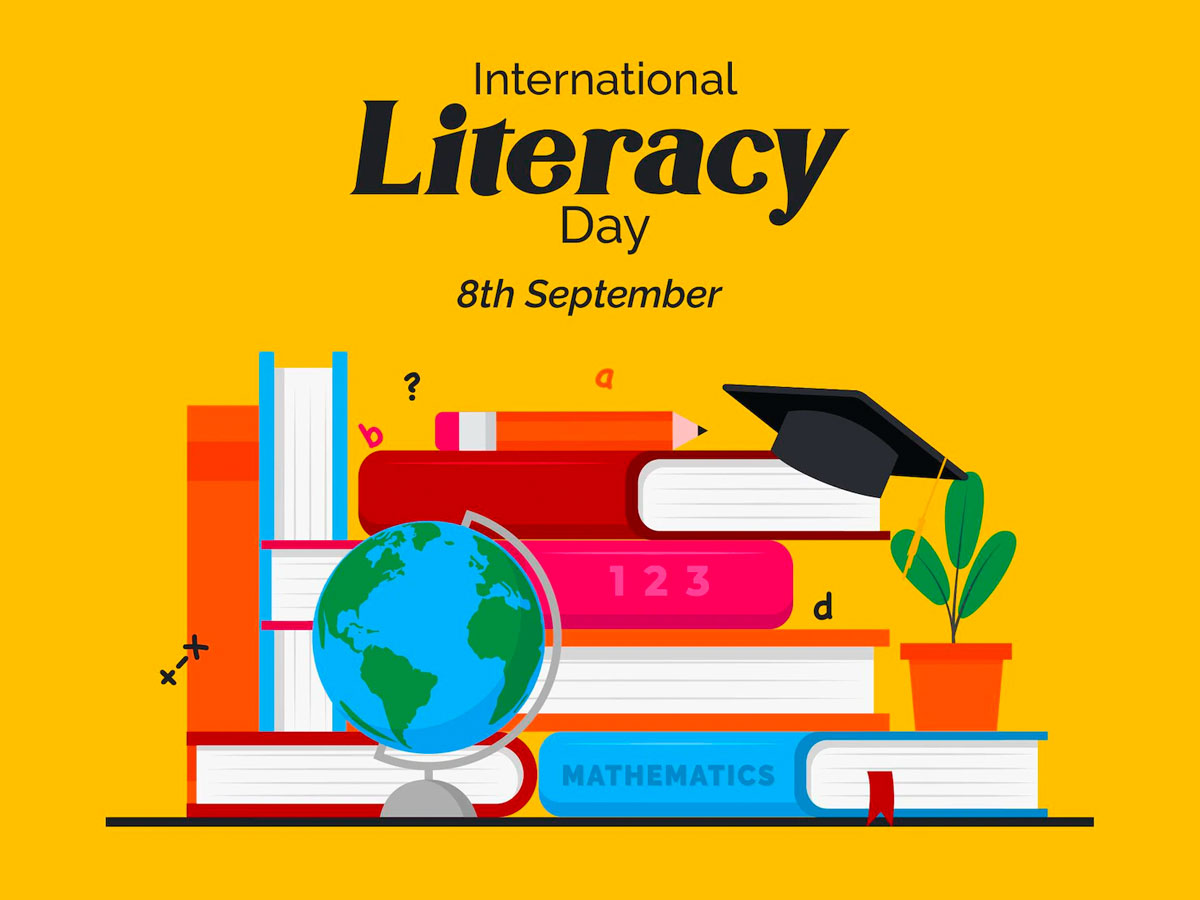
September 8 – Celebrating the Power of Reading, Writing and Learning
International Literacy Day (ILD) is observed every year on September 8 to remind the world that literacy is a fundamental human right and a powerful tool for human dignity, equality, development and peace.
Literacy is much more than the ability to read and write. In today’s world, it also includes the ability to understand information, communicate effectively, use digital technologies, think critically and participate meaningfully in society.
The day provides an opportunity to celebrate progress in literacy while drawing attention to the millions of children, young people and adults who still lack adequate literacy skills.
What is Literacy?
At its most basic level, literacy is the ability to read and write with understanding. But modern literacy has a much broader meaning.
A literate person should increasingly be able to:
- Read and understand written information
- Write and communicate ideas clearly
- Understand numbers and basic mathematics
- Evaluate information critically
- Use digital technologies responsibly
- Understand health, financial and civic information
- Continue learning throughout life
- Participate effectively in society
Thus, literacy is one of the foundations upon which education, employment, independence and social participation are built.
When is International Literacy Day?
International Literacy Day is celebrated annually on September 8.
The day was proclaimed by UNESCO in 1966 and has been observed internationally since 1967.
The date provides an annual opportunity for governments, schools, universities, libraries, civil-society organizations and communities to promote literacy and lifelong learning.
Why Was International Literacy Day Created?
The international community recognized that widespread illiteracy was a major obstacle to social and economic development.
People who cannot read or write often face difficulties in:
- Accessing education
- Finding decent employment
- Understanding official documents
- Accessing healthcare information
- Managing finances
- Participating in democratic processes
- Using modern technology
- Protecting themselves from misinformation and exploitation
International Literacy Day therefore emphasizes that literacy is not simply an educational issue. It is connected with human rights, poverty reduction, gender equality, health, employment and sustainable development.
The History of International Literacy Day
The origins of International Literacy Day can be traced to the World Conference of Ministers of Education on the Eradication of Illiteracy, held in Tehran in 1965.
The conference emphasized the importance of literacy as an essential part of human development.
In 1966, UNESCO formally proclaimed September 8 as International Literacy Day.
The first International Literacy Day was observed in 1967.
Since then, September 8 has become an important occasion for international discussions, educational campaigns, conferences, exhibitions, literacy programmes and community activities.
Literacy and Human Rights
Literacy is closely connected with human dignity and human rights.
A person who can read and understand information has greater opportunities to make informed decisions about life.
For example, literacy can help people:
- Read a medicine label
- Understand a job contract
- Complete a government form
- Read a newspaper
- Understand financial information
- Follow educational materials
- Access online services
- Communicate with institutions
- Learn about their rights
Literacy therefore gives people greater independence and confidence.
Literacy and Education
Literacy is the foundation of education.
A child who develops strong reading and writing skills is generally better positioned to learn subjects such as:
- Science
- Mathematics
- History
- Geography
- Literature
- Technology
- Social studies
But literacy does not end when formal schooling ends.
Lifelong literacy allows people to continue learning throughout their lives.
Literacy in the Digital Age
The meaning of literacy has changed dramatically in the 21st century.
Today, people increasingly need digital literacy—the ability to use computers, smartphones, the internet and digital services effectively and safely.
Digital literacy includes the ability to:
- Search for reliable information
- Recognize misinformation
- Protect personal information
- Use online services
- Communicate responsibly
- Understand digital media
- Identify fraudulent content
- Use artificial intelligence responsibly
A person may be able to read and write but still struggle to navigate the modern information environment.
Consequently, literacy today increasingly includes media literacy, information literacy and digital literacy.
Literacy and Women
Literacy has enormous importance for women and girls.
When girls receive quality education and develop strong literacy skills, they generally gain greater opportunities to participate in economic, social and civic life.
Women’s literacy can contribute to:
- Better educational opportunities
- Greater economic independence
- Improved access to information
- Greater participation in community decisions
- Better understanding of health information
- Increased confidence and social participation
Promoting literacy among women and girls is therefore an important component of achieving equality.
Literacy and Poverty
Illiteracy and poverty can reinforce one another.
People with limited literacy skills may have fewer employment opportunities and may find it difficult to access information about government services, financial resources and educational opportunities.
At the same time, poverty can make it difficult for children to remain in school.
Breaking this cycle requires investment in quality education, accessible schools, trained teachers, libraries and adult-learning programmes.
Adult Literacy
Literacy is not only a children’s issue.
Millions of adults around the world have had limited access to education and may struggle with reading, writing or numeracy.
Adult literacy programmes can help people:
- Improve employment opportunities
- Manage household finances
- Support their children’s education
- Access healthcare information
- Participate more confidently in society
- Learn new skills
- Become more independent
It is never too late to learn.
Literacy and Libraries
Libraries have historically played an important role in promoting literacy.
A library provides much more than books. It can serve as a community centre for:
- Reading
- Research
- Learning
- Digital access
- Children’s education
- Adult education
- Community programmes
In areas where families cannot afford books or internet access, libraries can provide valuable educational resources.
Literacy and Children
Developing literacy during childhood is particularly important.
Children who learn to read confidently can explore knowledge independently.
Parents and teachers can encourage literacy by:
- Reading stories aloud to children.
- Providing age-appropriate books.
- Encouraging children to ask questions.
- Visiting libraries.
- Limiting passive screen time.
- Encouraging creative writing.
- Making reading enjoyable rather than treating it only as homework.
A child who discovers the joy of reading may develop a lifelong relationship with learning.
Literacy and Sustainable Development
Literacy supports many of the United Nations Sustainable Development Goals (SDGs).
It is particularly connected with SDG 4, which calls for inclusive and equitable quality education and the promotion of lifelong learning opportunities for all.
Literacy also contributes indirectly to goals relating to:
- Poverty
- Gender equality
- Good health
- Decent work
- Reduced inequalities
- Peace and strong institutions
Education is one of the most powerful foundations for sustainable development.
The Continuing Global Challenge
Despite major progress in education around the world, literacy remains an important global challenge.
Some people still lack basic reading, writing and numeracy skills because of poverty, conflict, displacement, discrimination, inadequate educational infrastructure and other barriers.
Children in conflict zones and marginalized communities can be particularly vulnerable to interruptions in education.
The challenge is therefore not simply to increase school enrollment but also to ensure that learners receive quality education and actually acquire meaningful literacy skills.
How International Literacy Day Is Celebrated
Schools, governments, libraries and organizations around the world mark the day through activities such as:
- Reading competitions
- Essay-writing contests
- Book exhibitions
- Literacy awareness campaigns
- Storytelling sessions
- Public lectures
- Educational workshops
- Library programmes
- Adult-literacy activities
- Teacher-training programmes
- Community reading programmes
- Digital-literacy campaigns
How You Can Celebrate International Literacy Day
Everyone can contribute to literacy.
📖 Read a Book
Set aside time to read something meaningful.
👧 Read to a Child
Reading aloud to children can encourage curiosity and develop language skills.
📚 Donate Books
Give books to a school, library or community organization that needs them.
✍️ Help Someone Learn
If you have the opportunity, support someone who is learning to read or write.
💻 Promote Digital Literacy
Teach children and adults how to use digital resources safely and responsibly.
🏫 Support Education
Encourage initiatives that provide quality education to disadvantaged communities.
📱 Share Reliable Information
In the digital era, responsible information sharing is itself an important part of literacy.
Literacy Is More Than Reading Words
A truly literate society is not merely one in which people can recognize letters and form sentences.
It is a society in which people can understand, question, evaluate and use information wisely.
Literacy enables people to move from simply receiving information to actively participating in society.
It can give a person a voice.
It can open a door to education.
It can create employment opportunities.
It can help protect people from misinformation.
And it can give individuals greater control over their own lives.
A Message for International Literacy Day
“Every person who learns to read opens a new window to the world.”
International Literacy Day reminds us that education should not be a privilege available only to a few.
Every child deserves the opportunity to learn.
Every adult deserves the opportunity to improve their skills.
Every community deserves access to books, teachers, technology and knowledge.
And every society benefits when its citizens are empowered through education.
Conclusion
International Literacy Day, observed on September 8, is a celebration of the transformative power of education and learning.
Literacy can change individual lives and strengthen families, communities and nations. It can reduce inequality, expand opportunity and help people participate more fully in society.
In an age overflowing with information, literacy has become more important—not less.
The message of September 8 is therefore simple and powerful:
Literacy is a right. Knowledge is a power. Education is a pathway to a better future.
Let us celebrate International Literacy Day by reading more, learning more, teaching others and helping build a world where everyone has the opportunity to become literate.
Leave a Reply