

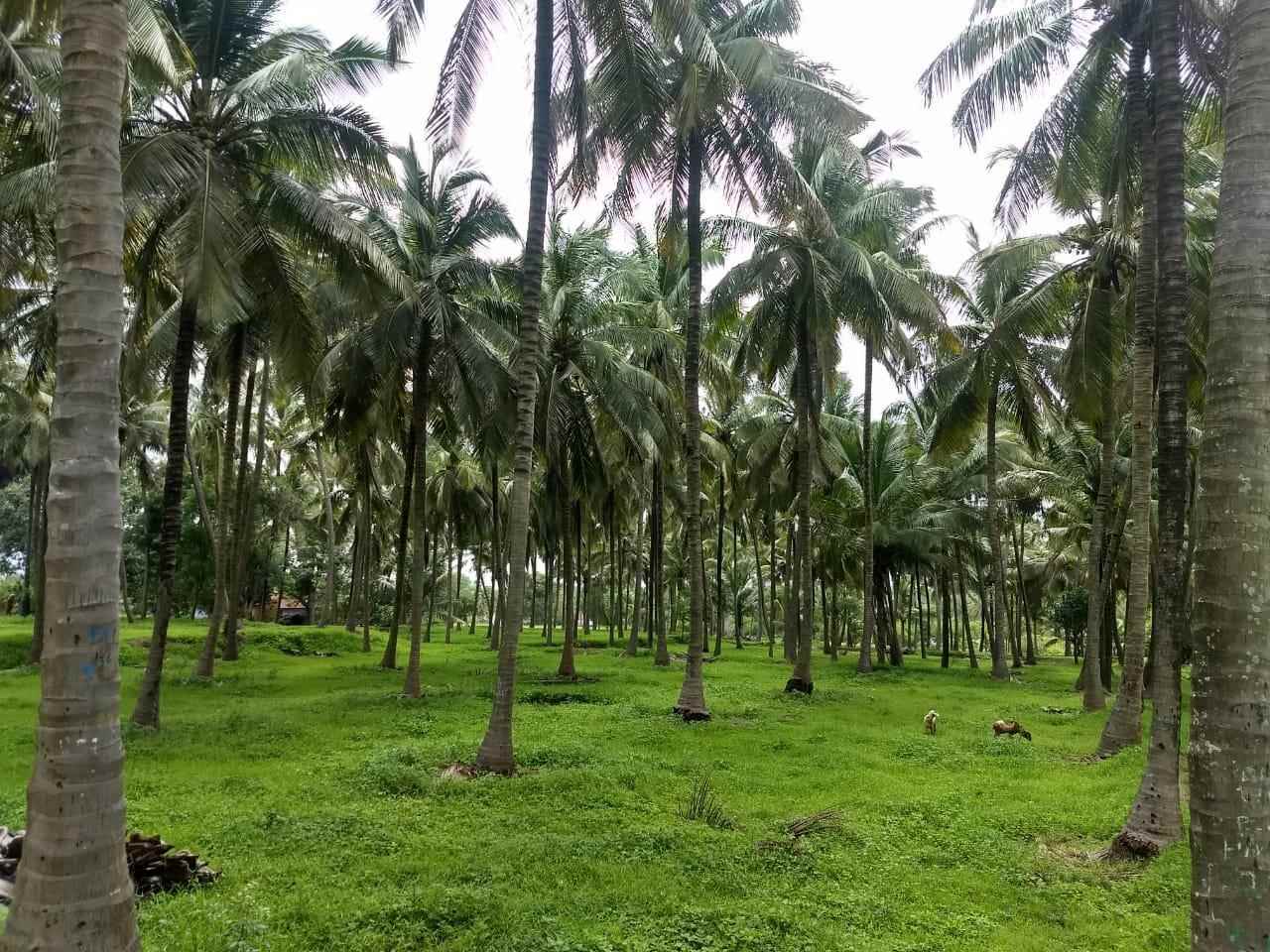
The Tree of Life in the Land of Coconuts
Kerala and the coconut palm have a relationship so deep that it is difficult to imagine the cultural landscape of the state without the graceful thengu (തെങ്ങ്). Coconut is not merely an agricultural crop in Kerala. It is part of the state’s food, festivals, livelihoods, traditional industries, village life, architecture, customs, religious practices and everyday vocabulary.
Kerala Tourism itself describes coconut as having a prominent role in the state’s cuisine, culture and traditions, while Kerala’s official economic and statistical sources note that coconut has played a vital role in the everyday life and economy of the state for centuries. (Kerala Tourism)


🌴 1. Coconut and the Identity of Kerala
The coconut palm is one of the defining images of Kerala.
Tall coconut trees line:
- village roads
- paddy fields
- beaches
- rivers and canals
- backwaters
- household compounds
- temple surroundings
- church and mosque neighbourhoods
- traditional homesteads
The palm has become so closely associated with the state that Kerala is popularly described as the “Land of Coconuts.”
There is also a well-known linguistic association between Keralam and kera, the Malayalam word associated with coconut. Kerala’s Department of Economics and Statistics notes this traditional connection while emphasizing the historical importance of coconut to the state’s economy. (Ecostat Kerala)
The coconut tree is therefore more than a crop—it is part of Kerala’s visual and cultural identity.
🥥 2. The Coconut Tree in Everyday Life
For generations, a coconut tree could provide a Kerala household with an extraordinary variety of useful materials.
Different parts of the tree were traditionally used for different purposes.
| Part | Traditional use |
|---|---|
| Coconut water | Beverage |
| Tender coconut | Food and drink |
| Coconut flesh | Cooking |
| Coconut milk | Curries and desserts |
| Coconut oil | Cooking and household uses |
| Husk | Coir |
| Shell | Fuel, utensils and crafts |
| Leaves | Weaving, roofing and decoration |
| Midribs | Brooms and craft items |
| Trunk | Construction and furniture |
| Spathe | Toddy tapping |
| Dried coconut/copra | Oil production |
Kerala Tourism notes that practically every part of the coconut tree has traditionally been put to use, making the palm an important component of everyday life and the rural economy. (Kerala Tourism)
This remarkable versatility explains why the coconut palm is often called the “Tree of Life.”
🍛 3. Coconut — The Heart of Kerala Cuisine
Perhaps nowhere is the cultural importance of coconut more obvious than in Kerala cuisine.
Coconut appears in food in many forms:
- freshly grated coconut
- coconut milk
- coconut cream
- coconut oil
- roasted coconut
- coconut paste
- coconut water
- tender coconut flesh
Kerala Tourism specifically identifies the generous use of coconut as one of the characteristic features of Kerala’s culinary tradition. (Kerala Tourism)
🍚 Puttu
One of Kerala’s most recognizable breakfast dishes, puttu, is traditionally prepared by alternating layers of rice flour and grated coconut before steaming.
🥬 Thoran
Vegetables are cooked with grated coconut to create one of the most common accompaniments to a Kerala meal.
🥘 Avial
Avial combines vegetables with a coconut-based mixture and is an important part of Kerala’s vegetarian culinary tradition.
🐟 Fish curry
Coconut milk or ground coconut is used in numerous Kerala fish-curry preparations.
🥞 Appam
The soft, lacy rice pancake known as appam is traditionally associated with coconut-based fermented batter.
🍚 Payasam
Several varieties of Kerala payasam use coconut milk, particularly those prepared for festivals and celebrations.
🍌 Ela ada
Rice dough filled with coconut and jaggery, wrapped in banana leaves and steamed, is another traditional delicacy.
Kerala Tourism lists these and numerous other coconut-based dishes as examples of the ingredient’s central place in the state’s food culture. (Kerala Tourism)
🌼 4. Coconut and the Kerala Sadya
Coconut has a particularly important place in the Sadya, Kerala’s traditional vegetarian feast.
Served traditionally on a banana leaf, Sadya brings together a remarkable range of flavours and textures.
Coconut appears in preparations such as:
- avial
- thoran
- olan variations
- koottukari
- pachadi
- kichadi
- coconut chutneys
- coconut-based curries
- certain payasams
Kerala Tourism specifically notes the role of coconut in traditional Sadya served during festivals, weddings and other ceremonies. (Kerala Tourism)
Thus coconut is not merely an ingredient on the Sadya leaf—it helps define the character of the meal itself.
🌾 5. Coconut and Onam
Onam, Kerala’s great harvest festival, is another occasion when coconut becomes highly visible.
During Onam:
- families prepare elaborate Sadya
- coconut is used in numerous dishes
- coconut oil is used in traditional cooking
- coconut-based sweets and desserts are prepared
- coconut palms form part of the familiar rural landscape surrounding celebrations
The coconut palm therefore becomes part of the sensory experience of Onam—the smell of coconut oil, the taste of grated coconut and coconut milk, and the sight of palms surrounding Kerala homes and fields.
🛕 6. Coconut in Religious and Ceremonial Life
Coconut has important ritual and ceremonial uses in Kerala and throughout India.
In Hindu religious traditions, a coconut may be offered during:
- temple rituals
- housewarming ceremonies
- weddings
- religious festivals
- inaugurations
- prayers
- other auspicious occasions
The coconut is widely associated with ideas such as purity, auspiciousness, prosperity and a fresh beginning.
Coconut offerings are therefore found not only in temples but also in many domestic and community ceremonies.
🏠 7. Coconut and Traditional Kerala Houses
The coconut palm is closely connected with the traditional Kerala homestead, or tharavadu.
A traditional rural household could contain:
- coconut trees
- banana plants
- jackfruit trees
- mango trees
- pepper vines
- arecanut palms
- vegetable gardens
Coconut palms frequently formed an important part of this mixed homestead landscape.
The result was an agricultural environment in which food, fuel, household materials and income could all be obtained from plants growing around the home.
🧴 8. Coconut Oil in Kerala Life
Coconut oil has been an important household product in Kerala for generations.
Traditionally it has been used for:
- cooking
- hair care
- traditional household preparations
- lamps and other purposes
- soap-making
- various artisanal applications
Traditional wooden oil presses, known as chekku, were historically used for extracting coconut oil. Kerala Tourism identifies chekku as part of the state’s traditional coconut-related practices. (Kerala Tourism)
Even today, the aroma of coconut oil is strongly associated with traditional Kerala cooking.
🌴 9. Coconut and Ayurveda
Coconut and coconut oil have also found a place in Kerala’s long-standing Ayurvedic traditions.
Coconut oil is used in various traditional external preparations, including hair and body applications.
Kerala’s Ayurveda traditions developed within a wider culture in which locally available plant resources—including coconut—were important household materials.
It is important, however, to distinguish traditional practices from scientifically established medical treatments.
🥥 10. Tender Coconut — Karikku
The young coconut, known in Malayalam as karikku (കരിക്ക്), is one of Kerala’s most popular natural refreshments.
Tender coconut water is especially valued during Kerala’s hot and humid weather.
The soft flesh inside the young coconut is also eaten.
Modern Kerala cuisine has developed creative preparations using tender coconut, including:
- tender coconut pudding
- tender coconut payasam
- karikku dosa
- elaneer curry
- tender coconut desserts
Kerala Tourism highlights these newer and traditional preparations as examples of the continuing evolution of coconut-based cuisine. (Kerala Tourism)
🥥 11. Coconut and the Traditional Kerala Economy
For centuries, coconut has been more than a food crop.
It has supported an entire economic network involving:
farmers → harvesters → coconut traders → oil producers → coir workers → artisans → manufacturers → exporters
Kerala’s official economic sources describe coconut as historically important to the state’s agricultural income and industries. (Kerala PR Department)
Although Kerala’s position in India’s coconut production has changed over time, the crop remains deeply embedded in the state’s agricultural landscape and economy.
🧵 12. Coir — Coconut Fibre and Kerala’s Traditional Industry
One of the most important cultural and economic uses of coconut is coir.
Coir is extracted from the fibrous husk surrounding the coconut.
Kerala became famous for its coir industry, particularly in the coastal districts.
Important coir centres include:
- Alappuzha
- Kollam
- surrounding coastal and backwater regions
Kerala Tourism describes coir as the state’s “golden fibre.” It has traditionally been used for ropes, mats, rugs, brushes, mattresses and numerous other products. (Kerala Tourism)
👩🦱 13. Women and the Coir Tradition
The history of Kerala’s coir industry is also a history of women’s work.
Women in many coastal villages traditionally participated in:
- fibre processing
- spinning
- yarn making
- weaving
- mat production
- other coir-related activities
Kerala Tourism reports that women constitute a very large proportion of workers in the state’s coir industry. (Kerala Tourism)
Thus coconut fibre has not merely produced commodities—it has supported generations of families and provided economic opportunities for rural women.
🧶 14. From Coconut Husk to Beautiful Craft
The transformation of a rough coconut husk into a beautiful finished product is one of Kerala’s fascinating traditional crafts.
The traditional process involves stages such as:
Coconut husk → retting → fibre extraction → cleaning → spinning → weaving → finished product
In some backwater regions, coconut husks were traditionally retted in water before the fibres were extracted.
Kerala Tourism’s documentation of the Vaikom region describes traditional retting, fibre extraction and spinning techniques. (Kerala Tourism)
The finished products may include:
- doormats
- floor mats
- rugs
- ropes
- brushes
- baskets
- bags
- mattresses
- wall decorations
- garden products
- geotextiles
🛶 15. Coconut and the Kerala Backwaters
Coconut and the backwaters of Kerala form one of the state’s most recognizable landscapes.
Along the waterways of:
- Alappuzha
- Kuttanad
- Kumarakom
- Kollam
- Vaikom
- Ponnani
- other coastal regions
coconut palms rise above canals, villages and paddy fields.
The relationship is not merely scenic.
Backwaters historically provided suitable conditions for activities such as coconut-husk retting, an important stage in traditional coir production. (Kerala Tourism)
Thus the coconut palm, the backwater and the coir industry are interconnected parts of Kerala’s cultural landscape.


🥥 16. Coconut Tree Climbing — A Traditional Skill
For generations, harvesting coconuts required specialized climbing skills.
Traditional coconut climbers learned to ascend tall palms using physical skill and specialized techniques.
Coconut tree climbing was therefore an important rural occupation.
Kerala Tourism’s responsible-tourism materials identify coconut-tree climbing as a traditional activity connected with Kerala’s landscape, lifestyle and economy. (Kerala Tourism)
Today, mechanized and safer harvesting technologies are increasingly important because traditional climbing can be physically demanding and hazardous.
🥃 17. Coconut and Toddy
The coconut palm also has a connection with toddy, traditionally called kallu in Malayalam.
Toddy is produced from the sap of the coconut palm’s inflorescence.
Traditional toddy tapping became an important occupation in parts of Kerala and contributed to the state’s rural economy and social history.
Kerala Tourism identifies toddy tapping as one of the traditional activities associated with coconut trees. (Kerala Tourism)
Toddy shops and toddy-related cuisine have also become part of Kerala’s culinary heritage.
🧹 18. Coconut Leaves in Traditional Life
The leaves of the coconut palm were traditionally far more useful than many people realize.
They could be used for:
- temporary roofing
- fences
- baskets
- mats
- decorations
- ceremonial objects
- weaving
- household items
Kerala Tourism notes that weaving coconut palm fronds is a widespread traditional craft in the state. (Kerala Tourism)
This is another example of Kerala’s traditional zero-waste approach to natural resources.
🔥 19. Coconut Shells and Firewood
Before modern fuels became widespread, coconut shells and other coconut residues were valuable household fuel sources.
Dried coconut shells could burn for considerable periods and were useful for cooking and other domestic purposes.
Today, shells can also be processed into charcoal and activated carbon, giving an agricultural by-product additional economic value.
🪵 20. The Coconut Trunk as Building Material
Older coconut palms that were no longer productive could traditionally provide timber.
The trunk could be used for:
- beams
- rafters
- posts
- sheds
- fences
- furniture
- other construction purposes
Kerala’s historical agricultural economy therefore made use of the tree even after its productive life.
🎨 21. Coconut in Kerala Arts and Imagery
The coconut palm is a recurring visual element in Kerala’s:
- paintings
- photographs
- tourism posters
- calendars
- films
- literature
- postcards
- travel writing
The image of green coconut palms against blue backwaters and traditional houses has become one of the most recognizable representations of Kerala.
📚 22. Coconut in Malayalam Language
The importance of coconut is reflected in everyday Malayalam vocabulary.
A few familiar words include:
- തെങ്ങ് (thengu) — coconut palm
- തേങ്ങ (thenga) — coconut
- കരിക്ക് (karikku) — tender coconut
- തേങ്ങാപ്പാൽ (thengaappaal) — coconut milk
- തേങ്ങെണ്ണ (thengayenna) — coconut oil
- കള്ള് (kallu) — toddy
The sheer number of coconut-related words reflects how deeply the palm has entered everyday Kerala life.
🏡 23. Coconut and the Kerala Village
Imagine a traditional Kerala village:
A narrow road passes between houses.
Coconut palms sway above the rooftops.
A farmer harvests coconuts.
Someone carries a basket of vegetables.
Women spin coir in a village workspace.
Coconut oil is heated in a kitchen.
Grated coconut is added to a curry.
Children drink fresh karikku.
Nearby, a canal winds through the paddy fields.
This is not simply a picturesque image. It represents the way coconut historically connected agriculture, household life, food, employment and landscape.
🌊 24. Coconut and Kerala’s Coastal Communities
The coastal districts of Kerala developed strong economic relationships with coconut and coir.
The abundance of coconut palms, combined with Kerala’s extensive network of:
- lagoons
- canals
- lakes
- rivers
- backwaters
created favourable conditions for traditional coir processing.
The State Planning Board has noted that Kerala’s natural coastal and backwater environment helped the coir industry develop from the 19th century onward. (Kerala Government)
🌍 25. Coconut and Kerala’s International Connections
Coconut products became part of Kerala’s wider trading economy.
Coir products from Kerala eventually reached international markets, while coconut and coconut-derived commodities became part of global trade.
The history of coir therefore connects a village industry in Kerala with markets far beyond India.
This is a remarkable example of how a local natural resource became part of an international economy.
♻️ 26. Coconut and the Idea of Sustainability
Traditional Kerala coconut culture offers an interesting lesson in resource efficiency.
Historically, people found uses for almost everything:
Fruit → food
Water → drink
Oil → cooking
Husk → fibre
Shell → fuel/craft
Leaves → weaving
Trunk → timber
Sap → toddy
Modern sustainability movements are rediscovering many of these principles.
Coir, for example, is a natural fibre with applications ranging from household products to geotextiles. Kerala Tourism describes coir products as eco-friendly and sustainable. (Kerala Tourism)
🌱 27. The Changing Coconut Culture of Kerala
Kerala’s relationship with coconut is changing.
Traditional occupations such as:
- coconut climbing
- hand spinning of coir
- traditional oil pressing
- manual husk processing
face challenges from:
- rising labour costs
- changing agricultural patterns
- mechanization
- changing consumer preferences
- competition from other producing regions
- declining agricultural profitability in some areas
Kerala’s share of India’s coconut production has also changed considerably over the decades. Recent state government material notes that Kerala remains important but no longer holds the dominant production position it once did. (Kerala PR Department)
🔬 28. The Future of Coconut in Kerala
The future of Kerala’s coconut culture will require combining traditional knowledge with modern technology.
Important areas include:
- improved coconut varieties
- scientific farming
- climate-resilient cultivation
- mechanized harvesting
- improved pest and disease management
- farmer cooperatives
- value-added products
- modern coir technology
- better marketing
- sustainable processing
- youth participation in agriculture
The objective should not simply be to preserve coconut as a symbol of the past, but to make it a productive and sustainable part of Kerala’s future.
❤️ 29. Coconut as a Symbol of Kerala
Why does coconut mean so much to Kerala?
Because it has been present at almost every level of life.
It is found in:
the kitchen
the farm
the festival
the temple
the village
the backwaters
the marketplace
the workplace
the traditional home
the landscape
It provides food, income, materials and memories.
It connects generations.
🌴 30. The Coconut Palm — A Cultural Heritage
The coconut palm is therefore best understood not merely as an agricultural crop but as a living cultural heritage of Kerala.
Its story is the story of:
- farmers who cultivate it
- climbers who harvest it
- women who spin its fibre
- artisans who weave its products
- cooks who transform it into food
- families who use its products
- communities that celebrate around it
- landscapes shaped by its presence
The coconut palm has survived changing times because Kerala people have continually found new ways to use it.
🥥 Coconut in Kerala: A Quick Summary
| Area | Role of Coconut |
|---|---|
| Food | Curries, chutneys, snacks, desserts |
| Sadya | Important ingredient in numerous dishes |
| Onam | Central to festive cuisine |
| Religion | Offerings and auspicious ceremonies |
| Agriculture | Major traditional crop |
| Cooking | Coconut oil, grated coconut, coconut milk |
| Coir | Fibre, rope, mats and rugs |
| Crafts | Shell and leaf products |
| Construction | Traditional use of trunk and leaves |
| Beverages | Tender coconut water and toddy |
| Livelihoods | Farming, harvesting, processing and crafts |
| Landscape | Iconic feature of Kerala’s countryside |
| Tourism | Symbol of Kerala’s tropical identity |
| Sustainability | Natural fibre and multiple by-products |
🌴 Final Thoughts
Coconut is Kerala’s tree of life—not because every part of the tree is literally used in every household, but because its influence reaches so many dimensions of life.
It has shaped Kerala’s food habits, rural economy, traditional occupations, handicrafts, festivals, landscapes and cultural memory.
When a coconut palm sways above a Kerala village, it represents much more than a tree. It represents generations of agricultural knowledge, family traditions, culinary heritage and rural livelihoods.
From the puttu on the breakfast table to the Sadya on a banana leaf, from coconut oil in the kitchen to coir mats in the home, and from tender coconut by the roadside to palms reflected in the backwaters, coconut is woven deeply into the story of Kerala.
That is why the coconut palm is not simply a crop of Kerala. It is a part of Kerala’s cultural identity. 🥥🌴
🌿 A fitting message for World Coconut Day
“In Kerala, the coconut is more than a fruit, more than a crop, and more than a tree—it is a tradition, a livelihood, a flavour, a landscape and a living part of the culture.”
Kerala Tourism – Coconut and Kerala cuisine
Kerala Tourism – Coir, the Golden Fibre of Kerala
Leave a Reply