

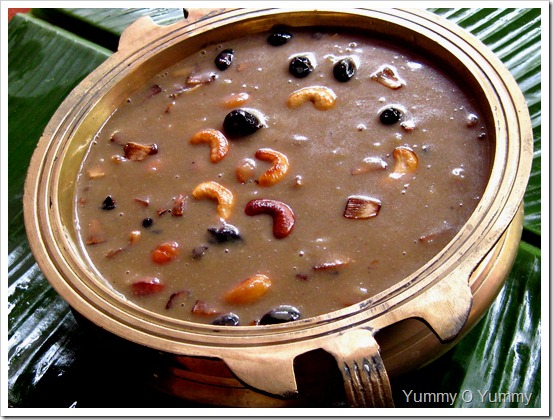
Ada Pradhaman is one of the most celebrated traditional desserts of Kerala and an essential part of a festive Onam Sadya. Made with rice ada, jaggery, coconut milk, ghee, cardamom and fried coconut pieces, this rich and aromatic payasam represents the sweetness, abundance and hospitality associated with Onam.
Unlike milk-based Palada Payasam, Ada Pradhaman gets its characteristic flavour from jaggery and coconut milk. It is traditionally prepared slowly in a heavy-bottomed vessel so that the ada absorbs the flavour of the jaggery and coconut milk.
🌼 Recipe at a Glance
| Item | Details |
|---|---|
| Recipe | Ada Pradhaman |
| Cuisine | Kerala / South Indian |
| Category | Dessert / Payasam |
| Festival | Onam |
| Preparation Time | 15–20 minutes |
| Cooking Time | 35–45 minutes |
| Total Time | About 50–65 minutes |
| Serves | 6–8 people |
| Difficulty | Easy to Moderate |
| Main Sweetener | Jaggery |
| Base | Rice ada & coconut milk |
| Vegetarian | Yes |
| Vegan | Yes, with coconut oil instead of ghee |
🥥 Ingredients
Main Ingredients
- Rice ada – 1 cup (about 100–120 g)
- Jaggery – 2 cups (about 300–350 g), grated or powdered
- Water – approximately 4–5 cups, as required
- Thin coconut milk – 3 cups (750 ml)
- Thick coconut milk – 1 cup (250 ml)
- Ghee – 3 tablespoons
- Fresh coconut pieces – 2 tablespoons, cut into small pieces
- Cardamom powder – ½ teaspoon
- Dry ginger powder – ⅛ teaspoon or a small pinch
- Salt – a small pinch
Optional Garnish
- Cashews – 8–10
- Raisins – 1 tablespoon
- A little extra ghee
- A few strands of saffron, for a modern variation
🍚 What Is Rice Ada?
Ada is made from rice and is available in dried flakes or small pieces. It is specially used in several Kerala payasams, including:
- Ada Pradhaman
- Palada Payasam
- Ada Payasam
For Ada Pradhaman, use plain rice ada, not flavoured or sweetened ada.
Different brands of ada may require slightly different cooking times, so always check the package instructions when available.
👩🍳 Step-by-Step Preparation
Step 1: Wash and Soak the Ada
Place 1 cup of rice ada in a bowl.
Wash it gently 2–3 times with water.
Soak it in enough warm water for approximately 10–15 minutes.
Drain completely.
Tip
Do not soak the ada for too long. Excessive soaking can make it mushy during cooking.
Step 2: Prepare the Jaggery Syrup
Place 2 cups of jaggery in a saucepan.
Add approximately 1 cup of water.
Heat over medium flame until the jaggery dissolves completely.
Strain the syrup through a fine sieve or clean cloth to remove possible impurities.
Keep the strained jaggery syrup aside.
Why strain the jaggery?
Traditional jaggery may contain small particles of sand or other impurities. Straining produces a smoother and cleaner payasam.
Step 3: Cook the Ada
Heat a heavy-bottomed pan or traditional uruli.
Add the drained ada and approximately 1–1½ cups of water.
Cook over medium heat until the ada becomes soft and translucent.
Stir occasionally to prevent sticking.
This normally takes approximately 10–15 minutes, depending on the type of ada.
The ada should be:
Soft + cooked + slightly chewy
It should not completely dissolve.
Step 4: Add the Jaggery
Once the ada is cooked, add the strained jaggery syrup.
Mix thoroughly.
Allow the mixture to simmer for approximately 8–10 minutes.
Stir frequently.
The ada will gradually absorb the sweetness and colour of the jaggery.
Step 5: Add Thin Coconut Milk
Add:
3 cups thin coconut milk
Mix well.
Simmer over low to medium heat for approximately 10–15 minutes.
The mixture will gradually become thicker and more aromatic.
Important
Do not cook on very high heat. Slow cooking allows the ada to absorb the flavours properly.
Step 6: Add Thick Coconut Milk
When the payasam has reached the desired consistency, reduce the flame to very low.
Add:
1 cup thick coconut milk
Mix gently.
Heat for only 2–3 minutes.
⚠️ Do Not Boil
Once thick coconut milk has been added, do not allow the payasam to boil vigorously.
High heat can cause coconut milk to separate or curdle.
Step 7: Add the Spices
Add:
- ½ teaspoon cardamom powder
- A small pinch of dry ginger powder
- A tiny pinch of salt
Mix gently.
The small amount of salt does not make the payasam salty. Instead, it helps balance and enhance the sweetness.
Turn off the flame.
Step 8: Fry the Coconut Pieces
Heat 3 tablespoons of ghee in a small pan.
Add the coconut pieces.
Fry until they become golden brown.
If using them, fry the cashews and raisins in the same ghee.
Add everything to the payasam.
Mix gently.
Step 9: Rest the Payasam
Allow the Ada Pradhaman to rest for approximately 30 minutes to 1 hour before serving.
The flavour improves as the ada absorbs the jaggery and coconut milk.
It will also become slightly thicker as it cools.
🍮 Serving Suggestions
Ada Pradhaman can be served:
Warm
Ideal immediately after preparing it.
At Room Temperature
This is one of the most traditional ways to enjoy it during an Onam Sadya.
Slightly Chilled
Some people enjoy payasam chilled, although traditional Sadya service generally presents it at room temperature or warm.
For an authentic Onam experience, serve it in a small traditional steel bowl or banana leaf as part of the Sadya.
🌿 The Traditional Flavour Combination
The characteristic taste of Ada Pradhaman comes from the combination of:
Rice Ada + Jaggery + Coconut Milk + Ghee + Fried Coconut + Cardamom
Each ingredient contributes something special:
| Ingredient | Contribution |
|---|---|
| Rice ada | Soft, slightly chewy texture |
| Jaggery | Deep caramel-like sweetness |
| Coconut milk | Creaminess and richness |
| Ghee | Aroma and richness |
| Fried coconut | Crunch and traditional flavour |
| Cardamom | Fragrance |
| Dry ginger | Warm, spicy undertone |
| Salt | Balances sweetness |
⭐ Tips for Perfect Ada Pradhaman
1. Choose good-quality jaggery
The quality of jaggery has a major influence on the colour and flavour.
Dark, flavourful traditional jaggery generally produces a richer-looking pradhaman.
2. Don’t overcook the ada
The ada should be soft but retain a slight bite.
Overcooked ada can become mushy.
3. Use fresh coconut milk when possible
Freshly extracted coconut milk gives a much richer traditional flavour.
4. Add thick coconut milk at the end
This is one of the most important techniques.
Add thick coconut milk only after the ada has been fully cooked.
5. Never boil thick coconut milk vigorously
Keep the flame low after adding it.
6. Don’t make it excessively thick
Remember that payasam thickens considerably while cooling.
7. Use a heavy-bottomed vessel
This reduces the possibility of burning or sticking.
8. Stir regularly
Jaggery-based payasam can easily stick to the bottom of the vessel.
9. Let it rest
A short resting period allows the flavours to blend beautifully.
10. Adjust sweetness carefully
Different varieties of jaggery have different levels of sweetness. Start with slightly less jaggery if necessary and add more after tasting.
🥥 How to Make Fresh Coconut Milk
For a truly traditional Ada Pradhaman, fresh coconut milk is highly recommended.
First extraction – Thick coconut milk
- Grate fresh coconut.
- Add a small amount of warm water.
- Grind well.
- Squeeze through a clean strainer.
- Collect the thick coconut milk.
Second extraction – Thin coconut milk
Add more warm water to the remaining coconut pulp.
Grind and squeeze again.
This produces thinner coconut milk.
Traditional order
First extraction = thick coconut milk
Second extraction = thin coconut milk
The thin milk is used earlier during cooking, while the thick milk is added toward the end.
🌴 Traditional Kerala Method
For a particularly authentic preparation, Ada Pradhaman can be cooked in a traditional uruli, the wide bronze vessel commonly associated with Kerala cooking.
The broad surface allows the payasam to cook evenly.
For large Onam celebrations, the recipe can be prepared in much larger quantities in an uruli.
🌱 Vegetarian and Vegan Notes
Vegetarian
Traditional Ada Pradhaman is vegetarian.
The use of ghee does not make it non-vegetarian.
Vegan Version
Ada Pradhaman can easily be made vegan.
Simply replace:
Ghee → Coconut oil
Use a mild-flavoured coconut oil so that it complements rather than overwhelms the coconut flavour.
All the other principal ingredients—rice ada, jaggery and coconut milk—are plant-based.
Vegan ingredient list
- Rice ada
- Jaggery
- Coconut milk
- Coconut oil
- Coconut pieces
- Cardamom
- Dry ginger
- Salt
🍯 Variations of Ada Pradhaman
1. Palm Jaggery Ada Pradhaman
Replace ordinary jaggery with palm jaggery for a deeper and more distinctive flavour.
2. Coconut-Rich Ada Pradhaman
Increase the amount of thick coconut milk slightly for an especially creamy version.
3. Cashew Ada Pradhaman
Add roasted cashews for additional richness and texture.
4. Raisin Ada Pradhaman
Golden raisins add small bursts of sweetness.
5. Saffron Ada Pradhaman
Add a few strands of saffron to the thick coconut milk for a modern festive variation.
6. Nutmeg Ada Pradhaman
A tiny amount of freshly grated nutmeg can give the payasam a warm festive aroma.
Use only a very small quantity because nutmeg can easily overpower the other flavours.
7. Extra Coconut Ada Pradhaman
Add more fried coconut pieces for a stronger traditional coconut flavour and pleasant texture.
❓ Frequently Asked Questions
Can I use store-bought coconut milk?
Yes.
Full-fat canned or packaged coconut milk can be used when fresh coconut milk is unavailable.
For the best result, dilute part of it to make thin coconut milk and reserve the thicker portion for the end.
Can I prepare Ada Pradhaman in advance?
Yes.
In fact, preparing it somewhat in advance can improve its flavour.
If it becomes too thick, gently loosen it with a little warm thin coconut milk or warm water before serving.
Why did my payasam become too thick?
Ada continues to absorb liquid even after cooking.
Simply add a little warm coconut milk or warm water and stir gently.
Why is my payasam not dark enough?
The colour mainly depends on the variety and quantity of jaggery used.
Some jaggery is naturally lighter.
Colour does not necessarily indicate quality.
Can I use sugar instead of jaggery?
Technically yes, but it will no longer have the characteristic flavour of traditional Ada Pradhaman.
For an authentic Onam version, jaggery is strongly preferred.
Can I use coconut milk powder?
Yes, if fresh or packaged coconut milk is unavailable.
Prepare it according to the manufacturer’s instructions and maintain separate thin and thick consistencies if possible.
Can I use leftover cooked ada?
Yes, provided it has been properly refrigerated and is still fresh.
Bring it to a suitable temperature before incorporating it into the payasam.
📌 Recipe Card
Traditional Kerala Ada Pradhaman
Preparation: 15–20 minutes
Cooking: 35–45 minutes
Total: 50–65 minutes
Serves: 6–8
Ingredients
- 1 cup rice ada
- 2 cups jaggery
- 3 cups thin coconut milk
- 1 cup thick coconut milk
- 3 tbsp ghee
- 2 tbsp coconut pieces
- ½ tsp cardamom powder
- Pinch of dry ginger
- Pinch of salt
- Cashews and raisins, optional
Method
1. Wash and soak the ada for 10–15 minutes.
2. Melt and strain the jaggery.
3. Cook the ada until soft.
4. Add jaggery syrup and simmer.
5. Add thin coconut milk and cook gently.
6. Add thick coconut milk and heat without boiling.
7. Add cardamom, dry ginger and salt.
8. Fry coconut pieces in ghee and add them.
9. Rest for 30 minutes before serving.
10. Serve warm or at room temperature.
🌸 Cultural Significance
Ada Pradhaman is more than a dessert on the Onam table.
It represents the sweetness, abundance and hospitality of Kerala’s harvest festival. During a traditional Onasadya, payasam is served toward the end of the meal, bringing the feast to a celebratory conclusion.
For generations, the preparation of payasam has also been associated with family gatherings, temple festivals, weddings and other important celebrations.
The combination of locally familiar ingredients—rice, coconut and jaggery—makes Ada Pradhaman a particularly beautiful representation of Kerala’s culinary heritage.
🌼 A Taste of Kerala’s Onam
A spoonful of Ada Pradhaman brings together several characteristic flavours of Kerala:
the sweetness of jaggery,
the richness of coconut milk,
the aroma of cardamom,
the fragrance of ghee,
and the satisfying texture of rice ada.
That is why Ada Pradhaman remains one of the most treasured payasams of the Kerala Onam Sadya.
Happy Onam! 🌼
ഓണാശംസകൾ!
Leave a Reply