

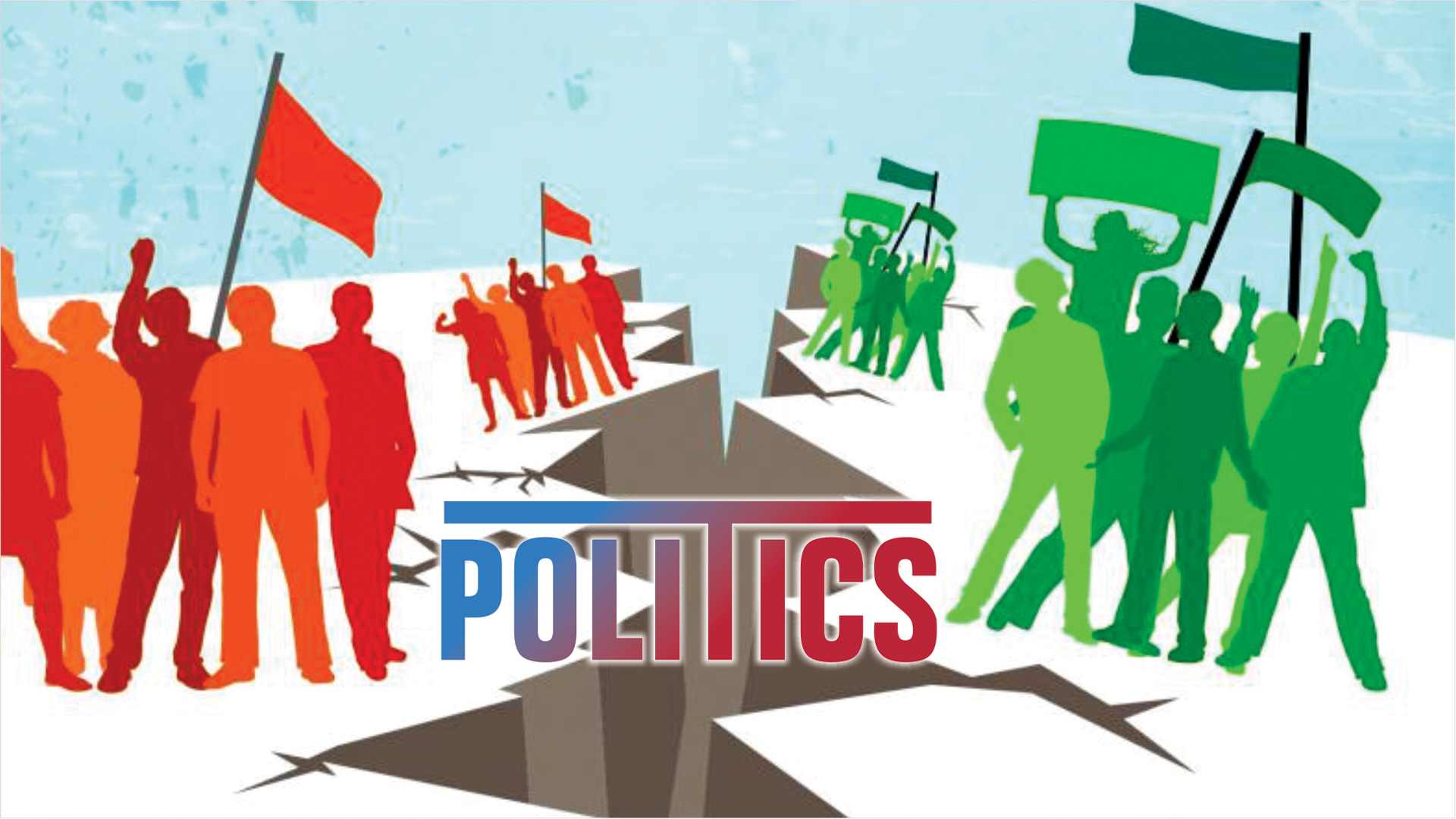
A curated bank of 100 General Knowledge questions covering fundamental topics in Political Science and Politics—including Political Theory & Concepts, Systems of Government, International Relations & Diplomacy, Constitutional Law & Governance, Political Ideologies, and Public Administration.
Politics GK Question Bank
Political Theory & Concepts (Q1–Q20)
- What term describes the supreme authority and independent power of a state to govern itself without external interference?
- Which 17th-century philosopher authored Leviathan and posited that life in the state of nature is “nasty, brutish, and short”?
- What concept describes an implicit agreement among individuals to form a society and establish a governing authority?
- Who is widely considered the author of the Two Treatises of Government, arguing that government exists to protect natural rights to life, liberty, and property?
- What principle, popularized by Montesquieu, divides government power among executive, legislative, and judicial branches?
- What term refers to a government’s recognized legitimacy and right to exercise power over its citizens?
- What Greek philosopher authored The Republic and introduced the concept of the “Philosopher King”?
- What term describes a system of government where ultimate political authority is held directly or indirectly by the people?
- What concept represents the idea that all individuals and institutions are subject to and accountable under the law?
- What term describes a governing system where citizens elect representatives to make laws and policies on their behalf?
- Which Renaissance political theorist authored The Prince, focusing on political realism and power dynamics?
- What political concept describes a territory with a permanent population, defined borders, a government, and the capacity to enter into relations with other states?
- What term describes the legal right of a citizen or authority to cast a decision-making vote or hold office?
- What form of democracy allows citizens to vote directly on laws and policies through mechanisms like referendums?
- What political term describes the fundamental principles and established precedents according to which a state is governed?
- What term describes a state’s geographic area where it exercises legal jurisdiction?
- Which political philosopher wrote The Social Contract and coined the phrase “Man is born free, and everywhere he is in chains”?
- What term describes the dynamic where opposing political parties or branches of government check and balance each other’s powers?
- What political concept describes the shared beliefs, values, and attitudes that shape political behavior in a society?
- What term refers to a political entity that combines the cultural identity of a nation with the legal authority of a state?
Systems of Government & Institutions (Q21–Q40)
- What system of government concentrates principal power in a central national authority, with subnational units deriving power from it?
- What system divides constitutional power between a central national government and regional or state governments?
- What form of government is led by a hereditary monarch whose powers are limited by a constitution?
- What system features an executive head of government (Prime Minister) who is chosen by and accountable to the legislature?
- What system features an independently elected President who serves as both head of state and head of government?
- What term describes a legislature that consists of two distinct chambers or houses?
- What term describes a legislature that consists of a single chamber or house?
- What form of government is ruled by a small, privileged elite or dominant group?
- What form of government is ruled by religious leaders claiming divine authority?
- What term describes a government ruled by a single absolute ruler who holds unrestricted authority?
- What executive mechanism allows a head of state or government to reject legislation passed by the parliament or congress?
- What legislative process allows lawmakers to block or delay a vote on a bill through prolonged debate?
- What procedure allows voters to remove an elected official from office before their term expires?
- What vote allows an electorate to directly express an opinion on or accept/reject a specific public policy proposal?
- What term describes a government formed by an alliance of multiple political parties when no single party holds a majority?
- What system allows a judicial court to review and invalidate laws or government actions deemed unconstitutional?
- What fundamental parliamentary motion expresses a lack of support in the sitting executive government, often forcing its resignation?
- What political term refers to the official residence and workplace of the President of the United States?
- What term refers to the upper house of the United States Congress or the Indian Parliament (Rajya Sabha counterpart)?
- What official body or institution is responsible for conducting and overseeing free and fair elections in many democratic states?
Political Ideologies & Movements (Q41–Q60)
- What political ideology emphasizes individual liberty, consent of the governed, free markets, and equality before the law?
- What political ideology emphasizes traditional institutions, social stability, gradual change, and established order?
- What political ideology advocates for social ownership of the means of production and democratic control over the economy?
- What far-left political and economic ideology aims for a classless, stateless, and moneyless society?
- What far-right, authoritarian ideology is characterized by dictatorial power, forcible suppression of opposition, and strong regimentation of society?
- What political philosophy advocates for the complete abolition of all organized government and compulsory state authority?
- What ideology asserts that the nation should be the fundamental unit of human social life and political loyalty?
- What political movement and ideology advocates for social, economic, and political equality for all genders?
- What political ideology focuses on environmental protection, ecological balance, and sustainable development?
- What political approach seeks to appeal to “ordinary people” who feel their concerns are disregarded by established elite groups?
- What economic and political framework advocates for free-market capitalism, deregulation, reduction in government spending, and privatization?
- What political doctrine advocates for maintaining or extending a nation’s power and influence through colonization or military force?
- What political ideology seeks to establish a society based on common ownership, but relies on a strong state apparatus to manage economic resources?
- What term describes political positions that align with reform, social equality, and progressive change on the traditional political spectrum?
- What term describes political positions that align with tradition, social hierarchy, and free-market principles on the traditional political spectrum?
- What political system promotes a welfare state combined with a capitalist market economy, common in Scandinavian countries?
- What political concept describes the peaceful transfer of executive power between rival political parties following an election?
- What term refers to political strategies that seek to secure votes by offering personal favors, goods, or services to supporters?
- What political philosophy holds that political actions should be evaluated based on their practical consequences and outcomes?
- What term describes extreme devotion or unyielding adherence to a specific political party or faction?
International Relations & Diplomacy (Q61–Q80)
- What international organization was established in 1945 following World War II to foster international peace and security?
- What principal organ of the United Nations bears primary responsibility for maintaining international peace and security?
- How many permanent members hold veto power on the United Nations Security Council?
- What military alliance was established in 1949 by North American and European nations for collective defense against aggression?
- What theoretical framework in international relations views world politics as an arena of competition among self-interested states seeking power?
- What theoretical framework in international relations emphasizes international cooperation, institutions, and democratic peace?
- What term describes a state of international politics where no single overarching global government exists to enforce rules?
- What condition of geopolitical tension existed between the United States and the Soviet Union from the late 1940s to 1991?
- What international judicial body located in The Hague serves as the principal judicial organ of the United Nations?
- What independent international court, established by the Rome Statute, prosecutes individuals for genocide, war crimes, and crimes against humanity?
- What diplomatic immunity protects foreign diplomats from prosecution and lawsuits under the host country’s laws?
- What term refers to the foreign policy strategy of maintaining equal distance or avoiding formal military alliances with major power blocs?
- What political agreement or treaty formalizes the end of a state of war between belligerent nations?
- What term describes economic penalties, such as trade embargos or asset freezes, imposed by one nation or group on another to force compliance?
- What concept describes a state’s ability to influence others through cultural, ideological, and diplomatic appeal rather than military coercion?
- What concept describes the use of military or economic threats (“hard power”) to influence another state’s actions?
- What international financial agreement signed in 1944 established the framework for the modern international monetary system, creating the IMF and World Bank?
- What treaty signed in 1992 formally created the European Union and paved the way for the single European currency (Euro)?
- What term describes a geopolitical situation where power is concentrated primarily around two major competing global superpowers?
- What term describes a geopolitical order dominated by a single dominant global superpower?
Elections, Public Policy & Governance (Q81–Q100)
- What electoral process allows voters to select a political party’s candidate for an upcoming general election?
- What electoral system awards seats in a legislature based on the percentage of total votes each political party receives?
- What electoral system awards victory to the candidate who receives more votes than any other individual candidate, even without an absolute majority?
- What practice involves redrawing electoral district boundaries to give an unfair political advantage to a specific party or group?
- What term refers to an incumbent politician who continues in office during the period between an election defeat and the inauguration of a successor?
- What organized group seeks to influence public policy and legislation on behalf of specific causes, industries, or interests?
- What formal process involves attempting to directly influence government officials and legislators to enact favorable laws?
- What term describes the administrative organization and non-elected officials who carry out government functions and policies?
- What primary survey tool measures public opinion by interviewing a representative sample of a population?
- What financial plan outlines a government’s anticipated revenues and proposed expenditures for a fiscal year?
- What legal mechanism or order requires a person under arrest to be brought before a judge to determine the lawfulness of their detention?
- What term describes the process by which a legislative body brings formal charges against a high-ranking public official to remove them from office?
- What practice involves appointing political supporters and friends to public office regardless of qualification?
- What legislative rider or provision appropriates government funds for local projects intended primarily to benefit a specific representative’s district?
- What political term refers to the group of senior executive officials appointed by a head of state or government to head major administrative departments?
- What term describes the percentage of eligible voters who cast a ballot in a given election?
- What non-governmental, non-profit organization operates independently of government control to address social or political issues?
- What political phenomenon occurs when public opinion becomes sharply divided into opposing, uncompromising factions?
- What measure or procedure requires absolute transparency and public access to government records and decision-making processes?
- What concept describes the policy-making process where decisions are made gradually through small, step-by-step adjustments rather than radical overhauls?
Answer Key (1–100)
- Sovereignty
- Thomas Hobbes
- Social contract
- John Locke
- Separation of powers
- Authority
- Plato
- Democracy
- Rule of Law
- Representative democracy (or Republic)
- Niccolò Machiavelli
- State (or Sovereign State)
- Franchise (or Suffrage / Right to vote)
- Direct democracy
- Constitution
- Territorial jurisdiction (or Territory)
- Jean-Jacques Rousseau
- Checks and balances
- Political culture
- Nation-state
- Unitary system (Unitary state)
- Federal system (Federalism)
- Constitutional monarchy
- Parliamentary system
- Presidential system
- Bicameral legislature
- Unicameral legislature
- Oligarchy
- Theocracy
- Autocracy (or Dictatorship)
- Veto
- Filibuster
- Recall election
- Referendum (or Plebiscite)
- Coalition government
- Judicial review
- Motion of no confidence (Vote of no confidence)
- The White House
- Senate
- Election Commission (or Electoral Management Body)
- Liberalism
- Conservatism
- Socialism
- Communism
- Fascism
- Anarchism
- Nationalism
- Feminism
- Green politics (or Ecologism / Environmentalism)
- Populism
- Neoliberalism
- Imperialism
- State socialism (or Collectivism)
- Left-wing (or Leftism)
- Right-wing (or Rightism)
- Social democracy (Nordic model)
- Peaceful transfer of power
- Clientelism (or Patronage politics)
- Pragmatism
- Partisanship
- United Nations (UN)
- United Nations Security Council (UNSC)
- 5 permanent members (USA, UK, France, Russia, China)
- NATO (North Atlantic Treaty Organization)
- Realism (Realpolitik)
- Liberalism (or Idealism / Constructivism in IR)
- Anarchy (International anarchy)
- The Cold War
- International Court of Justice (ICJ)
- International Criminal Court (ICC)
- Diplomatic immunity
- Non-alignment (Non-Aligned Movement)
- Peace treaty
- Sanctions (Economic sanctions)
- Soft power
- Hard power
- Bretton Woods Agreement
- Maastricht Treaty
- Bipolarity (Bipolar system)
- Unipolarity (Hegemony)
- Primary election (or Primary)
- Proportional representation (PR)
- First-past-the-post (or Plurality voting system)
- Gerrymandering
- Lame duck
- Interest group (or Advocacy group / Pressure group)
- Lobbying
- Bureaucracy (or Civil Service)
- Opinion poll (or Public opinion poll)
- National budget (or Fiscal budget)
- Habeas corpus
- Impeachment
- Spoils system (or Political patronage)
- Pork barrel (Pork-barrel politics)
- Cabinet
- Voter turnout
- Non-Governmental Organization (NGO)
- Political polarization
- Freedom of Information (Open government)
- Incrementalism
Leave a Reply