

Introduction
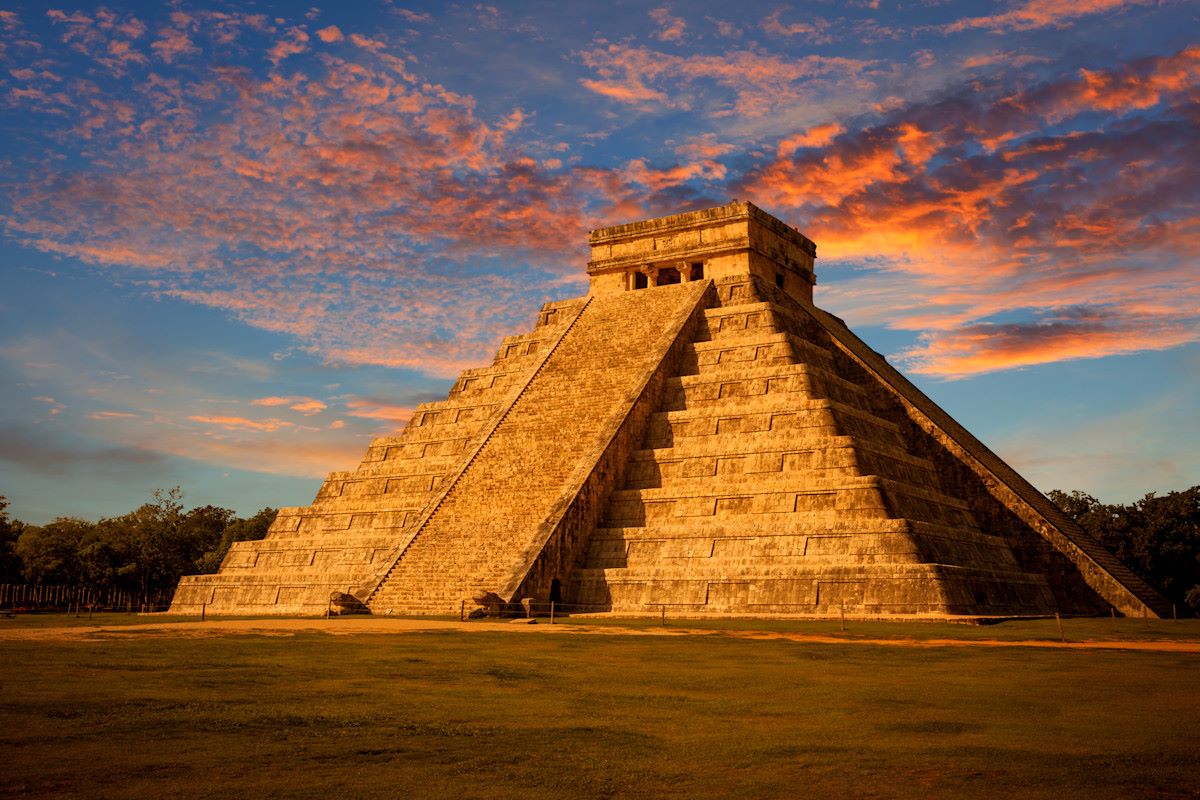
The Maya Civilization was one of the most remarkable civilizations of ancient Mesoamerica. It flourished across parts of present-day Mexico, Guatemala, Belize, Honduras, and El Salvador. The Maya are famous for their sophisticated writing system, mathematical knowledge, calendars, astronomy, monumental cities, temples, and artistic achievements.
Maya civilization developed over many centuries, reaching a major period of urban and cultural growth during the Classic Period (approximately 250–900 CE). Unlike some other ancient civilizations, the Maya did not form one unified empire; instead, they lived in numerous independent city-states that sometimes cooperated and sometimes fought one another.
This collection of 120 general knowledge questions covers Maya history, cities, rulers, religion, mathematics, astronomy, architecture, daily life, and the civilization’s enduring legacy.
Instructions: Answer the questions first, then check the answer key at the end.
Section 1: General Knowledge and History
- In which region of the world did the Maya Civilization develop?
- Which modern countries contain important archaeological sites of the Maya Civilization?
- What is the name of the geographical region traditionally associated with Maya civilization?
- During which broad historical period did Maya civilization flourish?
- What is the name of the period of greatest Maya urban and cultural development?
- Did the Maya Civilization consist of one unified empire?
- What type of political units governed much of Maya society?
- Which earlier Mesoamerican civilization influenced aspects of later Maya culture?
- What is the approximate date of the beginning of the Preclassic Maya period?
- What is the approximate date range of the Classic Maya period?
Section 2: Important Maya Cities and Archaeological Sites
- Which famous Maya city is located in the modern Mexican state of Yucatán?
- Which Maya city in Guatemala is famous for its monumental temples and pyramids?
- In which modern country is the ancient Maya city of Tikal located?
- Which Maya archaeological site is famous for the Temple of the Inscriptions?
- In which modern Mexican state is Palenque located?
- Which ancient Maya city is famous for its elaborate carved stairway containing hieroglyphic inscriptions?
- In which modern country is Copán located?
- Which Maya city is famous for the Caracol astronomical observatory?
- In which modern country is Caracol located?
- Which ancient Maya city is located in Belize and was an important ceremonial centre?
- Which Maya city is famous for the Temple of Kukulcán?
- What is the name of the famous stepped pyramid at Chichén Itzá?
- Which ancient Maya city is known for its extensive network of sacbeob, or raised roads?
- Which Maya site in Guatemala is associated with the famous murals of Bonampak?
- In which modern country is Bonampak located?
- Which ancient Maya city was a major power in the Petén region of Guatemala?
- Which Maya city is located near Lake Petén Itzá and was the last independent Maya kingdom conquered by the Spanish?
- Which Maya archaeological site in Honduras is famous for its sculptures and hieroglyphic stairway?
- Which Maya city in Mexico is associated with a large palace complex and elaborate architectural decoration?
- What was the general purpose of Maya ceremonial centres?
Section 3: Maya Rulers and Political History
- What title is often used for powerful Maya kings in modern scholarship?
- What was the role of a Maya king in religious ceremonies?
- Which Maya ruler is associated with the Temple of the Inscriptions at Palenque?
- What is another name for K’inich Janaab’ Pakal?
- Which Maya city was ruled by the famous king Jasaw Chan K’awiil I?
- Which Maya city was involved in a major conflict with Calakmul during the Classic Period?
- What was Calakmul?
- What role did warfare play among Maya city-states?
- How did Maya rulers demonstrate their political authority?
- What was one purpose of Maya royal inscriptions?
- Which Maya city became a major political power during the Late Classic Period?
- What was the significance of royal dynasties in Maya society?
- Did all Maya cities share the same ruler?
- What kinds of alliances did Maya rulers form?
- What happened to many major southern lowland Maya cities around the end of the Classic Period?
Section 4: Maya Writing and Language
- What type of writing system did the ancient Maya develop?
- What are the symbols in Maya writing commonly called?
- On what materials did the Maya record inscriptions?
- What is the name of the famous Maya book known for its account of creation and mythology?
- Which Maya codex is one of the few pre-Columbian Maya books to survive?
- What is the Dresden Codex especially famous for?
- What is the Paris Codex known for?
- What is the Madrid Codex also called?
- Which ancient Maya city contains a famous hieroglyphic stairway?
- What was the primary purpose of Maya inscriptions on monuments?
- Who helped make major advances in deciphering Maya hieroglyphs during the twentieth century?
- What language family includes many modern Maya languages?
- Are Maya languages still spoken today?
- Why were Maya scribes important?
- What did the decipherment of Maya writing reveal about Maya history?
Section 5: Mathematics, Astronomy and Calendars
- Which number system did the Maya use?
- What mathematical symbol did the Maya use to represent zero?
- Why was the concept of zero important in Maya mathematics?
- What base was used in the principal Maya vigesimal number system?
- Which celestial body was especially important in Maya astronomical observations?
- What was the purpose of Maya astronomical calculations?
- What was the Tzolk’in?
- How many days were in the Tzolk’in ritual calendar?
- What was the Haab’ calendar?
- How many days were in the standard Haab’ calendar?
- What was the Calendar Round?
- Approximately how long was the Maya Long Count period known as a baktun?
- What was the purpose of the Maya Long Count calendar?
- Which Maya city contains the famous structure known as El Caracol?
- What did Maya astronomers study besides the Sun?
- How did Maya astronomical knowledge help with agriculture and ceremonies?
- Did the Maya predict astronomical events with perfect accuracy?
- What was the significance of Venus in Maya astronomy?
- Which Maya city is especially famous for the astronomical alignments associated with the Temple of Kukulcán?
- What does Maya mathematical and astronomical knowledge reveal about their society?
Section 6: Religion, Gods and Mythology
- What was the general nature of Maya religion?
- Who was Itzamna in Maya mythology?
- Which Maya deity is commonly associated with rain and storms?
- Who was Kukulcán?
- Which feathered serpent deity was known by a related name among the Aztecs?
- What was the importance of maize in Maya mythology?
- Which sacred text describes the creation of the world and the adventures of the Hero Twins in K’iche’ Maya tradition?
- Who were the Hero Twins in the Popol Vuh?
- What was Xibalba in Maya mythology?
- What role did shamans and priests play in Maya society?
- What kinds of offerings were made in Maya religious ceremonies?
- What was the significance of bloodletting in some Maya rituals?
- What was the purpose of Maya ceremonial ballgames?
- What was the name commonly given to the Mesoamerican ballgame played by the Maya?
- Why were caves and cenotes important in Maya religious traditions?
Section 7: Architecture, Art and Engineering
- What architectural structure is especially associated with Maya ceremonial centres?
- What were Maya pyramids often used for?
- What is a stela in Maya archaeology?
- What materials were commonly used to construct Maya buildings?
- What was the purpose of Maya ball courts?
- What is a sacbe?
- Which Maya city is famous for the Temple of the Great Jaguar?
- What is the Temple of the Great Jaguar also known as?
- What were Maya palaces used for?
- What do Maya murals reveal about their civilization?
- What type of stone was commonly used for Maya sculptures and inscriptions?
- What was the purpose of carved stone monuments?
- What engineering achievement is associated with Maya water management?
- What was the function of reservoirs in Maya cities?
- What do Maya architectural alignments sometimes reveal about their astronomy and ceremonial practices?
Section 8: Agriculture, Trade and Daily Life
- Which crop was central to Maya agriculture and cuisine?
- Which agricultural technique involved clearing vegetation and cultivating land for a period before moving to another plot?
- What was the importance of beans and squash in Maya agriculture?
- What was the principal ingredient in many traditional Maya foods?
- Which valuable crop was used to prepare a ceremonial beverage and also served as a trade commodity?
- Which natural feature supplied water to many Maya communities in the Yucatán Peninsula?
- What goods were traded between Maya city-states and neighbouring regions?
- What was the importance of obsidian in Maya society?
- What was the role of marketplaces in Maya cities?
- Why is the Maya Civilization still important to the modern world?
Answer Key: 120 GK Questions About the Maya Civilization
Answers 1–20
- Mesoamerica, in Central America and southern Mexico.
- Mexico, Guatemala, Belize, Honduras, and El Salvador.
- The Maya region, encompassing parts of southeastern Mexico and northern Central America.
- Ancient and pre-Columbian history, spanning many centuries.
- The Classic Period, approximately 250–900 CE.
- No. It consisted of numerous independent and sometimes allied city-states.
- City-states.
- The Olmec civilization is often discussed as an important early influence in Mesoamerica, though the nature of specific cultural influences is debated.
- Approximately 2000 BCE, depending on the region and archaeological definition.
- Approximately 250–900 CE.
- Chichén Itzá.
- Tikal.
- Guatemala.
- Palenque.
- Chiapas.
- Copán.
- Honduras.
- Caracol.
- Belize.
- Xunantunich is a well-known ceremonial centre in Belize.
- Chichén Itzá.
- El Castillo, also called the Temple of Kukulcán.
- Coba.
- Bonampak.
- Mexico.
- Tikal.
- Nojpetén, on an island in Lake Petén Itzá.
- Copán.
- Palenque.
- Religious ceremonies, political administration, markets, and public gatherings.
Answers 21–40
- Chichén Itzá.
- El Castillo, or the Temple of Kukulcán.
- Coba is particularly known for its network of raised roads.
- Bonampak.
- Mexico.
- Tikal was one of the most influential powers in the Petén region.
- Nojpetén.
- Copán.
- Palenque.
- They served religious, political, ceremonial, and community functions.
- Ajaw, often translated as lord or ruler; powerful kings could bear more elaborate titles.
- To act as a religious intermediary and lead or participate in important rituals.
- K’inich Janaab’ Pakal.
- Pakal the Great.
- Tikal.
- Tikal.
- A powerful Maya city-state in what is now northern Guatemala.
- Warfare helped rulers compete for territory, resources, captives, prestige, and political dominance.
- Through monuments, royal ceremonies, warfare, dynastic claims, and religious authority.
- To record rulers, accessions, victories, rituals, and important dates.
- Several cities rose to prominence; Calakmul and Tikal were major competing powers.
- Dynasties established continuity of rule, political legitimacy, and elite identity.
- No. Each city-state generally had its own ruler or governing elite.
- Through marriage, diplomacy, military cooperation, and political agreements.
- Many experienced political disruption, declining populations, or abandonment, though Maya civilization continued elsewhere.
Answers 41–60
- Various cities, including Calakmul, Tikal, and other regional centres, held power at different times.
- They helped legitimize political rule and organize society.
- No.
- Marriage alliances, diplomatic agreements, and military coalitions.
- Many southern lowland centres declined during the Terminal Classic period.
- A logosyllabic writing system.
- Hieroglyphs or glyphs.
- Stone monuments, pottery, bones, wood, plaster, and bark-paper books.
- The Popol Vuh.
- The Dresden Codex is one of the surviving pre-Columbian Maya books.
- Its astronomical and calendrical tables, including important Venus calculations.
- It includes information about rituals, calendars, and historical or prophetic traditions.
- The Tro-Cortesianus Codex.
- Copán.
- To commemorate rulers, dates, victories, dynastic events, and ceremonies.
- Scholars including Yuri Knorozov, Tatiana Proskouriakoff, and other epigraphers.
- The Mayan language family.
- Yes. Millions of people speak Maya languages today.
- They recorded historical events, rituals, dynastic histories, and calendrical information.
- It revealed detailed royal histories, political rivalries, historical dates, and cultural practices.
Answers 61–80
- A vigesimal, or base-20, number system.
- A shell-shaped symbol.
- It allowed the representation of zero and supported positional mathematical notation.
- Base 20.
- The Sun, Moon, and Venus were particularly important.
- To track celestial cycles, develop calendars, and plan agricultural and ceremonial activities.
- A 260-day ritual calendar.
- 260 days.
- A 365-day calendar used for seasonal and civil purposes.
- 365 days, divided into 18 periods of 20 days plus five additional days.
- The combination of the 260-day Tzolk’in and the 365-day Haab’ calendars.
- Approximately 394 years.
- To record dates over long periods, including historical events.
- Chichén Itzá.
- The Moon, eclipses, planetary movements, and other celestial phenomena.
- It helped coordinate seasonal activities and religious observances.
- No. Their calculations were sophisticated, but predictions and models were not perfectly accurate in every case.
- Venus was important for calendrical calculations, warfare-related timing, and ritual traditions.
- Chichén Itzá.
- It demonstrates advanced mathematical reasoning, systematic observation, and skilled recordkeeping.
Answers 81–100
- A complex polytheistic tradition involving gods, ancestors, nature, and cycles of creation and renewal.
- A creator deity associated with knowledge, the sky, and aspects of civilization in some Maya traditions.
- Chaac.
- A feathered serpent deity associated with Maya traditions, particularly at Chichén Itzá.
- Quetzalcoatl.
- Maize was central to food, agriculture, identity, and creation stories.
- The Popol Vuh.
- Hunahpu and Xbalanque, commonly rendered as Hunahpu and Xbalanque in English-language texts.
- The underworld in K’iche’ Maya mythology.
- They conducted rituals, interpreted religious knowledge, and helped maintain ceremonial calendars.
- Food, incense, flowers, crafted objects, and sometimes blood offerings.
- It was a ritual act associated with communication with deities and ancestors and with royal legitimacy.
- Ceremonial, political, and social purposes; its meaning varied by context.
- The Mesoamerican ballgame, often called pitz in discussions of Maya terminology.
- They were associated with water, fertility, ancestors, and entrances to the underworld.
Answers 101–120
- A raised or paved road connecting Maya settlements and ceremonial buildings.
- Tikal.
- Temple I at Tikal.
- They served as residences and administrative spaces for rulers and elites.
- They depict ceremonies, warfare, rulers, costumes, and aspects of Maya social life.
- Limestone was widely used; other stones were also employed.
- To commemorate rulers, record dates, and display political or religious messages.
- Reservoirs, canals, terracing, and other systems for storing and managing water.
- To collect and store water, particularly in areas with seasonal rainfall.
- They may reflect relationships between buildings, celestial events, and ceremonial calendars.
- Maize (corn).
- Slash-and-burn cultivation, also known as shifting cultivation.
- They provided complementary foods and supported diverse agricultural production.
- Maize.
- Cacao.
- Cenotes, natural sinkholes that expose groundwater.
- Jade, obsidian, salt, cacao, textiles, pottery, feathers, and other goods.
- It was used to produce sharp tools, weapons, and ceremonial objects.
- They facilitated the exchange of food, craft goods, raw materials, and other products.
- Its achievements in mathematics, astronomy, writing, architecture, agriculture, and cultural continuity remain historically significant.
Conclusion
The Maya Civilization was an extraordinary achievement in human history. Its people developed a sophisticated writing system, advanced calendars, remarkable mathematical knowledge, monumental architecture, and complex political institutions. Although many southern Maya cities declined around the end of the Classic Period, Maya peoples and cultures did not disappear.
Important note: Maya civilization continues to thrive today. Millions of Maya people maintain their languages, traditions, and cultural identities. Some interpretations of ancient religious practices, astronomical alignments, and political events remain subjects of ongoing archaeological research.
Leave a Reply