

Introduction
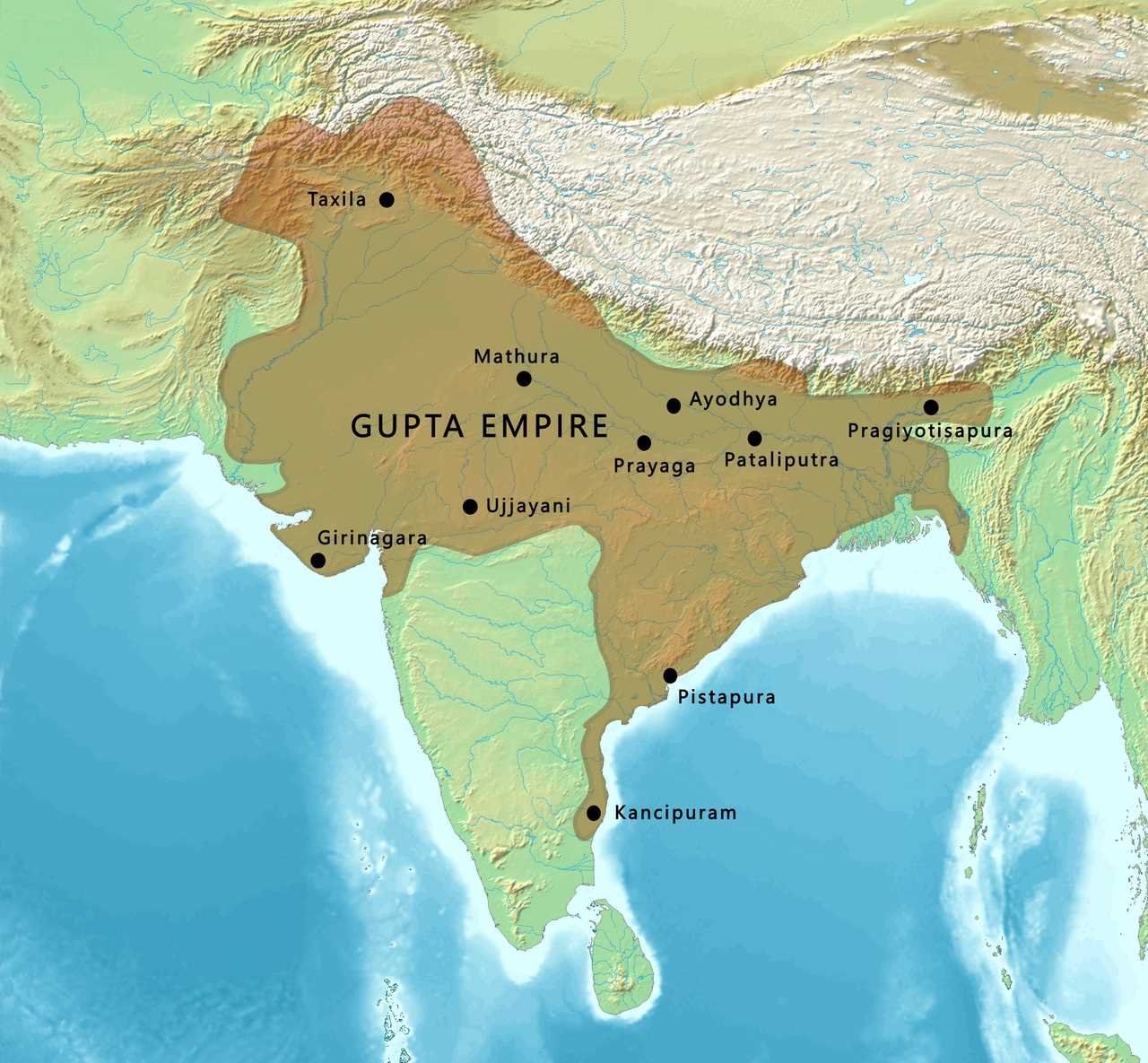
The Gupta Empire was one of the most remarkable empires in ancient Indian history. Founded by Sri Gupta’s successors and consolidated by Chandragupta I around the early 4th century CE, the empire witnessed a golden age of Indian culture, science, mathematics, astronomy, literature, art and architecture.
The Gupta period produced several outstanding scholars, including Aryabhata and Kalidasa. Rulers such as Samudragupta and Chandragupta II expanded the empire and encouraged cultural and intellectual achievements.
This collection of 120 general knowledge questions covers Gupta emperors, administration, literature, science, mathematics, religion, art, architecture and the decline of the empire.
Section 1: Introduction to the Gupta Empire
- Who is traditionally regarded as the founder of the Gupta Dynasty?
- Around which century did the Gupta Dynasty emerge?
- Who established the Gupta Empire as a major imperial power?
- What was the capital of the Gupta Empire?
- Which ancient Indian region was the original centre of Gupta power?
- Which period of Indian history is commonly called the Golden Age of Ancient India?
- Which dynasty preceded the Guptas as an important ruling power in northern India?
- Which river valley formed an important part of the Gupta Empire?
- Which era began in 319–320 CE and is associated with the Gupta Dynasty?
- Which ancient Indian empire is particularly remembered for its contributions to science, mathematics and literature?
Section 2: Chandragupta I
- Who was the first major imperial ruler of the Gupta Dynasty?
- Around which year did Chandragupta I begin his reign?
- Who was Chandragupta I’s queen?
- Which influential ancient Indian family did Kumaradevi belong to?
- What was the importance of Chandragupta I’s marriage alliance with Kumaradevi?
- Which famous coins depict Chandragupta I and Kumaradevi together?
- What title did Chandragupta I assume to demonstrate his imperial authority?
- Who succeeded Chandragupta I?
- What was the approximate period of Chandragupta I’s reign?
- Which historical era is associated with Chandragupta I’s accession?
Section 3: Samudragupta
- Who was the second major emperor of the Gupta Empire?
- Who was Samudragupta’s father?
- Who was Samudragupta’s mother?
- Which famous inscription provides information about Samudragupta’s military campaigns?
- Who composed the Allahabad Pillar inscription of Samudragupta?
- What was the name of the poet and court official who wrote the inscription?
- Which Mughal-era monument later became associated with the Allahabad Pillar?
- Which Gupta ruler is often described by historians as the Napoleon of India?
- Which musical instrument is depicted on some of Samudragupta’s coins?
- Which religious tradition did Samudragupta particularly patronise?
- What was the title of Samudragupta indicating his military achievements?
- Which southern Indian region did Samudragupta conquer during his military campaigns?
- What policy did Samudragupta generally follow towards the defeated southern rulers?
- Which famous ancient ruler of Sri Lanka sent an embassy to Samudragupta?
- Which Buddhist monastery at Bodh Gaya was associated with the request of the Sri Lankan ruler?
- Which Gupta emperor issued gold coins depicting himself playing a veena?
- What was the approximate period of Samudragupta’s reign?
- Who succeeded Samudragupta?
- Which Gupta ruler is particularly remembered for his extensive military conquests?
- What was the major source of information about Samudragupta’s achievements?
Section 4: Chandragupta II – Vikramaditya
- Who succeeded Samudragupta as the most famous ruler of the Gupta Dynasty after Ramagupta’s disputed place in succession?
- What was Chandragupta II’s famous title?
- Which ruler is traditionally associated with the legendary Navaratnas?
- What does the term Navaratnas mean?
- Which famous Sanskrit poet is traditionally associated with Chandragupta II’s court?
- Which western Indian rulers were defeated by Chandragupta II?
- Which silver coins did Chandragupta II introduce after conquering western India?
- Which famous Chinese Buddhist traveller visited India during Chandragupta II’s reign?
- What was the Chinese traveller’s name?
- What was Faxian’s main purpose in visiting India?
- Which important city became a major political and cultural centre under Chandragupta II?
- Which Gupta ruler was known for promoting trade and commerce?
- Which metal was prominently used in the famous Iron Pillar of Delhi?
- Which Gupta ruler is traditionally associated with the Iron Pillar inscription at Mehrauli?
- What was the approximate period of Chandragupta II’s reign?
Section 5: Later Gupta Emperors
- Who succeeded Chandragupta II?
- Who was Kumaragupta I’s father?
- Which famous university is traditionally associated with Kumaragupta I?
- Which ancient Indian educational centre became internationally famous during the Gupta period?
- Which goddess is frequently depicted on Kumaragupta I’s coins?
- Which title was used by Kumaragupta I?
- Who succeeded Kumaragupta I?
- Which Gupta ruler faced the invasion of the Hunas?
- Who was Skandagupta’s father?
- Which foreign group invaded northwestern India during Skandagupta’s reign?
- Which Gupta ruler is credited with successfully resisting early Huna invasions?
- What was the approximate period of Skandagupta’s reign?
- Which inscription records the repair of the Sudarshana Lake during Skandagupta’s reign?
- In which present-day Indian state was the Sudarshana Lake located?
- What happened to the Gupta Empire after Skandagupta’s death?
Section 6: Gupta Administration and Economy
- What was the principal source of revenue for the Gupta Empire?
- What was the title commonly used by Gupta emperors?
- What was the term for a Gupta provincial administrative unit?
- What was the officer in charge of a province called?
- What was the term used for a district during the Gupta period?
- Who generally administered villages under Gupta rule?
- What was the main occupation of the majority of the population?
- Which metal was widely used in Gupta gold coinage?
- What were Gupta gold coins commonly called?
- Which economic activities flourished during the Gupta period?
- Which trade routes connected India with Central Asia and other regions during the Gupta period?
- Which ancient Indian port was an important centre of maritime trade?
- What was the importance of guilds during the Gupta period?
- Which language was widely used in royal inscriptions and literature?
- What was the general nature of Gupta administration?
Section 7: Gupta Literature and Education
- Which language reached great literary prominence during the Gupta period?
- Who was the famous Sanskrit poet and dramatist traditionally associated with the Gupta age?
- Which famous Sanskrit play was written by Kalidasa?
- Who wrote the literary work Meghaduta?
- Which epic poem was composed by Kalidasa about the Raghu dynasty?
- Which famous Sanskrit drama tells the story of King Dushyanta and Shakuntala?
- Which ancient Indian grammarian’s work continued to influence Sanskrit scholarship during the Gupta period?
- Which famous university became a major centre of Buddhist learning in ancient India?
- Which ancient scholar is associated with the development of Sanskrit grammar?
- Which ancient Indian text deals with the theory and practice of statecraft and politics?
Section 8: Science, Mathematics and Astronomy
- Who was the famous mathematician and astronomer of the Gupta period who wrote the Aryabhatiya?
- In which year was the Aryabhatiya composed?
- What was Aryabhata’s major contribution to mathematics?
- Which mathematical concept was developed and systematised in ancient India and later transmitted to other parts of the world?
- Who explained that the Earth rotates on its axis?
- Which ancient Indian scholar calculated an approximation of the value of pi?
- Who was the famous astronomer who wrote the Brahmasphutasiddhanta?
- Which Gupta-period mathematician made important contributions to algebra?
- Which ancient Indian medical scholar wrote the Charaka Samhita?
- Which ancient Indian text is associated with surgery and medical science?
- Who is traditionally known as the father of Indian surgery?
- Which Indian medical tradition flourished during the Gupta period?
- Which astronomical phenomenon did Aryabhata explain scientifically?
- What was the importance of the decimal place-value system?
- Which branch of mathematics developed significantly during the Gupta period?
Section 9: Gupta Art, Architecture and Religion
- Which religious traditions flourished during the Gupta period?
- Which Hindu deity received significant royal patronage from several Gupta rulers?
- Which Gupta ruler was particularly associated with Vaishnavism?
- Which famous temple at Deogarh is an important example of Gupta architecture?
- To which Hindu deity is the Dashavatara Temple at Deogarh dedicated?
- Which famous Buddhist monument at Sarnath contains important Gupta-period sculpture?
- Which caves in Maharashtra contain remarkable paintings from the Gupta and post-Gupta periods?
- Which famous ancient paintings are found in the Ajanta Caves?
- Which artistic style became famous for its serene Buddha sculptures during the Gupta period?
- What is one of the most important architectural contributions of the Gupta period?
Answer Key
Answers are arranged according to the question numbers.
Section 1: Introduction to the Gupta Empire
- Sri Gupta
- 3rd century CE
- Chandragupta I
- Pataliputra
- Magadha
- Gupta period
- Kushan Dynasty (among the important earlier powers in northern India)
- Ganges River valley
- Gupta Era
- Gupta Empire
Section 2: Chandragupta I
- Chandragupta I
- Around 319–320 CE
- Kumaradevi
- Licchavi family
- It strengthened the Gupta Dynasty politically and expanded its influence
- Chandragupta I–Kumaradevi gold coins
- Maharajadhiraja
- Samudragupta
- Approximately 319–335 CE
- Gupta Era
Section 3: Samudragupta
- Samudragupta
- Chandragupta I
- Kumaradevi
- Allahabad Pillar inscription (Prayaga Prashasti)
- Harisena
- Harisena
- Allahabad Fort
- Samudragupta
- Veena
- Hinduism, particularly Vaishnavism
- Ashvamedha performer and other imperial titles
- Southern India (Dakshinapatha)
- He generally defeated the rulers, released them and restored their kingdoms under his supremacy
- Meghavarna
- A Buddhist monastery at Bodh Gaya
- Samudragupta
- Approximately 335–375 CE
- Ramagupta, according to some historical accounts, followed by Chandragupta II
- Samudragupta
- Allahabad Pillar inscription
Section 4: Chandragupta II – Vikramaditya
- Chandragupta II
- Vikramaditya
- Chandragupta II
- Nine Jewels
- Kalidasa
- Western Kshatrapas (Shaka rulers)
- Silver coins
- Faxian (Fa-Hien)
- Faxian
- To collect Buddhist scriptures and visit Buddhist holy places
- Ujjain
- Chandragupta II
- Iron
- Chandragupta II is traditionally associated with the ruler named Chandra in the inscription
- Approximately 375–415 CE
Section 5: Later Gupta Emperors
- Kumaragupta I
- Chandragupta II
- Nalanda University
- Nalanda
- Goddess Lakshmi
- Mahendraditya
- Skandagupta
- Skandagupta
- Kumaragupta I
- Hunas
- Skandagupta
- Approximately 455–467 CE
- Junagadh inscription
- Gujarat
- The empire gradually weakened and fragmented
Section 6: Gupta Administration and Economy
- Land revenue
- Maharajadhiraja
- Bhukti
- Uparika
- Vishaya
- Village headmen (Gramika)
- Agriculture
- Gold
- Dinaras
- Agriculture, trade, handicrafts and commerce
- Uttarapatha and other inland and international trade routes
- Bharuch (Barygaza)
- They organised merchants and craftsmen and facilitated trade and production
- Sanskrit
- Monarchical administration with provincial and local administrative divisions
Section 7: Gupta Literature and Education
- Sanskrit
- Kalidasa
- Abhijnanashakuntalam
- Kalidasa
- Raghuvamsha
- Abhijnanashakuntalam
- Ashtadhyayi
- Nalanda
- Panini
- Arthashastra
Section 8: Science, Mathematics and Astronomy
- Aryabhata
- 499 CE
- Important contributions to arithmetic, algebra, trigonometry and astronomy
- Zero and the decimal place-value system
- Aryabhata
- Aryabhata
- Brahmagupta
- Brahmagupta
- Charaka
- Sushruta Samhita
- Sushruta
- Ayurveda
- Solar and lunar eclipses
- It made numerical calculations easier and supported advanced mathematics
- Mathematics, including arithmetic, algebra and geometry
Section 9: Gupta Art, Architecture and Religion
- Hinduism, Buddhism and Jainism
- Vishnu
- Chandragupta II and other Gupta rulers
- Dashavatara Temple
- Vishnu
- Gupta-period Buddha sculptures at Sarnath
- Ajanta Caves
- Buddhist religious and narrative paintings
- Gupta art style
- Development of Hindu temple architecture, stone sculpture and religious monuments
Important Gupta Emperors – Quick Reference
| Emperor | Approximate reign |
|---|---|
| Sri Gupta | c. 240–280 CE |
| Ghatotkacha | c. 280–319 CE |
| Chandragupta I | c. 319–335 CE |
| Samudragupta | c. 335–375 CE |
| Ramagupta | Dates uncertain |
| Chandragupta II | c. 375–415 CE |
| Kumaragupta I | c. 415–455 CE |
| Skandagupta | c. 455–467 CE |
| Later Gupta rulers | 5th–6th centuries CE |
Note: The chronology and succession of some Gupta rulers, especially Ramagupta and the later emperors, remain subjects of historical debate.
Important Facts About the Gupta Empire
- Founder of the dynasty: Sri Gupta.
- Founder of Gupta imperial power: Chandragupta I.
- Capital: Pataliputra.
- Greatest military conqueror: Samudragupta.
- Famous title: Vikramaditya, associated with Chandragupta II.
- Famous Chinese traveller: Faxian.
- Famous poet: Kalidasa.
- Famous mathematician: Aryabhata.
- Famous astronomer: Aryabhata.
- Important educational centre: Nalanda.
- Famous inscription: Allahabad Pillar inscription.
- Famous temple: Dashavatara Temple at Deogarh.
- Major foreign invaders: Hunas.
- Important contribution: Advances in mathematics, astronomy, literature, art and architecture.
- Decline: Gradual weakening during the 5th and 6th centuries CE.
Conclusion
The Gupta Empire represents one of the most celebrated periods in ancient Indian history. Its achievements in mathematics, astronomy, literature, medicine, sculpture and architecture influenced generations of scholars and artists.
The contributions of Aryabhata, Kalidasa and other great thinkers demonstrate the intellectual richness of this period. The Gupta rulers also helped establish traditions of administration, education and cultural development that became an important part of India’s historical heritage.
Editorial Note: This GK collection is intended for students, competitive examination candidates and general readers. Some dates, historical interpretations and attributions are debated among historians. The answers reflect commonly accepted historical information.
Explore more GK topics on Nelsapy: Ancient India, Medieval India, Modern India, Maurya Empire, Mughal Empire, Ancient Civilizations of the World and Famous Empires in History.
Leave a Reply