

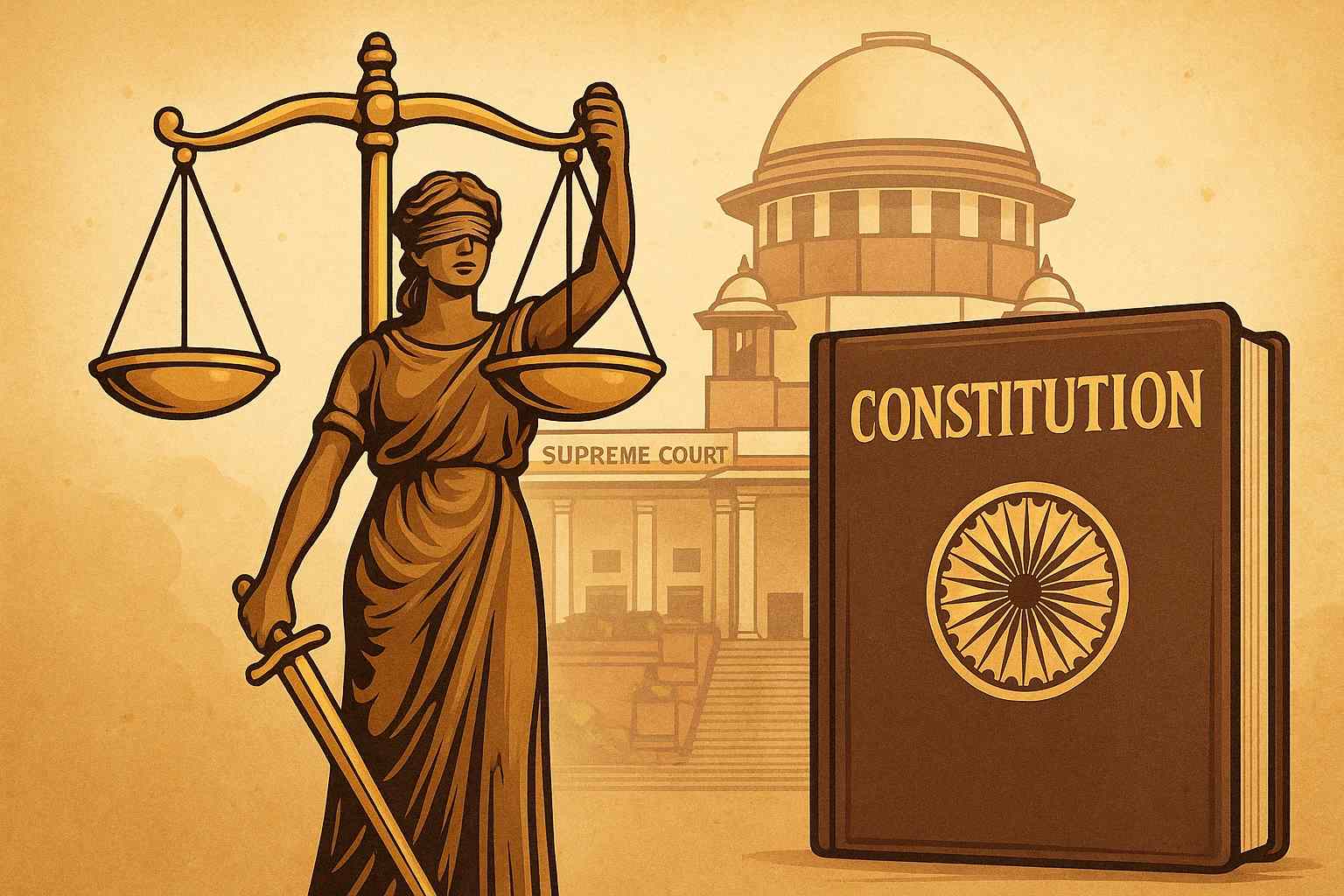
Nelsapy – General Knowledge Series
Introduction
The Constitution of India is the supreme law of the country. It establishes the framework of the Indian political system, defines the powers and responsibilities of the government, guarantees fundamental rights to citizens, and outlines the duties of the state and its people.
Adopted on 26 November 1949 and brought into force on 26 January 1950, the Indian Constitution is one of the most detailed written constitutions in the world.
This GK collection contains 120 important questions covering the making of the Constitution, the Constituent Assembly, the Preamble, Fundamental Rights, Directive Principles, Fundamental Duties, Parliament, the President, the judiciary, constitutional amendments and other important provisions.
Instructions
- Read each question carefully.
- Choose the correct answer from the four options.
- Try to complete all 120 questions without referring to books or the internet.
- Check your knowledge using the answer key provided at the end.
- Each question carries one mark.
Section 1: Making of the Indian Constitution
1. When was the Constitution of India adopted?
A) 15 August 1947
B) 26 November 1949
C) 26 January 1950
D) 2 October 1949
2. When did the Constitution of India come into force?
A) 15 August 1947
B) 26 November 1949
C) 26 January 1950
D) 1 January 1950
3. Who is known as the chief architect of the Indian Constitution?
A) Jawaharlal Nehru
B) Mahatma Gandhi
C) Dr. B. R. Ambedkar
D) Sardar Vallabhbhai Patel
4. Who was the President of the Constituent Assembly?
A) Dr. Rajendra Prasad
B) Dr. B. R. Ambedkar
C) Jawaharlal Nehru
D) C. Rajagopalachari
5. Who was the chairman of the Drafting Committee of the Indian Constitution?
A) K. M. Munshi
B) Dr. B. R. Ambedkar
C) Alladi Krishnaswami Ayyar
D) B. N. Rau
6. When was the Constituent Assembly established?
A) 1942
B) 1945
C) 1946
D) 1947
7. Who was the temporary chairman of the Constituent Assembly?
A) Dr. Rajendra Prasad
B) Sachchidananda Sinha
C) Jawaharlal Nehru
D) B. R. Ambedkar
8. Who served as the Constitutional Adviser to the Constituent Assembly?
A) B. N. Rau
B) K. M. Munshi
C) Sardar Patel
D) H. C. Mukherjee
9. How long did it take to prepare the Indian Constitution?
A) 1 year and 6 months
B) 2 years, 11 months and 18 days
C) 3 years and 6 months
D) 4 years
10. Who moved the Objectives Resolution in the Constituent Assembly?
A) Mahatma Gandhi
B) Dr. Rajendra Prasad
C) Jawaharlal Nehru
D) Dr. B. R. Ambedkar
11. How many members originally formed the Constituent Assembly?
A) 299
B) 389
C) 350
D) 400
12. How many members signed the original Constitution?
A) 284
B) 299
C) 389
D) 250
13. Who was the Vice-President of the Constituent Assembly?
A) H. C. Mukherjee
B) B. N. Rau
C) K. M. Munshi
D) Sardar Patel
14. Which committee was responsible for preparing the draft Constitution?
A) Union Powers Committee
B) Drafting Committee
C) Advisory Committee
D) Rules Committee
15. On which date was the Constitution signed by the members of the Constituent Assembly?
A) 15 August 1947
B) 26 November 1949
C) 24 January 1950
D) 26 January 1950
Section 2: The Preamble and Basic Features
16. What are the opening words of the Indian Constitution?
A) Jai Hind
B) We, the People of India
C) India is a Republic
D) Sovereign India
17. Which of the following words was added to the Preamble by the 42nd Constitutional Amendment?
A) Democratic
B) Republic
C) Socialist
D) Justice
18. How many times has the Preamble been amended?
A) Once
B) Twice
C) Three times
D) Never
19. Which amendment added the words Socialist, Secular and Integrity to the Preamble?
A) 24th Amendment
B) 42nd Amendment
C) 44th Amendment
D) 52nd Amendment
20. India is described in the Preamble as a:
A) Federal Monarchy
B) Sovereign Socialist Secular Democratic Republic
C) Socialist Parliamentary Monarchy
D) Unitary Republic
21. What does the term Sovereign mean?
A) Rule by a king
B) Independent authority
C) Rule by the military
D) Religious government
22. Which form of government does India follow?
A) Presidential system
B) Parliamentary system
C) Monarchical system
D) Military system
23. What does the term Republic mean?
A) The country is ruled by a hereditary monarch
B) The head of state is elected
C) The country has no Constitution
D) The Prime Minister is hereditary
24. Which principle means that all citizens are equal before the law?
A) Liberty
B) Equality
C) Fraternity
D) Sovereignty
25. Which concept in the Preamble promotes a sense of brotherhood among citizens?
A) Justice
B) Liberty
C) Fraternity
D) Democracy
26. The Preamble of the Indian Constitution is based on which document?
A) Government of India Act, 1935
B) Objectives Resolution
C) Indian Independence Act, 1947
D) Cabinet Mission Plan
27. Which of the following is NOT mentioned in the Preamble?
A) Justice
B) Liberty
C) Equality
D) Federalism
28. Which type of justice is mentioned in the Preamble?
A) Social, economic and political
B) Religious, cultural and legal
C) Civil, criminal and political
D) Economic, military and social
29. Which part of the Constitution contains the Preamble?
A) It is a separate introductory statement
B) Part I
C) Part II
D) Part III
30. Which Supreme Court judgment recognised the Preamble as part of the Constitution?
A) Golaknath Case
B) Kesavananda Bharati Case
C) Minerva Mills Case
D) Maneka Gandhi Case
Section 3: Fundamental Rights
31. Which part of the Indian Constitution deals with Fundamental Rights?
A) Part II
B) Part III
C) Part IV
D) Part V
32. Which articles deal with Fundamental Rights?
A) Articles 1–11
B) Articles 12–35
C) Articles 36–51
D) Articles 52–78
33. How many categories of Fundamental Rights are currently recognised in India?
A) Five
B) Six
C) Seven
D) Eight
34. Which article guarantees equality before the law?
A) Article 12
B) Article 14
C) Article 19
D) Article 21
35. Which article prohibits discrimination on grounds of religion, race, caste, sex or place of birth?
A) Article 14
B) Article 15
C) Article 17
D) Article 18
36. Which article abolishes untouchability?
A) Article 15
B) Article 16
C) Article 17
D) Article 19
37. Which article guarantees equality of opportunity in public employment?
A) Article 14
B) Article 16
C) Article 18
D) Article 21
38. Which article provides freedom of speech and expression?
A) Article 17
B) Article 19
C) Article 21
D) Article 25
39. Which article protects life and personal liberty?
A) Article 19
B) Article 20
C) Article 21
D) Article 22
40. Which article provides the Right to Education for children aged 6–14 years?
A) Article 19A
B) Article 21A
C) Article 22A
D) Article 30A
41. Which article prohibits human trafficking and forced labour?
A) Article 21
B) Article 23
C) Article 24
D) Article 25
42. Which article prohibits the employment of children below 14 years in factories, mines and hazardous employment?
A) Article 21A
B) Article 22
C) Article 24
D) Article 29
43. Which articles deal with the Right to Freedom of Religion?
A) Articles 14–18
B) Articles 19–22
C) Articles 25–28
D) Articles 29–30
44. Which article guarantees the right to constitutional remedies?
A) Article 21
B) Article 25
C) Article 32
D) Article 44
45. Who described Article 32 as the heart and soul of the Constitution?
A) Mahatma Gandhi
B) Dr. B. R. Ambedkar
C) Jawaharlal Nehru
D) Dr. Rajendra Prasad
46. Which writ is issued to produce a detained person before a court?
A) Mandamus
B) Certiorari
C) Habeas Corpus
D) Quo Warranto
47. Which writ commands a public authority to perform its legal duty?
A) Mandamus
B) Habeas Corpus
C) Prohibition
D) Quo Warranto
48. Which writ is used to prevent a lower court from exceeding its jurisdiction?
A) Mandamus
B) Prohibition
C) Habeas Corpus
D) Quo Warranto
49. Which writ questions the legal authority of a person holding a public office?
A) Certiorari
B) Mandamus
C) Quo Warranto
D) Habeas Corpus
50. Which Fundamental Right was removed from the list of Fundamental Rights by the 44th Amendment?
A) Right to Equality
B) Right to Property
C) Right to Freedom
D) Right against Exploitation
Section 4: Directive Principles and Fundamental Duties
51. Which part of the Constitution contains the Directive Principles of State Policy?
A) Part II
B) Part III
C) Part IV
D) Part V
52. Which articles deal with the Directive Principles of State Policy?
A) Articles 12–35
B) Articles 36–51
C) Articles 52–78
D) Articles 100–150
53. The Directive Principles of State Policy were borrowed from the Constitution of which country?
A) United States
B) Ireland
C) Canada
D) Australia
54. Are the Directive Principles of State Policy legally enforceable by courts?
A) Yes, always
B) No
C) Only during emergencies
D) Only by the Supreme Court
55. Which article directs the state to organise village panchayats?
A) Article 40
B) Article 44
C) Article 48
D) Article 51
56. Which article deals with the Uniform Civil Code?
A) Article 39
B) Article 40
C) Article 44
D) Article 50
57. Which article promotes the organisation of agriculture and animal husbandry on modern and scientific lines?
A) Article 45
B) Article 48
C) Article 49
D) Article 51
58. Which article directs the state to protect and improve the environment?
A) Article 47
B) Article 48A
C) Article 50
D) Article 51A
59. Which part of the Constitution contains Fundamental Duties?
A) Part III
B) Part IV
C) Part IVA
D) Part V
60. Which article lists the Fundamental Duties of Indian citizens?
A) Article 32
B) Article 44
C) Article 51A
D) Article 368
61. How many Fundamental Duties were originally introduced in the Constitution?
A) Eight
B) Ten
C) Eleven
D) Twelve
62. Which Constitutional Amendment introduced Fundamental Duties?
A) 24th Amendment
B) 42nd Amendment
C) 44th Amendment
D) 52nd Amendment
63. How many Fundamental Duties are currently listed in the Constitution?
A) Ten
B) Eleven
C) Twelve
D) Fourteen
64. Which amendment added the 11th Fundamental Duty relating to education?
A) 42nd Amendment
B) 44th Amendment
C) 86th Amendment
D) 91st Amendment
65. Fundamental Duties were inspired by the Constitution of which country?
A) United Kingdom
B) Soviet Union
C) United States
D) France
Section 5: The President, Prime Minister and Union Government
66. Who is the constitutional head of the Indian Union?
A) Prime Minister
B) President
C) Chief Justice of India
D) Speaker of the Lok Sabha
67. Which article deals with the office of the President of India?
A) Article 52
B) Article 60
C) Article 72
D) Article 80
68. What is the term of office of the President of India?
A) Four years
B) Five years
C) Six years
D) Seven years
69. Who elects the President of India?
A) Directly the citizens
B) Members of the Electoral College
C) Members of the Lok Sabha alone
D) Members of the Rajya Sabha alone
70. Who was the first President of India?
A) Dr. S. Radhakrishnan
B) Dr. Rajendra Prasad
C) Zakir Husain
D) V. V. Giri
71. Who was the first woman President of India?
A) Indira Gandhi
B) Pratibha Patil
C) Droupadi Murmu
D) Sarojini Naidu
72. Which article deals with the appointment of the Prime Minister?
A) Article 72
B) Article 74
C) Article 75
D) Article 78
73. Who appoints the Prime Minister of India?
A) Chief Justice of India
B) President
C) Speaker of the Lok Sabha
D) Election Commission
74. Who is the real executive head of the Union Government?
A) President
B) Prime Minister
C) Vice-President
D) Chief Justice
75. Who is the ex-officio Chairman of the Rajya Sabha?
A) President
B) Prime Minister
C) Vice-President
D) Speaker of the Lok Sabha
76. What is the term of office of the Vice-President of India?
A) Four years
B) Five years
C) Six years
D) Seven years
77. Which article deals with the Council of Ministers assisting and advising the President?
A) Article 72
B) Article 74
C) Article 80
D) Article 85
78. Who administers the oath of office to the President of India?
A) Prime Minister
B) Vice-President
C) Chief Justice of India
D) Speaker of the Lok Sabha
79. Which article gives the President the power to grant pardons and reprieves?
A) Article 61
B) Article 72
C) Article 123
D) Article 143
80. Who is the Supreme Commander of the Indian Armed Forces?
A) Prime Minister
B) Defence Minister
C) President
D) Chief of Defence Staff
Section 6: Parliament of India
81. Which article provides for the establishment of the Indian Parliament?
A) Article 70
B) Article 79
C) Article 85
D) Article 100
82. The Indian Parliament consists of:
A) Lok Sabha and Rajya Sabha only
B) President, Lok Sabha and Rajya Sabha
C) Prime Minister and Lok Sabha
D) President and Lok Sabha only
83. Which is the Lower House of the Indian Parliament?
A) Rajya Sabha
B) Lok Sabha
C) Legislative Council
D) Vidhan Parishad
84. Which is the Upper House of the Indian Parliament?
A) Lok Sabha
B) Rajya Sabha
C) Vidhan Sabha
D) Gram Sabha
85. What is the normal term of the Lok Sabha?
A) Four years
B) Five years
C) Six years
D) Seven years
86. Which House of Parliament is a permanent body?
A) Lok Sabha
B) Rajya Sabha
C) Both Houses
D) Neither House
87. What is the term of a Rajya Sabha member?
A) Four years
B) Five years
C) Six years
D) Seven years
88. What proportion of Rajya Sabha members retire every two years?
A) One-fourth
B) One-third
C) One-half
D) Two-thirds
89. Who presides over the Lok Sabha?
A) President
B) Vice-President
C) Speaker
D) Prime Minister
90. Who presides over the Rajya Sabha?
A) President
B) Vice-President
C) Prime Minister
D) Speaker of the Lok Sabha
91. In which House can a Money Bill be introduced?
A) Rajya Sabha only
B) Lok Sabha only
C) Either House
D) Joint sitting only
92. Who decides whether a Bill is a Money Bill?
A) President
B) Prime Minister
C) Speaker of the Lok Sabha
D) Finance Minister
93. Which article defines a Money Bill?
A) Article 108
B) Article 110
C) Article 112
D) Article 123
94. Who presides over a joint sitting of Parliament?
A) President
B) Vice-President
C) Speaker of the Lok Sabha
D) Chief Justice of India
95. Which article deals with joint sittings of Parliament?
A) Article 100
B) Article 108
C) Article 110
D) Article 123
Section 7: Judiciary and Constitutional Bodies
96. Which is the highest judicial authority in India?
A) High Court
B) District Court
C) Supreme Court
D) Sessions Court
97. Which article provides for the establishment of the Supreme Court of India?
A) Article 124
B) Article 136
C) Article 141
D) Article 214
98. When was the Supreme Court of India inaugurated?
A) 15 August 1947
B) 26 January 1950
C) 28 January 1950
D) 26 November 1949
99. Who was the first Chief Justice of India?
A) Justice M. Patanjali Sastri
B) Justice H. J. Kania
C) Justice B. K. Mukherjea
D) Justice P. B. Gajendragadkar
100. Who appoints the Chief Justice of India?
A) Prime Minister
B) President
C) Parliament
D) Vice-President
101. Which article provides for High Courts in the states?
A) Article 124
B) Article 214
C) Article 226
D) Article 280
102. Which court has the power to issue writs under Article 226?
A) District Court
B) High Court
C) Gram Nyayalaya
D) Family Court
103. Which article gives the Supreme Court the power to review its own judgments?
A) Article 137
B) Article 143
C) Article 148
D) Article 280
104. Which constitutional body conducts elections to Parliament and State Legislatures?
A) Union Public Service Commission
B) Election Commission of India
C) Finance Commission
D) NITI Aayog
105. Which article deals with the Election Commission of India?
A) Article 280
B) Article 324
C) Article 315
D) Article 356
106. Which constitutional body recommends the distribution of financial resources between the Union and the States?
A) Election Commission
B) Finance Commission
C) UPSC
D) Planning Commission
107. Which article provides for the Finance Commission?
A) Article 148
B) Article 280
C) Article 300
D) Article 324
108. Which article provides for the Comptroller and Auditor General of India?
A) Article 124
B) Article 148
C) Article 214
D) Article 280
109. Which body is responsible for conducting examinations for recruitment to many central government services?
A) Election Commission
B) Union Public Service Commission
C) Finance Commission
D) Supreme Court
110. Which article provides for the Union Public Service Commission?
A) Article 280
B) Article 315
C) Article 324
D) Article 368
Section 8: Constitutional Amendments and Other Provisions
111. Which article deals with the amendment of the Indian Constitution?
A) Article 32
B) Article 110
C) Article 356
D) Article 368
112. Which Constitutional Amendment is known as the Mini Constitution?
A) 24th Amendment
B) 42nd Amendment
C) 44th Amendment
D) 52nd Amendment
113. Which amendment introduced the Anti-Defection Law?
A) 42nd Amendment
B) 44th Amendment
C) 52nd Amendment
D) 61st Amendment
114. Which amendment reduced the voting age from 21 to 18 years?
A) 42nd Amendment
B) 44th Amendment
C) 61st Amendment
D) 73rd Amendment
115. Which amendment gave constitutional status to Panchayati Raj institutions?
A) 42nd Amendment
B) 52nd Amendment
C) 73rd Amendment
D) 74th Amendment
116. Which amendment gave constitutional status to urban local bodies?
A) 61st Amendment
B) 73rd Amendment
C) 74th Amendment
D) 86th Amendment
117. Which amendment introduced the Goods and Services Tax (GST) in India?
A) 97th Amendment
B) 99th Amendment
C) 101st Amendment
D) 103rd Amendment
118. Which amendment introduced a 10% reservation for Economically Weaker Sections (EWS) in education and public employment?
A) 101st Amendment
B) 102nd Amendment
C) 103rd Amendment
D) 104th Amendment
119. Which schedule of the Constitution contains the list of recognised languages?
A) Fifth Schedule
B) Seventh Schedule
C) Eighth Schedule
D) Tenth Schedule
120. How many languages are currently recognised in the Eighth Schedule of the Indian Constitution?
A) 14
B) 18
C) 22
D) 24
Answer Key – Indian Constitution GK
Check your answers after completing all 120 questions.
| Q.No. | Answer | Q.No. | Answer |
|---|---|---|---|
| 1 | B – 26 November 1949 | 2 | C – 26 January 1950 |
| 3 | C – Dr. B. R. Ambedkar | 4 | A – Dr. Rajendra Prasad |
| 5 | B – Dr. B. R. Ambedkar | 6 | C – 1946 |
| 7 | B – Sachchidananda Sinha | 8 | A – B. N. Rau |
| 9 | B – 2 years, 11 months and 18 days | 10 | C – Jawaharlal Nehru |
| 11 | B – 389 | 12 | A – 284 |
| 13 | A – H. C. Mukherjee | 14 | B – Drafting Committee |
| 15 | C – 24 January 1950 | 16 | B – We, the People of India |
| 17 | C – Socialist | 18 | A – Once |
| 19 | B – 42nd Amendment | 20 | B – Sovereign Socialist Secular Democratic Republic |
| 21 | B – Independent authority | 22 | B – Parliamentary system |
| 23 | B – Head of state is elected | 24 | B – Equality |
| 25 | C – Fraternity | 26 | B – Objectives Resolution |
| 27 | D – Federalism | 28 | A – Social, economic and political |
| 29 | A – Separate introductory statement | 30 | B – Kesavananda Bharati Case |
| 31 | B – Part III | 32 | B – Articles 12–35 |
| 33 | B – Six | 34 | B – Article 14 |
| 35 | B – Article 15 | 36 | C – Article 17 |
| 37 | B – Article 16 | 38 | B – Article 19 |
| 39 | C – Article 21 | 40 | B – Article 21A |
| 41 | B – Article 23 | 42 | C – Article 24 |
| 43 | C – Articles 25–28 | 44 | C – Article 32 |
| 45 | B – Dr. B. R. Ambedkar | 46 | C – Habeas Corpus |
| 47 | A – Mandamus | 48 | B – Prohibition |
| 49 | C – Quo Warranto | 50 | B – Right to Property |
| 51 | C – Part IV | 52 | B – Articles 36–51 |
| 53 | B – Ireland | 54 | B – No |
| 55 | A – Article 40 | 56 | C – Article 44 |
| 57 | B – Article 48 | 58 | B – Article 48A |
| 59 | C – Part IVA | 60 | C – Article 51A |
| 61 | B – Ten | 62 | B – 42nd Amendment |
| 63 | B – Eleven | 64 | C – 86th Amendment |
| 65 | B – Soviet Union | 66 | B – President |
| 67 | A – Article 52 | 68 | B – Five years |
| 69 | B – Electoral College | 70 | B – Dr. Rajendra Prasad |
| 71 | B – Pratibha Patil | 72 | C – Article 75 |
| 73 | B – President | 74 | B – Prime Minister |
| 75 | C – Vice-President | 76 | B – Five years |
| 77 | B – Article 74 | 78 | C – Chief Justice of India |
| 79 | B – Article 72 | 80 | C – President |
| 81 | B – Article 79 | 82 | B – President, Lok Sabha and Rajya Sabha |
| 83 | B – Lok Sabha | 84 | B – Rajya Sabha |
| 85 | B – Five years | 86 | B – Rajya Sabha |
| 87 | C – Six years | 88 | B – One-third |
| 89 | C – Speaker | 90 | B – Vice-President |
| 91 | B – Lok Sabha only | 92 | C – Speaker of the Lok Sabha |
| 93 | B – Article 110 | 94 | C – Speaker of the Lok Sabha |
| 95 | B – Article 108 | 96 | C – Supreme Court |
| 97 | A – Article 124 | 98 | C – 28 January 1950 |
| 99 | B – Justice H. J. Kania | 100 | B – President |
| 101 | B – Article 214 | 102 | B – High Court |
| 103 | A – Article 137 | 104 | B – Election Commission of India |
| 105 | B – Article 324 | 106 | B – Finance Commission |
| 107 | B – Article 280 | 108 | B – Article 148 |
| 109 | B – Union Public Service Commission | 110 | B – Article 315 |
| 111 | D – Article 368 | 112 | B – 42nd Amendment |
| 113 | C – 52nd Amendment | 114 | C – 61st Amendment |
| 115 | C – 73rd Amendment | 116 | C – 74th Amendment |
| 117 | C – 101st Amendment | 118 | C – 103rd Amendment |
| 119 | C – Eighth Schedule | 120 | C – 22 |
Important Constitutional Facts to Remember
- Constitution adopted: 26 November 1949.
- Constitution came into force: 26 January 1950.
- Constitution Day: 26 November.
- Republic Day: 26 January.
- Chief architect: Dr. B. R. Ambedkar.
- President of the Constituent Assembly: Dr. Rajendra Prasad.
- Drafting Committee Chairman: Dr. B. R. Ambedkar.
- Original Constitution: 395 Articles, 22 Parts and 8 Schedules.
- Fundamental Rights: Part III.
- Directive Principles: Part IV.
- Fundamental Duties: Part IVA.
- Constitutional Amendment: Article 368.
- Right to Education: Article 21A.
- Constitutional Remedies: Article 32.
- Recognised languages: 22 under the Eighth Schedule.
Concluding Comment
The Indian Constitution is more than a legal document. It is the foundation of Indian democracy, national unity, justice, liberty and equality.
Understanding the Constitution helps every citizen recognise their rights, fulfil their responsibilities and appreciate the democratic values that hold our nation together.
An informed citizen is the strength of a democratic nation.
Public Note
This GK collection is prepared for students, teachers, competitive examination candidates and general readers. It can be used as a learning resource for school activities, quiz competitions, civil service preparation and general knowledge development.
Readers are encouraged to study the original Constitution and refer to official government publications for detailed legal provisions and amendments.
NELSAPY | GENERAL KNOWLEDGE SERIES
Learn More. Know More. Grow More.
Explore more educational resources and GK collections on Nelsapy.com.
Leave a Reply