

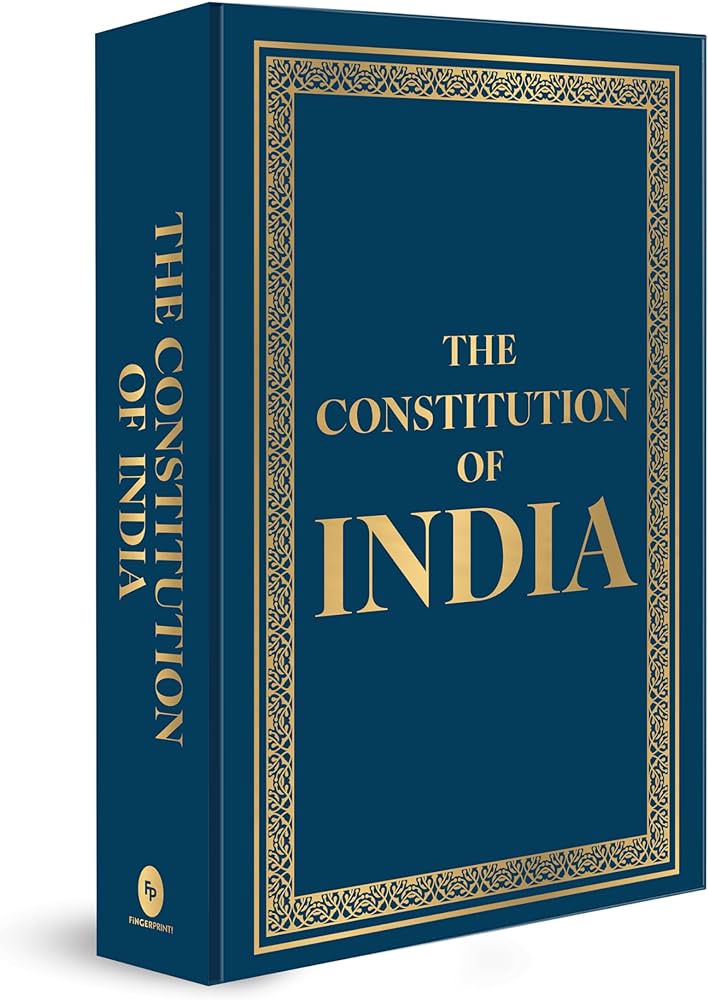
General Knowledge Quiz | Indian Constitution | Indian Polity | Constitutional History
Introduction
The Constitution of India is a living document that has evolved to meet the changing needs of Indian society, democracy and governance. Since its adoption in 1950, several amendments have been introduced to strengthen democratic institutions, protect fundamental rights, promote social justice, reorganise political structures and improve the administration of the country.
The constitutional amendment process is primarily governed by Article 368. Some amendments have brought significant changes to Indian democracy, including the First Amendment, the 42nd Amendment, the 44th Amendment, the 61st Amendment, the 73rd Amendment, the 74th Amendment and the 101st Amendment.
This GK collection contains 120 multiple-choice questions covering important constitutional amendments, their years, provisions, historical backgrounds and significance.
Instructions:
- Choose the correct answer from the four options.
- Attempt all 120 questions.
- The complete answer key is provided at the end.
- Each question carries one mark.
Section 1: Basics of Constitutional Amendments
1. Which Article of the Indian Constitution deals with the amendment of the Constitution?
A) Article 14
B) Article 32
C) Article 368
D) Article 370
2. Which part of the Indian Constitution contains provisions relating to constitutional amendments?
A) Part XV
B) Part XVIII
C) Part XX
D) Part XXI
3. In which year did the Constitution of India come into force?
A) 1947
B) 1949
C) 1950
D) 1952
4. When was the Constitution of India adopted?
A) 15 August 1947
B) 26 November 1949
C) 26 January 1950
D) 2 October 1950
5. Which body has the power to amend the Constitution under Article 368?
A) Supreme Court
B) Parliament
C) Election Commission
D) President acting alone
6. What is the minimum requirement for passing a constitutional amendment bill under the special majority procedure?
A) Simple majority only
B) Two-thirds of all voters
C) Majority of the total membership of each House and two-thirds of members present and voting
D) Unanimous approval of Parliament
7. Can a constitutional amendment bill be introduced in either House of Parliament?
A) Yes
B) No, only in Lok Sabha
C) No, only in Rajya Sabha
D) Only in a joint sitting
8. Can a constitutional amendment bill be introduced in a State Legislature?
A) Yes
B) No
C) Only with Supreme Court permission
D) Only during an emergency
9. Is a joint sitting of Parliament permitted to resolve a deadlock over a constitutional amendment bill?
A) Yes
B) No
C) Only with presidential permission
D) Only when the Lok Sabha is dissolved
10. Is the President of India required to give assent to a constitutional amendment bill duly passed under Article 368?
A) Yes
B) No
C) Only if the Prime Minister agrees
D) Only during a national emergency
11. Which constitutional amendment introduced the words “Socialist” and “Secular” into the Preamble?
A) 24th Amendment
B) 42nd Amendment
C) 44th Amendment
D) 52nd Amendment
12. Which principle prevents Parliament from destroying the essential features of the Constitution through amendments?
A) Rule of law
B) Basic Structure Doctrine
C) Doctrine of lapse
D) Separation of powers alone
13. Which Supreme Court judgment established the Basic Structure Doctrine?
A) Golaknath v. State of Punjab
B) Kesavananda Bharati v. State of Kerala
C) Minerva Mills v. Union of India
D) Maneka Gandhi v. Union of India
14. In which year was the Kesavananda Bharati judgment delivered?
A) 1967
B) 1971
C) 1973
D) 1976
15. Which constitutional amendment clarified Parliament’s power to amend the Constitution, including Fundamental Rights?
A) 1st Amendment
B) 24th Amendment
C) 42nd Amendment
D) 44th Amendment
Section 2: First to Tenth Constitutional Amendments
16. In which year was the First Constitutional Amendment passed?
A) 1950
B) 1951
C) 1952
D) 1955
17. What was one of the major objectives of the First Constitutional Amendment?
A) Introduction of GST
B) Land reforms and reasonable restrictions on certain Fundamental Rights
C) Reduction of voting age
D) Establishment of Panchayati Raj institutions
18. Which schedule was added to the Constitution by the First Amendment?
A) Fifth Schedule
B) Seventh Schedule
C) Ninth Schedule
D) Tenth Schedule
19. Which Article was inserted by the First Amendment to protect certain laws relating to land reforms?
A) Article 19A
B) Article 31A
C) Article 32A
D) Article 35A
20. Which Article was also introduced by the First Amendment to provide protection to certain laws placed in the Ninth Schedule?
A) Article 31B
B) Article 39A
C) Article 43A
D) Article 51A
21. Which amendment reorganised the classification of States and Union Territories following the States Reorganisation Act?
A) 5th Amendment
B) 7th Amendment
C) 9th Amendment
D) 10th Amendment
22. In which year was the Seventh Constitutional Amendment passed?
A) 1953
B) 1956
C) 1958
D) 1960
23. Which constitutional amendment incorporated Dadra and Nagar Haveli into India as a Union Territory?
A) 8th Amendment
B) 10th Amendment
C) 12th Amendment
D) 14th Amendment
24. In which year was the Tenth Constitutional Amendment passed?
A) 1958
B) 1960
C) 1962
D) 1965
25. Which amendment provided for the incorporation of Goa, Daman and Diu into India?
A) 10th Amendment
B) 12th Amendment
C) 14th Amendment
D) 16th Amendment
26. In which year was the Twelfth Constitutional Amendment passed?
A) 1960
B) 1961
C) 1962
D) 1965
27. Which amendment incorporated Pondicherry (now Puducherry) into the Indian Union?
A) 12th Amendment
B) 13th Amendment
C) 14th Amendment
D) 15th Amendment
28. Which amendment created Nagaland as a State of India?
A) 12th Amendment
B) 13th Amendment
C) 14th Amendment
D) 16th Amendment
29. In which year was the Thirteenth Constitutional Amendment passed?
A) 1960
B) 1962
C) 1963
D) 1967
30. Which amendment provided for the representation of Union Territories in Parliament and the creation of certain legislatures?
A) 10th Amendment
B) 12th Amendment
C) 14th Amendment
D) 16th Amendment
Section 3: Important Amendments from 15th to 44th
31. Which amendment increased the retirement age of High Court judges from 60 to 62 years?
A) 12th Amendment
B) 15th Amendment
C) 18th Amendment
D) 21st Amendment
32. In which year was the Fifteenth Constitutional Amendment passed?
A) 1959
B) 1960
C) 1963
D) 1965
33. Which amendment introduced restrictions concerning the sovereignty and integrity of India in relation to certain Fundamental Rights?
A) 14th Amendment
B) 16th Amendment
C) 18th Amendment
D) 20th Amendment
34. In which year was the Twenty-first Constitutional Amendment passed?
A) 1963
B) 1965
C) 1967
D) 1969
35. Which language was added to the Eighth Schedule by the 21st Amendment?
A) Konkani
B) Sindhi
C) Manipuri
D) Nepali
36. Which amendment extended the reservation of seats for Scheduled Castes and Scheduled Tribes in Parliament and State Assemblies for another ten years?
A) 21st Amendment
B) 23rd Amendment
C) 24th Amendment
D) 25th Amendment
37. In which year was the Twenty-fifth Constitutional Amendment passed?
A) 1969
B) 1970
C) 1971
D) 1973
38. Which amendment inserted Article 31C into the Constitution?
A) 24th Amendment
B) 25th Amendment
C) 26th Amendment
D) 29th Amendment
39. Which amendment abolished the recognition of princely rulers and their privy purses?
A) 24th Amendment
B) 25th Amendment
C) 26th Amendment
D) 27th Amendment
40. In which year was the Twenty-sixth Constitutional Amendment passed?
A) 1967
B) 1969
C) 1971
D) 1973
41. Which amendment placed the Kerala Land Reforms Amendment Act, 1969, in the Ninth Schedule?
A) 24th Amendment
B) 29th Amendment
C) 31st Amendment
D) 35th Amendment
42. Which amendment made Sikkim an associate State of India?
A) 32nd Amendment
B) 35th Amendment
C) 36th Amendment
D) 42nd Amendment
43. Which amendment made Sikkim a full-fledged State of India?
A) 35th Amendment
B) 36th Amendment
C) 37th Amendment
D) 38th Amendment
44. In which year was the Thirty-sixth Constitutional Amendment passed?
A) 1972
B) 1973
C) 1975
D) 1976
45. Which amendment introduced provisions concerning the disqualification of members of Parliament and State Legislatures on grounds of defection?
A) 42nd Amendment
B) 44th Amendment
C) 52nd Amendment
D) 61st Amendment
Section 4: The 42nd and 44th Constitutional Amendments
46. In which year was the Forty-second Constitutional Amendment passed?
A) 1971
B) 1973
C) 1976
D) 1978
47. Why is the 42nd Amendment often called the “Mini Constitution”?
A) It introduced only minor changes
B) It made extensive changes to many parts of the Constitution
C) It replaced the entire Constitution
D) It abolished Parliament
48. Which three words were added to the Preamble by the 42nd Amendment?
A) Justice, Liberty and Equality
B) Socialist, Secular and Integrity
C) Democratic, Republic and Sovereign
D) Unity, Peace and Fraternity
49. Which amendment introduced Fundamental Duties into the Indian Constitution?
A) 40th Amendment
B) 42nd Amendment
C) 44th Amendment
D) 52nd Amendment
50. Which Article was added to introduce Fundamental Duties?
A) Article 32
B) Article 51A
C) Article 72
D) Article 368
51. How many Fundamental Duties were originally introduced by the 42nd Amendment?
A) 8
B) 10
C) 11
D) 12
52. Which amendment added the words “unity and integrity of the Nation” to the Preamble?
A) 24th Amendment
B) 42nd Amendment
C) 44th Amendment
D) 52nd Amendment
53. Which amendment transferred certain subjects from the State List to the Concurrent List?
A) 24th Amendment
B) 42nd Amendment
C) 44th Amendment
D) 61st Amendment
54. Which of the following subjects was transferred to the Concurrent List by the 42nd Amendment?
A) Police
B) Education
C) Public order
D) Agriculture
55. Which amendment reduced the voting age in India from 21 to 18 years?
A) 42nd Amendment
B) 44th Amendment
C) 61st Amendment
D) 73rd Amendment
56. Which amendment reversed several controversial provisions of the 42nd Amendment and restored important democratic safeguards?
A) 43rd Amendment
B) 44th Amendment
C) 52nd Amendment
D) 61st Amendment
57. In which year was the 44th Constitutional Amendment passed?
A) 1976
B) 1977
C) 1978
D) 1980
58. Which amendment replaced the right to property as a Fundamental Right with a constitutional legal right?
A) 42nd Amendment
B) 44th Amendment
C) 52nd Amendment
D) 61st Amendment
59. Under which Article is the right to property now protected?
A) Article 19
B) Article 21
C) Article 300A
D) Article 326
60. Which amendment changed the grounds for proclaiming a National Emergency from “internal disturbance” to “armed rebellion”?
A) 42nd Amendment
B) 44th Amendment
C) 52nd Amendment
D) 86th Amendment
Section 5: Amendments from 52nd to 86th
61. Which amendment introduced the Anti-Defection Law in India?
A) 44th Amendment
B) 52nd Amendment
C) 61st Amendment
D) 69th Amendment
62. Which schedule was added to the Constitution by the 52nd Amendment?
A) Eighth Schedule
B) Ninth Schedule
C) Tenth Schedule
D) Eleventh Schedule
63. In which year was the 52nd Constitutional Amendment passed?
A) 1978
B) 1982
C) 1985
D) 1989
64. Which amendment granted full statehood to Mizoram?
A) 53rd Amendment
B) 55th Amendment
C) 56th Amendment
D) 61st Amendment
65. Which amendment granted full statehood to Arunachal Pradesh?
A) 52nd Amendment
B) 55th Amendment
C) 61st Amendment
D) 69th Amendment
66. Which amendment made Goa a full-fledged State of India?
A) 55th Amendment
B) 56th Amendment
C) 57th Amendment
D) 61st Amendment
67. Which amendment reduced the voting age from 21 to 18 years?
A) 52nd Amendment
B) 61st Amendment
C) 69th Amendment
D) 73rd Amendment
68. In which year was the 61st Constitutional Amendment passed?
A) 1985
B) 1987
C) 1988
D) 1991
69. Which amendment introduced special provisions for the National Capital Territory of Delhi?
A) 61st Amendment
B) 69th Amendment
C) 71st Amendment
D) 73rd Amendment
70. Which amendment added Konkani, Manipuri and Nepali to the Eighth Schedule?
A) 69th Amendment
B) 71st Amendment
C) 73rd Amendment
D) 74th Amendment
71. How many languages were included in the Eighth Schedule before the 71st Amendment?
A) 14
B) 15
C) 18
D) 22
72. Which amendment provided constitutional status to Panchayati Raj institutions?
A) 69th Amendment
B) 71st Amendment
C) 73rd Amendment
D) 74th Amendment
73. In which year was the 73rd Constitutional Amendment passed?
A) 1990
B) 1991
C) 1992
D) 1993
74. Which part of the Constitution was added by the 73rd Amendment?
A) Part VIII
B) Part IX
C) Part X
D) Part XI
75. Which schedule was added by the 73rd Amendment?
A) Ninth Schedule
B) Tenth Schedule
C) Eleventh Schedule
D) Twelfth Schedule
76. How many subjects are listed in the Eleventh Schedule?
A) 18
B) 25
C) 29
D) 35
77. Which amendment gave constitutional status to Municipalities?
A) 72nd Amendment
B) 73rd Amendment
C) 74th Amendment
D) 75th Amendment
78. Which schedule was added by the 74th Constitutional Amendment?
A) Ninth Schedule
B) Tenth Schedule
C) Eleventh Schedule
D) Twelfth Schedule
79. How many subjects are included in the Twelfth Schedule?
A) 12
B) 18
C) 22
D) 29
80. Which amendment provided for a National Commission for Scheduled Castes and Scheduled Tribes as separate constitutional bodies?
A) 73rd Amendment
B) 74th Amendment
C) 89th Amendment
D) 91st Amendment
81. Which amendment provided special reservation arrangements for certain northeastern States in relation to Panchayats?
A) 73rd Amendment
B) 75th Amendment
C) 77th Amendment
D) 81st Amendment
82. Which amendment introduced Article 16(4A), providing for reservation in promotions for Scheduled Castes and Scheduled Tribes?
A) 73rd Amendment
B) 76th Amendment
C) 77th Amendment
D) 79th Amendment
83. Which amendment placed the Tamil Nadu law providing 69% reservation in the Ninth Schedule?
A) 74th Amendment
B) 76th Amendment
C) 77th Amendment
D) 81st Amendment
84. Which amendment introduced Article 16(4B), relating to unfilled reserved vacancies?
A) 77th Amendment
B) 81st Amendment
C) 82nd Amendment
D) 85th Amendment
85. Which amendment provided for relaxation in qualifying marks or standards for reservation in promotions for SCs and STs?
A) 80th Amendment
B) 81st Amendment
C) 82nd Amendment
D) 86th Amendment
86. Which amendment provided for consequential seniority in promotions for SCs and STs?
A) 81st Amendment
B) 82nd Amendment
C) 85th Amendment
D) 89th Amendment
87. Which amendment made education a Fundamental Right for children aged 6 to 14 years?
A) 73rd Amendment
B) 74th Amendment
C) 86th Amendment
D) 91st Amendment
88. Which Article was inserted by the 86th Amendment to guarantee the right to education?
A) Article 19A
B) Article 21A
C) Article 29A
D) Article 51A
89. Which Fundamental Duty was added by the 86th Amendment?
A) To protect public property
B) To develop scientific temper
C) To provide educational opportunities to children aged 6 to 14 years
D) To protect the environment
90. In which year was the 86th Constitutional Amendment passed?
A) 1995
B) 1998
C) 2002
D) 2005
Section 6: Amendments from 89th to 106th
91. Which amendment created a separate National Commission for Scheduled Tribes?
A) 86th Amendment
B) 89th Amendment
C) 91st Amendment
D) 93rd Amendment
92. Which amendment limited the size of the Council of Ministers at the Union and State levels?
A) 89th Amendment
B) 91st Amendment
C) 93rd Amendment
D) 97th Amendment
93. According to the 91st Amendment, what is the maximum size of the Union Council of Ministers, including the Prime Minister?
A) 10% of Lok Sabha membership
B) 15% of Lok Sabha membership
C) 20% of Lok Sabha membership
D) 25% of Lok Sabha membership
94. Which amendment enabled the reservation of seats for socially and educationally backward classes in educational institutions, with specified constitutional exceptions?
A) 86th Amendment
B) 89th Amendment
C) 93rd Amendment
D) 97th Amendment
95. Which Article was inserted by the 93rd Amendment?
A) Article 15(5)
B) Article 16(4A)
C) Article 21A
D) Article 300A
96. Which amendment gave constitutional recognition to cooperative societies?
A) 91st Amendment
B) 93rd Amendment
C) 97th Amendment
D) 99th Amendment
97. Which amendment introduced the Goods and Services Tax (GST) in India?
A) 97th Amendment
B) 99th Amendment
C) 101st Amendment
D) 102nd Amendment
98. In which year was the 101st Constitutional Amendment passed?
A) 2014
B) 2015
C) 2016
D) 2017
99. Which constitutional body was given constitutional status by the 102nd Amendment?
A) Election Commission of India
B) National Commission for Backward Classes
C) Finance Commission
D) National Human Rights Commission
100. Which Article was inserted by the 102nd Amendment to provide for the National Commission for Backward Classes?
A) Article 338A
B) Article 338B
C) Article 340A
D) Article 342A
101. Which amendment restored the power of States and Union Territories to identify socially and educationally backward classes for their own purposes, subject to constitutional provisions?
A) 101st Amendment
B) 102nd Amendment
C) 103rd Amendment
D) 105th Amendment
102. In which year was the 105th Constitutional Amendment passed?
A) 2019
B) 2020
C) 2021
D) 2022
103. Which amendment introduced 10% reservation for Economically Weaker Sections (EWS)?
A) 101st Amendment
B) 102nd Amendment
C) 103rd Amendment
D) 104th Amendment
104. Which Articles were amended by the 103rd Constitutional Amendment to provide for EWS reservation?
A) Articles 14 and 15
B) Articles 15 and 16
C) Articles 19 and 21
D) Articles 32 and 226
105. Which amendment extended the reservation of seats for Scheduled Castes and Scheduled Tribes in the Lok Sabha and State Legislative Assemblies until 2030?
A) 101st Amendment
B) 102nd Amendment
C) 103rd Amendment
D) 104th Amendment
106. Which amendment discontinued the provision for nomination of Anglo-Indian members to the Lok Sabha and State Legislative Assemblies?
A) 101st Amendment
B) 103rd Amendment
C) 104th Amendment
D) 105th Amendment
107. In which year was the 104th Constitutional Amendment passed?
A) 2018
B) 2019
C) 2020
D) 2021
108. Which amendment is popularly known as the Women’s Reservation Act?
A) 103rd Amendment
B) 104th Amendment
C) 105th Amendment
D) 106th Amendment
109. What percentage of seats does the 106th Amendment provide for reservation for women in the Lok Sabha and State Legislative Assemblies?
A) 25%
B) 30%
C) 33%
D) 50%
110. In which year was the 106th Constitutional Amendment enacted?
A) 2020
B) 2021
C) 2022
D) 2023
Section 7: Other Important Constitutional Amendments and Their Significance
111. Which amendment inserted Article 239AA, providing special constitutional provisions for Delhi?
A) 61st Amendment
B) 69th Amendment
C) 73rd Amendment
D) 74th Amendment
112. Which amendment introduced provisions relating to the protection of forests and wildlife in the Concurrent List?
A) 24th Amendment
B) 42nd Amendment
C) 44th Amendment
D) 52nd Amendment
113. Which amendment introduced Article 43B, relating to the promotion of cooperative societies?
A) 91st Amendment
B) 93rd Amendment
C) 97th Amendment
D) 101st Amendment
114. Which amendment introduced the National Judicial Appointments Commission (NJAC)?
A) 97th Amendment
B) 99th Amendment
C) 101st Amendment
D) 102nd Amendment
115. Which Supreme Court judgment declared the NJAC unconstitutional?
A) Kesavananda Bharati Case
B) Minerva Mills Case
C) Supreme Court Advocates-on-Record Association Case (2015)
D) Golaknath Case
116. Which amendment introduced Article 279A, providing for the GST Council?
A) 99th Amendment
B) 100th Amendment
C) 101st Amendment
D) 102nd Amendment
117. Which amendment gave constitutional recognition to the National Commission for Backward Classes?
A) 97th Amendment
B) 101st Amendment
C) 102nd Amendment
D) 103rd Amendment
118. Which constitutional amendment extended the reservation of seats for SCs and STs in Parliament and State Assemblies until 2030?
A) 101st Amendment
B) 102nd Amendment
C) 103rd Amendment
D) 104th Amendment
119. Which amendment provided for 33% reservation for women in the Lok Sabha and State Legislative Assemblies, subject to its implementation provisions?
A) 103rd Amendment
B) 104th Amendment
C) 105th Amendment
D) 106th Amendment
120. Which constitutional amendment restored the States’ authority to identify socially and educationally backward classes for their own purposes?
A) 101st Amendment
B) 102nd Amendment
C) 104th Amendment
D) 105th Amendment
Answer Key – Important Constitutional Amendments
Correct answers to all 120 questions
| Q.No. | Answer | Q.No. | Answer | Q.No. | Answer |
|---|---|---|---|---|---|
| 1 | C | 41 | B | 81 | A |
| 2 | C | 42 | B | 82 | C |
| 3 | C | 43 | B | 83 | B |
| 4 | B | 44 | C | 84 | B |
| 5 | B | 45 | C | 85 | C |
| 6 | C | 46 | C | 86 | C |
| 7 | A | 47 | B | 87 | C |
| 8 | B | 48 | B | 88 | B |
| 9 | B | 49 | B | 89 | C |
| 10 | A | 50 | B | 90 | C |
| 11 | B | 51 | B | 91 | B |
| 12 | B | 52 | B | 92 | B |
| 13 | B | 53 | B | 93 | B |
| 14 | C | 54 | B | 94 | C |
| 15 | B | 55 | C | 95 | A |
| 16 | B | 56 | B | 96 | C |
| 17 | B | 57 | C | 97 | C |
| 18 | C | 58 | B | 98 | C |
| 19 | B | 59 | C | 99 | B |
| 20 | A | 60 | B | 100 | B |
| 21 | B | 61 | B | 101 | D |
| 22 | B | 62 | C | 102 | C |
| 23 | B | 63 | C | 103 | C |
| 24 | B | 64 | A | 104 | B |
| 25 | B | 65 | B | 105 | D |
| 26 | C | 66 | B | 106 | C |
| 27 | C | 67 | B | 107 | C |
| 28 | B | 68 | C | 108 | D |
| 29 | C | 69 | B | 109 | C |
| 30 | C | 70 | B | 110 | D |
| 31 | B | 71 | A | 111 | B |
| 32 | C | 72 | C | 112 | B |
| 33 | B | 73 | C | 113 | C |
| 34 | B | 74 | B | 114 | B |
| 35 | B | 75 | C | 115 | C |
| 36 | B | 76 | C | 116 | C |
| 37 | C | 77 | C | 117 | C |
| 38 | B | 78 | D | 118 | D |
| 39 | C | 79 | B | 119 | D |
| 40 | C | 80 | C | 120 | D |
Important Constitutional Amendments at a Glance
The following table provides a quick revision guide to some of the most important amendments in Indian constitutional history.
| Amendment | Year | Major significance |
|---|---|---|
| 1st | 1951 | Land reforms; Ninth Schedule |
| 7th | 1956 | Reorganisation of States |
| 10th | 1961 | Dadra and Nagar Haveli |
| 12th | 1962 | Goa, Daman and Diu |
| 13th | 1962 | Creation of Nagaland |
| 21st | 1967 | Sindhi added to Eighth Schedule |
| 24th | 1971 | Parliament’s amending power |
| 25th | 1971 | Article 31C |
| 26th | 1971 | Abolition of privy purses |
| 35th | 1974 | Sikkim as associate State |
| 36th | 1975 | Sikkim becomes a State |
| 42nd | 1976 | Mini Constitution; Fundamental Duties |
| 44th | 1978 | Right to Property changed |
| 52nd | 1985 | Anti-Defection Law |
| 61st | 1988 | Voting age reduced to 18 |
| 69th | 1991 | Special status for Delhi |
| 71st | 1992 | Three languages added |
| 73rd | 1992 | Panchayati Raj |
| 74th | 1992 | Municipalities |
| 77th | 1995 | Reservation in promotions |
| 86th | 2002 | Right to Education |
| 91st | 2003 | Limit on Council of Ministers |
| 97th | 2011 | Cooperative societies |
| 99th | 2014 | NJAC |
| 101st | 2016 | GST |
| 102nd | 2018 | Constitutional status to NCBC |
| 103rd | 2019 | EWS reservation |
| 104th | 2019 | Extension of SC/ST reservation; end of Anglo-Indian nomination |
| 105th | 2021 | State power to identify backward classes |
| 106th | 2023 | Women’s reservation |
Conclusion
Constitutional amendments have played a major role in shaping modern India. They reflect the changing political, social, economic and democratic needs of the country.
From land reforms and linguistic reorganisation to local self-government, education, economic equality, GST and women’s representation, these amendments demonstrate how the Indian Constitution has evolved over time.
Understanding these amendments is essential for students, competitive examination candidates, teachers and every citizen interested in Indian democracy.
A Note for the Public
The Constitution is not merely a legal document; it is the foundation of India’s democratic values and national identity.
Every citizen should understand its principles, respect constitutional institutions and remain aware of the amendments that shape the country’s future.
Remember: Understanding the Constitution is the first step towards becoming an informed and responsible citizen.
Recommended Nelsapy category: Indian Constitution | Indian Polity | Indian History | General Knowledge
Reference resources:
Editorial note: The 106th Amendment was enacted in 2023. Its women’s reservation provisions are subject to the constitutional implementation conditions involving a subsequent census and delimitation. The reservation does not automatically take effect immediately upon enactment.
Leave a Reply