

Nelsapy – General Knowledge and Educational Resources
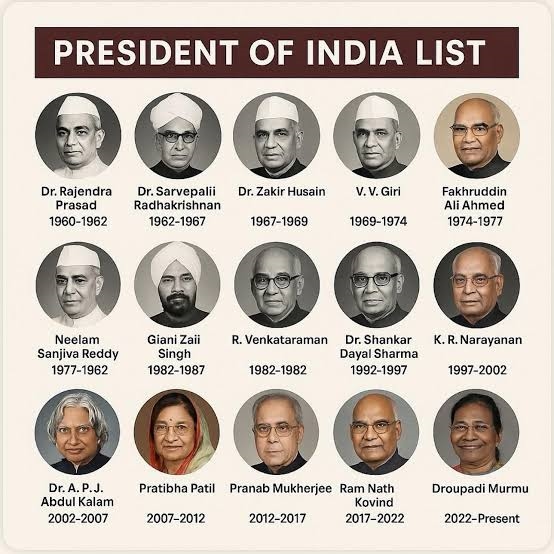
The President of India is the constitutional head of the Indian Republic and the First Citizen of the country. The President represents the unity, integrity, and sovereignty of India and plays an important role in the functioning of the country’s parliamentary democracy.
The President is the Supreme Commander of the Indian Armed Forces and exercises various executive, legislative, financial, judicial, and emergency powers under the Constitution of India.
This collection of 120 GK questions covers the history of the presidency, presidential elections, constitutional provisions, powers and responsibilities, impeachment, important Presidents, and interesting facts about the highest constitutional office in India.
Instructions: Read each question carefully and select the correct answer from the four options. Try to answer all questions without looking at the answer key. The complete answer key is provided at the end.
Section 1: Introduction and History of the President of India
1. Who is the constitutional head of the Republic of India?
A) Prime Minister
B) President
C) Chief Justice of India
D) Vice-President
2. Who was the first President of independent India?
A) Dr. S. Radhakrishnan
B) Dr. Rajendra Prasad
C) Jawaharlal Nehru
D) Dr. Zakir Husain
3. When did Dr. Rajendra Prasad assume office as the first President of India?
A) 15 August 1947
B) 26 November 1949
C) 26 January 1950
D) 28 January 1950
4. Who was the first woman President of India?
A) Indira Gandhi
B) Droupadi Murmu
C) Pratibha Patil
D) Sarojini Naidu
5. In which year was Pratibha Patil elected President of India?
A) 2002
B) 2005
C) 2007
D) 2012
6. Who is the 15th President of India?
A) Ram Nath Kovind
B) Pranab Mukherjee
C) Pratibha Patil
D) Droupadi Murmu
7. When did Droupadi Murmu assume office as President of India?
A) 15 August 2022
B) 25 July 2022
C) 26 January 2022
D) 2 October 2022
8. Droupadi Murmu belongs to which Indian state?
A) Jharkhand
B) Odisha
C) Chhattisgarh
D) West Bengal
9. Droupadi Murmu belongs to which tribal community?
A) Gond
B) Bhil
C) Santhal
D) Toda
10. Who was the first Vice-President of India?
A) Dr. Zakir Husain
B) Dr. S. Radhakrishnan
C) V. V. Giri
D) Gopal Swarup Pathak
11. Which President of India served two complete terms?
A) Dr. Rajendra Prasad
B) Dr. S. Radhakrishnan
C) Fakhruddin Ali Ahmed
D) R. Venkataraman
12. Who was the first Muslim President of India?
A) Dr. Zakir Husain
B) A. P. J. Abdul Kalam
C) Fakhruddin Ali Ahmed
D) Shankar Dayal Sharma
13. Who was the first Sikh President of India?
A) Giani Zail Singh
B) K. R. Narayanan
C) Pranab Mukherjee
D) Ram Nath Kovind
14. Who was the first Dalit President of India?
A) Giani Zail Singh
B) K. R. Narayanan
C) Ram Nath Kovind
D) Dr. Zakir Husain
15. Who was the first President of India to die while in office?
A) Dr. Rajendra Prasad
B) Dr. Zakir Husain
C) Fakhruddin Ali Ahmed
D) Neelam Sanjiva Reddy
Section 2: Constitutional Provisions and Presidential Election
16. Which Article of the Indian Constitution provides for the office of the President?
A) Article 50
B) Article 52
C) Article 54
D) Article 56
17. Which Article deals with the executive power of the Union?
A) Article 51
B) Article 52
C) Article 53
D) Article 55
18. Which Article deals with the election of the President?
A) Article 52
B) Article 53
C) Article 54
D) Article 57
19. Which Article explains the manner of election of the President?
A) Article 54
B) Article 55
C) Article 56
D) Article 58
20. Which Article deals with the term of office of the President?
A) Article 55
B) Article 56
C) Article 57
D) Article 60
21. What is the normal term of office of the President of India?
A) Four years
B) Five years
C) Six years
D) Seven years
22. Can a President of India be re-elected?
A) No
B) Only once
C) Yes, without a constitutional limit on the number of terms
D) Only after ten years
23. Which Article deals with the qualifications required to become President?
A) Article 56
B) Article 57
C) Article 58
D) Article 60
24. What is the minimum age required to become the President of India?
A) 25 years
B) 30 years
C) 35 years
D) 40 years
25. Which of the following is a necessary qualification for becoming President of India?
A) Must be a citizen of India
B) Must be a Member of Parliament
C) Must be a former Governor
D) Must be a Supreme Court judge
26. A presidential candidate must be qualified for election as a member of which House?
A) Rajya Sabha
B) Lok Sabha
C) State Legislative Council
D) State Legislative Assembly
27. Who elects the President of India?
A) Directly by the people
B) Members of Lok Sabha only
C) An Electoral College
D) Members of Rajya Sabha only
28. Which of the following is included in the Electoral College for the presidential election?
A) Nominated members of Parliament
B) Elected members of both Houses of Parliament
C) All members of State Legislative Councils
D) Members of Gram Panchayats
29. Are nominated members of Parliament eligible to vote in the presidential election?
A) Yes
B) No
C) Only nominated Rajya Sabha members
D) Only nominated Lok Sabha members
30. Are elected members of State Legislative Assemblies included in the presidential Electoral College?
A) Yes
B) No
C) Only in large states
D) Only in Union Territories
31. Which Union Territories have elected Legislative Assemblies whose elected members participate in the presidential election?
A) Chandigarh and Lakshadweep
B) Delhi and Puducherry
C) Ladakh and Chandigarh
D) Andaman and Nicobar Islands
32. Which voting system is used in the presidential election?
A) First-past-the-post system
B) Proportional representation by means of the single transferable vote
C) Open ballot system
D) Simple majority voting
33. Voting in the presidential election is conducted through which method?
A) Public voting
B) Voice vote
C) Secret ballot
D) Online voting
34. Who conducts the presidential election in India?
A) Supreme Court
B) Parliament
C) Election Commission of India
D) Union Cabinet
35. Who administers the oath of office to the President of India?
A) Prime Minister
B) Chief Justice of India
C) Vice-President
D) Lok Sabha Speaker
Section 3: Powers and Functions of the President
36. Who is the Supreme Commander of the Indian Armed Forces?
A) Prime Minister
B) Defence Minister
C) President
D) Chief of Defence Staff
37. Which Article vests the supreme command of the Defence Forces in the President?
A) Article 52
B) Article 53
C) Article 54
D) Article 60
38. Who appoints the Prime Minister of India?
A) Chief Justice of India
B) President
C) Lok Sabha Speaker
D) Election Commission
39. Who appoints the other Union Ministers?
A) President on the advice of the Prime Minister
B) Chief Justice of India
C) Lok Sabha Speaker
D) Vice-President
40. Who appoints the Governors of Indian states?
A) Prime Minister
B) Chief Minister
C) President
D) Parliament
41. Who appoints the Attorney General of India?
A) Prime Minister
B) President
C) Chief Justice of India
D) Parliament
42. Who appoints the Comptroller and Auditor General of India?
A) President
B) Prime Minister
C) Finance Minister
D) Lok Sabha Speaker
43. Who appoints the judges of the Supreme Court of India?
A) Prime Minister
B) Chief Justice of India
C) President
D) Parliament
44. Who appoints the Chief Election Commissioner of India?
A) Prime Minister
B) President
C) Chief Justice of India
D) Lok Sabha Speaker
45. Who summons and prorogues the sessions of Parliament?
A) Prime Minister
B) President
C) Vice-President
D) Speaker of Lok Sabha
46. Who can dissolve the Lok Sabha?
A) Chief Justice of India
B) President
C) Election Commission
D) Attorney General
47. Who addresses the first session of Parliament after each general election and the first session of each year?
A) Prime Minister
B) President
C) Vice-President
D) Lok Sabha Speaker
48. Which Article provides for the President’s special address to Parliament?
A) Article 75
B) Article 85
C) Article 87
D) Article 100
49. Who gives assent to bills passed by Parliament?
A) Prime Minister
B) President
C) Chief Justice of India
D) Vice-President
50. Which Article deals with the President’s assent to bills?
A) Article 108
B) Article 110
C) Article 111
D) Article 123
Section 4: Legislative, Financial and Judicial Powers
51. Who has the power to promulgate ordinances when the constitutional conditions are satisfied?
A) Prime Minister
B) President
C) Lok Sabha Speaker
D) Chief Justice of India
52. Which Article deals with the ordinance-making power of the President?
A) Article 111
B) Article 112
C) Article 123
D) Article 143
53. When can the President promulgate an ordinance under Article 123?
A) Only during a national emergency
B) When both Houses of Parliament are in session
C) When Parliament is not in session and immediate action is necessary
D) Only during elections
54. Which Article provides for the President’s power to grant pardons?
A) Article 70
B) Article 72
C) Article 74
D) Article 76
55. Which of the following powers belongs to the President?
A) Granting pardons
B) Appointing the Chief Minister directly in every situation
C) Preparing state budgets
D) Conducting parliamentary elections
56. Who has the power to grant a pardon in cases involving death sentences under Article 72?
A) Prime Minister
B) President
C) Governor only
D) Chief Justice of India
57. Who presents the Union Budget in Parliament?
A) President personally
B) Finance Minister
C) Prime Minister personally
D) Chief Justice of India
58. Which Article requires the President’s recommendation for introducing a Money Bill in the Lok Sabha?
A) Article 109
B) Article 110
C) Article 117
D) Article 123
59. Who causes the Annual Financial Statement (Union Budget) to be laid before Parliament?
A) President
B) Chief Justice of India
C) Election Commission
D) Rajya Sabha Chairman
60. Which Article deals with the Annual Financial Statement?
A) Article 110
B) Article 112
C) Article 123
D) Article 148
61. Which Article empowers the President to seek the advisory opinion of the Supreme Court?
A) Article 131
B) Article 136
C) Article 143
D) Article 148
62. What is the power of the President to return an ordinary bill to Parliament for reconsideration called?
A) Absolute veto
B) Suspensive veto
C) Judicial veto
D) Emergency veto
63. Can the President withhold assent to an ordinary bill?
A) No, under any circumstances
B) Yes
C) Only with Supreme Court permission
D) Only during an emergency
64. Can the President return a Money Bill to Parliament for reconsideration?
A) Yes
B) No
C) Only once
D) Only during a joint session
65. What is commonly called the pocket veto?
A) Rejecting a bill permanently
B) Keeping a bill pending without taking a decision
C) Sending a bill to the Supreme Court
D) Cancelling a parliamentary election
Section 5: Emergency Powers of the President
66. Which Article deals with the declaration of a National Emergency?
A) Article 352
B) Article 356
C) Article 360
D) Article 365
67. Under which circumstances can a National Emergency be proclaimed?
A) War, external aggression or armed rebellion
B) General elections
C) Economic growth
D) Change of government
68. Which Article deals with President’s Rule in a state?
A) Article 352
B) Article 356
C) Article 360
D) Article 368
69. Which Article provides for a Financial Emergency?
A) Article 352
B) Article 356
C) Article 360
D) Article 370
70. Has a Financial Emergency ever been declared in India?
A) Yes, once
B) Yes, twice
C) Yes, three times
D) No
71. Who issues the proclamation of a National Emergency?
A) Prime Minister personally
B) President
C) Chief Justice of India
D) Parliament Speaker
72. Which type of emergency was declared in India in 1975?
A) Financial Emergency
B) National Emergency
C) State Emergency only
D) Judicial Emergency
73. Who was the President of India when the National Emergency was declared in June 1975?
A) Dr. Zakir Husain
B) Fakhruddin Ali Ahmed
C) Neelam Sanjiva Reddy
D) Giani Zail Singh
74. Which Constitutional Amendment introduced safeguards concerning the declaration of National Emergency, including the requirement for written Cabinet advice?
A) 24th Amendment
B) 42nd Amendment
C) 44th Amendment
D) 52nd Amendment
75. What is the role of the President during a constitutional breakdown in a state under Article 356?
A) Declares President’s Rule based on the constitutional process
B) Directly becomes the Chief Minister
C) Dissolves Parliament
D) Appoints the Chief Justice of India
Section 6: Impeachment and Removal of the President
76. Which Article deals with the impeachment of the President of India?
A) Article 56
B) Article 58
C) Article 61
D) Article 72
77. On what ground can the President of India be impeached?
A) Political disagreement
B) Violation of the Constitution
C) Poor election performance
D) Loss of parliamentary majority
78. Which House of Parliament can initiate the impeachment process against the President?
A) Only Lok Sabha
B) Only Rajya Sabha
C) Either House of Parliament
D) Joint sitting only
79. What majority is required in each House to pass an impeachment resolution against the President?
A) Simple majority of members present
B) Two-thirds of members present and voting
C) Two-thirds of the total membership of the House
D) Unanimous approval
80. Can a President resign before completing the five-year term?
A) No
B) Yes
C) Only with Parliament’s permission
D) Only after Supreme Court approval
81. To whom must the President submit a resignation?
A) Prime Minister
B) Vice-President
C) Chief Justice of India
D) Lok Sabha Speaker
82. Who communicates the President’s resignation to the Lok Sabha Speaker?
A) Prime Minister
B) Vice-President
C) Chief Justice of India
D) Cabinet Secretary
83. Who performs the duties of the President when the office becomes vacant due to death, resignation or removal?
A) Prime Minister
B) Vice-President
C) Lok Sabha Speaker
D) Chief Justice of India
84. Within what period must an election be held to fill a vacancy in the office of President due to death, resignation or removal?
A) Three months
B) Six months
C) One year
D) Two years
85. Which Article provides for the discharge of the President’s functions in contingencies not otherwise provided for?
A) Article 65
B) Article 70
C) Article 72
D) Article 74
Section 7: Important Presidents of India
86. Who was popularly known as the People’s President?
A) Dr. Rajendra Prasad
B) A. P. J. Abdul Kalam
C) Giani Zail Singh
D) K. R. Narayanan
87. What was the professional background of Dr. A. P. J. Abdul Kalam?
A) Lawyer
B) Scientist
C) Historian
D) Economist
88. Which President was a renowned philosopher and teacher?
A) Dr. S. Radhakrishnan
B) Giani Zail Singh
C) Ram Nath Kovind
D) Pranab Mukherjee
89. When is Teachers’ Day celebrated in India in honour of Dr. S. Radhakrishnan?
A) 5 September
B) 14 November
C) 2 October
D) 15 August
90. Who was the youngest person to become President of India?
A) Dr. Rajendra Prasad
B) Neelam Sanjiva Reddy
C) Fakhruddin Ali Ahmed
D) A. P. J. Abdul Kalam
91. Who was the first President of India elected unopposed?
A) Dr. Rajendra Prasad
B) Neelam Sanjiva Reddy
C) Giani Zail Singh
D) K. R. Narayanan
92. Who was President of India during the 1998 nuclear tests at Pokhran?
A) Shankar Dayal Sharma
B) K. R. Narayanan
C) A. P. J. Abdul Kalam
D) Pranab Mukherjee
93. Who was the President of India during the Kargil War in 1999?
A) K. R. Narayanan
B) A. P. J. Abdul Kalam
C) Giani Zail Singh
D) R. Venkataraman
94. Who was the first President of India born after independence?
A) Pratibha Patil
B) Ram Nath Kovind
C) Droupadi Murmu
D) A. P. J. Abdul Kalam
95. Who was the first President of India from a Dalit background to serve as a diplomat before becoming President?
A) K. R. Narayanan
B) Giani Zail Singh
C) Ram Nath Kovind
D) Dr. Zakir Husain
Section 8: Rashtrapati Bhavan and Presidential Institutions
96. What is the official residence of the President of India?
A) Parliament House
B) Rashtrapati Bhavan
C) Hyderabad House
D) Teen Murti Bhavan
97. Where is Rashtrapati Bhavan situated?
A) Mumbai
B) New Delhi
C) Kolkata
D) Hyderabad
98. Who designed the original building of Rashtrapati Bhavan?
A) Edwin Lutyens
B) Le Corbusier
C) Charles Correa
D) Herbert Baker
99. What was Rashtrapati Bhavan originally known as during British rule?
A) India House
B) Government House
C) Viceroy’s House
D) King’s Palace
100. Which Mughal-style garden is associated with Rashtrapati Bhavan?
A) Shalimar Bagh
B) Amrit Udyan
C) Brindavan Gardens
D) Nishat Bagh
101. What is the official name of the office that assists the President in constitutional and administrative duties?
A) Prime Minister’s Office
B) President’s Secretariat
C) Cabinet Secretariat
D) Parliament Secretariat
102. Which is the official website of the President of India?
A) presidentofindia.gov.in
B) india.gov.in/president-office
C) rashtrapati.com
D) presidentindia.org
103. What is the term “First Citizen of India” commonly used to describe?
A) Prime Minister
B) President
C) Chief Justice
D) Vice-President
104. Which official ceremony marks the beginning of a President’s term?
A) Coronation
B) Swearing-in ceremony
C) Parliamentary election
D) Republic Day parade
105. On which national occasion does the President of India unfurl the national flag at the main Republic Day ceremony?
A) Independence Day
B) Republic Day
C) Gandhi Jayanti
D) Constitution Day
Section 9: Advanced GK and Interesting Facts
106. Which part of the Indian Constitution contains the provisions relating to the President?
A) Part II
B) Part III
C) Part V
D) Part VI
107. Which Article states that there shall be a Council of Ministers to aid and advise the President?
A) Article 72
B) Article 74
C) Article 76
D) Article 78
108. Who is the head of the Council of Ministers?
A) President
B) Prime Minister
C) Vice-President
D) Lok Sabha Speaker
109. Is the President generally bound by the advice of the Council of Ministers?
A) No, never
B) Yes, under Article 74, subject to the constitutional provision allowing one reconsideration
C) Only during emergencies
D) Only when Parliament is in session
110. Can the President ask the Council of Ministers to reconsider its advice?
A) No
B) Yes, once
C) Yes, unlimited times
D) Only with Supreme Court permission
111. Which Article deals with the President’s duty to be informed about decisions of the Council of Ministers?
A) Article 75
B) Article 77
C) Article 78
D) Article 80
112. What happens when the President’s five-year term expires but the successor has not yet assumed office?
A) The office automatically becomes vacant
B) The outgoing President continues until the successor enters office
C) The Prime Minister becomes President
D) The Vice-President becomes permanent President
113. Which constitutional authority can remove the President through impeachment?
A) Supreme Court alone
B) Parliament
C) Election Commission
D) Union Cabinet
114. Which of the following is NOT a constitutional power of the President?
A) Appointing the Prime Minister
B) Summoning Parliament
C) Declaring a National Emergency under constitutional conditions
D) Personally passing ordinary legislation without Parliament
115. Which President of India was also a noted agricultural scientist and aerospace engineer?
A) A. P. J. Abdul Kalam
B) Dr. Rajendra Prasad
C) Dr. S. Radhakrishnan
D) Pranab Mukherjee
116. Who was the President of India when the Constitution completed 25 years in 1975?
A) Dr. Zakir Husain
B) Fakhruddin Ali Ahmed
C) Neelam Sanjiva Reddy
D) Giani Zail Singh
117. Which President of India served from 1982 to 1987?
A) Neelam Sanjiva Reddy
B) Giani Zail Singh
C) R. Venkataraman
D) Shankar Dayal Sharma
118. Who was the President of India from 1997 to 2002?
A) K. R. Narayanan
B) A. P. J. Abdul Kalam
C) Shankar Dayal Sharma
D) Pranab Mukherjee
119. Which President of India served from 2012 to 2017?
A) Pratibha Patil
B) Ram Nath Kovind
C) Pranab Mukherjee
D) A. P. J. Abdul Kalam
120. What is the most important constitutional responsibility of the President of India?
A) Leading political parties
B) Protecting and upholding the Constitution and the law
C) Controlling all state governments directly
D) Preparing the annual budgets of states
Answer Key – President of India GK
Questions 1–40
| No. | Correct Answer | No. | Correct Answer |
|---|---|---|---|
| 1 | B – President | 21 | B – Five years |
| 2 | B – Dr. Rajendra Prasad | 22 | C – Yes, without term limit |
| 3 | C – 26 January 1950 | 23 | C – Article 58 |
| 4 | C – Pratibha Patil | 24 | C – 35 years |
| 5 | C – 2007 | 25 | A – Citizen of India |
| 6 | D – Droupadi Murmu | 26 | B – Lok Sabha |
| 7 | B – 25 July 2022 | 27 | C – Electoral College |
| 8 | B – Odisha | 28 | B – Elected members of both Houses |
| 9 | C – Santhal | 29 | B – No |
| 10 | B – Dr. S. Radhakrishnan | 30 | A – Yes |
| 11 | A – Dr. Rajendra Prasad | 31 | B – Delhi and Puducherry |
| 12 | A – Dr. Zakir Husain | 32 | B – Proportional representation |
| 13 | A – Giani Zail Singh | 33 | C – Secret ballot |
| 14 | B – K. R. Narayanan | 34 | C – Election Commission |
| 15 | B – Dr. Zakir Husain | 35 | B – Chief Justice of India |
| 16 | B – Article 52 | 36 | C – President |
| 17 | C – Article 53 | 37 | B – Article 53 |
| 18 | C – Article 54 | 38 | B – President |
| 19 | B – Article 55 | 39 | A – President on PM’s advice |
| 20 | B – Article 56 | 40 | C – President |
Questions 41–80
| No. | Correct Answer | No. | Correct Answer |
|---|---|---|---|
| 41 | B – President | 61 | C – Article 143 |
| 42 | A – President | 62 | B – Suspensive veto |
| 43 | C – President | 63 | B – Yes |
| 44 | B – President | 64 | B – No |
| 45 | B – President | 65 | B – Keeping a bill pending |
| 46 | B – President | 66 | A – Article 352 |
| 47 | B – President | 67 | A – War, external aggression or armed rebellion |
| 48 | C – Article 87 | 68 | B – Article 356 |
| 49 | B – President | 69 | C – Article 360 |
| 50 | C – Article 111 | 70 | D – No |
| 51 | B – President | 71 | B – President |
| 52 | C – Article 123 | 72 | B – National Emergency |
| 53 | C – Parliament not in session | 73 | B – Fakhruddin Ali Ahmed |
| 54 | B – Article 72 | 74 | C – 44th Amendment |
| 55 | A – Granting pardons | 75 | A – Declares President’s Rule |
| 56 | B – President | 76 | C – Article 61 |
| 57 | B – Finance Minister | 77 | B – Violation of Constitution |
| 58 | C – Article 117 | 78 | C – Either House |
| 59 | A – President | 79 | C – Two-thirds of total membership |
| 60 | B – Article 112 | 80 | B – Yes |
Questions 81–120
| No. | Correct Answer | No. | Correct Answer |
|---|---|---|---|
| 81 | B – Vice-President | 101 | B – President’s Secretariat |
| 82 | B – Vice-President | 102 | A – presidentofindia.gov.in |
| 83 | B – Vice-President | 103 | B – President |
| 84 | B – Six months | 104 | B – Swearing-in ceremony |
| 85 | B – Article 70 | 105 | B – Republic Day |
| 86 | B – A. P. J. Abdul Kalam | 106 | C – Part V |
| 87 | B – Scientist | 107 | B – Article 74 |
| 88 | A – Dr. S. Radhakrishnan | 108 | B – Prime Minister |
| 89 | A – 5 September | 109 | B – Yes, subject to reconsideration |
| 90 | B – Neelam Sanjiva Reddy | 110 | B – Yes, once |
| 91 | B – Neelam Sanjiva Reddy | 111 | C – Article 78 |
| 92 | B – K. R. Narayanan | 112 | B – Continues until successor assumes office |
| 93 | A – K. R. Narayanan | 113 | B – Parliament |
| 94 | B – Ram Nath Kovind | 114 | D – Passing ordinary legislation personally |
| 95 | A – K. R. Narayanan | 115 | A – A. P. J. Abdul Kalam |
| 96 | B – Rashtrapati Bhavan | 116 | B – Fakhruddin Ali Ahmed |
| 97 | B – New Delhi | 117 | B – Giani Zail Singh |
| 98 | A – Edwin Lutyens | 118 | A – K. R. Narayanan |
| 99 | C – Viceroy’s House | 119 | C – Pranab Mukherjee |
| 100 | B – Amrit Udyan | 120 | B – Protecting and upholding the Constitution |
Important Facts to Remember
- First President: Dr. Rajendra Prasad.
- First woman President: Pratibha Patil.
- First Muslim President: Dr. Zakir Husain.
- First Sikh President: Giani Zail Singh.
- First Dalit President: K. R. Narayanan.
- First President elected unopposed: Neelam Sanjiva Reddy.
- Youngest President: Neelam Sanjiva Reddy.
- People’s President: Dr. A. P. J. Abdul Kalam.
- Current President: Droupadi Murmu.
- Current President’s term began: 25 July 2022.
- Official residence: Rashtrapati Bhavan, New Delhi.
- Normal presidential term: Five years.
- Minimum age: 35 years.
- Constitutional provision: Article 52.
- Impeachment provision: Article 61.
Conclusion
The President of India occupies a unique and prestigious position in the country’s democratic system. Although the President is the constitutional head of the Union, the office carries significant responsibilities in safeguarding the Constitution, maintaining democratic institutions, and ensuring the proper functioning of the government.
Learning about the President’s powers, duties, and constitutional position helps citizens understand the foundations of Indian democracy and the importance of constitutional governance.
Note for the Public
This collection is intended for students, teachers, competitive examination aspirants, and general knowledge enthusiasts. It can be used for classroom activities, quiz competitions, self-assessment, and preparation for examinations.
For further reading, consult these official resources:
- President of India – Official Profile
- Constitution of India – Legislative Department
- Election Commission of India – Presidential Election FAQs
Nelsapy – Learn Something New Every Day!
Leave a Reply