

Nelsapy – General Knowledge Question Bank
Introduction
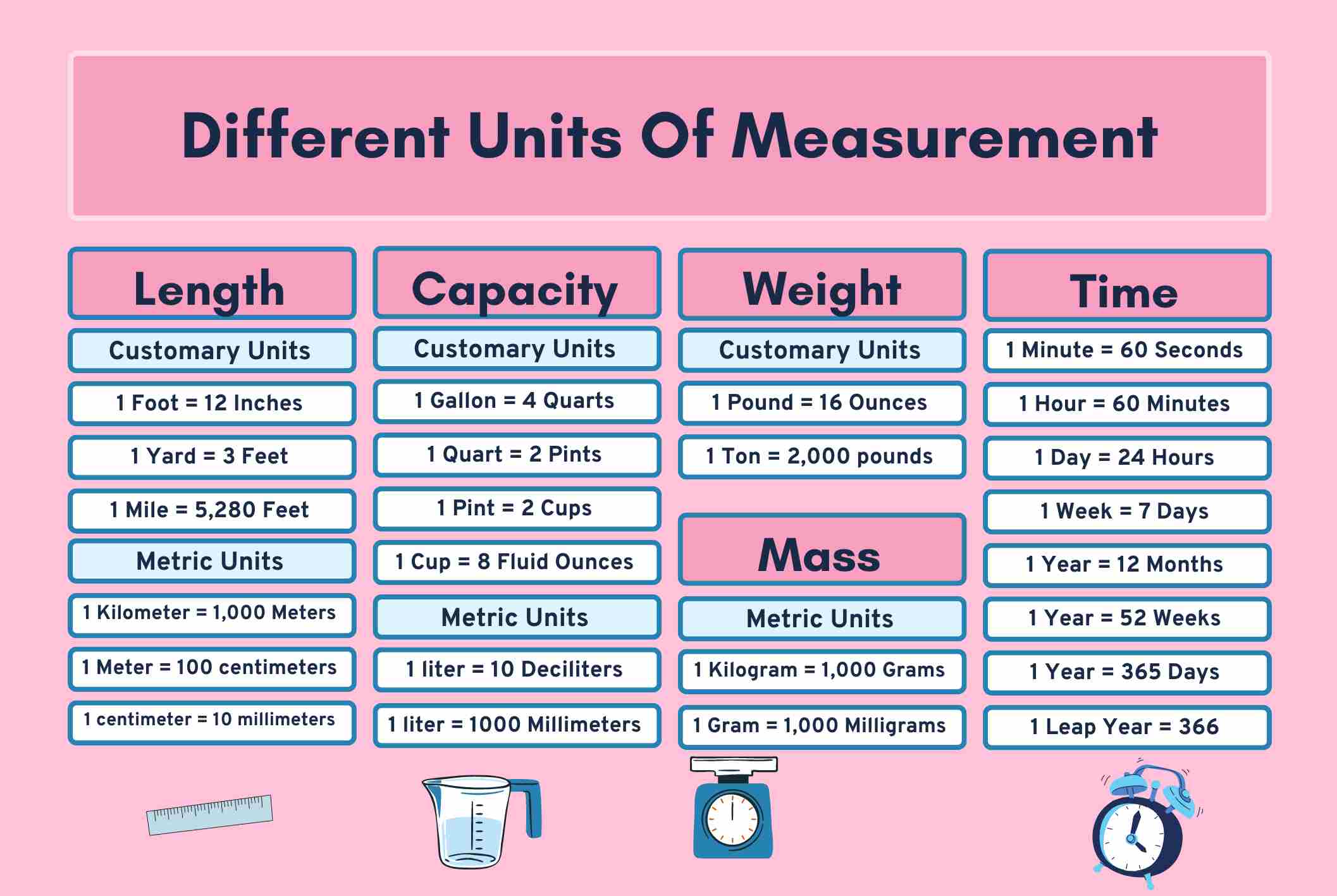
Units of measurement are essential tools used in science, mathematics, engineering, commerce and everyday life. They help us measure quantities such as length, mass, time, temperature, speed, area, volume, energy and pressure.
The International System of Units (SI) provides a globally accepted standard for scientific and technical measurements. Understanding measurement units is important for students, competitive examinations and general knowledge enthusiasts.
This collection contains 125 GK questions covering SI units, metric units, scientific measurements, everyday measurements and specialised units.
Instructions
- Read each question carefully.
- Try to answer all questions before checking the answer key.
- Each question has one correct answer.
- The complete answer key is provided at the end.
Section 1: Basic Units and the International System of Units
1. What is the full form of SI in the International System of Units?
2. Which international organisation coordinates the development of the SI system?
3. How many fundamental base units are there in the SI system?
4. What is the SI unit of length?
5. What is the SI unit of mass?
6. What is the SI unit of time?
7. What is the SI unit of electric current?
8. What is the SI unit of thermodynamic temperature?
9. What is the SI unit of amount of substance?
10. What is the SI unit of luminous intensity?
11. Which unit is used to measure the length of a football field?
12. What is the standard SI symbol for kilogram?
13. What is the symbol for the SI unit of time?
14. Which unit is commonly used to measure the distance between two cities?
15. What is the relationship between one kilometre and one metre?
Section 2: Units of Length, Distance and Area
16. Which unit is used to measure very small lengths in the atomic scale?
17. What is an angstrom used to measure?
18. How many millimetres are there in one centimetre?
19. How many centimetres are there in one metre?
20. How many metres are there in one kilometre?
21. Which unit is commonly used to measure the diameter of a human hair?
22. What is the SI unit of area?
23. Which unit is commonly used to measure the area of agricultural land?
24. How many square metres are there in one hectare?
25. What is the approximate area of one acre in square metres?
26. Which unit is used to measure large geographical areas?
27. What is a square kilometre used to measure?
28. Which unit is commonly used to measure the thickness of a sheet of paper?
29. What is a nautical mile used to measure?
30. How many metres are there in one nautical mile?
Section 3: Units of Mass and Weight
31. What is the SI unit of mass?
32. Which unit is commonly used to measure the weight of vegetables in a market?
33. How many grams are there in one kilogram?
34. How many milligrams are there in one gram?
35. What is the metric unit equal to 1,000 kilograms?
36. Which unit is commonly used to measure the mass of precious metals?
37. What is the SI unit of force, including weight as a force?
38. What is the difference between mass and weight?
39. Which instrument is used to measure mass in a laboratory?
40. What is a carat used to measure?
41. How many milligrams are there in one metric carat?
42. Which unit is used to measure the mass of ships and large cargoes in shipping?
43. What is a tonne equivalent to in kilograms?
44. Which unit is commonly used to measure the mass of medicines in small quantities?
45. What is the SI symbol for the gram?
Section 4: Units of Time, Frequency and Speed
46. What is the SI unit of time?
47. How many seconds are there in one minute?
48. How many minutes are there in one hour?
49. How many seconds are there in one hour?
50. Which unit is used to measure the frequency of sound waves?
51. What is the SI unit of frequency?
52. Which scientist is associated with the development of the pendulum clock?
53. What is the SI unit of speed?
54. Which unit is commonly used to measure the speed of cars?
55. What does RPM stand for?
56. Which unit is used to measure the rotational speed of an engine?
57. What is the SI unit of acceleration?
58. Which unit is used to measure the duration of very short events in physics?
59. What is a nanosecond?
60. How many seconds are there in one millisecond?
Section 5: Units of Temperature, Heat and Energy
61. What is the SI unit of temperature?
62. Which temperature scale is commonly used in India?
63. Which scientist developed the Celsius temperature scale?
64. Who introduced the Fahrenheit temperature scale?
65. What is the freezing point of water on the Celsius scale at standard atmospheric pressure?
66. What is the boiling point of water on the Celsius scale at standard atmospheric pressure?
67. What is absolute zero on the Celsius scale approximately?
68. What is the SI unit of energy?
69. Which unit is commonly used to measure electrical energy consumption in homes?
70. What does one kilowatt-hour represent?
71. What is the SI unit of power?
72. Which unit is commonly used to express the power rating of electric appliances?
73. What is the relationship between a joule and a watt-second?
74. Which unit is commonly used to measure the energy content of food?
75. What is the SI unit of heat?
Section 6: Units of Electricity and Magnetism
76. What is the SI unit of electric charge?
77. What is the SI unit of electrical potential difference?
78. Which unit is used to measure electrical resistance?
79. What is the SI unit of electrical conductance?
80. Which unit is used to measure electrical capacitance?
81. What is the SI unit of inductance?
82. Which unit is used to measure magnetic flux?
83. What is the SI unit of magnetic flux density?
84. Which unit is used to measure electrical power?
85. What is the SI unit of resistivity?
86. Which instrument is used to measure electric current?
87. Which instrument is used to measure voltage?
88. What is the unit of electrical energy commonly used in household electricity bills?
89. What does kV stand for?
90. What does mA stand for?
Section 7: Units of Pressure, Volume and Density
91. What is the SI unit of pressure?
92. Which unit is commonly used to measure atmospheric pressure?
93. What is the standard atmospheric pressure approximately in pascals?
94. Which instrument is used to measure atmospheric pressure?
95. What is the SI unit of volume?
96. How many litres are there in one cubic metre?
97. Which unit is commonly used to measure the volume of liquids?
98. What is the SI unit of density?
99. Which unit is commonly used to measure the density of liquids in laboratories?
100. What is the approximate density of pure water at 4°C in kilograms per cubic metre?
101. Which unit is used to measure the volume of very small quantities of liquid?
102. What does PSI stand for?
103. Which unit is commonly used to measure the pressure in vehicle tyres?
104. What is the SI unit of surface tension?
105. Which instrument is used to measure the pressure of gases in a closed container?
Section 8: Specialised Scientific and Everyday Units
106. Which unit is used to measure the intensity of sound?
107. What is the SI unit of sound intensity?
108. Which unit is commonly used to express sound levels?
109. What is the unit used to measure the frequency of radio waves?
110. Which unit is used to measure the wavelength of visible light?
111. What is the unit of luminous flux?
112. Which unit is used to measure illuminance?
113. What is the unit of radioactive activity?
114. Which unit is used to measure absorbed radiation dose?
115. What is the SI unit of equivalent radiation dose?
116. Which unit is used to measure the acidity or alkalinity of a solution?
117. What is the unit of catalytic activity?
118. Which unit is used to measure the viscosity of a fluid in the SI system?
119. What is the unit of angular measurement in the SI system?
120. Which unit is used to measure the solid angle?
121. What is the unit used to measure astronomical distances within the Solar System?
122. Which unit is commonly used to measure distances between stars?
123. What is a light-year?
124. Which unit is used to measure the apparent brightness of stars?
125. What is the astronomical unit (AU) approximately equal to?
Answer Key
Section 1: Basic Units and the International System of Units
- International System of Units.
- The General Conference on Weights and Measures (CGPM), with work coordinated internationally through the BIPM.
- Seven.
- Metre (m).
- Kilogram (kg).
- Second (s).
- Ampere (A).
- Kelvin (K).
- Mole (mol).
- Candela (cd).
- Metre.
- kg.
- s.
- Kilometre.
- 1 kilometre = 1,000 metres.
Section 2: Units of Length, Distance and Area
- Nanometre.
- Atomic and molecular dimensions, especially distances between atoms.
- 10 millimetres.
- 100 centimetres.
- 1,000 metres.
- Micrometre (micron).
- Square metre (m²).
- Hectare.
- 10,000 square metres.
- Approximately 4,047 square metres.
- Square kilometre.
- The area of large geographical regions and land surfaces.
- Millimetre.
- Distances used in marine and air navigation.
- 1,852 metres.
Section 3: Units of Mass and Weight
- Kilogram (kg).
- Kilogram.
- 1,000 grams.
- 1,000 milligrams.
- Metric tonne.
- Troy ounce or gram; precious metals are often measured in troy ounces.
- Newton (N).
- Mass is the amount of matter in an object; weight is the gravitational force acting on it.
- Balance.
- The mass of gemstones and pearls.
- 200 milligrams.
- Tonne (metric ton).
- 1,000 kilograms.
- Milligram.
- g.
Section 4: Units of Time, Frequency and Speed
- Second (s).
- 60 seconds.
- 60 minutes.
- 3,600 seconds.
- Hertz.
- Hertz (Hz).
- Christiaan Huygens.
- Metre per second (m/s).
- Kilometres per hour (km/h).
- Revolutions per minute.
- Revolutions per minute (rpm).
- Metre per second squared (m/s²).
- Microsecond, nanosecond or other smaller time units, depending on the event.
- One billionth of a second (10⁻⁹ seconds).
- 0.001 seconds.
Section 5: Units of Temperature, Heat and Energy
- Kelvin (K).
- Celsius (°C).
- Anders Celsius.
- Daniel Gabriel Fahrenheit.
- 0°C.
- 100°C.
- −273.15°C.
- Joule (J).
- Kilowatt-hour (kWh).
- The energy consumed by a 1-kilowatt appliance operating for one hour.
- Watt (W).
- Watt (W).
- One joule equals one watt-second.
- Kilocalorie (kcal) or kilojoule (kJ).
- Joule (J).
Section 6: Units of Electricity and Magnetism
- Coulomb (C).
- Volt (V).
- Ohm (Ω).
- Siemens (S).
- Farad (F).
- Henry (H).
- Weber (Wb).
- Tesla (T).
- Watt (W).
- Ohm metre (Ω·m).
- Ammeter.
- Voltmeter.
- Kilowatt-hour (kWh).
- Kilovolt.
- Milliampere.
Section 7: Units of Pressure, Volume and Density
- Pascal (Pa).
- Bar or millibar; atmospheric pressure is also commonly reported in hectopascals.
- Approximately 101,325 pascals.
- Barometer.
- Cubic metre (m³).
- 1,000 litres.
- Litre (L).
- Kilogram per cubic metre (kg/m³).
- Gram per cubic centimetre (g/cm³) or gram per millilitre (g/mL).
- Approximately 1,000 kg/m³.
- Microlitre (µL).
- Pounds per square inch.
- PSI (pounds per square inch), although pascals and bar are also used.
- Newton per metre (N/m).
- Manometer.
Section 8: Specialised Scientific and Everyday Units
- Decibel is commonly used for sound level, while sound intensity is measured in watts per square metre.
- Watt per square metre (W/m²).
- Decibel (dB).
- Hertz (Hz).
- Nanometre (nm).
- Lumen (lm).
- Lux (lx).
- Becquerel (Bq).
- Gray (Gy).
- Sievert (Sv).
- pH scale.
- Katal (kat).
- Pascal-second (Pa·s) for dynamic viscosity.
- Radian (rad).
- Steradian (sr).
- Astronomical unit (AU).
- Light-year or parsec.
- The distance light travels in a vacuum in one Julian year.
- Magnitude.
- Approximately 149.6 million kilometres, the mean distance between Earth and the Sun.
Concluding Comment
Units of measurement are fundamental to scientific knowledge and everyday activities. From measuring the length of a road to calculating the energy produced by a power station, standard units make accurate communication and comparison possible.
Understanding these units helps students develop numerical skills, scientific awareness and practical knowledge that can be applied in education, technology, industry and daily life.
Note for the Public
The International System of Units (SI) is the internationally recognised standard for scientific measurements. Some traditional units, such as inches, feet, acres and pounds, are still widely used in particular countries and industries. Always check the measurement system and conversion factors when comparing values.
Nelsapy – Knowledge for Everyone.
Leave a Reply