

Nelsapy – General Knowledge Question Bank
Introduction
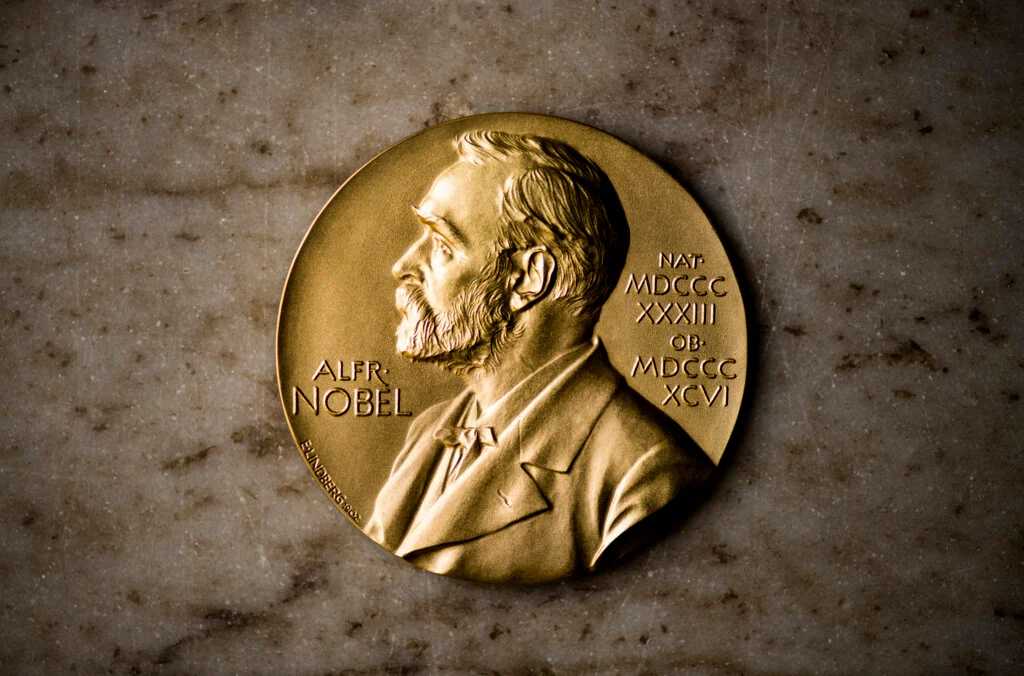
The Nobel Prize is one of the world’s most prestigious international awards, recognising outstanding contributions to humanity in fields such as Physics, Chemistry, Medicine, Literature, Peace and Economic Sciences.
Since the first Nobel Prizes were awarded in 1901, numerous scientists have received international recognition for discoveries and innovations that transformed our understanding of the world.
This collection of 125 general knowledge questions explores famous Nobel Prize-winning scientists, their discoveries, research, achievements and contributions to science.
Instructions
- Read each question carefully.
- Try to answer all questions before checking the answer key.
- Each question has one correct answer.
- The complete answer key is provided at the end.
Section 1: Nobel Prize – General Knowledge
1. Who established the Nobel Prizes?
2. In which year were the first Nobel Prizes awarded?
3. Who was Alfred Nobel?
4. Which country was Alfred Nobel from?
5. How many original Nobel Prize categories were established in Alfred Nobel’s will?
6. Which Nobel Prize category was added in 1968?
7. Which institution awards the Nobel Prize in Physics?
8. Which institution awards the Nobel Prize in Chemistry?
9. Which institution awards the Nobel Prize in Physiology or Medicine?
10. Which organisation awards the Nobel Peace Prize?
11. Where is the Nobel Prize award ceremony held, except for the Peace Prize?
12. In which city is the Nobel Peace Prize ceremony held?
13. On which date are Nobel Prizes traditionally presented?
14. What is the date of Alfred Nobel’s death?
15. What is the name of the medal awarded to Nobel laureates?
Section 2: Nobel Prize Winners in Physics
16. Who was the first Nobel Prize winner in Physics?
17. For which discovery did Wilhelm Conrad Röntgen receive the Nobel Prize?
18. Who received the Nobel Prize in Physics in 1905 for work on cathode rays?
19. Which scientist won the 1906 Nobel Prize in Physics for research on electrical conduction in gases?
20. Who received the 1909 Nobel Prize in Physics for work on wireless telegraphy?
21. Which scientist won the 1918 Nobel Prize in Physics for the discovery of energy quanta?
22. Who received the 1921 Nobel Prize in Physics for explaining the photoelectric effect?
23. Which scientist received the 1922 Nobel Prize in Physics for research on atomic structure and radiation?
24. Who won the 1929 Nobel Prize in Physics for his work on the wave nature of electrons?
25. Which scientist received the 1933 Nobel Prize in Physics for the discovery of new productive forms of atomic theory?
26. Who received the 1938 Nobel Prize in Physics for demonstrating nuclear reactions caused by neutron irradiation?
27. Which scientist won the 1945 Nobel Prize in Physics for the exclusion principle?
28. Who received the 1956 Nobel Prize in Physics for research on semiconductors and the discovery of the transistor effect?
29. Which scientist won the 1965 Nobel Prize in Physics for fundamental work in quantum electrodynamics?
30. Who received the 1969 Nobel Prize in Physics for his contributions to the development of the theory of elementary particles?
31. Which scientist received the 1979 Nobel Prize in Physics for contributions to electroweak unification?
32. Who won the 1983 Nobel Prize in Physics for theoretical studies of stellar evolution?
33. Which scientist received the 2001 Nobel Prize in Physics for the achievement of Bose-Einstein condensation in dilute gases?
34. Who received the 2013 Nobel Prize in Physics for the theoretical discovery of the Higgs mechanism?
35. Which scientist won the 2017 Nobel Prize in Physics for decisive contributions to the LIGO detector and the observation of gravitational waves?
36. Who became the first woman to receive the Nobel Prize in Physics?
37. Which Indian-American physicist won the 1983 Nobel Prize in Physics for his work on the structure and evolution of stars?
38. Which scientist shared the 2020 Nobel Prize in Physics for the discovery of a supermassive compact object at the centre of our galaxy?
39. Who received the 2022 Nobel Prize in Physics for experiments involving entangled photons and pioneering quantum information science?
40. Which scientist won the 2023 Nobel Prize in Physics for experimental methods that generate attosecond pulses of light?
Section 3: Nobel Prize Winners in Chemistry
41. Who was the first Nobel Prize winner in Chemistry?
42. For which discovery did Jacobus Henricus van ‘t Hoff receive the 1901 Nobel Prize in Chemistry?
43. Which scientist received the 1903 Nobel Prize in Chemistry for research into the disintegration of elements and radioactive substances?
44. Who won the 1908 Nobel Prize in Chemistry for investigations into the composition of radium?
45. Which scientist received the 1911 Nobel Prize in Chemistry for the discovery of radium and polonium?
46. Who received the 1918 Nobel Prize in Chemistry for the synthesis of ammonia?
47. Which scientist won the 1935 Nobel Prize in Chemistry jointly with Irène Joliot-Curie for the synthesis of new radioactive elements?
48. Who received the 1939 Nobel Prize in Chemistry for the discovery of the fission of heavy nuclei?
49. Which scientist won the 1944 Nobel Prize in Chemistry for the discovery of nuclear fission?
50. Who received the 1954 Nobel Prize in Chemistry for research on the nature of the chemical bond?
51. Which scientist won the 1958 Nobel Prize in Chemistry for determining the structure of proteins?
52. Who received the 1962 Nobel Prize in Chemistry for determining the structures of globular proteins?
53. Which scientist won the 1964 Nobel Prize in Chemistry for work on the structure of vitamin B12?
54. Who received the 1967 Nobel Prize in Chemistry for studies of extremely fast chemical reactions?
55. Which scientist won the 1988 Nobel Prize in Chemistry for determining the three-dimensional structure of the photosynthetic reaction centre?
56. Who received the 1995 Nobel Prize in Chemistry for research into atmospheric chemistry, particularly ozone depletion?
57. Which scientist won the 2000 Nobel Prize in Chemistry for the discovery and development of conductive polymers?
58. Who received the 2008 Nobel Prize in Chemistry for the discovery and development of the green fluorescent protein?
59. Which scientist won the 2010 Nobel Prize in Chemistry for palladium-catalysed cross-coupling reactions in organic synthesis?
60. Who received the 2014 Nobel Prize in Chemistry for the development of super-resolved fluorescence microscopy?
61. Which scientist won the 2016 Nobel Prize in Chemistry for the design and synthesis of molecular machines?
62. Who received the 2019 Nobel Prize in Chemistry for the development of lithium-ion batteries?
63. Which scientist won the 2020 Nobel Prize in Chemistry for the development of a method for genome editing?
64. Who received the 2022 Nobel Prize in Chemistry for the development of click chemistry and bioorthogonal chemistry?
65. Which scientists shared the 2023 Nobel Prize in Chemistry for the discovery and synthesis of quantum dots?
Section 4: Nobel Prize Winners in Physiology or Medicine
66. Who received the first Nobel Prize in Physiology or Medicine?
67. For which discovery did Emil von Behring receive the 1901 Nobel Prize in Medicine?
68. Which scientist received the 1905 Nobel Prize in Medicine for research on tuberculosis?
69. Who received the 1906 Nobel Prize in Medicine for work on the structure of the nervous system?
70. Which scientist won the 1908 Nobel Prize in Medicine for research on immunity?
71. Who received the 1923 Nobel Prize in Medicine for the discovery of insulin?
72. Which scientists received the 1945 Nobel Prize in Medicine for the discovery of penicillin?
73. Who received the 1952 Nobel Prize in Medicine for the discovery of streptomycin?
74. Which scientists shared the 1962 Nobel Prize in Medicine for discovering the molecular structure of DNA?
75. Who received the 1968 Nobel Prize in Medicine for deciphering the genetic code?
76. Which scientist won the 1979 Nobel Prize in Medicine for developing computer-assisted tomography?
77. Who received the 1982 Nobel Prize in Medicine for discovering prostaglandins and related biologically active substances?
78. Which scientist received the 1983 Nobel Prize in Medicine for discovering mobile genetic elements?
79. Who won the 1984 Nobel Prize in Medicine for discoveries concerning the immune system?
80. Which scientist received the 1993 Nobel Prize in Medicine for discovering split genes?
81. Who received the 1997 Nobel Prize in Medicine for discovering prions as a new biological principle of infection?
82. Which scientist won the 2002 Nobel Prize in Medicine for discoveries concerning genetic regulation of organ development and programmed cell death?
83. Who received the 2005 Nobel Prize in Medicine for discovering the bacterium responsible for peptic ulcer disease?
84. Which scientist shared the 2006 Nobel Prize in Medicine for discovering RNA interference?
85. Who received the 2008 Nobel Prize in Medicine for discovering HIV?
86. Which scientist won the 2009 Nobel Prize in Medicine for discoveries concerning telomeres and telomerase?
87. Who received the 2015 Nobel Prize in Medicine for discoveries concerning therapies against malaria and infections caused by roundworm parasites?
88. Which scientist won the 2018 Nobel Prize in Medicine for cancer therapy by inhibition of negative immune regulation?
89. Who received the 2020 Nobel Prize in Medicine for the discovery of the hepatitis C virus?
90. Which scientist received the 2023 Nobel Prize in Medicine for discoveries that enabled the development of effective mRNA vaccines against COVID-19?
Section 5: Nobel Prize-Winning Women Scientists
91. Who was the first woman to receive a Nobel Prize?
92. How many Nobel Prizes did Marie Curie receive?
93. In which two scientific fields did Marie Curie receive Nobel Prizes?
94. Who was the first woman to receive the Nobel Prize in Chemistry?
95. Which daughter of Marie Curie also won a Nobel Prize in Chemistry?
96. Who was the first woman to receive the Nobel Prize in Physiology or Medicine?
97. Which American scientist received the 1983 Nobel Prize in Physiology or Medicine for discovering mobile genetic elements?
98. Who shared the 2009 Nobel Prize in Chemistry for studies of the structure and function of the ribosome?
99. Which scientist shared the 2020 Nobel Prize in Chemistry for CRISPR-Cas9 genome editing?
100. Who received the 2023 Nobel Prize in Physiology or Medicine jointly with Drew Weissman?
Section 6: Nobel Prize-Winning Scientists of Indian Origin and Indian Connection
101. Who was the first Asian to receive a Nobel Prize in Science?
102. In which year did C. V. Raman receive the Nobel Prize in Physics?
103. For which discovery did C. V. Raman receive the Nobel Prize?
104. What is the scientific phenomenon named after C. V. Raman?
105. Who was the first Indian-born scientist to receive a Nobel Prize?
106. Which Indian scientist received the Nobel Prize in Chemistry in 2009?
107. For what discovery did Venkatraman Ramakrishnan receive the Nobel Prize?
108. Which Indian scientist received the Nobel Prize in Physics in 1983?
109. Which Nobel Prize-winning physicist was born in Lahore, then part of British India?
110. Which Indian-origin scientist shared the 2024 Nobel Prize in Chemistry for computational protein design?
Section 7: Nobel Prize-Winning Scientists and Their Discoveries
111. Which scientist discovered X-rays?
112. Who discovered radioactivity?
113. Which scientist discovered the electron?
114. Who discovered the neutron?
115. Which scientists are credited with discovering the structure of DNA?
116. Who discovered the first antibiotic, penicillin?
117. Which scientist developed the theory of relativity?
118. Who discovered the Raman Effect?
119. Which scientist developed the first successful vaccine against rabies?
120. Who is known for pioneering research into the structure of atoms through the gold foil experiment?
121. Which scientists received the 2015 Nobel Prize in Physics for the discovery of neutrino oscillations?
122. Who shared the 2021 Nobel Prize in Physics for the physical modelling of Earth’s climate and the discovery of the interaction of disorder and fluctuations in physical systems?
123. Which scientists received the 2024 Nobel Prize in Physics for foundational discoveries and inventions that enable machine learning with artificial neural networks?
124. Which scientists shared the 2024 Nobel Prize in Physiology or Medicine for the discovery of microRNA and its role in post-transcriptional gene regulation?
125. Which scientists shared the 2024 Nobel Prize in Chemistry for protein structure prediction and computational protein design?
Answer Key
Section 1: Nobel Prize – General Knowledge
- Alfred Nobel.
-
- A Swedish chemist, engineer, inventor and industrialist who established the Nobel Prizes.
- Sweden.
- Five.
- Economic Sciences.
- The Royal Swedish Academy of Sciences.
- The Royal Swedish Academy of Sciences.
- The Nobel Assembly at Karolinska Institutet.
- The Norwegian Nobel Committee.
- Stockholm, Sweden.
- Oslo, Norway.
- 10 December.
- 10 December 1896.
- The Nobel Prize medal.
Section 2: Nobel Prize Winners in Physics
- Wilhelm Conrad Röntgen.
- X-rays.
- Philipp Lenard.
- J. J. Thomson.
- Guglielmo Marconi and Karl Ferdinand Braun.
- Max Planck.
- Albert Einstein.
- Niels Bohr.
- Louis de Broglie.
- Erwin Schrödinger and Paul Dirac.
- Enrico Fermi.
- Wolfgang Pauli.
- William Shockley, John Bardeen and Walter Brattain.
- Richard Feynman, Julian Schwinger and Sin-Itiro Tomonaga.
- Murray Gell-Mann.
- Sheldon Glashow, Abdus Salam and Steven Weinberg.
- Subrahmanyan Chandrasekhar and William A. Fowler.
- Eric Cornell, Wolfgang Ketterle and Carl Wieman.
- François Englert and Peter Higgs.
- Rainer Weiss, Barry Barish and Kip Thorne.
- Marie Curie.
- Subrahmanyan Chandrasekhar.
- Reinhard Genzel and Andrea Ghez.
- Alain Aspect, John Clauser and Anton Zeilinger.
- Pierre Agostini, Ferenc Krausz and Anne L’Huillier.
Section 3: Nobel Prize Winners in Chemistry
- Jacobus Henricus van ‘t Hoff.
- Discovery of the laws of chemical dynamics and osmotic pressure in solutions.
- Marie Curie and Pierre Curie.
- Ernest Rutherford.
- Marie Curie.
- Fritz Haber.
- Frédéric Joliot and Irène Joliot-Curie.
- Otto Hahn.
- Otto Hahn.
- Linus Pauling.
- Frederick Sanger.
- John Kendrew and Max Perutz.
- Dorothy Crowfoot Hodgkin.
- Manfred Eigen, Ronald George Wreyford Norrish and George Porter.
- Johann Deisenhofer, Robert Huber and Hartmut Michel.
- Paul Crutzen, Mario Molina and F. Sherwood Rowland.
- Alan Heeger, Alan MacDiarmid and Hideki Shirakawa.
- Osamu Shimomura, Martin Chalfie and Roger Y. Tsien.
- Richard F. Heck, Ei-ichi Negishi and Akira Suzuki.
- Eric Betzig, Stefan Hell and William E. Moerner.
- Jean-Pierre Sauvage, J. Fraser Stoddart and Bernard L. Feringa.
- John B. Goodenough, M. Stanley Whittingham and Akira Yoshino.
- Emmanuelle Charpentier and Jennifer A. Doudna.
- Carolyn R. Bertozzi, Morten Meldal and K. Barry Sharpless.
- Moungi G. Bawendi, Louis E. Brus and Alexei I. Ekimov.
Section 4: Nobel Prize Winners in Physiology or Medicine
- Emil von Behring.
- Development of serum therapy against diphtheria.
- Robert Koch.
- Camillo Golgi and Santiago Ramón y Cajal.
- Ilya Mechnikov and Paul Ehrlich.
- Frederick Banting and John Macleod.
- Alexander Fleming, Ernst Boris Chain and Howard Florey.
- Selman Waksman.
- James Watson, Francis Crick and Maurice Wilkins.
- Robert W. Holley, Har Gobind Khorana and Marshall W. Nirenberg.
- Allan Cormack and Godfrey Hounsfield.
- Sune Bergström, Bengt Samuelsson and John Vane.
- Barbara McClintock.
- Niels K. Jerne, Georges J. F. Köhler and César Milstein.
- Richard J. Roberts and Phillip A. Sharp.
- Stanley B. Prusiner.
- Sydney Brenner, H. Robert Horvitz and John E. Sulston.
- Barry J. Marshall and J. Robin Warren.
- Andrew Z. Fire and Craig C. Mello.
- Françoise Barré-Sinoussi and Luc Montagnier.
- Elizabeth H. Blackburn, Carol W. Greider and Jack W. Szostak.
- William C. Campbell, Satoshi Ōmura and Tu Youyou.
- James P. Allison and Tasuku Honjo.
- Harvey J. Alter, Michael Houghton and Charles M. Rice.
- Katalin Karikó and Drew Weissman.
Section 5: Nobel Prize-Winning Women Scientists
- Marie Curie.
- Two.
- Physics and Chemistry.
- Marie Curie.
- Irène Joliot-Curie.
- Gerty Cori.
- Barbara McClintock.
- Ada Yonath, Thomas A. Steitz and Venkatraman Ramakrishnan.
- Jennifer A. Doudna.
- Katalin Karikó.
Section 6: Nobel Prize-Winning Scientists of Indian Origin and Indian Connection
- C. V. Raman.
-
- The discovery of the scattering of light, known as the Raman Effect.
- The Raman Effect.
- C. V. Raman.
- Venkatraman Ramakrishnan.
- Studies of the structure and function of the ribosome.
- Subrahmanyan Chandrasekhar.
- Subrahmanyan Chandrasekhar.
- Demis Hassabis, who shared the 2024 Nobel Prize in Chemistry with John Jumper and David Baker.
Section 7: Nobel Prize-Winning Scientists and Their Discoveries
- Wilhelm Conrad Röntgen.
- Henri Becquerel.
- J. J. Thomson.
- James Chadwick.
- James Watson, Francis Crick and Maurice Wilkins were recognised for discoveries concerning DNA’s molecular structure; Rosalind Franklin’s X-ray diffraction work was important to the discovery but she did not receive the Nobel Prize.
- Alexander Fleming.
- Albert Einstein.
- C. V. Raman.
- Louis Pasteur.
- Ernest Rutherford.
- Takaaki Kajita and Arthur B. McDonald.
- Syukuro Manabe, Klaus Hasselmann and Giorgio Parisi.
- John J. Hopfield and Geoffrey Hinton.
- Victor Ambros and Gary Ruvkun.
- David Baker, Demis Hassabis and John Jumper.
Concluding Comment
Nobel Prize-winning scientists have expanded the boundaries of human knowledge and changed the course of history. Their discoveries have contributed to modern medicine, communication, space exploration, computing, chemistry, physics and biotechnology.
Their achievements remind us that scientific progress begins with curiosity, careful observation, determination and the courage to explore unanswered questions.
Note for the Public
The Nobel Prize recognises important contributions to humanity, but scientific progress is rarely the work of one individual alone. Many discoveries build upon the research, experiments and contributions of scientists from different generations. Some important contributors were not included among the Nobel laureates, even when their work played a significant role in a recognised discovery.
Nelsapy – Knowledge for Everyone.
Leave a Reply