

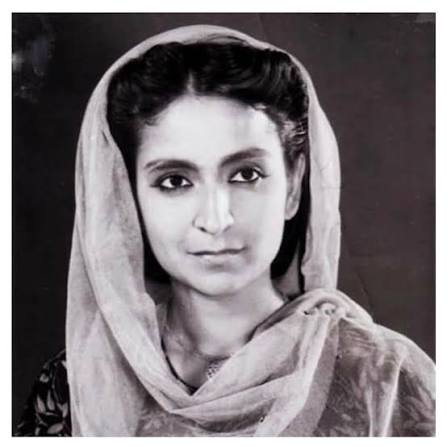
“Through her fearless writings, Amrita Pritam gave voice to the pain of Partition, the struggles of women, and the enduring power of love. Her poetry and prose transformed modern Punjabi literature and earned her a place among India’s greatest literary figures.”
Introduction
Amrita Pritam (1919–2005) was one of the most celebrated poets, novelists, essayists, and memoirists in modern Indian literature. Writing primarily in Punjabi and later in Hindi, she became the first woman to emerge as a major voice in Punjabi literature and one of the foremost literary figures of twentieth-century India.
Renowned for her lyrical poetry, emotionally powerful novels, and deeply personal memoirs, Amrita Pritam explored themes of love, loss, identity, spirituality, women’s rights, and the trauma of the Partition of India. Her works transcended linguistic and national boundaries, resonating with readers across the world.
She was also a fearless advocate for women’s dignity and freedom, challenging traditional social norms through both her writings and her life. Today, she is remembered as one of India’s greatest literary pioneers and a symbol of artistic courage and compassion.
Early Life
Amrita Pritam was born as Amrit Kaur on 31 August 1919 in Gujranwala, Punjab, then part of British India (now in Pakistan).
Her father, Kartar Singh Hitkari, was a scholar, teacher, and Sikh preacher with literary interests. Her mother, Raj Bibi, was a deeply religious woman who died when Amrita was only eleven years old.
The loss of her mother profoundly affected the young Amrita and became one of the formative influences on her emotional and literary development.
Growing up in Lahore, she developed a love for literature at an early age and began writing poetry as a teenager.
Early Literary Career
Amrita published her first collection of poems, Amrit Lehran (Immortal Waves), in 1936, when she was only sixteen years old.
Her early poetry reflected romantic themes and youthful idealism, but her experiences during the turbulent years leading to India’s independence gradually deepened her literary vision.
As her writing matured, she became increasingly concerned with social injustice, gender inequality, and human suffering.
Marriage and Personal Life
At the age of sixteen, she married Pritam Singh, from whom she derived the surname Pritam.
The marriage eventually proved unhappy, and the couple separated in 1960.
Amrita later shared a lifelong companionship with the renowned painter and writer Imroz, whose support and artistic partnership became an important part of her life and creative journey.
She also openly acknowledged her deep emotional bond with the celebrated Urdu poet Sahir Ludhianvi, an attachment that inspired some of her most poignant writings.
Her willingness to write honestly about love, longing, and relationships was considered bold and unconventional for her time.
The Partition of India
The defining event of Amrita Pritam’s life was the Partition of India in 1947.
Like millions of others, she was forced to leave her home in Lahore and migrate to Delhi amid widespread communal violence.
The suffering she witnessed—including massacres, displacement, and the abduction of women—left an indelible mark on her soul and became the central theme of many of her greatest works.
“Ajj Aakhaan Waris Shah Nu”
Soon after Partition, Amrita wrote her most famous poem:
Ajj Aakhaan Waris Shah Nu
(Today I Call Upon Waris Shah)
In this moving elegy, she invokes the eighteenth-century Punjabi poet Waris Shah, author of Heer Ranjha, asking him to rise from his grave and witness the tragedy that had befallen Punjab.
The poem begins:
“Today I call upon Waris Shah—
Speak from your grave,
And open another page
In the book of love.”
The poem mourns not only the suffering of individuals but also the destruction of Punjab’s shared cultural heritage.
It remains one of the most powerful literary responses to the Partition of India.
Major Literary Works
Amrita Pritam wrote more than 100 books, including poetry, novels, autobiographies, essays, and short stories.
Pinjar (The Skeleton)
Published in 1950, Pinjar is widely regarded as her masterpiece.
Set during the Partition, the novel tells the story of Puro, a young Hindu woman abducted by a Muslim man amidst communal violence.
The novel explores:
- Women’s suffering during Partition
- Identity
- Human dignity
- Forgiveness
- Religious conflict
- Gender oppression
Pinjar was later adapted into an acclaimed Hindi film in 2003.
Sunehade
This poetry collection won her the Sahitya Akademi Award in 1956, making her the first woman to receive the prestigious honor for Punjabi literature.
Kagaz Te Canvas
This celebrated poetry collection earned her the Jnanpith Award in 1982, India’s highest literary honor.
The poems reflect maturity, philosophical reflection, and artistic freedom.
Rasidi Ticket (The Revenue Stamp)
Her autobiography, Rasidi Ticket, offers an intimate account of her personal life, literary journey, relationships, and creative philosophy.
The title originated from a remark suggesting that the story of her life could fit on the back of a revenue stamp—a comment she transformed into the title of one of India’s finest literary memoirs.
Themes in Her Writings
Partition and Human Suffering
The trauma of Partition remained the central theme of Amrita Pritam’s work.
She portrayed the emotional and psychological consequences of violence with extraordinary sensitivity.
Women’s Freedom
Amrita challenged patriarchal traditions and advocated women’s independence.
Her female characters often struggle against:
- Social oppression
- Forced marriage
- Domestic violence
- Gender inequality
She believed that women deserved autonomy, dignity, and the freedom to shape their own destinies.
Love
Love occupies a central place in her poetry.
For Amrita, love was not merely romantic but also spiritual, creative, and transformative.
Her writings celebrate love while acknowledging its complexities, joys, and sorrows.
Spirituality
In her later years, Amrita’s writings increasingly explored spirituality, inner peace, and the search for self-realization beyond institutional religion.
Literary Style
Amrita Pritam’s writing is admired for its:
- Emotional honesty
- Lyrical beauty
- Simplicity of language
- Feminine sensitivity
- Symbolic imagery
- Psychological depth
- Courageous self-expression
Her works blend personal experience with universal human concerns, making them accessible and deeply moving.
Contributions to Punjabi Literature
Amrita revolutionized Punjabi literature by introducing modern themes and giving voice to women’s experiences in unprecedented ways.
She helped transform Punjabi poetry from conventional romanticism into a powerful medium for exploring social, political, and psychological realities.
Her influence extended equally to Hindi literature through her numerous translations and original works.
Awards and Honors
Amrita Pritam received numerous prestigious honors during her lifetime, including:
- Sahitya Akademi Award (1956) for Sunehade
- Padma Shri (1969)
- Jnanpith Award (1982)
- Bharatiya Jnanpith Award
- Padma Vibhushan (2004), India’s second-highest civilian award
- Honorary doctorates from several universities
She also received international recognition for her contributions to literature and peace.
Final Years
Amrita continued writing into her later years despite declining health.
She remained active in literary circles and continued to inspire younger generations of writers.
She passed away on 31 October 2005 in New Delhi, at the age of eighty-six.
Her death marked the end of one of the most remarkable literary careers in modern India.
Legacy
Amrita Pritam’s influence extends across literature, feminism, and cultural history.
She is remembered as:
- One of India’s greatest women writers
- A pioneer of modern Punjabi literature
- A leading voice of Partition literature
- A champion of women’s rights
- A poet of universal human emotions
Her works continue to be translated into dozens of languages and studied worldwide.
Lessons from the Life of Amrita Pritam
Amrita Pritam’s life offers enduring lessons:
- Literature can heal the wounds of history by preserving memory and fostering empathy.
- Love, in all its forms, has the power to transform and sustain human life.
- Women deserve freedom, dignity, and equality in every sphere of society.
- Writers have a responsibility to bear witness to injustice and human suffering.
- Personal honesty enriches artistic expression.
- Compassion transcends religious, national, and cultural boundaries.
- Creativity flourishes when one remains true to one’s inner voice.
Conclusion
Amrita Pritam stands among the greatest literary figures of modern India. Through her poetry, novels, memoirs, and essays, she captured the deepest emotions of love, loss, longing, and hope with remarkable honesty and artistic brilliance. Her unforgettable portrayal of the human tragedy of Partition and her fearless advocacy for women’s rights established her as a pioneering voice in Indian literature.
More than a writer, Amrita Pritam was a witness to history, a champion of human dignity, and a seeker of truth. Her timeless works continue to inspire readers across generations, reminding us that literature has the power not only to reflect human experience but also to heal, challenge, and transform society.
Leave a Reply