

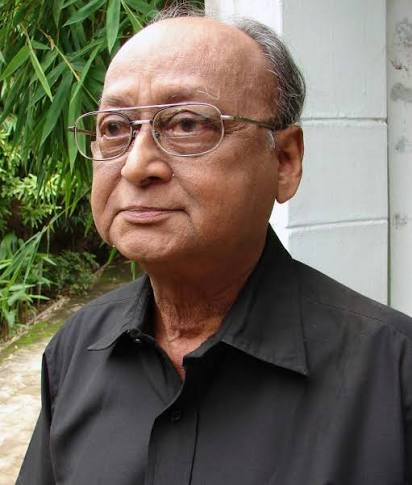
“Through quiet introspection and evocative imagery, Jayanta Mahapatra transformed ordinary moments into profound reflections on history, faith, identity, and the human condition. His poetry established him as one of the finest voices in Indian English literature.”
Introduction
Jayanta Mahapatra (1928–2023) was one of India’s most distinguished poets, essayists, and literary editors. Widely regarded as one of the pioneers of modern Indian English poetry, he became the first Indian English poet to receive the Sahitya Akademi Award, a landmark achievement that brought greater recognition to Indian writing in English.
Known for his subtle imagery, emotional restraint, and meditative style, Mahapatra explored themes of memory, history, loneliness, religion, death, love, nature, and cultural identity. Deeply rooted in the landscape and culture of Odisha, his poetry reflects both regional experiences and universal human concerns.
Over a literary career spanning more than five decades, Jayanta Mahapatra emerged as one of India’s most respected literary voices, earning admiration both within the country and internationally.
Early Life
Jayanta Mahapatra was born on 22 October 1928 in Cuttack, Odisha (then Orissa), British India.
He belonged to a Christian family whose ancestors had converted from Hinduism in the nineteenth century. This unique cultural heritage gave him a distinctive perspective on questions of identity, faith, and tradition, themes that frequently appear in his poetry.
Growing up in Odisha, Mahapatra developed a deep attachment to its rivers, temples, villages, and coastal landscapes. These surroundings later became central images in many of his poems.
Education
Mahapatra completed his education in Cuttack and studied physics, eventually earning a master’s degree in the subject.
Unlike many literary figures, he began his professional life not as a writer but as a scientist and educator.
He served for many years as a Professor of Physics at various colleges in Odisha.
His scientific training influenced his poetry, which is marked by precision, careful observation, and disciplined craftsmanship.
Beginning of His Literary Career
Jayanta Mahapatra began writing poetry relatively late in life.
His first poems appeared in literary journals during the 1960s, and his first collection was published in the early 1970s.
Despite beginning his literary career later than many poets, he quickly established himself through his originality and mature poetic voice.
His poetry avoided rhetorical flourishes and instead emphasized quiet reflection, emotional subtlety, and carefully crafted imagery.
Major Poetry Collections
Close the Sky, Ten by Ten (1971)
Mahapatra’s first major poetry collection introduced readers to his distinctive style.
The poems examine isolation, memory, personal identity, and the relationship between humanity and nature.
Svayamvara and Other Poems (1971)
This collection draws upon Indian mythology and history while exploring contemporary human experiences.
It reflects Mahapatra’s ability to combine ancient cultural symbols with modern psychological insight.
A Rain of Rites (1976)
One of his finest achievements, this collection won the Sahitya Akademi Award in 1981, making Mahapatra the first Indian English poet to receive the prestigious honor.
The poems explore:
- Ritual
- Death
- Religion
- Memory
- Human suffering
- The cultural life of Odisha
Relationship (1980)
Often regarded as his masterpiece, Relationship is a long poetic sequence examining the history, mythology, and spiritual heritage of Odisha.
The work reflects the poet’s deep emotional connection to his homeland.
Life Signs (1983)
This collection meditates on mortality, personal relationships, and the search for meaning in modern life.
Temple
Many of Mahapatra’s later collections continued to explore themes of spirituality, aging, memory, and human resilience with remarkable sensitivity.
Themes in His Poetry
Odisha and Its Cultural Heritage
No Indian English poet is more closely associated with a particular region than Jayanta Mahapatra.
Odisha’s:
- Temples
- Rivers
- Villages
- Festivals
- Seashore
- Rural life
form the emotional landscape of much of his poetry.
His descriptions transform local experiences into reflections on universal human existence.
Memory
Memory is one of Mahapatra’s recurring themes.
His poems often move between past and present, exploring how personal and collective memories shape identity.
Religion and Spirituality
As an Indian Christian deeply immersed in Hindu culture, Mahapatra examined the coexistence of different religious traditions.
His poems rarely present fixed religious answers; instead, they explore spiritual uncertainty, faith, doubt, and the search for transcendence.
Loneliness
Many of Mahapatra’s poems portray quiet solitude rather than dramatic isolation.
His characters often seek meaning in silence, reflection, and ordinary human encounters.
Death
Death appears not merely as an ending but as a natural part of life’s continuing cycle.
His treatment of mortality is philosophical rather than sentimental.
Nature
Nature plays a central role in Mahapatra’s poetry.
Rain, rivers, birds, trees, the sea, and changing seasons become symbols of memory, renewal, and spiritual contemplation.
Literary Style
Jayanta Mahapatra’s poetry is distinguished by:
- Simple yet powerful language
- Rich symbolic imagery
- Quiet emotional intensity
- Free verse
- Reflective tone
- Philosophical depth
- Careful observation
Rather than relying on dramatic statements, he allows images and silence to convey profound meaning.
His poems reward slow and thoughtful reading.
Contributions Beyond Poetry
Apart from writing poetry, Mahapatra made important contributions as:
- Essayist
- Literary critic
- Translator
- Editor
In 1977, he founded the literary magazine Chandrabhaga, which became one of India’s most respected journals devoted to contemporary poetry and literary criticism.
Through this magazine, he encouraged and published numerous young Indian writers.
Awards and Honors
Jayanta Mahapatra received many prestigious honors during his lifetime.
Among them are:
- Sahitya Akademi Award (1981) for Relationship (the award recognized his outstanding contribution during this phase of his work)
- Padma Shri (2009), India’s fourth-highest civilian honor
- Numerous national and international literary awards
- Honorary doctorates from several universities
In 2015, Mahapatra returned the Padma Shri in protest against what he described as growing intolerance and the perceived neglect of writers and intellectuals, making a significant public statement on freedom of expression.
International Recognition
Mahapatra’s poetry has been translated into many languages, including:
- French
- German
- Spanish
- Swedish
- Hindi
- Malayalam
- Bengali
- Odia
His works are taught in universities around the world and have become an important part of postcolonial literary studies.
Final Years
Even in his later years, Mahapatra remained active as a poet, mentor, and public intellectual.
He continued writing, editing, and participating in literary discussions until declining health limited his activities.
Jayanta Mahapatra passed away on 27 August 2023 in Cuttack, Odisha, at the age of ninety-four.
His death marked the end of one of the longest and most distinguished careers in Indian English poetry.
Legacy
Jayanta Mahapatra occupies a unique place in Indian literature.
He is remembered as:
- The first Indian English poet to win the Sahitya Akademi Award
- A master of reflective poetry
- The poetic voice of Odisha
- A distinguished literary editor
- An influential mentor to younger poets
His works continue to inspire readers through their quiet wisdom, emotional honesty, and artistic refinement.
Lessons from the Life of Jayanta Mahapatra
Mahapatra’s life and writings offer enduring lessons:
- Great poetry often arises from careful observation of ordinary life.
- Silence can express truths that words alone cannot.
- Cultural roots enrich universal artistic expression.
- Literature should preserve memory while encouraging reflection.
- Faith and doubt can coexist in the search for meaning.
- Simplicity of language often conveys the deepest emotions.
- Lifelong learning and creativity know no age limits.
Conclusion
Jayanta Mahapatra stands among the foremost figures of modern Indian English literature. Through his reflective, image-rich poetry, he illuminated the landscapes of Odisha while addressing universal questions of memory, faith, identity, mortality, and the human condition. His quiet, contemplative voice offered an alternative to rhetorical poetry, demonstrating that subtlety and silence can possess extraordinary emotional power.
As the first Indian English poet to receive the Sahitya Akademi Award, Mahapatra helped secure the place of Indian English poetry within the broader landscape of Indian literature. His enduring legacy continues to inspire readers and writers alike, reminding us that poetry has the unique ability to transform the ordinary into the timeless and the personal into the universal.
Leave a Reply