

Introduction
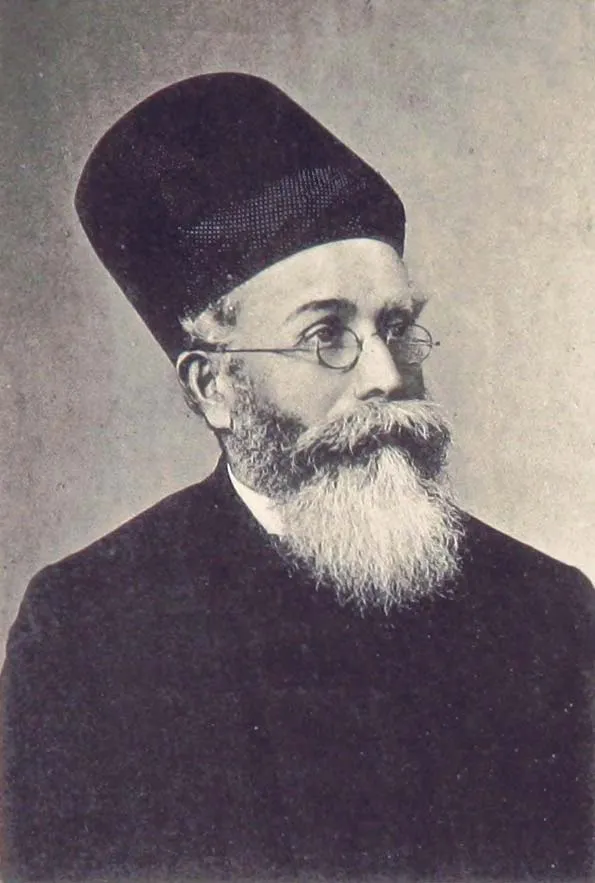
Dadabhai Naoroji was one of the earliest architects of India’s freedom movement and a pioneering voice for Indian rights under British rule. Revered as the “Grand Old Man of India,” he was an eminent political leader, educator, social reformer, economist, and writer. Through his tireless efforts, Naoroji exposed the economic exploitation of India by the British Empire and laid the intellectual foundation for the country’s struggle for self-rule.
His life was devoted to justice, education, equality, and national awakening. Long before the demand for complete independence gained momentum, Naoroji advocated self-government and inspired generations of Indian leaders, including Mahatma Gandhi, Gopal Krishna Gokhale, and Bal Gangadhar Tilak.
Early Life
Dadabhai Naoroji was born on September 4, 1825, in Bombay (now Mumbai) into a middle-class Parsi family. His father, Naoroji Palanji Dordi, died when Dadabhai was only four years old, leaving his mother, Manekbai, to raise him under difficult circumstances.
Despite financial hardships, his mother ensured that he received a good education. Her encouragement and strong moral values played a significant role in shaping his character and commitment to public service.
Education
Naoroji was an outstanding student from an early age. He studied at the prestigious Elphinstone Institution in Bombay, where he excelled in mathematics, philosophy, and languages.
He later became one of the first Indian professors at Elphinstone College, teaching mathematics and natural philosophy. His appointment was a remarkable achievement during a period when senior academic positions were largely reserved for Europeans.
Believing that education was the key to national progress, Naoroji actively promoted modern learning among Indians while encouraging the preservation of India’s rich cultural heritage.
Business Career
In addition to his academic pursuits, Naoroji entered the business world and became associated with Indian commercial enterprises in Britain. His experience in international trade provided him with a deeper understanding of the economic relationship between Britain and India.
Living in England also enabled him to directly engage British politicians, intellectuals, and the public, advocating for India’s interests on an international stage.
Political Awakening
As Naoroji studied India’s economic condition, he became increasingly convinced that British colonial rule was impoverishing the country.
He believed that India’s poverty was not due to a lack of resources or ability but was the direct result of exploitative colonial policies. Instead of relying on emotional arguments, he used statistics, economic analysis, and official government data to support his claims.
His calm reasoning and persuasive arguments earned him widespread respect in both India and Britain.
The Drain Theory
Dadabhai Naoroji is best remembered for formulating the famous “Drain Theory.”
According to this theory, enormous wealth was being transferred annually from India to Britain without adequate economic return. He argued that this “drain of wealth” occurred through:
- Salaries and pensions paid to British officials.
- Profits earned by British companies.
- Military expenditures charged to India.
- Payments for goods and services benefiting Britain.
- Interest on public debt held by British investors.
Naoroji demonstrated that this continuous outflow of wealth prevented India’s economic development and contributed to widespread poverty.
His theory profoundly influenced Indian economic thought and became one of the strongest intellectual arguments against British colonial rule.
“Poverty and Un-British Rule in India”
In 1901, Naoroji published his landmark book, Poverty and Un-British Rule in India.
The book presented detailed statistical evidence showing how British policies were draining India’s resources and creating economic hardship for millions of Indians.
It became one of the most influential political and economic works of the Indian freedom movement and remains an important reference for historians studying colonial economics.
Role in the Indian National Congress
Dadabhai Naoroji was one of the founding leaders of the Indian National Congress (INC), established in 1885.
He served as the President of the Congress three times:
- 1886 (Calcutta)
- 1893 (Lahore)
- 1906 (Calcutta)
During the historic 1906 session, Naoroji openly declared “Swaraj” (self-government) as the ultimate goal of the Congress. This marked a significant turning point in India’s national movement.
First Indian Member of the British Parliament
One of Naoroji’s greatest achievements came in 1892, when he was elected to the British House of Commons as the Liberal Party Member of Parliament for Central Finsbury in London.
He became the first Indian and the first Asian to serve as a Member of the British Parliament.
In Parliament, he tirelessly advocated:
- Greater Indian representation in government.
- Equal opportunities for Indians in the civil services.
- Fair economic policies.
- Administrative reforms.
- Expansion of education.
Although he often faced prejudice and opposition, Naoroji earned admiration for his integrity, eloquence, and commitment to justice.
Social Reformer
Beyond politics, Naoroji was a dedicated social reformer.
He supported:
- Women’s education.
- Social equality.
- Religious tolerance.
- Modern scientific education.
- Educational opportunities for all communities.
As a member of the Parsi community, he also worked to reform social practices within his own community while promoting harmony among India’s diverse religious groups.
Influence on Future Leaders
Dadabhai Naoroji profoundly influenced many of India’s greatest national leaders.
Mahatma Gandhi, who met Naoroji while studying in London, regarded him as a mentor and often referred to him with deep respect.
Leaders such as Gopal Krishna Gokhale, Bal Gangadhar Tilak, Muhammad Ali Jinnah, and many others admired his scholarship, honesty, and patriotism.
His constitutional methods, economic reasoning, and commitment to public service shaped the early course of India’s national movement.
Honors and Recognition
Throughout his life, Dadabhai Naoroji earned numerous honors for his contributions to public life.
He became known throughout India as the “Grand Old Man of India,” a title reflecting his wisdom, integrity, and lifelong service to the nation.
Today, his name is commemorated through educational institutions, roads, public buildings, and memorials across India.
Legacy
Dadabhai Naoroji transformed the Indian freedom movement by introducing economic analysis into political debate. His arguments demonstrated that colonial rule was not only politically unjust but also economically destructive.
His vision of self-government, democratic participation, education, and economic justice inspired generations of freedom fighters.
Even today, his ideas remain relevant in discussions on economic development, public accountability, and national sovereignty.
Lessons from His Life
Dadabhai Naoroji’s life teaches several valuable lessons:
- Education is the foundation of national progress.
- Facts and evidence are powerful tools for achieving justice.
- Peaceful constitutional methods can bring lasting change.
- Economic freedom is essential for political independence.
- Leadership requires integrity, perseverance, and service to others.
Conclusion
Dadabhai Naoroji was much more than a politician; he was the intellectual pioneer of India’s freedom movement. Through his scholarship, public service, and unwavering commitment to justice, he awakened India to the realities of colonial exploitation and inspired the demand for self-rule.
Known as the Grand Old Man of India, Naoroji combined wisdom with courage, reason with patriotism, and scholarship with action. His life remains a shining example of how ideas, integrity, and peaceful advocacy can shape the destiny of a nation. More than a century after his passing, his contributions continue to occupy a place of honor in the history of modern India and its long journey to independence.
Leave a Reply