

Introduction
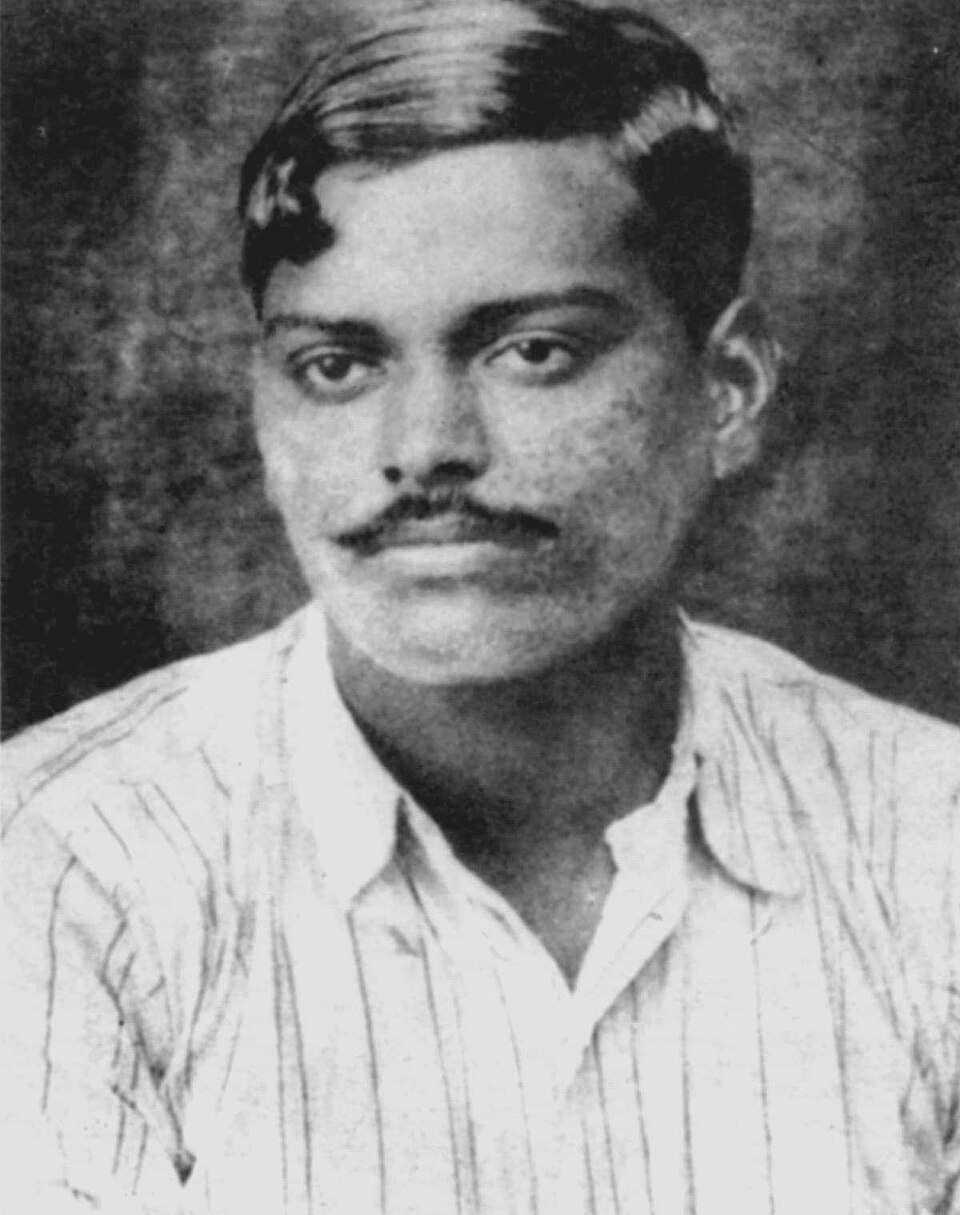
Among the countless heroes who fought for India’s independence, Chandra Shekhar Azad occupies a place of extraordinary honor. A fearless revolutionary, brilliant strategist, and inspiring leader, Azad dedicated his entire life to the struggle against British colonial rule. Known for his unmatched courage and unwavering determination, he vowed that he would never be captured alive by the British—a promise he fulfilled until his last breath.
His life remains a shining example of patriotism, sacrifice, and the relentless pursuit of freedom. Though he died at the young age of 24, his legacy continues to inspire millions of Indians.
Early Life
Chandra Shekhar Azad was born as Chandra Shekhar Tiwari on July 23, 1906, in Bhabra village (now Chandrashekhar Azad Nagar) in the present-day Alirajpur district of Madhya Pradesh. His father, Sitaram Tiwari, and mother, Jagrani Devi, belonged to a modest Brahmin family.
Azad spent his childhood amidst the forests and hills of central India, where he developed remarkable physical strength, courage, and skills in archery and outdoor survival. These early experiences later proved invaluable during his revolutionary activities.
The Birth of “Azad”
The turning point in his life came during Mahatma Gandhi’s Non-Cooperation Movement in 1921. At the age of just fifteen, Chandra Shekhar participated in protests against British rule.
He was arrested and brought before a British magistrate. When questioned, he famously declared:
- Name: Azad (“Free”)
- Father’s Name: Swatantrata (“Freedom”)
- Residence: Jail
The magistrate sentenced him to receive fifteen lashes. Despite the brutal punishment, the young boy shouted “Vande Mataram!” after every lash.
From that day onward, the name “Azad” became his identity, symbolizing his determination never to live as a slave.
Joining the Revolutionary Movement
After the suspension of the Non-Cooperation Movement, many young nationalists became disillusioned with constitutional methods. Chandra Shekhar Azad chose the path of revolutionary action.
He joined the Hindustan Republican Association (HRA), founded by revolutionaries such as Ram Prasad Bismil, Sachindra Nath Sanyal, and Jogesh Chandra Chatterjee. Following the execution of several leaders after the Kakori Conspiracy Case, Azad emerged as one of the organization’s most capable leaders.
Later, the organization was reorganized as the Hindustan Socialist Republican Association (HSRA), with Azad playing a central leadership role.
Leadership and Revolutionary Activities
Azad believed that India’s independence required courage, discipline, and sacrifice. Under his leadership, the HSRA trained young revolutionaries and organized resistance against British rule.
He worked closely with several notable revolutionaries, including:
- Bhagat Singh
- Rajguru
- Sukhdev Thapar
- Batukeshwar Dutt
- Bhagwati Charan Vohra
- Yashpal
Azad became the mentor of many young revolutionaries, encouraging them to combine bravery with careful planning and discipline.
The Kakori Conspiracy
One of the major revolutionary actions associated with Azad was the Kakori Train Robbery of 1925. Members of the HRA seized government funds being transported by train to finance the freedom movement.
Although many revolutionaries involved in the conspiracy were arrested and later executed, Azad successfully escaped capture. His ability to evade the British police earned him legendary status among both revolutionaries and the colonial authorities.
Partnership with Bhagat Singh
Chandra Shekhar Azad and Bhagat Singh formed one of the most influential partnerships in India’s revolutionary history.
After the death of Lala Lajpat Rai, Azad supported Bhagat Singh and his associates in planning the assassination of British police officer John Saunders, whom they held responsible for the fatal lathi charge on Lajpat Rai.
Azad also helped organize safe houses, arranged weapons, and facilitated the escape of fellow revolutionaries following various operations.
His leadership provided stability and direction to the revolutionary movement during a critical period.
Life Underground
For several years, Azad remained one of the British Empire’s most wanted revolutionaries. Despite intensive police efforts, he managed to evade arrest through disguises, constant movement, and a network of trusted supporters.
He frequently changed locations, lived under assumed identities, and continued organizing revolutionary activities while remaining remarkably elusive.
His discipline was legendary. He expected complete commitment from his comrades and never tolerated carelessness that might endanger the movement.
Martyrdom at Alfred Park
On February 27, 1931, acting on information provided by an informer, British police surrounded Chandra Shekhar Azad while he was meeting a fellow revolutionary at Alfred Park in Allahabad (now Chandra Shekhar Azad Park in Prayagraj).
A fierce gun battle followed. Azad single-handedly held off numerous police officers, allowing his companion to escape safely.
When only one bullet remained in his pistol and capture became inevitable, Azad fulfilled his lifelong pledge. Rather than surrender to the British, he used his final bullet on himself.
He died at the age of only twenty-four, remaining “Azad” (free) until the very end.
Ideals and Philosophy
Although remembered for his armed struggle, Azad’s vision extended beyond violent resistance. He dreamed of an India that would be:
- Independent from colonial rule.
- Socially just.
- Economically equitable.
- Free from exploitation and oppression.
- United across religious and regional divisions.
He believed that true freedom required courage, discipline, sacrifice, and national unity.
Famous Quotes
Some of Chandra Shekhar Azad’s most remembered words include:
“Dushman ki goliyon ka hum samna karenge. Azad hi rahe hain, Azad hi rahenge.”
(“We shall face the enemy’s bullets. We have lived free, and we shall remain free.”)
His life itself became the greatest expression of these words.
Legacy
Chandra Shekhar Azad remains one of India’s greatest revolutionary heroes. Numerous institutions, parks, roads, educational establishments, and public memorials across India bear his name.
His birthplace has been renamed Chandrashekhar Azad Nagar, and the park where he attained martyrdom is now known as Chandra Shekhar Azad Park.
His life has inspired countless books, films, documentaries, and plays, and he continues to be celebrated as a symbol of courage, self-sacrifice, and unwavering patriotism.
Lessons from His Life
Chandra Shekhar Azad teaches us several enduring lessons:
- Love for one’s country demands commitment and sacrifice.
- Courage is demonstrated through action, not words.
- Leadership requires discipline, responsibility, and integrity.
- True freedom is achieved through determination and unity.
- Great leaders inspire others through their own example.
Conclusion
Chandra Shekhar Azad’s life was brief but extraordinary. He chose a path filled with hardship, danger, and sacrifice so that future generations could live in freedom. His courage under pressure, steadfast loyalty to his comrades, and refusal to surrender made him one of the most iconic revolutionaries in India’s freedom struggle.
More than nine decades after his martyrdom, Chandra Shekhar Azad continues to symbolize fearless resistance against injustice and unwavering devotion to the nation. His immortal pledge—to live and die as a free man—remains one of the most powerful expressions of patriotism in Indian history.
Leave a Reply