

Introduction
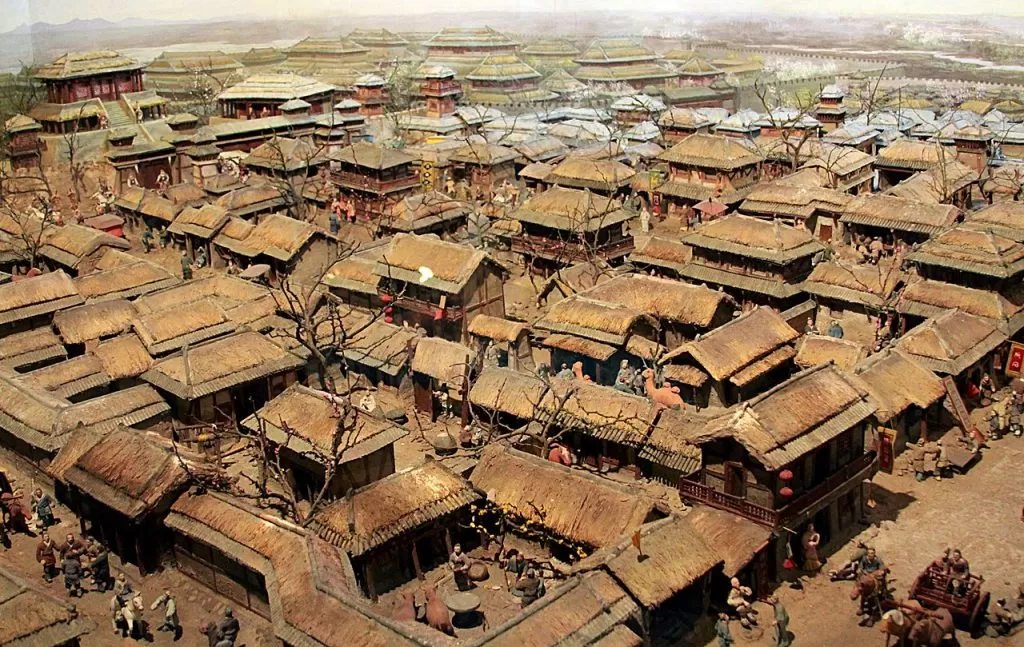
Ancient China was one of the world’s oldest continuous civilizations, known for its dynasties, philosophical traditions, inventions, monumental architecture, and contributions to science, literature, and government. From the Shang Dynasty and the Zhou Dynasty to the Qin unification and the Han Empire, Chinese civilization profoundly influenced East Asia and the wider world.
This collection of 120 general knowledge questions covers Chinese dynasties, emperors, philosophy, inventions, the Great Wall, the Silk Road, religion, culture, warfare, and archaeology. It is suitable for students, competitive examinations, quiz competitions, and history enthusiasts.
Instructions: Attempt all the questions first. The complete answer key is provided at the end.
Section 1: General Knowledge and Early History
- Which ancient civilization developed along the Yellow River in northern China?
- What is another name for the Yellow River?
- Which river is traditionally regarded as one of the cradles of Chinese civilization?
- What is the traditional name of China’s earliest legendary dynasty?
- Which dynasty is traditionally associated with Yu the Great?
- Which was the first Chinese dynasty supported by substantial archaeological evidence?
- Which ancient Chinese dynasty followed the Shang Dynasty?
- What was the main political unit of ancient China during the Zhou period?
- Which dynasty first unified China under a centralized imperial government?
- In which year was China first unified under Qin Shi Huang?
Section 2: Ancient Chinese Dynasties
- Which dynasty is associated with the earliest well-established Chinese writing system?
- What type of objects preserve many Shang Dynasty inscriptions?
- Which dynasty introduced the concept known as the Mandate of Heaven?
- What did the Mandate of Heaven mean?
- Which dynasty ruled China during the period of Confucius?
- What are the two major periods of the Zhou Dynasty?
- Which dynasty reunified China after the long period of division following the Han Dynasty?
- Which dynasty built much of the foundation of China’s imperial examination system?
- Which dynasty is particularly famous for the Terracotta Army?
- Which dynasty followed the Qin Dynasty?
- Which dynasty is associated with the reign of Emperor Wu and the expansion of the empire?
- Which dynasty is traditionally divided into Western Han and Eastern Han?
- Which dynasty ruled China during the lives of Confucius and Laozi, according to traditional chronology?
- Which dynasty was known for major developments in poetry, painting, and international trade during the early medieval period?
- Which dynasty ruled China immediately before the Yuan Dynasty?
Section 3: Famous Emperors and Leaders
- Who was the first emperor of a unified China?
- What was the original name of Qin Shi Huang?
- Which emperor ordered the construction of a famous underground army of terracotta warriors?
- Who was the founder of the Han Dynasty?
- Which Han emperor greatly expanded China’s influence into Central Asia?
- Which Chinese general and diplomat is traditionally associated with opening diplomatic routes toward Central Asia during the Han Dynasty?
- Who was the famous Han Dynasty historian who wrote Records of the Grand Historian?
- Which emperor is associated with the promotion of Confucian learning during the Han Dynasty?
- Who founded the Sui Dynasty?
- Which Tang emperor was associated with the early expansion and consolidation of the Tang Empire?
- Who was Wu Zetian?
- What distinction did Wu Zetian hold in Chinese imperial history?
- Which Tang emperor’s reign was disrupted by the An Lushan Rebellion?
- Who was the Mongol ruler who founded the Yuan Dynasty in China?
- Which dynasty overthrew the Mongol-led Yuan Dynasty?
Section 4: The Great Wall and Ancient Architecture
- What is the famous defensive structure built across parts of northern China called?
- What was one major purpose of the Great Wall?
- Which emperor connected and expanded earlier defensive walls on a large scale?
- Was the Great Wall built entirely during the reign of Qin Shi Huang?
- Which Chinese dynasty constructed many sections of the Great Wall that survive today?
- What was the Forbidden City?
- In which city is the Forbidden City located?
- Which dynasty began the construction of the Forbidden City?
- What was the primary function of the Forbidden City?
- What is the traditional name of the ancient Chinese architectural complex associated with imperial ceremonies and sacrifices to Heaven in Beijing?
- What was the principal building material for many traditional Chinese structures?
- What is the name of the famous terraced imperial burial complex associated with Qin Shi Huang?
- Which ancient Chinese structure is especially famous for its enormous defensive walls and watchtowers?
- What was the purpose of watchtowers along the Great Wall?
- What does the design of ancient Chinese palaces reveal about imperial society?
Section 5: Chinese Philosophy and Religion
- Who founded the philosophical tradition known as Confucianism?
- What was the personal name of Confucius?
- What is the central importance of filial piety in Confucian thought?
- Which book records many sayings and conversations of Confucius and his disciples?
- Who is traditionally regarded as the founder of Daoism?
- Which classic text is traditionally attributed to Laozi?
- What does the Chinese concept of Dao generally mean?
- Which Chinese philosophical school emphasized strict laws and strong state authority?
- Which philosopher is most closely associated with the development of Legalist thought?
- Who was Mozi?
- What principle did Mohism emphasize?
- Which Indian religious tradition entered China and became influential during the Han and later dynasties?
- Which Buddhist figure is commonly associated with compassion in Chinese Buddhism?
- What is ancestor veneration?
- What role did Confucianism play in traditional Chinese government?
Section 6: Inventions, Science and Technology
- Which ancient civilization is credited with the invention of paper?
- Which Han Dynasty official is traditionally credited with improving the papermaking process?
- Which four inventions are traditionally called the Four Great Inventions of ancient China?
- What was the primary military use of gunpowder in its early development?
- Which invention helped sailors determine direction?
- What was the main use of the ancient Chinese seismometer associated with Zhang Heng?
- Who was Zhang Heng?
- Which ancient Chinese mathematician wrote a famous mathematical work known as The Nine Chapters on the Mathematical Art?
- Which Chinese mathematician is famous for a theorem concerning right-angled triangles, often called the Gougu theorem in China?
- What was the purpose of ancient Chinese astronomical observations?
- Which Chinese invention helped reproduce text and images on paper using carved surfaces?
- What is movable-type printing?
- Which dynasty saw the development of early paper money on a significant scale?
- What was silk primarily made from?
- Which ancient Chinese technology helped improve agricultural productivity through iron tools?
Section 7: The Silk Road and Trade
- What was the Silk Road?
- Which Han Dynasty emperor helped expand China’s connections with Central Asia?
- Which luxury textile gave the Silk Road its name?
- Which region was an important source of horses for ancient Chinese trade and diplomacy?
- Which major desert presented a challenge to travelers on Silk Road routes?
- Which Central Asian city became an important centre of Silk Road commerce and cultural exchange?
- Which ancient empire controlled much of Persia and neighboring territories during part of the Silk Road’s development?
- Which religion spread into China partly through Silk Road connections?
- What kinds of goods besides silk traveled along Silk Road routes?
- How did Silk Road trade affect ancient Chinese culture?
- What was the importance of Zhang Qian’s journeys?
- Did the Silk Road consist of one single road?
- Which sea route connected southern China with Southeast Asia, India, and beyond?
- Why were camels useful for some overland Silk Road journeys?
- What was one major consequence of Silk Road trade for Eurasian societies?
Section 8: Culture, Literature and Daily Life
- Which Chinese classic is attributed to Sun Tzu?
- What is the main subject of The Art of War?
- Which Chinese classic is a collection of historical speeches, documents, and traditions?
- What was the purpose of calligraphy in traditional Chinese culture?
- Which material was widely used for early Chinese writing before paper became common?
- What was oracle-bone writing?
- Which traditional Chinese garment is associated with a long history of Chinese clothing culture and is often worn in modern formal or cultural settings?
- Which crop was a major staple in northern China?
- Which crop became especially important in southern China?
- What was the purpose of ancestral temples in traditional Chinese society?
- Which Chinese art form uses brush, ink, and paper or silk to create written characters?
- What was the importance of jade in ancient Chinese culture?
- Which traditional Chinese instrument has a long history and is played by plucking strings?
- What was the role of scholars in imperial Chinese society?
- Which Chinese literary classic describes the adventures of the monk Xuanzang and his companions in a fantastical retelling?
Section 9: Warfare, Government and Society
- What was the main purpose of the Terracotta Army?
- What is the traditional name of the ancient Chinese military strategy text associated with Sun Tzu?
- What was the civil service examination system designed to assess?
- What was the Mandate of Heaven used to justify?
- What was one major contribution of ancient China to world civilization?
Answer Key: 120 GK Questions About Ancient China
Answers 1–20
- Ancient Chinese civilization.
- Huang He.
- The Yellow River; the Yangtze River was also a major centre of early Chinese civilization.
- The Xia Dynasty.
- The Xia Dynasty.
- The Shang Dynasty.
- The Zhou Dynasty.
- A network of states under the authority of the Zhou king.
- The Qin Dynasty.
- 221 BCE.
- The Shang Dynasty.
- Oracle bones and bronze vessels.
- The Zhou Dynasty.
- The belief that Heaven granted rulers the right to govern, which could be withdrawn if they ruled unjustly.
- The Zhou Dynasty.
- Western Zhou and Eastern Zhou.
- The Sui Dynasty.
- The Sui Dynasty is associated with early development of imperial examinations; the system expanded under later dynasties.
- The Qin Dynasty.
- The Han Dynasty.
Answers 21–40
- The Han Dynasty.
- The Han Dynasty.
- The Zhou Dynasty.
- The Tang Dynasty.
- The Song Dynasty.
- Qin Shi Huang.
- Ying Zheng.
- Qin Shi Huang.
- Liu Bang, also known as Emperor Gaozu of Han.
- Emperor Wu of Han.
- Zhang Qian.
- Sima Qian.
- Emperor Wu of Han.
- Emperor Wen of Sui, Yang Jian.
- Emperor Taizong of Tang.
- A Chinese ruler who rose to power during the Tang period.
- She was the only woman in Chinese history to rule as emperor in her own name.
- Emperor Xuanzong of Tang.
- Kublai Khan.
- The Ming Dynasty.
Answers 41–60
- The Great Wall of China.
- To help defend northern territories against raids and invasions.
- Qin Shi Huang.
- No. It was built, rebuilt, and extended over many centuries.
- The Ming Dynasty.
- The imperial palace complex of China’s emperors.
- Beijing.
- The Ming Dynasty.
- It served as the imperial residence and the centre of government and court ceremonies.
- The Temple of Heaven.
- Timber, often combined with brick, stone, and other materials.
- The Mausoleum of Qin Shi Huang.
- The Great Wall of China.
- Surveillance, warning signals, and defensive coordination.
- It reflects hierarchy, ceremonial order, and the authority of the emperor.
- Confucius.
- Kong Qiu.
- Respect, care, and duty toward parents and ancestors.
- The Analects.
- Laozi, according to traditional attribution.
- The Dao De Jing.
- The Way, path, or underlying principle of the universe.
- Legalism.
- Han Fei.
- A Chinese philosopher and founder of Mohism.
- Impartial care, practical benefit, and opposition to wasteful aggression.
- Buddhism.
- Guanyin.
- Respecting and honouring deceased family members and ancestors.
- It influenced education, official ethics, social relationships, and government ideals.
Answers 61–80
- China.
- Cai Lun.
- Papermaking, printing, gunpowder, and the compass.
- Military applications, including incendiary weapons and early explosives.
- The compass.
- To detect and indicate distant earthquakes.
- A Han Dynasty polymath, astronomer, mathematician, and inventor.
- The authors of The Nine Chapters on the Mathematical Art are unknown; the work developed over time.
- The theorem is associated with ancient Chinese mathematical traditions; it does not have a single securely established inventor.
- Calendar-making, timekeeping, seasonal prediction, and observation of celestial events.
- Woodblock printing.
- Printing using individual reusable characters or pieces of type.
- The Song Dynasty.
- Fibres produced by silkworms.
- Iron ploughshares and other iron agricultural tools.
Answers 81–100
- Woodblock printing.
- A method of printing with separate movable characters.
- The Song Dynasty.
- Silkworm cocoons.
- Iron tools and improved agricultural implements.
- A network of trade routes linking China with Central Asia, western Asia, and parts of Europe.
- Emperor Wu of Han.
- Silk.
- Central Asia.
- The Taklamakan Desert.
- Samarkand.
- The Persian empires, including the Parthian Empire during part of this period.
- Buddhism.
- Spices, horses, glassware, metals, textiles, and other commodities.
- It encouraged the exchange of religions, technologies, art, ideas, and customs.
- His missions expanded Chinese knowledge of and diplomatic connections with Central Asia.
- No; it was a network of interconnected land and maritime routes.
- The Maritime Silk Road.
- They could travel long distances through arid regions while carrying substantial loads.
- Greater commercial and cultural connections across Eurasia.
Answers 101–120
- The Art of War.
- Military strategy, planning, leadership, and warfare.
- The Book of Documents, also known as the Shangshu.
- Artistic expression, communication, scholarship, and cultural refinement.
- Bamboo strips, wooden tablets, and silk.
- Inscriptions carved on animal bones and turtle shells, often used for divination.
- Hanfu is a traditional style of Chinese clothing; other historical garments also existed.
- Millet and wheat.
- Rice.
- Honouring ancestors and maintaining family and community traditions.
- Chinese calligraphy.
- Jade symbolized values such as virtue, status, beauty, and ritual significance.
- The guqin.
- They served as scholars, teachers, administrators, and government officials.
- Journey to the West.
- To guard Qin Shi Huang in the afterlife, according to the funerary interpretation.
- The Art of War.
- Candidates’ knowledge and abilities, especially in classical learning and government service, depending on the period.
- The legitimacy of a ruler or dynasty and the removal of that legitimacy when a ruler was deemed unjust.
- Papermaking, printing, the compass, gunpowder, major philosophical traditions, and advances in government and science.
Conclusion
Ancient China made remarkable contributions to human civilization through its inventions, philosophy, literature, architecture, agriculture, and systems of government. The Qin unification transformed the political landscape, the Han Dynasty expanded international connections, and later dynasties developed Chinese culture and technology further.
Studying ancient China helps us understand not only the origins of one of the world’s great civilizations but also the development of trade networks, scientific knowledge, and philosophical ideas that continue to influence the modern world.
Educational note: Some details of China’s earliest history, including the chronology of the Xia Dynasty and the traditional attribution of certain inventions and philosophical works, remain subjects of scholarly discussion. The answers above distinguish established historical evidence from traditional accounts where appropriate.
Leave a Reply