

Introduction
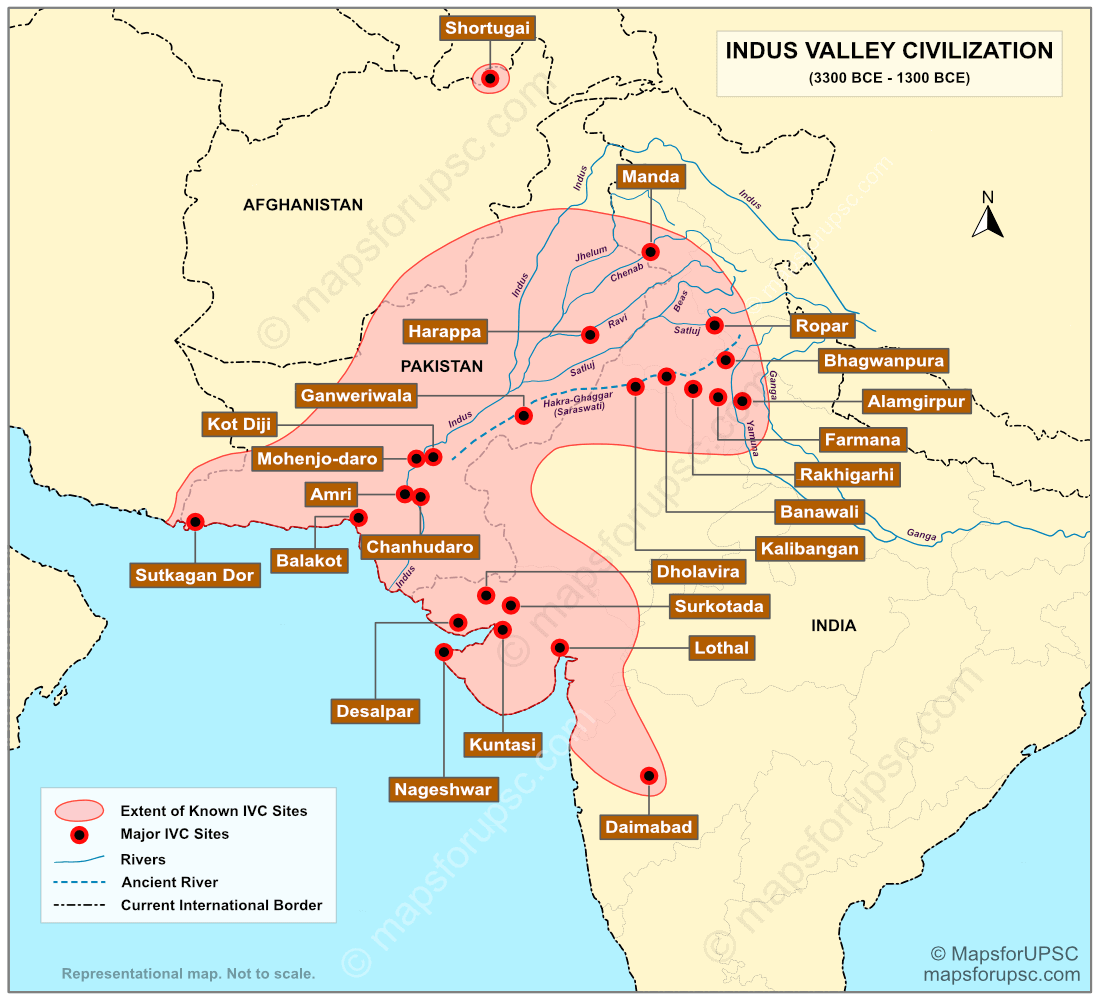
The Indus Valley Civilization, also known as the Harappan Civilization, was one of the world’s earliest urban civilizations. It flourished in parts of present-day Pakistan and northwestern India, with its mature urban phase generally dated to approximately 2600–1900 BCE. It was known for its planned cities, advanced drainage systems, standardized weights, craft production, and long-distance trade.
This collection of 120 general knowledge questions covers important archaeological sites, city planning, economy, agriculture, trade, religion, art, script, and the decline of the civilization. It is suitable for students, competitive examination preparation, quiz competitions, and history enthusiasts.
Instructions: Try answering all the questions before checking the answer key at the end.
Section 1: General Knowledge and History
- What is another name for the Indus Valley Civilization?
- Which ancient civilization is associated with the city of Harappa?
- Around which year did the Mature Harappan phase begin?
- Between which approximate years did the Mature Harappan phase flourish?
- Which two modern countries contain the largest concentration of known Harappan sites?
- Which river gave the civilization its commonly used name?
- What is the archaeological term for the main urban phase of this civilization?
- Which civilization was contemporary with the Indus Valley Civilization in Mesopotamia?
- What is the approximate period of the Early Harappan phase?
- What is the approximate period of the Late Harappan phase?
Section 2: Important Archaeological Sites
- Which archaeological site gave the Harappan Civilization its name?
- In which present-day country is Harappa located?
- Who led the excavations at Harappa in 1921?
- Which ancient city was excavated by R. D. Banerji in 1922?
- In which present-day country is Mohenjo-daro located?
- What does the name Mohenjo-daro commonly mean?
- Which Harappan site is famous for its Great Bath?
- Which Harappan site is located in Gujarat and is famous for its water-management system?
- Which Harappan site is associated with evidence of a possible ancient dockyard?
- In which Indian state is Dholavira located?
- Which Harappan site is famous for its large signboard-like arrangement of ten signs?
- Which Harappan site is located in Haryana and is one of the largest known Harappan urban settlements in India?
- Which Harappan site in Haryana is known for its extensive craft production and urban remains?
- Which Harappan site in Rajasthan is associated with evidence of an ancient ploughed field?
- Which Harappan site in Rajasthan is particularly associated with evidence of fire altars?
- Which Harappan site in Gujarat is associated with shell-working and bead production?
- Which Harappan site in Jammu and Kashmir is located near the Chenab River region?
- Which site in Pakistan’s Balochistan region is associated with an important early farming settlement?
- Which Harappan site in Punjab, India, is known for its cemetery and other Harappan remains?
- Which Harappan site is associated with a large reservoir and an elaborate system of water conservation?
Section 3: City Planning and Architecture
- What was a major feature of Harappan city planning?
- What material was commonly used to construct the walls of Harappan buildings?
- What type of drainage system was common in many Harappan cities?
- How were many Harappan streets arranged in relation to one another?
- What was the main purpose of the Great Bath at Mohenjo-daro?
- What were the two broad sectors often identified in many Harappan cities?
- What type of structures were commonly found in residential areas?
- What was a notable feature of many Harappan houses?
- What construction feature helped Harappan cities maintain organized drainage?
- What does the careful standardization of bricks suggest about Harappan society?
- Which famous structure at Mohenjo-daro was a large rectangular tank with steps?
- What were wells used for in Harappan cities?
- What is the general archaeological interpretation of the raised, often fortified sector of a Harappan city?
- Did all Harappan settlements have the same urban layout?
- What does the presence of public structures and organized streets indicate about Harappan urban life?
Section 4: Economy, Agriculture and Trade
- Which crop was an important staple of the Harappan economy?
- Which fibre crop is associated with early cultivation in the Indus region?
- Which animal was widely domesticated by Harappan communities?
- Which animal appears prominently on many Harappan seals and is often called the unicorn motif?
- What evidence indicates that Harappans engaged in long-distance trade?
- Which ancient Mesopotamian region referred to in cuneiform sources is often associated with trade connections to the Indus region?
- What were standardized weights primarily used for?
- Which craft was especially developed at Chanhudaro?
- Which material was widely used to make Harappan beads?
- What was an important use of cotton in Harappan society?
- Which metal was commonly used for tools and implements?
- Which alloy of copper and tin was used to make some Harappan objects?
- Which agricultural activity is supported by evidence from Kalibangan?
- What role did rivers play in the Harappan economy?
- What does the discovery of seals and weights at different sites suggest about trade?
- Which type of craft object was produced from carnelian?
- What was one important source of raw materials for Harappan craft production?
- What was the principal means of transporting goods overland?
- What evidence suggests that Harappans had maritime trading connections?
- Which ancient civilization had trade links with the Indus Valley Civilization and was located in present-day Iraq?
Section 5: Art, Crafts and Technology
- Which famous bronze sculpture from Mohenjo-daro depicts a young female figure?
- What technique was used to create the famous bronze Dancing Girl?
- Which stone material was used to make the famous sculpture often called the Priest-King?
- What was a common function of Harappan seals?
- What animal motif appears frequently on Harappan seals?
- Which material was commonly used to make Harappan pottery?
- What colours were commonly used to decorate Harappan pottery?
- Which small objects were often made from steatite?
- What do Harappan terracotta figurines provide evidence about?
- Which craft involved shaping, drilling, and polishing small ornamental stones?
- What does the standardization of weights reveal about Harappan technology and administration?
- What was the lost-wax casting technique used to produce?
- What types of objects were made from shell?
- What does the presence of finely crafted ornaments suggest about Harappan society?
- What was one important technological achievement of Harappan cities?
Section 6: Religion, Society and Daily Life
- What is the name commonly given to a famous seal depicting a seated figure surrounded by animals?
- Why is the religious interpretation of the so-called Pashupati seal debated?
- What do terracotta figurines sometimes interpreted as mother goddesses tell us about Harappan beliefs?
- What evidence suggests that bathing may have had social or ritual importance?
- What can burial practices reveal about Harappan society?
- Did archaeologists discover definitive evidence of large monumental temples in the Harappan cities?
- What can the variety of ornaments tell us about Harappan craftsmanship?
- Which domestic animal provided milk and other useful products to Harappan communities?
- What can toys made of terracotta tell us about everyday life?
- Why is it difficult to identify the exact political system of the Harappan Civilization?
Section 7: Harappan Script and Administration
- What type of writing system did the Harappans use?
- Has the Harappan script been conclusively deciphered?
- On what objects are many Harappan inscriptions found?
- In which direction are many Harappan inscriptions generally thought to have been written?
- Approximately how many basic signs are often identified in the Harappan script, depending on classification?
- Why is the short length of many Harappan inscriptions a challenge for decipherment?
- What might the use of seals and standardized weights indicate about administration?
- What language did the Harappans speak?
- Why is the relationship between Harappan signs and modern Indian scripts uncertain?
- What is the main obstacle to confidently translating Harappan inscriptions?
Section 8: Decline and Legacy
- Around which period did the Mature Harappan urban system begin to decline?
- Did the decline of the Harappan Civilization occur suddenly everywhere?
- Which environmental factor may have contributed to changes in some Harappan settlements?
- How may changes in river systems have affected Harappan communities?
- What does the shift from large cities to smaller settlements suggest?
- Is there a single universally accepted explanation for the decline of the Harappan Civilization?
- What happened to many Harappan urban centres during the Late Harappan phase?
- Why is the older theory of a single invasion causing the civilization’s collapse treated cautiously by many scholars?
- What does the continued existence of regional cultural traditions suggest about the Harappan legacy?
- Why is the Harappan Civilization important in the history of South Asia?
Section 9: Advanced and Exam-Oriented Questions
- Which archaeological site is famous for its water reservoirs and sophisticated water conservation?
- Which Harappan site is located in the Rann of Kutch region?
- Which site provides important evidence for early agricultural activity in the Indus region?
- What was the significance of the discovery of the Dancing Girl sculpture?
- What is the archaeological significance of the Great Bath?
- Why are Harappan weights important to historians?
- What does the distribution of Harappan seals suggest about commercial activity?
- Which ancient source mentions a land called Meluhha, often identified with the Indus region?
- What is one major difference between Harappan urban remains and the monumental architecture of ancient Egypt?
- What is the most important reason the Harappan script remains undeciphered?
Answer Key: 120 GK Questions About the Indus Valley Civilization
Answers 1–20
- Harappan Civilization.
- The Indus Valley Civilization.
- Around 2600 BCE.
- Approximately 2600–1900 BCE.
- Pakistan and India.
- The Indus River.
- The Mature Harappan phase.
- The Mesopotamian Civilization.
- Approximately 3300–2600 BCE, although dates vary by region.
- Approximately 1900–1300 BCE, with regional variation.
- Harappa.
- Pakistan.
- Daya Ram Sahni.
- Mohenjo-daro.
- Pakistan.
- “Mound of the Dead.”
- Mohenjo-daro.
- Dholavira.
- Lothal, traditionally interpreted as having a dockyard; this interpretation remains debated.
- Gujarat.
Answers 21–40
- Dholavira.
- Rakhigarhi.
- Rakhigarhi.
- Kalibangan.
- Kalibangan.
- Nageshwar is particularly known for shell-working; Lothal is also famous for bead production.
- Akhnoor is associated with ancient archaeological remains in the Chenab region, although its identification as a major Harappan site is not straightforward.
- Mehrgarh.
- Ropar (Rupnagar).
- Dholavira.
- Planned streets, organized neighbourhoods, and drainage systems.
- Baked bricks and mud bricks.
- Covered or carefully constructed drains.
- Often in a roughly grid-like pattern.
- Its exact purpose is unknown, but ritual bathing is a common interpretation.
- A raised citadel sector and a lower town, although layouts varied.
- Houses, courtyards, storage areas, and domestic facilities.
- Courtyards and access to wells or bathing areas in many houses.
- Drains connected to household wastewater outlets.
- Shared construction standards and organized production.
- The Great Bath.
- To obtain water for domestic and other uses.
- It may have housed important public, administrative, or communal structures.
- No; layouts differed by settlement and period.
- Organized urban planning and coordinated community activity.
Answers 41–60
- The Great Bath.
- Water supply.
- A potentially important public or administrative sector.
- No.
- Organized urban life and community planning.
- Wheat and barley.
- Cotton.
- Cattle.
- The so-called unicorn.
- Seals, weights, artefacts, and evidence of connections with distant regions.
- Dilmun was an important Gulf trading intermediary; Meluhha is commonly associated with the Indus region.
- Measuring goods and facilitating trade.
- Bead-making and other crafts.
- Carnelian, agate, and other semi-precious stones.
- Producing textiles and clothing.
- Copper.
- Bronze.
- Ploughed-field agriculture.
- Water supply, agriculture, transport, and settlement development.
- Trade networks and shared commercial practices.
- Beads and ornaments.
- Minerals, stones, shells, and metals obtained locally or through trade.
- Carts and pack animals.
- Coastal settlements, marine materials, and connections with Gulf trading networks.
- Mesopotamian Civilization.
Answers 61–80
- Beads.
- Stones, metals, shells, and other raw materials.
- Bullock carts and other land transport.
- Coastal sites and evidence of exchange with regions around the Persian Gulf.
- Mesopotamia.
- The Dancing Girl.
- Lost-wax casting.
- Steatite.
- Trade, identification, and possibly administrative purposes.
- The unicorn motif, along with bulls and other animals.
- Clay.
- Red and black.
- Seals.
- Crafts, domestic life, and possibly religious beliefs.
- Bead-making.
- Standardized measurement and organized commercial practices.
- Bronze and other metal objects.
- Bangles, beads, inlays, and decorative objects.
- Skilled artisanship and demand for personal adornment.
- Advanced urban drainage and water-management systems.
Answers 81–100
- The Pashupati seal.
- The figure’s identity and religious meaning are uncertain.
- They provide possible evidence of beliefs involving fertility or female figures, but interpretations remain debated.
- The Great Bath and bathing facilities in houses.
- Burial customs, treatment of the dead, and possible social differences.
- No definitive, universally accepted examples of large temples have been identified.
- Advanced craft skills and personal adornment traditions.
- Cattle.
- Children’s play, domestic activities, and everyday culture.
- The script is undeciphered, and clear written records of rulers or government have not been identified.
- A still-undeciphered system of signs.
- No.
- Seals, pottery, tablets, and small objects.
- Often right to left, though writing direction can vary or be uncertain in individual cases.
- Roughly 400–600 signs or sign variants, depending on classification.
- Most inscriptions are very short and provide limited linguistic context.
- Organized trade and some degree of standardization or administrative coordination.
- Unknown; several hypotheses have been proposed, but none is conclusively established.
- The script has not been deciphered, and a secure linguistic connection has not been demonstrated.
- The absence of a confirmed bilingual inscription and the lack of agreement about the underlying language.
Answers 101–120
- Around 1900 BCE.
- No; changes occurred at different times and in different regions.
- Climate change, including shifts in monsoon patterns.
- They may have reduced water availability or changed agricultural opportunities and settlement patterns.
- Urban decline and a transition toward more dispersed settlements.
- No; multiple interacting factors are considered likely.
- Many declined or were abandoned, while other settlements continued in altered forms.
- Archaeological evidence does not support a simple, single invasion as a sufficient explanation for the civilization’s decline.
- Regional cultural practices continued and transformed over time.
- It was one of the earliest major urban civilizations of South Asia.
- Dholavira.
- Dholavira.
- Mehrgarh, an earlier farming settlement in the broader region.
- It demonstrates sophisticated metalworking and artistic skill.
- It provides evidence of advanced public architecture and possibly ritual bathing.
- They reveal standardized measurement and commercial organization.
- Connections between settlements and wider trading networks.
- Mesopotamian cuneiform texts.
- Harappan cities are noted especially for urban planning and drainage, whereas Egypt is particularly famous for pyramids and royal monumental tombs.
- The script is short, undeciphered, and lacks a confirmed bilingual text or securely identified language.
Conclusion
The Indus Valley Civilization remains one of the most fascinating chapters in ancient history. Its carefully planned cities, impressive water-management systems, skilled artisans, and extensive trade networks demonstrate a sophisticated urban culture. Although many questions about its script, government, and religious beliefs remain unanswered, ongoing archaeological research continues to reveal new insights.
Public knowledge note: These questions are intended for educational use. Some archaeological interpretations—including the purpose of Lothal’s structure, the meaning of the Pashupati seal, and the causes of urban decline—remain debated among scholars.
Leave a Reply