

Introduction
World War I, also known as the First World War or the Great War, was one of the most significant conflicts in modern history. It lasted from 1914 to 1918 and involved major powers from Europe, Asia, Africa, and other parts of the world. The war was fought mainly between the Allied Powers and the Central Powers.
The assassination of Archduke Franz Ferdinand of Austria-Hungary in June 1914 triggered a chain of events that led to the outbreak of war. The conflict introduced new forms of warfare, including tanks, chemical weapons, military aircraft, and extensive trench warfare. It resulted in millions of military and civilian deaths and reshaped the political map of the world.
Test your knowledge with these 120 general knowledge questions about World War I. The questions cover important events, leaders, battles, weapons, treaties, and the consequences of the war. The complete answer key is provided at the end.
Section 1: General Knowledge About World War I
- In which year did World War I begin?
- In which year did World War I end?
- What is another name for World War I?
- Which event triggered the outbreak of World War I?
- On what date was Archduke Franz Ferdinand assassinated?
- In which city was Archduke Franz Ferdinand assassinated?
- To which country did Archduke Franz Ferdinand belong?
- What was the name of the assassin who killed Archduke Franz Ferdinand?
- Which organization was associated with the assassin Gavrilo Princip?
- Which country declared war on Serbia in July 1914?
Section 2: Causes of the War
- What does the acronym MAIN represent in explanations of the causes of World War I?
- Which European policy involved building up armed forces and weapons before the war?
- What is the term for extreme loyalty to one’s nation that contributed to international tensions before the war?
- Which two European countries competed intensely for colonial possessions before World War I?
- Which country was Austria-Hungary particularly concerned about as a rival in the Balkans?
- What was the name of the alliance between Germany, Austria-Hungary, and Italy formed before the war?
- Which two countries formed the core of the Franco-Russian Alliance?
- Which agreement brought Britain, France, and Russia together in the years before the war?
- What was the name of the region in southeastern Europe that experienced intense nationalist tensions before the war?
- Which country invaded Belgium in August 1914?
Section 3: Allied Powers and Central Powers
- Which country was the principal leader of the Allied Powers during World War I?
- Which country was the principal leader of the Central Powers in Europe?
- Name the four major European powers that fought as the Central Powers.
- Which country joined the Allied Powers in 1914 after initially remaining neutral?
- In which year did the Ottoman Empire enter World War I?
- Which country joined the Central Powers in 1915?
- Which country joined the Allied Powers in 1915 after being neutral at the beginning of the war?
- Which country entered the war on the Allied side in 1916?
- Which major power entered World War I in 1917 on the Allied side?
- Which country withdrew from World War I following the Bolshevik Revolution?
Section 4: Important Leaders and Personalities
- Who was the German emperor during most of World War I?
- Who was the British monarch during World War I?
- Who was the president of the United States when it entered World War I?
- Who was the French president during World War I?
- Who was the Russian emperor at the beginning of World War I?
- Who was the British prime minister when the war began in 1914?
- Who was the British prime minister at the end of World War I?
- Who was the French military commander associated with the Allied victory at the First Battle of the Marne?
- Which German military leader became famous for his role on the Eastern Front and later served as Germany’s president?
- Who was the Italian general who led the Italian army at the Battle of Caporetto before being replaced?
Section 5: Major Battles of World War I
- In which year was the First Battle of the Marne fought?
- Which battle in 1914 helped prevent Germany from capturing Paris?
- Which major battle began in February 1916 and lasted until December 1916?
- Which battle in 1916 became a symbol of the enormous casualties suffered during World War I?
- In which country was the Battle of Gallipoli fought?
- Which two major Allied powers led the Gallipoli campaign?
- What was the main strategic objective of the Gallipoli campaign?
- Which battle in 1917 was a major Allied offensive on the Western Front and is associated with Canadian forces capturing Vimy Ridge?
- Which 1917 battle on the Eastern Front was fought near the town of Riga?
- Which 1917 battle is also known as the Third Battle of Ypres?
Section 6: Trench Warfare and Military Technology
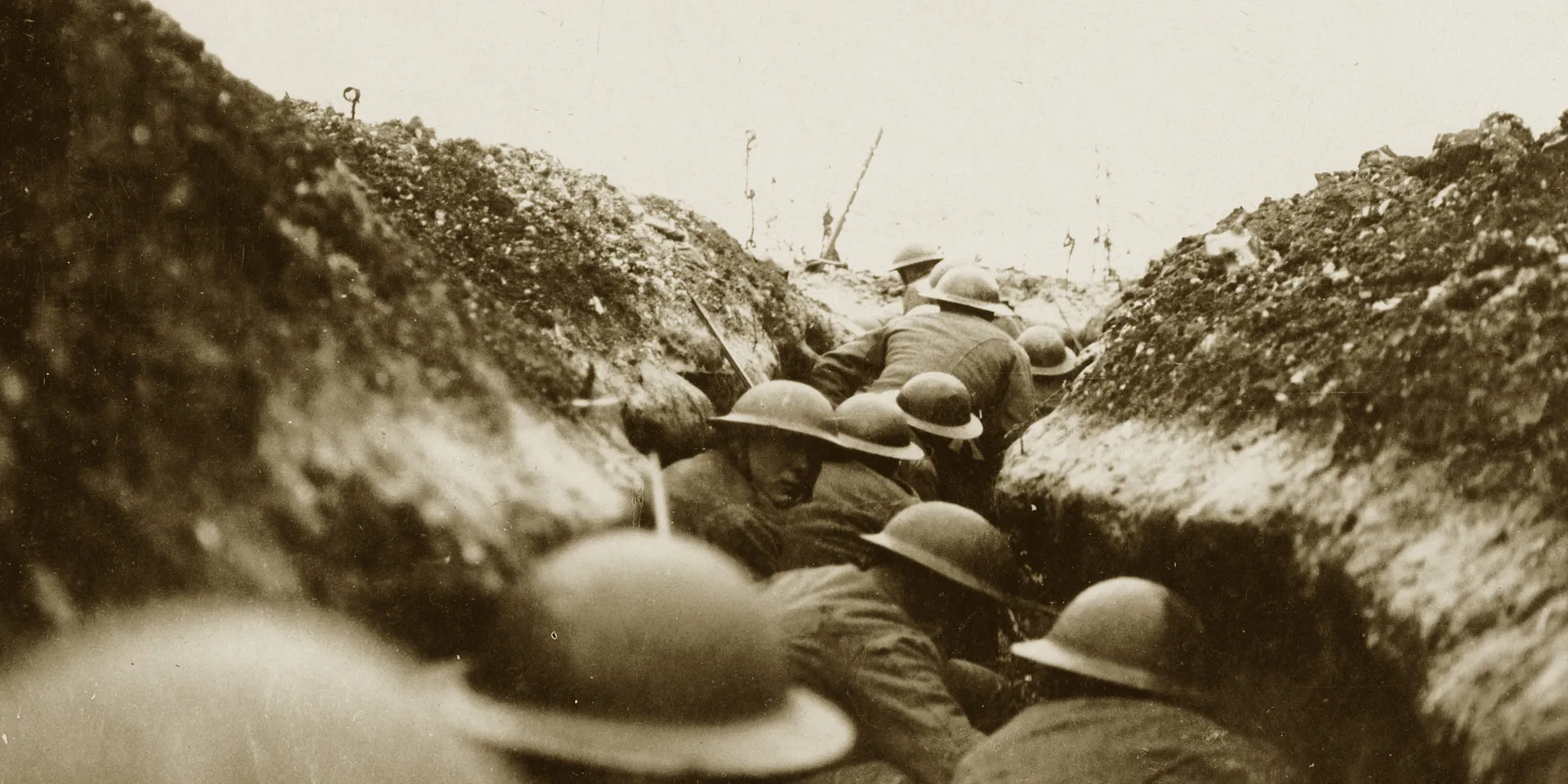
- What type of warfare involved soldiers fighting from long, fortified ditches?
- What was the dangerous area between opposing trench systems commonly called?
- Which country first used tanks in combat during World War I?
- In which year were tanks first used in battle?
- What type of weapon caused severe lung damage and other injuries through poisonous gases?
- Which country is widely associated with the first large-scale use of chlorine gas on the Western Front?
- What was the main role of military aircraft during the early years of the war?
- What were German submarines called?
- Which type of machine gun became a major feature of defensive warfare during World War I?
- What was the name of the German fighter pilot known as the “Red Baron”?
Section 7: The United States and World War I
- In which year did the United States enter World War I?
- On which side did the United States fight?
- What was the name of the German policy of attacking ships with submarines without warning?
- Which passenger ship was sunk by a German submarine in 1915, killing nearly 1,200 people?
- Which intercepted German diplomatic message helped influence American public opinion in favor of entering the war?
- To which country was the Zimmermann Telegram proposing a military alliance?
- Who was the German foreign secretary associated with the Zimmermann Telegram?
- What was the name of the American military force sent to Europe during World War I?
- Who was the commander of the American Expeditionary Forces?
- Which American president presented the Fourteen Points as a basis for peace?
Section 8: Important Events During the War
- On what date did Britain declare war on Germany in 1914?
- Which country was invaded by Germany shortly before Britain entered the war?
- What was the name of the major naval battle fought between Britain and Germany in 1916?
- Which revolution in 1917 led to the overthrow of the Russian monarchy?
- Which revolution brought the Bolsheviks to power in Russia in 1917?
- Who led the Bolsheviks during the Russian Revolution?
- What was the name of the 1918 German offensive intended to achieve victory on the Western Front before large numbers of American troops arrived?
- What was the name of the 1918 Allied counteroffensive that marked a turning point on the Western Front?
- What date is celebrated as Armistice Day to commemorate the end of fighting on the Western Front?
- At what time did the armistice take effect on 11 November 1918?
Section 9: Treaties and the End of the War
- What is an armistice?
- In which year was the Treaty of Versailles signed?
- On what date was the Treaty of Versailles signed?
- Which country was primarily held responsible for the war under Article 231 of the Treaty of Versailles?
- In which palace was the Treaty of Versailles signed?
- Which treaty formally ended the state of war between Germany and the Allied Powers?
- What was the name of the treaty between the Allied Powers and Austria?
- What was the name of the treaty between the Allied Powers and Hungary?
- Which treaty formally ended the war between the Allied Powers and the Ottoman Empire?
- What was the name of the treaty that established peace terms with Bulgaria?
Section 10: Consequences of World War I
- Which international organization was established after World War I to promote peace and collective security?
- Which four major empires collapsed or were dismantled as a result of World War I and its aftermath?
- Which German political system was established after the fall of the German Empire?
- Which country experienced the Bolshevik Revolution and later became the Soviet Union?
- Which new country was formed from territories of the former Austro-Hungarian Empire and other lands in 1918?
- Which country regained independence in 1918 after more than a century of partitions?
- Which region of the former Ottoman Empire came under British and French mandates after the war?
- What was the name of the agreement that outlined British and French spheres of influence in parts of the Ottoman Empire in 1916?
- What global influenza pandemic spread during the final years of World War I and the immediate postwar period?
- Which international conference began in Paris in January 1919 to determine the peace settlement after the war?
Section 11: World War I and India
- Which colonial power governed India during World War I?
- On whose side did British India participate in World War I?
- Approximately how many Indian soldiers served overseas during World War I?
- Name one major region outside Europe where Indian troops served during the war.
- Which Indian political leader returned to India from South Africa in 1915 during World War I?
- Which British government declaration of August 1917 promised the gradual development of self-governing institutions in India?
- Which Indian nationalist leader supported recruitment efforts for the British war effort during part of World War I?
- What was the name of the 1919 legislation that extended emergency wartime powers in India?
- Which 1919 massacre in Amritsar became a major turning point in India’s independence movement?
- Which Indian revolutionary movement sought to overthrow British rule and had links with anti-colonial activity during the World War I period?
Section 12: Advanced World War I General Knowledge
- What was the name of the German plan for defeating France rapidly at the beginning of the war?
- Which 1915 naval disaster involving a British ocean liner contributed to tensions between Germany and the United States?
- Which battle in 1914 was fought in East Prussia and became a major German victory over Russia?
- Which battle in 1914 marked a major Russian defeat in East Prussia?
- Which battle in 1918 was the last major German offensive on the Western Front?
- Which British nurse became famous for caring for wounded soldiers and was often called the “Lady with the Lamp”?
- Which Serbian nationalist group was linked to the assassination of Archduke Franz Ferdinand?
- What was the name of the German naval policy that resumed unrestricted submarine warfare in 1917?
- Which armistice ended hostilities between the Allies and the Ottoman Empire in October 1918?
- What name is given to the period of relative military stalemate on the Western Front, characterized by trench systems?
Answer Key: 100+ GK Questions About World War I
Answers 1–20
- 1914
- 1918
- The Great War.
- The assassination of Archduke Franz Ferdinand.
- 28 June 1914.
- Sarajevo, in Bosnia and Herzegovina, then part of Austria-Hungary.
- Austria-Hungary.
- Gavrilo Princip.
- He was associated with Young Bosnia, a revolutionary movement; the Serbian-linked Black Hand organization was also connected to the wider assassination conspiracy.
- Austria-Hungary.
- Militarism, Alliances, Imperialism, and Nationalism.
- Militarism.
- Nationalism.
- Britain and Germany.
- Serbia.
- The Triple Alliance.
- France and Russia.
- The Triple Entente.
- The Balkans.
- Germany.
Answers 21–40
- Britain, alongside France and Russia.
- Germany.
- Germany, Austria-Hungary, the Ottoman Empire, and Bulgaria.
- Japan.
- 1914
- Bulgaria.
- Italy.
- Romania.
- The United States.
- Russia.
- Kaiser Wilhelm II.
- King George V.
- Woodrow Wilson.
- Raymond Poincaré.
- Tsar Nicholas II.
- H. H. Asquith.
- David Lloyd George.
- Joseph Joffre.
- Paul von Hindenburg.
- Luigi Cadorna.
Answers 41–60
- 1914
- The First Battle of the Marne.
- The Battle of Verdun.
- The Battle of the Somme.
- The Ottoman Empire, in present-day Türkiye.
- Britain and France.
- To secure the Dardanelles, open a sea route to Russia, and potentially force the Ottoman Empire out of the war.
- The Battle of Arras, during which Canadian forces captured Vimy Ridge.
- The Battle of Riga.
- The Battle of Passchendaele.
- Trench warfare.
- No Man’s Land.
- Britain.
- 1916
- Chemical weapons or poison gas.
- Germany, at the Second Battle of Ypres in 1915.
- Reconnaissance and artillery spotting; aircraft were later used for bombing and air combat.
- U-boats.
- The machine gun.
- Manfred von Richthofen.
Answers 61–80
- 1917
- The Allied Powers.
- Unrestricted submarine warfare.
- RMS Lusitania.
- The Zimmermann Telegram.
- Mexico.
- Arthur Zimmermann.
- The American Expeditionary Forces (AEF).
- General John J. Pershing.
- Woodrow Wilson.
- 4 August 1914.
- Belgium.
- The Battle of Jutland.
- The February Revolution.
- The October Revolution.
- Vladimir Lenin.
- The German Spring Offensive, also known as the Kaiserschlacht.
- The Hundred Days Offensive.
- 11 November.
- 11:00 a.m.
Answers 81–100
- An agreement to stop fighting, usually temporarily or pending a peace settlement.
- 1919
- 28 June 1919.
- Germany, under the treaty’s war-guilt clause.
- The Palace of Versailles, France.
- The Treaty of Versailles.
- The Treaty of Saint-Germain-en-Laye.
- The Treaty of Trianon.
- The Treaty of Sèvres was signed in 1920, but it was never fully implemented; the Treaty of Lausanne in 1923 ultimately replaced it.
- The Treaty of Neuilly-sur-Seine.
- The League of Nations.
- The German, Austro-Hungarian, Russian, and Ottoman empires.
- The Weimar Republic.
- Russia.
- Czechoslovakia.
- Poland.
- The Middle East, including territories that became Iraq, Syria, Lebanon, and Palestine.
- The Sykes–Picot Agreement.
- The 1918 influenza pandemic, commonly called the Spanish flu.
- The Paris Peace Conference.
Answers 101–120
- The United Kingdom, through the British Raj.
- On the Allied side.
- Approximately 1.3 million Indian soldiers and combatants served overseas; totals vary depending on the categories counted.
- Mesopotamia, East Africa, Egypt, Gallipoli, or France and Belgium.
- Mahatma Gandhi.
- The Montagu Declaration.
- Mahatma Gandhi supported recruitment efforts in 1918, although his wider political position and methods evolved over time.
- The Rowlatt Act.
- The Jallianwala Bagh massacre.
- The Ghadar Movement.
- The Schlieffen Plan.
- The sinking of the RMS Lusitania by a German U-boat in 1915.
- The Battle of Tannenberg.
- The Battle of the Masurian Lakes was another major Russian defeat in East Prussia in 1914; Tannenberg was the most famous.
- The Second Battle of the Marne is associated with the failure of the final major German offensive in July 1918.
- Florence Nightingale is the traditional answer, although she served during the Crimean War, not World War I. Edith Cavell was a famous World War I nurse.
- The Black Hand, a Serbian nationalist secret society, was linked to the wider conspiracy.
- The resumption of unrestricted submarine warfare in February 1917.
- The Armistice of Mudros.
- The stalemate on the Western Front, particularly from late 1914 through much of 1918.
Conclusion
World War I transformed the political, military, and social landscape of the modern world. It contributed to the collapse of empires, the emergence of new nations, the Russian Revolution, and the establishment of the League of Nations. Its unresolved political tensions also helped create conditions that contributed to the outbreak of World War II.
These 120 questions can be used for school competitions, quiz programs, competitive examination preparation, history lessons, and general knowledge practice.
Editorial Note: Historical events should be understood in their wider context. World War I was not caused by a single assassination alone; militarism, rival alliances, imperial competition, nationalism, and decisions made by political and military leaders all contributed to the conflict.
Leave a Reply