

Introduction
The Kalinga War, fought around 261 BCE, was one of the most consequential conflicts in ancient Indian history. It was waged between the Maurya Empire, led by Emperor Ashoka, and the independent kingdom of Kalinga, located along the eastern coast of the Indian subcontinent (primarily in present-day Odisha and parts of northern Andhra Pradesh).
Although Ashoka emerged victorious, the war became famous not for military triumph but for its profound moral consequences. The immense loss of life and suffering witnessed on the battlefield deeply affected the emperor, leading him to renounce aggressive warfare and embrace the principles of Buddhism, nonviolence (Ahimsa), and compassionate governance.
The Kalinga War is unique in world history because it transformed one of history’s most powerful conquerors into one of its greatest advocates of peace. Ashoka’s conversion reshaped the Mauryan Empire and contributed to the spread of Buddhism across Asia.
Historical Background
The Rise of the Maurya Empire
The Maurya Empire was founded in 322 BCE by Chandragupta Maurya, who overthrew the Nanda Dynasty with the guidance of his advisor Chanakya (Kautilya).
Under Chandragupta and his son Bindusara, the empire expanded rapidly, becoming one of the largest political entities in the ancient world.
By the time Ashoka ascended the throne around 268 BCE, the Mauryan Empire stretched across most of the Indian subcontinent.
Yet one significant region remained outside Mauryan control—Kalinga.
Why Kalinga Was Important
The Kingdom of Kalinga occupied a strategic position on India’s eastern coast.
Its importance stemmed from several factors:
Maritime Trade
Kalinga possessed flourishing ports that connected India with Southeast Asia and Sri Lanka.
Its merchants conducted extensive overseas trade.
Economic Prosperity
The region was rich in:
- Agriculture
- Forest resources
- Minerals
- Skilled artisans
Its economic strength made it an attractive target.
Strategic Location
Kalinga controlled vital land and coastal trade routes linking northern and southern India.
Its independence interrupted Mauryan control over the eastern seaboard.
Political Independence
Unlike many neighboring kingdoms, Kalinga had successfully resisted Mauryan expansion.
Its continued independence challenged Ashoka’s authority.
Emperor Ashoka
Ashoka, later known as Ashoka the Great, was the grandson of Chandragupta Maurya.
Early historical traditions describe him as a capable and determined ruler who sought to consolidate and expand his empire.
The conquest of Kalinga became one of his greatest military objectives.
The Opposing Forces
Mauryan Army
The Mauryan military was among the largest standing armies of the ancient world.
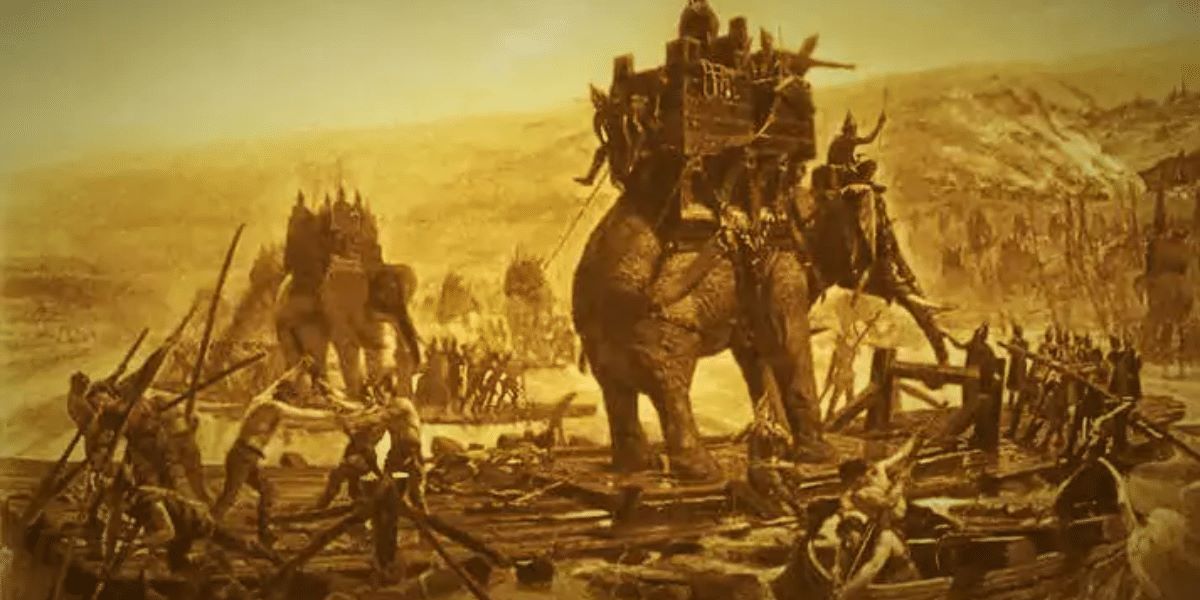
Greek sources from the time of Chandragupta describe the empire as possessing enormous military resources, including infantry, cavalry, chariots, and war elephants.
Although the exact size of Ashoka’s army during the Kalinga campaign is unknown, it was likely significantly larger than Kalinga’s forces.
Kalinga Army
Kalinga fielded a determined defensive force consisting of:
- Infantry
- Cavalry
- Chariots
- War elephants
- Local militias
The people of Kalinga fought fiercely to preserve their independence.
Historical traditions suggest that both soldiers and civilians participated in the resistance.
The Course of the War
The exact details of the campaign have not survived in full.
Most of what is known comes from Ashoka’s Rock Edict XIII, one of his own inscriptions, supplemented by later literary traditions.
The fighting was intense.
The Mauryan army eventually overwhelmed Kalinga’s defenses after fierce resistance.
Cities were captured, villages destroyed, and the kingdom was annexed into the Mauryan Empire.
The Human Cost
Unlike many ancient rulers who celebrated military victories, Ashoka later recorded the terrible consequences of the war.
In Rock Edict XIII, he declared that approximately:
- 100,000 people were killed
- 150,000 were deported
- Many times that number died later from famine, disease, and other consequences of the conflict
Modern historians caution that these figures may be symbolic or rhetorical, but they agree that the war caused immense destruction and suffering.
The Kalinga War ranks among the bloodiest conflicts of the ancient world.
Ashoka’s Transformation
After surveying the battlefield, Ashoka was deeply troubled by the devastation.
Rather than celebrating victory, he experienced profound remorse.
His inscriptions express sorrow not only for the deaths of soldiers but also for the suffering of:
- Families
- Children
- Religious communities
- Ordinary civilians
This moral awakening transformed his outlook on kingship.
Embracing Buddhism
Following the war, Ashoka increasingly embraced the teachings of Buddhism.
Although the exact timing of his conversion remains debated, the Kalinga War clearly marked the turning point in his spiritual life.
He adopted principles emphasizing:
- Nonviolence (Ahimsa)
- Compassion
- Moral conduct
- Religious tolerance
- Respect for all living beings
Rather than pursuing conquest through warfare, Ashoka promoted what he called “Dhamma” (moral law or righteous conduct).
Ashoka’s Policy of Dhamma
Ashoka introduced reforms unlike those of most ancient emperors.
His policies included:
Religious Tolerance
He respected followers of different religions, including Hindus, Buddhists, Jains, and others.
Welfare Measures
He ordered the construction of:
- Roads
- Wells
- Rest houses
- Hospitals for people and animals
Humane Governance
Officials were instructed to govern fairly and listen to the concerns of ordinary people.
Protection of Animals
Ashoka restricted certain forms of animal slaughter and encouraged kindness toward living creatures.
The Spread of Buddhism
One of the Kalinga War’s most enduring consequences was the expansion of Buddhism beyond India.
Ashoka sponsored:
- Buddhist monasteries
- Stupas
- Missionary journeys
He sent emissaries to regions including:
- Sri Lanka
- Central Asia
- Southeast Asia
- The Hellenistic kingdoms
His son Mahinda and daughter Sanghamitta are traditionally credited with introducing Buddhism to Sri Lanka.
These missions helped transform Buddhism into a major world religion.
Ashoka’s Edicts
To communicate his ideals, Ashoka ordered inscriptions carved on rocks and stone pillars throughout his empire.
These Edicts of Ashoka survive today across India, Nepal, Pakistan, Bangladesh, and Afghanistan.
They provide invaluable insights into his administration, ethical beliefs, and vision of government.
Among them, Rock Edict XIII is especially significant because it records his remorse after the Kalinga War and his commitment to peaceful rule.
Why the Kalinga War Matters
The Kalinga War stands apart from many famous battles because its greatest legacy was not territorial expansion but moral transformation.
It demonstrated that:
- Military victory can carry profound human costs.
- A ruler’s greatness may be measured by compassion as much as conquest.
- Political power can be redirected toward welfare and ethical governance.
Ashoka’s response to the war remains one of the most remarkable examples of personal transformation in history.
Long-Term Significance
End of Mauryan Expansion
After Kalinga, Ashoka largely abandoned offensive warfare.
The Mauryan Empire reached its greatest territorial extent.
Rise of Buddhism
Ashoka’s patronage played a crucial role in Buddhism’s emergence as a global religion.
Ethical Kingship
Ashoka became a model of righteous governance in Indian political thought.
His ideals continue to inspire discussions of leadership and public service.
National Symbolism
Modern India honors Ashoka through:
- The Lion Capital of Ashoka, adopted as the national emblem.
- The Ashoka Chakra, the 24-spoked wheel at the center of the Indian national flag.
These symbols reflect his enduring legacy of justice, moral responsibility, and good governance.
Historical Debate
Much of the evidence for the Kalinga War comes from Ashoka’s own inscriptions, particularly Rock Edict XIII.
Historians debate:
- The precise date of the war.
- The exact casualty figures recorded in the edict.
- Whether Ashoka fully renounced all warfare after Kalinga or simply avoided wars of expansion.
Despite these questions, scholars broadly agree that the conflict profoundly influenced Ashoka’s policies and contributed significantly to the spread of Buddhism.
Interesting Facts
- The Kalinga War was fought around 261 BCE.
- It was the only major military campaign specifically described in Ashoka’s own inscriptions.
- Rock Edict XIII records Ashoka’s remorse over the immense suffering caused by the war.
- The conflict led Ashoka to embrace the principles of Buddhism and Dhamma.
- Ashoka sponsored Buddhist missions that reached Sri Lanka, Central Asia, and beyond.
- The Lion Capital of Ashoka is the national emblem of India.
- The Ashoka Chakra on the Indian national flag is inspired by the wheel depicted on Ashokan pillars.
Military and Leadership Lessons
The Kalinga War offers enduring lessons that extend beyond the battlefield:
- Victory carries responsibility: Military success can have lasting humanitarian consequences.
- Leadership can evolve: Ashoka demonstrated that even a powerful conqueror can change course after recognizing the costs of war.
- Moral authority strengthens governance: Compassion and justice can enhance a ruler’s legitimacy.
- Soft power has lasting influence: Ashoka’s promotion of ethical values and Buddhism had a greater long-term impact than his military conquests.
- History remembers transformation: Ashoka is celebrated not only for the empire he ruled but also for the ideals he embraced after Kalinga.
Conclusion
The Kalinga War (261 BCE) was more than a decisive military conquest—it was a watershed moment in world history. While the Mauryan Empire achieved territorial expansion, the immense human suffering witnessed by Emperor Ashoka led to an extraordinary transformation in his vision of leadership. Rejecting further wars of conquest, he embraced Buddhism, promoted the principles of Dhamma, and dedicated his reign to justice, compassion, and the welfare of his people. Through his edicts, reforms, and support for the spread of Buddhism, Ashoka left a legacy that extended far beyond the borders of his empire. The Kalinga War remains a timeless reminder that the greatest victories are not always won on the battlefield, but in the transformation of the human heart and the pursuit of peace.
Leave a Reply