

Empowering Young People for a Changing World
“The future belongs to those who are equipped not only with knowledge but also with the skills to transform that knowledge into meaningful action.”
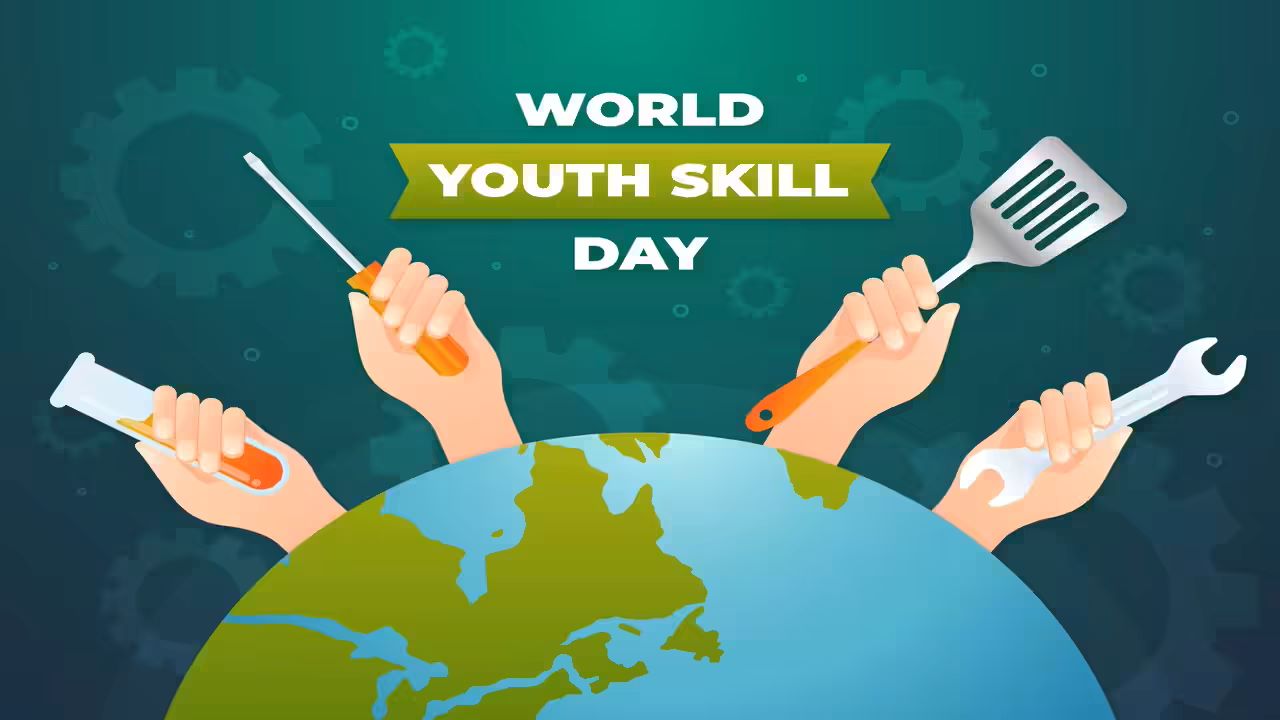
Every year on July 15, the world celebrates World Youth Skills Day, an international observance established by the United Nations to recognize the importance of equipping young people with the skills they need for employment, entrepreneurship, innovation, and active participation in society. The day highlights the vital role of technical and vocational education, lifelong learning, and digital competence in preparing youth to meet the challenges of a rapidly changing global economy.
Young people are among the world’s greatest assets. Their creativity, energy, and capacity for innovation have the power to transform communities and nations. However, this potential can only be fully realized when they have access to quality education, practical training, and opportunities to develop relevant skills. World Youth Skills Day serves as a reminder that investing in youth is investing in the future.
The Origin of World Youth Skills Day
In 2014, the United Nations General Assembly adopted a resolution proclaiming 15 July as World Youth Skills Day. The first observance took place in 2015.
The day was created to raise awareness about the significance of providing young people with the skills necessary for decent work, sustainable livelihoods, and entrepreneurship. It also seeks to encourage governments, educational institutions, employers, and civil society organizations to collaborate in creating opportunities for skill development.
Since its inception, World Youth Skills Day has become a global platform for discussions on education, workforce readiness, innovation, and inclusive economic growth.
Why Youth Skills Matter
Today’s world is evolving faster than ever before. Technological advances, artificial intelligence, automation, climate change, and globalization are transforming industries and creating new types of jobs while making others obsolete.
To succeed in this environment, young people require more than academic qualifications. They need a broad range of practical, technical, interpersonal, and digital skills.
Skill development enables young people to:
- Find meaningful employment.
- Become entrepreneurs and job creators.
- Adapt to changing industries.
- Increase productivity and innovation.
- Contribute to economic growth.
- Improve their quality of life.
- Participate actively in civic and community life.
Countries with skilled youth populations tend to enjoy stronger economies, greater innovation, and more sustainable development.
Understanding Youth Skills
Skills can be grouped into several categories.
1. Technical Skills
These are job-specific abilities acquired through education or training.
Examples include:
- Engineering
- Information technology
- Healthcare
- Agriculture
- Electrical work
- Plumbing
- Construction
- Automotive repair
- Graphic design
- Data analysis
- Artificial intelligence
- Robotics
Technical skills are often developed through vocational schools, colleges, apprenticeships, and workplace training.
2. Digital Skills
Digital literacy has become essential in nearly every profession.
Important digital skills include:
- Computer literacy
- Online collaboration
- Coding and programming
- Data management
- Cybersecurity awareness
- Digital communication
- Cloud computing
- Responsible use of artificial intelligence
- Digital marketing
As workplaces become increasingly digital, these competencies are indispensable.
3. Soft Skills
Employers consistently identify soft skills as among the most valuable qualities in employees.
These include:
- Communication
- Teamwork
- Leadership
- Problem-solving
- Critical thinking
- Creativity
- Emotional intelligence
- Time management
- Adaptability
- Conflict resolution
- Professional ethics
Unlike technical skills, soft skills are transferable across many careers.
4. Entrepreneurial Skills
Many young people aspire to start their own businesses.
Entrepreneurship requires:
- Financial literacy
- Business planning
- Marketing
- Customer service
- Risk management
- Innovation
- Negotiation
- Networking
- Decision-making
Supporting youth entrepreneurship can create jobs and stimulate local economies.
Technical and Vocational Education and Training (TVET)
One of the key themes of World Youth Skills Day is the importance of Technical and Vocational Education and Training (TVET).
TVET prepares students with practical skills that meet labor market needs.
Benefits include:
- Hands-on learning.
- Faster transition into employment.
- Industry-relevant training.
- Reduced unemployment.
- Opportunities for lifelong learning.
- Increased productivity.
Many countries are investing heavily in TVET systems to bridge the gap between education and employment.
Challenges Facing Young People
Despite their potential, millions of young people encounter barriers to acquiring valuable skills.
Unemployment
Youth unemployment remains significantly higher than adult unemployment in many parts of the world.
Skills Mismatch
Many graduates possess qualifications that do not align with current labor market demands.
Digital Divide
Not every young person has access to computers, reliable internet, or modern technology.
Limited Access to Quality Education
Economic hardship, conflict, and geographic isolation continue to prevent many young people from receiving quality education and training.
Gender Inequality
In some regions, girls and young women face additional barriers to education, vocational training, and employment.
Rapid Technological Change
New technologies require continual learning and adaptation throughout one’s career.
Skills for the Future
Experts increasingly emphasize the importance of preparing young people for emerging industries.
Future-ready skills include:
- Artificial intelligence literacy
- Data science
- Renewable energy technologies
- Environmental sustainability
- Green jobs
- Biotechnology
- Advanced manufacturing
- Digital entrepreneurship
- Cybersecurity
- Healthcare innovation
Continuous learning has become essential rather than optional.
The Role of Governments
Governments contribute by:
- Expanding vocational education.
- Modernizing school curricula.
- Supporting apprenticeships.
- Investing in digital infrastructure.
- Promoting innovation.
- Encouraging public-private partnerships.
- Funding entrepreneurship programs.
- Ensuring equal opportunities for marginalized youth.
The Role of Educational Institutions
Schools, colleges, and universities help prepare students by:
- Combining theory with practical learning.
- Promoting internships.
- Strengthening career guidance.
- Encouraging creativity.
- Teaching digital literacy.
- Supporting research and innovation.
- Building partnerships with industry.
The Role of Employers
Businesses play an important role through:
- Apprenticeships.
- Internship programs.
- Workplace training.
- Mentorship.
- Scholarships.
- Professional development opportunities.
- Collaboration with educational institutions.
Employers benefit from investing in skilled young workers while contributing to national development.
Youth and Entrepreneurship
Entrepreneurship allows young people to become innovators rather than merely job seekers.
Young entrepreneurs contribute by:
- Creating employment.
- Developing new technologies.
- Solving local problems.
- Supporting community development.
- Driving economic growth.
Governments and financial institutions increasingly offer startup grants, incubators, mentorship, and training to encourage youth entrepreneurship.
A Christian Perspective
From a Christian perspective, work is more than a means of earning a living—it is a participation in God’s creative work and a way of serving others. Scripture encourages believers to cultivate their gifts faithfully:
“Whatever you do, work at it with all your heart, as working for the Lord.” (Colossians 3:23)
The Parable of the Talents (Matthew 25:14–30) reminds Christians that God entrusts each person with unique abilities and expects them to develop those gifts responsibly. Skills, therefore, are not merely tools for personal success but instruments for serving the common good.
For Catholic educators, parents, and mentors, World Youth Skills Day is an opportunity to encourage young people to pursue excellence, integrity, compassion, and lifelong learning. Technical competence should always be accompanied by ethical values, honesty, and a commitment to justice.
How to Observe World Youth Skills Day
Individuals and communities can celebrate the day by:
- Participating in skill-development workshops.
- Learning a new practical or digital skill.
- Volunteering to mentor young people.
- Supporting vocational education initiatives.
- Encouraging entrepreneurship among youth.
- Promoting digital literacy.
- Recognizing outstanding young innovators.
- Organizing career guidance sessions.
- Sharing success stories of skilled young professionals.
The Importance of Lifelong Learning
In today’s rapidly changing world, learning does not end with graduation. The most successful individuals continually update their knowledge and acquire new competencies throughout their lives. Lifelong learning enables people to remain adaptable, resilient, and prepared for new opportunities.
World Youth Skills Day reminds us that education is not simply about earning degrees but about developing the abilities that enable people to contribute meaningfully to society.
Conclusion
World Youth Skills Day is a celebration of the potential, creativity, and resilience of young people. By investing in quality education, vocational training, digital literacy, and lifelong learning, societies empower youth to become innovators, entrepreneurs, professionals, and compassionate leaders.
For Christians, the observance also serves as a reminder that every talent is a gift from God, entrusted to us not only for personal advancement but also for the service of others. As young people develop their skills with diligence, integrity, and faith, they become builders of stronger families, flourishing communities, and a more just and hopeful world.
“The future is not built by dreams alone, but by skilled hands, informed minds, compassionate hearts, and lives dedicated to serving the common good.”
Leave a Reply