

30 August | Celebrating the World’s Largest Fish and Protecting the Gentle Giants of the Ocean
Every year on 30 August, the world observes International Whale Shark Day, a day dedicated to celebrating the magnificent whale shark (Rhincodon typus), raising awareness about its ecological importance, and encouraging stronger efforts to protect this remarkable but threatened marine species.
Despite its enormous size, the whale shark is a peaceful filter-feeding shark that feeds primarily on plankton and other tiny organisms. It is the largest living fish on Earth. The species is currently classified as Endangered on the IUCN Red List. (FishBase)


🐋 What Is a Whale Shark?
The whale shark is a cartilaginous fish belonging to the shark family. Its scientific name is Rhincodon typus.
It is called a “whale shark” because of its enormous size and feeding behavior, but it is not a whale or a mammal. It is a true shark.
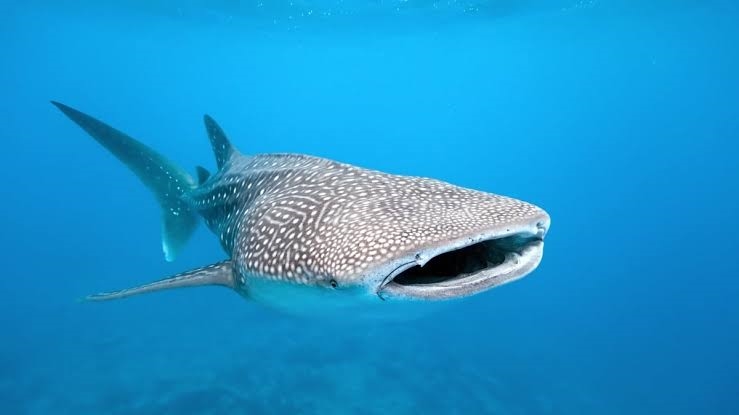
Whale sharks are characterized by:
- An enormous, broad head
- A huge terminal mouth
- A flattened body
- Distinctive white or yellowish spots and stripes
- Five pairs of gill slits
- Powerful fins and a large tail
- A filter-feeding system
The spot pattern on each whale shark is unique, rather like a human fingerprint, allowing researchers to identify individual animals. (World Wildlife Fund)
🌊 The World’s Largest Fish
The whale shark holds the extraordinary distinction of being the largest fish species alive today.
Whale sharks can reach enormous dimensions. Reliable modern sources commonly cite lengths of around 12–13 metres, while exceptional individuals may be considerably larger. NOAA notes that individuals exceeding about 39 feet (12 metres) are uncommon. (CMS Convention)
Their enormous size makes them one of the most spectacular animals in the ocean.
Yet their appearance can be misleading.
Despite having a huge mouth and thousands of tiny teeth, whale sharks are gentle filter feeders and do not hunt large animals like many other sharks.
🦐 What Do Whale Sharks Eat?
Whale sharks are filter feeders.
Their diet consists mainly of very small organisms such as:
- Plankton
- Krill
- Small shrimp
- Small fish
- Fish eggs
- Squid and other tiny marine organisms
They take enormous quantities of seawater into their mouths and use specialized structures associated with their gills to separate food from the water. (World Wildlife Fund)
This creates one of nature’s most remarkable contrasts:
The largest fish in the world survives by eating some of the smallest creatures in the ocean.
🐟 Whale Sharks Are Sharks—But Different
Whale sharks belong to the class Chondrichthyes, the group of cartilaginous fishes that includes sharks, rays and skates.
Unlike many famous predatory sharks, whale sharks are specialized for filter feeding.
They are generally:
- Slow-moving
- Non-aggressive toward humans
- Migratory
- Solitary for much of their lives
- Often associated with areas rich in plankton
They may gather in large numbers where seasonal concentrations of food occur. (World Wildlife Fund)
🌍 Where Do Whale Sharks Live?
Whale sharks inhabit tropical and warm-temperate oceans around the world, generally avoiding the Mediterranean Sea.
They can be found in:
- The Indian Ocean
- Pacific Ocean
- Atlantic Ocean
- Tropical coastal waters
- Open ocean environments
They undertake extensive migrations between feeding areas. Some individuals travel thousands of kilometres in search of suitable food.
Recent research has emphasized just how extensive these movements can be. A major 2026 study of Indo-Pacific whale sharks examined movements across 13 countries and territories as well as international waters, demonstrating the need for conservation cooperation across national boundaries. (Conservation International)
🗺️ Whale Sharks and India
Whale sharks have a special conservation story in India.
They occur along India’s western and southern coasts, including waters around Gujarat, Maharashtra, Kerala, Tamil Nadu and other coastal regions.
For many years, whale sharks were hunted in parts of India’s western coast for their meat, fins, skin and liver oil. Conservation campaigns eventually helped transform public attitudes toward the species. (IUCN)
In 2001, India gave whale sharks the highest level of protection available under the country’s wildlife law by including them in Schedule I of the Wildlife (Protection) Act, 1972, according to the Wildlife Trust of India/IUCN account. (IUCN)
India’s conservation experience demonstrates an important lesson:
When governments, scientists, fishing communities and conservation organizations work together, attitudes toward threatened wildlife can change dramatically.
🇮🇳 The Gujarat Whale Shark Conservation Story
One of India’s best-known whale shark conservation initiatives has taken place along the coast of Gujarat.
Historically, whale sharks were heavily hunted there. Conservation organizations, government agencies, fishing communities and local campaigners worked together to change this situation.
The Whale Shark Conservation Project, associated with the Wildlife Trust of India and filmmaker Mike Pandey, helped promote the idea of the whale shark as a species deserving protection rather than exploitation. IUCN reported that hundreds of whale sharks had been directly saved through the project. (IUCN)
This became an important example of community-based marine conservation.
🔬 Fascinating Whale Shark Facts
1. They are the largest living fish
The whale shark is larger than every other living fish species. (National Ocean Service)
2. They are not whales
Despite their name, whale sharks are sharks—not whales.
3. They are filter feeders
They feed mainly on plankton and other small marine organisms.
4. Their spots are unique
Each whale shark has an individual pattern of spots and stripes that can be used for identification. (World Wildlife Fund)
5. They can migrate thousands of kilometres
Whale sharks travel between feeding grounds and can cross international boundaries. (World Wildlife Fund)
6. They are relatively slow swimmers
Their enormous bodies move through the water at a leisurely pace compared with many predatory sharks.
7. They can live for decades
Scientists believe whale sharks may live for many decades; estimates vary, with some research suggesting potential lifespans of 70–100 years or more. (CMS Convention)
8. They mature slowly
Whale sharks have a relatively slow life history, including late sexual maturity. This makes recovering from population losses particularly difficult. (CMS Convention)
9. Their babies are tiny compared with adults
Newborn whale sharks are only around half a metre to a little over half a metre long, dramatically smaller than adults. (FishBase)
10. Scientists still have many questions
Important aspects of whale shark reproduction, early life and population dynamics remain poorly understood.
🐣 Reproduction and Life Cycle
Whale shark reproduction is one of the fascinating areas of marine biology.
They are ovoviviparous: embryos develop inside eggs retained within the mother’s body, and the young are born alive. A pregnant female has been documented carrying around 300 embryos, although scientists still know relatively little about where whale sharks give birth and where their youngest offspring spend their early lives. (FishBase)
Their slow growth, late maturity and apparently low survival of young make them particularly vulnerable to excessive mortality.
⚠️ Why Are Whale Sharks Endangered?
The whale shark is currently classified as Endangered by the IUCN. (FishBase)
Several human activities threaten these magnificent animals.
1. Fishing
Whale sharks have historically been hunted for:
- Meat
- Fins
- Skin
- Liver oil
Although many countries have introduced protections, illegal and poorly regulated fishing remains a concern. (World Wildlife Fund)
2. Accidental capture
Whale sharks can become entangled in fishing nets intended for other species.
This is known as bycatch.
3. Ship and boat strikes
Because whale sharks often feed near the surface, they can be injured or killed by boats and larger vessels. (IUCN)
4. Habitat degradation
Pollution, coastal development and changes to marine ecosystems can damage important feeding and aggregation areas.
5. Marine pollution
Plastic and other pollutants pose risks to whale sharks and the ecosystems on which they depend.
6. Unsustainable tourism
Whale shark tourism can provide important economic benefits to coastal communities, but poorly managed interactions can disturb the animals.
Boats may approach too closely, while swimmers or divers may touch or interfere with the animals.
🚤 Responsible Whale Shark Tourism
Swimming with whale sharks can be an extraordinary wildlife experience, but tourism should always prioritize the animals’ welfare.
Responsible operators should:
- Maintain an appropriate distance
- Avoid touching the shark
- Avoid blocking its path
- Control the number of boats around an animal
- Prevent feeding or baiting where prohibited
- Reduce engine-related risks
- Follow local wildlife regulations
- Educate tourists about conservation
WWF has highlighted the importance of responsible tourism practices in places where whale sharks aggregate. (World Wildlife Fund)
The principle is simple:
Observe wildlife without changing its natural behavior.
🛡️ International Protection
Whale sharks receive protection through several international conservation frameworks.
The species is listed under CITES, which regulates international trade in wildlife and wildlife products.
It is also included under the Convention on Migratory Species (CMS). The CMS lists whale sharks on Appendix I and Appendix II, recognizing the importance of international cooperation for this highly migratory species. (CMS Convention)
These international protections are important because a whale shark does not recognize national borders.
An animal protected in one country’s waters may travel into another country’s jurisdiction.
🔎 Why Research Matters
Scientists study whale sharks using techniques including:
- Photo identification
- Satellite tagging
- Acoustic monitoring
- Genetic research
- Underwater observations
- Population surveys
- Drone and photographic surveys
Their distinctive spot patterns make individual identification possible without physically capturing the animals. (World Wildlife Fund)
Long-term research helps scientists understand:
- Migration routes
- Feeding grounds
- Population size
- Reproductive behavior
- Age and growth
- Habitat requirements
- Human impacts
🌊 Why Whale Sharks Matter to Ocean Ecosystems
Whale sharks are not merely spectacular animals.
They are part of complex marine food webs and can serve as valuable indicators of ocean conditions.
Their seasonal presence often corresponds with areas where plankton and other food resources are abundant. Understanding where whale sharks congregate can therefore provide information about marine productivity and ecosystem health. (World Wildlife Fund)
Protecting whale sharks also means protecting:
- Feeding grounds
- Coastal ecosystems
- Plankton-rich waters
- Migratory corridors
- Marine biodiversity
- Fishing communities dependent on healthy seas
🌱 How Can We Protect Whale Sharks?
Everyone has a role to play.
Governments can:
- Enforce fishing regulations
- Protect critical habitats
- Reduce illegal wildlife trade
- Establish marine protected areas
- Monitor whale shark populations
- Cooperate internationally
Fishing communities can:
- Reduce accidental capture
- Release accidentally caught whale sharks safely when feasible
- Report sightings and strandings
- Participate in conservation programs
Tourism operators can:
- Follow responsible wildlife-viewing guidelines
- Avoid collisions
- Prevent tourists from touching animals
- Educate visitors
Scientists can:
- Monitor populations
- Study migration
- Improve knowledge of reproduction
- Identify critical habitats
Ordinary people can:
- Reduce plastic pollution
- Support responsible seafood choices
- Avoid purchasing shark products
- Support marine conservation
- Share accurate information about sharks
📅 Why August 30?
International Whale Shark Day is observed on 30 August as a dedicated occasion to celebrate the species and draw attention to its conservation. The IUCN Shark Specialist Group has also highlighted 30 August as International Whale Shark Day and used the occasion to emphasize threats including accidental capture, vessel strikes and habitat disruption.
The day transforms fascination into action:
Admire the whale shark—but also protect it.
🐋 Whale Shark vs. Whale
| Feature | Whale Shark | Whale |
|---|---|---|
| Classification | Fish | Mammal |
| Scientific group | Shark | Cetacean |
| Skeleton | Cartilage | Bones |
| Breathing | Gills | Lungs |
| Feeding | Mainly filter feeding | Depends on species |
| Young | Born alive | Born alive |
| Body temperature | Ectothermic | Endothermic |
| Milk production | No | Yes |
| Largest living fish | Yes | No |
The name “whale shark” therefore describes its enormous size and some aspects of its feeding behavior—not its biological relationship to whales.
🌏 A Symbol of Marine Conservation
The whale shark has become a powerful symbol of ocean conservation.
Its enormous body, peaceful nature and distinctive spotted appearance capture people’s imagination. This makes it an important flagship species—an animal that can inspire wider protection of marine environments.
Saving a whale shark requires more than protecting one animal.
It requires protecting the ocean ecosystem through which it travels.
🕊️ Message of International Whale Shark Day
International Whale Shark Day reminds us that size does not guarantee survival.
The largest fish in the world can still be vulnerable to fishing nets, vessel strikes, pollution, habitat degradation and unsustainable human activities.
The whale shark’s story is therefore a lesson in conservation:
Even the giants of the ocean need our protection.
When we protect whale sharks, we also protect the health and diversity of the seas they inhabit.
🌊 Conclusion
International Whale Shark Day, observed on 30 August, is a celebration of one of Earth’s most extraordinary marine animals.
The whale shark is enormous, ancient-looking and majestic, yet remarkably peaceful. It can travel thousands of kilometres across oceans and feed on microscopic organisms. Its unique spotted body has made it one of the most recognizable animals beneath the waves.
But behind its magnificent appearance lies a conservation challenge.
The whale shark is Endangered, and its slow life history means that populations cannot easily recover from excessive mortality. Fishing, bycatch, vessel strikes, habitat degradation, pollution and poorly managed tourism continue to create risks.
International Whale Shark Day therefore asks us to do more than admire this gentle giant.
Learn about it.
Respect it.
Protect its habitat.
Support responsible marine tourism.
Reduce ocean pollution.
Work with fishing communities.
And keep the world’s largest fish swimming freely in healthy oceans.
🐋 Protect the whale shark. Protect the ocean. Protect our shared future.
Quick Facts
- Date: 30 August
- Animal: Whale shark
- Scientific name: Rhincodon typus
- Group: Cartilaginous fish / shark
- Distinction: World’s largest living fish
- Diet: Mainly plankton and small marine organisms
- Habitat: Tropical and warm-temperate oceans
- IUCN status: Endangered
- Major threats: Fishing, bycatch, vessel strikes, habitat degradation, pollution and poorly managed tourism
- International protection: CITES and CMS
- India: Protected under Schedule I of the Wildlife (Protection) Act, 1972
Leave a Reply