

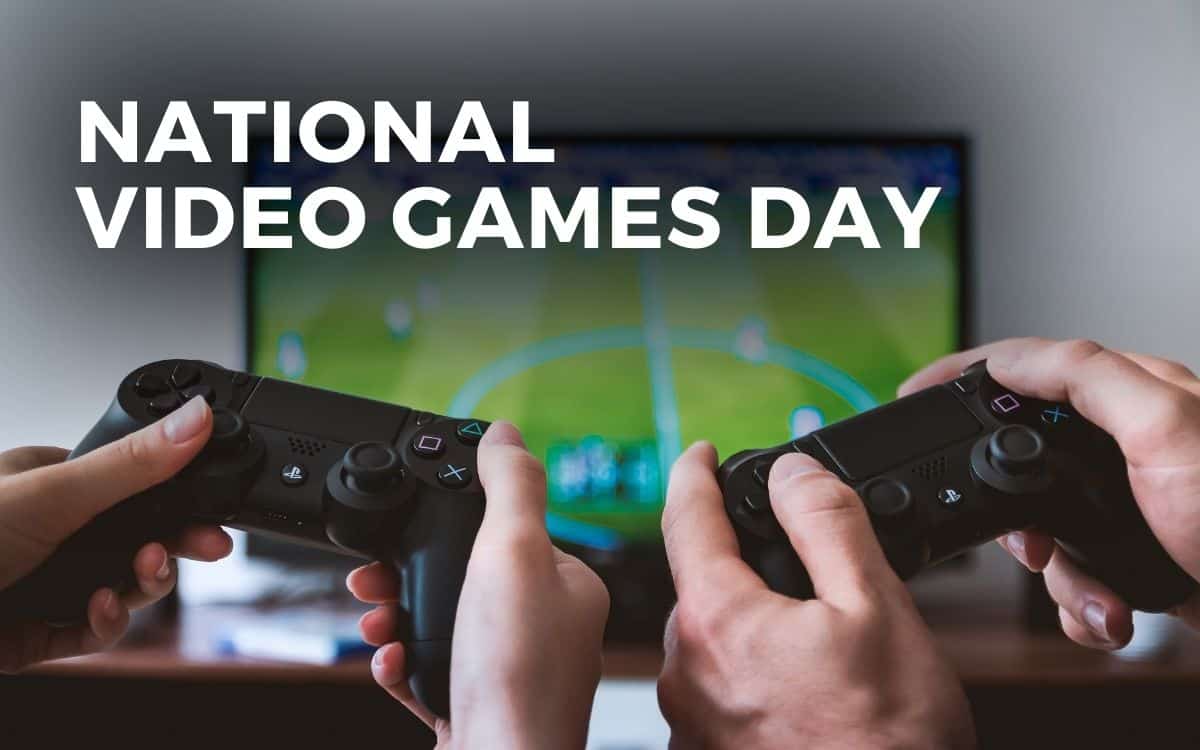
Video Games Day is an occasion to celebrate the fascinating world of video games and the people who create, play and enjoy them. Video games have evolved from simple experimental computer programs into one of the world’s largest forms of entertainment, combining technology, storytelling, music, art, competition and social interaction.
From early arcade machines to modern consoles, smartphones, personal computers and immersive virtual-reality systems, video games have become an important part of global popular culture.
What Is Video Games Day?
Video Games Day is an informal observance celebrating video games and gaming culture.
It provides an opportunity for gamers, families, schools, technology enthusiasts and the wider public to learn about the history of gaming, enjoy favorite games and recognize the creativity and technological innovation behind the industry.
The observance is sometimes confused with National Video Game Day, which is generally observed in the United States on July 8, while National Video Games Day is commonly observed on September 12.
Because these are informal observances rather than a single universally standardized international day, different calendars may list different dates.
The Birth of Video Games
The history of video games began long before today’s sophisticated consoles.
In the middle of the 20th century, scientists and engineers experimented with electronic games on large computers.
1952 – OXO
British computer scientist Alexander S. Douglas created OXO, a computerized version of tic-tac-toe, as part of his doctoral work at the University of Cambridge.
1958 – Tennis for Two
Physicist William Higinbotham created Tennis for Two, an interactive electronic game displayed on an oscilloscope.
It allowed two players to hit a virtual ball over a net.
1962 – Spacewar!
MIT researchers developed Spacewar!, one of the earliest influential computer games.
Two players controlled spacecraft and attempted to destroy each other’s ships while maneuvering around a simulated star.
The Rise of Arcade Games
The 1970s witnessed the emergence of commercial arcade video games.
Pong
Released by Atari in 1972, Pong became one of the earliest commercially successful arcade video games.
Its simple concept—two players hitting a ball back and forth—helped introduce video gaming to a mass audience.
Space Invaders
Released in 1978, Space Invaders became a worldwide arcade sensation and helped establish video games as a major entertainment industry.
Pac-Man
Released in 1980, Pac-Man became one of the most recognizable video-game characters in history.
Its colorful design and accessible gameplay helped attract audiences far beyond the traditional arcade-gaming demographic.
The Video Game Console Revolution
Home consoles transformed gaming by allowing people to play video games in their own homes.
Important systems included:
- Magnavox Odyssey
- Atari 2600
- Nintendo Entertainment System
- Sega Genesis
- Super Nintendo Entertainment System
- Sony PlayStation
- Nintendo 64
- Sega Dreamcast
- Microsoft Xbox
- Nintendo Wii
- PlayStation 2, 3, 4 and 5
- Xbox 360, Xbox One and Xbox Series X/S
- Nintendo Switch
Each generation introduced new technologies, graphics and ways of playing.
The Rise of Personal Computer Gaming
Personal computers also became important gaming platforms.
PC gaming helped popularize genres such as:
- Strategy
- Simulation
- Role-playing games
- Adventure games
- First-person shooters
- Massively multiplayer online games
Games such as Doom, The Sims, Civilization, World of Warcraft and Minecraft helped shape PC gaming culture.
Mobile Gaming
The spread of smartphones dramatically changed the gaming landscape.
Mobile games can be downloaded and played almost anywhere.
Popular mobile titles have included:
- Candy Crush Saga
- Angry Birds
- Pokémon GO
- Clash of Clans
- PUBG Mobile
- Genshin Impact
- Subway Surfers
- Among Us
Mobile gaming has introduced video games to millions of people who may never have owned a traditional gaming console.
Major Video Game Genres
Video games come in many different forms.
Action Games
Focus on physical challenges, combat and fast reactions.
Adventure Games
Emphasize exploration, storytelling and solving problems.
Role-Playing Games
Players control characters who develop skills, equipment and abilities throughout a story.
Strategy Games
Require players to plan and make decisions to achieve objectives.
Sports Games
Simulate real-world sports such as football, basketball, cricket, racing and tennis.
Simulation Games
Recreate activities or environments such as cities, farms, aircraft and businesses.
Puzzle Games
Challenge players to solve logical or visual problems.
Racing Games
Focus on vehicles, tracks and competition.
Fighting Games
Feature one-on-one or group combat between characters.
First-Person Shooters
Players experience action from a first-person perspective.
Survival Games
Require players to gather resources, manage hazards and survive within challenging environments.
Multiplayer Online Games
Allow players to interact and compete with others over the internet.
Famous Video Game Franchises
Some of the world’s most recognizable video-game franchises include:
- Super Mario
- The Legend of Zelda
- Pokémon
- Minecraft
- Grand Theft Auto
- Call of Duty
- FIFA / EA Sports FC
- The Sims
- Sonic the Hedgehog
- Final Fantasy
- Resident Evil
- Street Fighter
- Mortal Kombat
- Halo
- Fortnite
- World of Warcraft
- The Elder Scrolls
- Assassin’s Creed
- God of War
- Animal Crossing
The Cultural Impact of Video Games
Video games have moved beyond being simple electronic entertainment.
They influence:
- Movies
- Television
- Music
- Fashion
- Art
- Literature
- Sports
- Education
- Technology
- Social media
Characters such as Mario, Sonic and Pikachu have become globally recognized cultural icons.
Video Games and Storytelling
Modern video games can tell complex stories involving:
- Friendship
- Family
- War
- Survival
- Love
- Loss
- Courage
- Morality
- Identity
- Environmental issues
Some games provide players with choices that affect the direction of the story.
This interactive storytelling distinguishes video games from many traditional forms of entertainment.
Video Games and Education
Video games can also have educational applications.
Educational games can help students practice:
- Mathematics
- Language
- Geography
- History
- Science
- Problem-solving
- Logical reasoning
Games can provide interactive environments in which learners experiment, make mistakes and try again.
Potential Benefits of Gaming
Responsible gaming can provide several potential benefits.
Problem-Solving
Many games require players to analyze situations and find solutions.
Strategic Thinking
Strategy games can require planning several steps ahead.
Hand-Eye Coordination
Action and simulation games may involve coordination between visual information and physical movement.
Creativity
Construction and sandbox games can encourage experimentation and creative expression.
Social Interaction
Multiplayer games can allow friends and communities to communicate and cooperate.
Persistence
Games frequently encourage players to learn from failure and try again.
Video Games and Social Connection
Online gaming has created enormous communities of players.
Friends and family members can play together even when they live far apart.
However, online interaction should be accompanied by good digital citizenship and awareness of issues such as harassment, scams and privacy.
Responsible Gaming
Video games can be enjoyable, but balance is important.
Healthy gaming habits include:
- Taking regular breaks
- Getting adequate sleep
- Maintaining physical activity
- Completing school or work responsibilities
- Spending time with family and friends offline
- Protecting personal information
- Following age ratings
- Avoiding excessive spending on games
- Maintaining healthy posture and screen habits
Gaming should be part of a balanced lifestyle rather than replacing essential activities.
Video Game Addiction and Problematic Gaming
For some people, gaming can become difficult to control.
Warning signs can include:
- Losing control over gaming time
- Neglecting school, work or relationships
- Sacrificing sleep
- Continuing to play despite serious negative consequences
- Becoming highly distressed when unable to play
Persistent problems may require support from a qualified healthcare or mental-health professional.
Children and Video Games
Parents and caregivers can help children develop healthy gaming habits by:
- Checking age ratings
- Setting reasonable limits
- Knowing what games children are playing
- Discussing online safety
- Monitoring in-game purchases
- Encouraging physical activity
- Protecting sleep time
- Playing games together when appropriate
The goal should not necessarily be to eliminate gaming, but to help children use technology responsibly.
Esports
Competitive video gaming, commonly known as esports, has developed into a major international phenomenon.
Professional players compete in games such as:
- League of Legends
- Dota 2
- Counter-Strike
- Valorant
- Fortnite
- Overwatch
- Street Fighter
- StarCraft
Esports tournaments can attract large audiences both online and in physical venues.
Video Games and Virtual Reality
Virtual-reality technology has introduced new ways to experience games.
VR headsets can create immersive environments in which players interact with a simulated three-dimensional world.
The technology also has applications beyond entertainment, including:
- Education
- Training
- Simulation
- Design
- Research
- Rehabilitation
Video Games and Artificial Intelligence
Artificial intelligence has played an important role in video games for decades.
AI can control:
- Computer-controlled characters
- Enemies
- Traffic
- Opponents
- Game environments
Modern AI techniques are increasingly being explored for game development, procedural content creation, animation and interactive storytelling.
Video Games in India
India has a rapidly growing gaming community.
The expansion of:
- Affordable smartphones
- Faster internet
- Digital payments
- Local game developers
- Esports
- Streaming platforms
has helped increase interest in gaming across the country.
Indian developers are also creating games inspired by Indian mythology, history, culture and contemporary life.
30 Interesting Video Game Facts
- OXO was an early computer implementation of tic-tac-toe.
- Tennis for Two was created in 1958.
- Spacewar! appeared in 1962.
- Pong was released by Atari in 1972.
- Space Invaders became a major arcade hit in 1978.
- Pac-Man was released in 1980.
- Nintendo’s Mario became one of gaming’s most recognizable characters.
- The Pokémon franchise began in Japan in the 1990s.
- The Sims allows players to simulate aspects of everyday life.
- Minecraft became famous for its block-based sandbox world.
- Video games can combine programming, art, music and storytelling.
- Modern games can contain extremely large virtual worlds.
- Many games support online multiplayer.
- Mobile phones have become major gaming platforms.
- Esports has developed professional players and teams.
- Game soundtracks have become an important part of popular culture.
- Video-game characters have appeared in films and television programs.
- Some games are used for educational purposes.
- Simulation games can recreate real-world environments.
- Virtual reality can make gaming more immersive.
- Game designers use artificial intelligence for computer-controlled characters.
- Puzzle games can encourage logical thinking.
- Strategy games often require planning and resource management.
- Multiplayer games can encourage cooperation.
- Gaming communities exist in countries throughout the world.
- Video-game development is a multidisciplinary industry.
- Game developers include programmers, artists, designers, writers, musicians and producers.
- Some modern games receive updates for many years after release.
- Video games are now an important part of global entertainment culture.
- The technology used in games continues to evolve rapidly.
How to Celebrate Video Games Day
1. Play a Favorite Game
Spend some time enjoying a favorite game responsibly.
2. Try a Classic Game
Explore an older arcade or console game to see how gaming has evolved.
3. Organize a Gaming Tournament
Friends, schools or clubs can organize a friendly competition.
4. Learn About Game Development
Try basic programming or game-design software.
5. Explore Educational Games
Choose games that encourage learning, creativity or problem-solving.
6. Play With Family
Introduce parents, grandparents or siblings to a favorite game.
7. Discuss Gaming History
Create a presentation about the evolution of video games from the 1950s to today.
8. Hold a Video Game Quiz
Questions can cover classic games, characters, consoles and gaming technology.
9. Create Fan Art
Draw or digitally design an original video-game character.
10. Practice Digital Wellness
Use the day as a reminder to balance screen time with exercise, sleep and real-world relationships.
Video Games Day Quiz Questions
- Which company released Pong?
- What was the name of the early game created by William Higinbotham?
- Which character is Nintendo’s famous Italian plumber?
- Which game features blocks and crafting?
- What does esports mean?
- Which game features the character Pikachu?
- What technology creates immersive three-dimensional gaming environments?
- Which game is famous for the character Pac-Man?
- What does RPG stand for?
- What does VR stand for?
Video Games Day Awareness Messages
- Play, create, explore—but always keep gaming balanced.
- Video games are where technology meets imagination.
- From pixels to virtual worlds, gaming has transformed entertainment.
- Celebrate games, creativity and the people who make them.
- Play responsibly. Stay active. Protect your health.
- Gaming can connect people across borders and generations.
- Every great game begins with an idea and imagination.
- Discover the history behind the games you love.
- Enjoy the game—but don’t let the game control you.
- Pause the screen sometimes and enjoy the real world too.
Conclusion
Video games have come a remarkably long way—from simple experiments on early computers to enormous interactive worlds experienced on consoles, computers, smartphones and virtual-reality systems.
They are now a powerful combination of technology, creativity, storytelling, music, art and human interaction.
Video Games Day offers an opportunity to celebrate that remarkable journey while remembering the importance of responsible gaming.
The best gaming experience is one that provides enjoyment without sacrificing health, education, relationships, sleep or everyday responsibilities.
Leave a Reply