

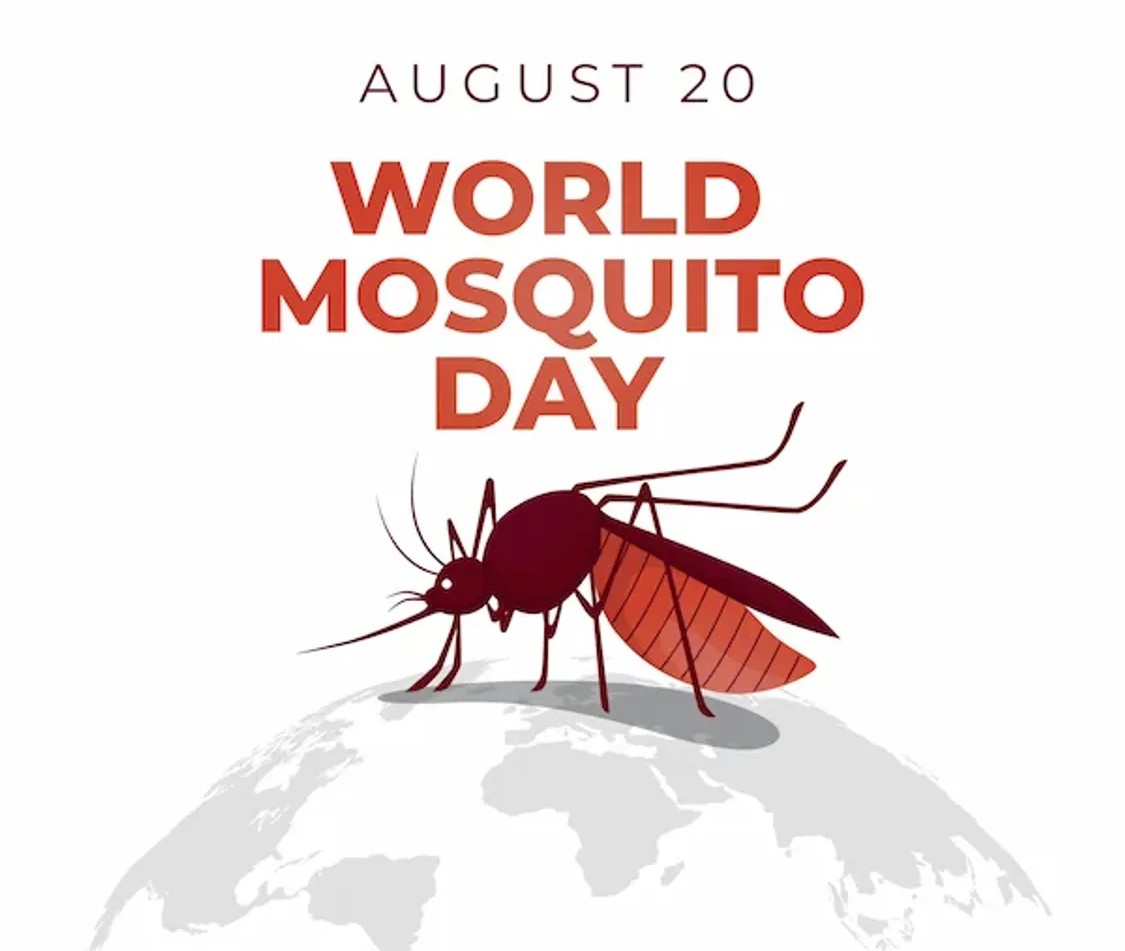
Every year on August 20, the world observes World Mosquito Day, an important awareness day dedicated to one of the smallest yet most dangerous creatures on Earth—the mosquito. Although mosquitoes are tiny insects, they can transmit serious diseases that affect millions of people around the world.
World Mosquito Day provides an opportunity to raise awareness about malaria, dengue, yellow fever, chikungunya, Zika, Japanese encephalitis, lymphatic filariasis, and other mosquito-borne diseases. It also highlights the importance of scientific research, disease prevention, environmental management, and community participation.
🦟 What Is World Mosquito Day?
World Mosquito Day is observed annually on August 20. The day commemorates the groundbreaking discovery made by British physician and scientist Sir Ronald Ross in 1897.
Ross discovered that female Anopheles mosquitoes transmit the malaria parasite between humans. His discovery established the mosquito as an important vector in the transmission of malaria and opened the way for major advances in malaria research and prevention.
His work was recognized with the Nobel Prize in Physiology or Medicine in 1902.
World Mosquito Day is therefore not simply about mosquitoes themselves. It is primarily a day to promote awareness of mosquito-borne diseases and the scientific efforts to control them.
📜 The History Behind World Mosquito Day
The story of World Mosquito Day goes back to British India.
In 1897, Ronald Ross was working in India as a medical officer. At the time, malaria was one of the most serious diseases affecting people in tropical regions, but scientists were still trying to understand exactly how the disease was transmitted.
Ross investigated mosquitoes and malaria parasites. On August 20, 1897, he made a crucial observation: he found malaria parasites inside the stomach tissues of mosquitoes that had fed on infected patients.
This provided important evidence that mosquitoes played a role in transmitting malaria.
Ross later demonstrated that the female Anopheles mosquito is responsible for transmitting the malaria parasite.
The discovery represented a major breakthrough in medical science.
🔬 Sir Ronald Ross and His Historic Discovery
Sir Ronald Ross (1857–1932) was a British physician, mathematician, epidemiologist, and writer.
Born in Almora, India, Ross developed a strong interest in medicine and scientific research. His work on malaria eventually transformed understanding of mosquito-borne diseases.
His discovery demonstrated that controlling mosquitoes could become an important part of controlling malaria.
For his pioneering research, Ross received the 1902 Nobel Prize in Physiology or Medicine.
His work helped establish the broader scientific concept of vector-borne disease transmission—the idea that certain organisms can carry infectious pathogens from one host to another.
🌍 Why Are Mosquitoes So Dangerous?
Mosquitoes are among the world’s most important disease vectors.
A mosquito can become infected when it bites a person or animal carrying a pathogen. The pathogen can then multiply or develop inside the mosquito. When the mosquito subsequently bites another person, it can transmit the infection.
Not every mosquito transmits disease, and only female mosquitoes bite humans and other animals for blood meals. They require nutrients from blood to develop their eggs.
Different mosquito species transmit different diseases.
Major mosquito-borne diseases include:
- Malaria
- Dengue
- Yellow fever
- Chikungunya
- Zika virus disease
- Japanese encephalitis
- West Nile virus disease
- Lymphatic filariasis
The diseases they transmit can cause serious illness and, in some cases, death.
🩸 Malaria and the Anopheles Mosquito
Malaria remains one of the world’s major infectious diseases.
It is caused by Plasmodium parasites and is transmitted primarily through the bites of infected female Anopheles mosquitoes.
Common symptoms of malaria can include:
- Fever
- Chills
- Headache
- Sweating
- Weakness
- Muscle aches
- Nausea and vomiting
Severe malaria can lead to serious complications, particularly among young children, pregnant women, and other vulnerable populations.
World Mosquito Day reminds us that mosquito control, early diagnosis, effective treatment, and prevention are all important components of malaria control.
🌡️ Dengue and Other Mosquito-Borne Diseases
While malaria is strongly associated with World Mosquito Day, mosquitoes transmit many other diseases.
Dengue
Dengue is mainly transmitted by Aedes mosquitoes, particularly Aedes aegypti. It occurs widely in tropical and subtropical regions.
Symptoms can include high fever, severe headache, pain behind the eyes, muscle and joint pain, nausea, and rash.
Chikungunya
Chikungunya is also primarily spread by Aedes mosquitoes. It commonly causes fever and severe joint pain.
Yellow Fever
Yellow fever is a viral disease transmitted by infected mosquitoes in parts of Africa and South America. Vaccination provides highly effective protection.
Zika
Zika virus is primarily transmitted by infected Aedes mosquitoes. Infection is often mild, but Zika can cause serious complications during pregnancy.
Japanese Encephalitis
Japanese encephalitis is a mosquito-borne viral disease occurring mainly in parts of Asia and the western Pacific. Vaccination and mosquito-bite prevention are important protective measures.
🏠 How Can We Prevent Mosquito Breeding?
One of the most effective ways of controlling mosquitoes is to eliminate places where they breed.
Mosquitoes often lay their eggs in standing water.
People can help reduce mosquito populations by:
- Emptying containers that collect rainwater.
- Keeping water-storage containers properly covered.
- Cleaning gutters and drains.
- Changing water in flower vases regularly.
- Removing discarded tyres and containers that can hold water.
- Keeping surroundings clean.
- Maintaining swimming pools properly.
- Preventing water from accumulating around homes and buildings.
Even small amounts of stagnant water can sometimes provide suitable breeding conditions for mosquitoes.
🛡️ Protecting Yourself From Mosquito Bites
Personal protection is another important part of mosquito-borne disease prevention.
Useful measures include:
1. Use mosquito repellents
Apply an appropriate insect repellent according to its instructions.
2. Wear protective clothing
Long sleeves and long trousers can reduce exposed skin.
3. Use mosquito nets
Bed nets can provide valuable protection, particularly in areas where malaria transmission occurs.
4. Use window and door screens
Screens can help keep mosquitoes outside.
5. Use air conditioning when available
Keeping indoor spaces cool and screened can reduce mosquito exposure.
6. Remove standing water
Regularly inspect the area around your home for containers or objects holding water.
🌱 Climate Change and Mosquitoes
Mosquito populations are influenced by environmental conditions such as temperature, rainfall, humidity, and availability of breeding sites.
Changes in climate and environmental conditions can affect where certain mosquito species can survive and how diseases are transmitted.
Urbanization, population movement, inadequate sanitation, water storage practices, and environmental changes can also influence mosquito populations.
For this reason, mosquito control is not only a medical issue—it is also connected with public health, environmental management, urban planning, sanitation, and climate resilience.
🔬 The Role of Science and Technology
Modern mosquito control increasingly depends on scientific research.
Researchers around the world are studying:
- New insecticides
- Better mosquito nets
- Improved vaccines
- New malaria treatments
- Mosquito population surveillance
- Genetic approaches to mosquito control
- Improved diagnostic techniques
- Biological control methods
- New ways of monitoring disease outbreaks
Technological advances have significantly improved our ability to understand mosquito populations and the diseases they transmit.
🇮🇳 World Mosquito Day in India
World Mosquito Day has particular relevance to India because mosquito-borne diseases remain an important public-health concern.
India experiences outbreaks and transmission of diseases such as dengue, malaria, chikungunya, Japanese encephalitis, and lymphatic filariasis in different regions.
The country’s tropical and subtropical climate, monsoon rainfall, urbanization, and water-storage practices can create favorable conditions for mosquito breeding.
Community participation is therefore extremely important.
Simple actions such as removing stagnant water, keeping surroundings clean, using mosquito nets and repellents, and seeking medical attention when symptoms occur can contribute significantly to disease prevention.
👨👩👧👦 The Importance of Community Participation
Mosquito control cannot be achieved by governments and health departments alone.
Every household, school, workplace, institution, and community has a role to play.
A single neglected container filled with rainwater may become a breeding site. Therefore, regular community-level cleaning and surveillance can make a meaningful difference.
Schools can also use World Mosquito Day to educate children about:
- Mosquito life cycles
- Disease transmission
- Personal protection
- Environmental cleanliness
- The importance of eliminating stagnant water
Children can then carry these lessons home and encourage their families to participate in mosquito-control activities.
🌎 World Mosquito Day and Global Health
Mosquito-borne diseases remain a major global health challenge, particularly in tropical and subtropical regions.
The fight against these diseases involves international organizations, national governments, scientists, healthcare workers, environmental agencies, community organizations, and ordinary citizens.
World Mosquito Day reminds us that public health often begins with small actions.
Removing a container of stagnant water may seem insignificant, but when millions of people take similar actions, the collective effect can be substantial.
🗓️ How Can We Observe World Mosquito Day?
Individuals and organizations can mark World Mosquito Day by:
- Organizing awareness programs.
- Cleaning mosquito-breeding sites.
- Conducting school educational activities.
- Sharing reliable information about mosquito-borne diseases.
- Encouraging proper use of mosquito nets and repellents.
- Supporting malaria and vector-control programs.
- Learning about the history of Ronald Ross’s discovery.
- Promoting community sanitation.
- Encouraging people to seek medical care when symptoms of mosquito-borne diseases appear.
🌟 The Message of World Mosquito Day
The mosquito is one of the smallest creatures capable of having a tremendous impact on human health. Yet many mosquito-borne diseases can be prevented or controlled through science, awareness, environmental management, vaccination where available, personal protection, and effective public-health programs.
The discovery made by Sir Ronald Ross in 1897 changed our understanding of malaria and helped establish a new era in tropical medicine.
More than a century later, his discovery continues to remind humanity of the importance of scientific research.
🦟 World Mosquito Day 2026
August 20, 2026, is an opportunity to remember the scientific breakthrough that revealed the mosquito’s role in malaria transmission and to renew our commitment to preventing mosquito-borne diseases.
The message is simple: understand the mosquito, eliminate breeding places, protect yourself from bites, support public-health efforts, and help build healthier communities.
“A tiny mosquito can create a huge health problem—but informed communities can make a huge difference.”
Quick Facts
| Topic | Information |
|---|---|
| Date | August 20 |
| Observed for | Awareness of mosquito-borne diseases |
| Historic discovery | Ronald Ross’s malaria-transmission research |
| Year of discovery | 1897 |
| Key mosquito associated with malaria | Female Anopheles mosquito |
| Ronald Ross Nobel Prize | 1902 |
| Major diseases | Malaria, dengue, yellow fever, chikungunya, Zika, Japanese encephalitis, filariasis |
| Main prevention principle | Reduce mosquito breeding and prevent mosquito bites |
Leave a Reply