

Introduction
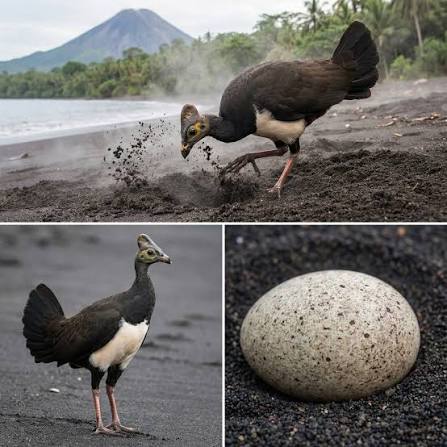
The Maleo (Macrocephalon maleo) is one of the most extraordinary birds in the world. Endemic to Sulawesi, Indonesia, this unusual megapode is famous for a breeding strategy unlike that of most birds: instead of sitting on its eggs to incubate them, the Maleo buries its enormous eggs in naturally heated sand or soil and leaves them to hatch using solar or geothermal heat. (BirdLife International)
The Maleo is also one of Indonesia’s most threatened birds. It was reclassified from Endangered (EN) to Critically Endangered (CR) in the 2021 IUCN Red List update, reflecting its continuing population decline and severe threats from egg collection and habitat destruction. (IUCN Red List)


🐦 Quick Facts About the Maleo
| Fact | Information |
|---|---|
| Common name | Maleo |
| Scientific name | Macrocephalon maleo |
| Family | Megapodiidae |
| Order | Galliformes |
| Genus | Macrocephalon |
| Range | Sulawesi, Indonesia and associated islands/localities |
| Habitat | Lowland and hill forests; communal nesting grounds |
| Conservation status | Critically Endangered (CR) |
| Diet | Mainly seeds, fruits and other plant material, along with invertebrates |
| Nesting | Communal nesting grounds |
| Egg incubation | Solar or geothermal heat |
| Parental care | None after the egg is buried |
| Special feature | Large bony casque on the head |
| Young | Hatch highly developed and become independent immediately |
The Maleo belongs to the megapode family, a group of birds known for unusual methods of incubating their eggs. The name “megapode” comes from Greek roots associated with large feet. (BirdLife DataZone)
🌏 Where Does the Maleo Live?
The Maleo is endemic to Sulawesi, meaning that its natural range is restricted to this Indonesian island and nearby associated islands/localities.
It occupies two very different environments during its life.
1. Forest habitat
Adult Maleos generally live in lowland and lower hill forests, where they forage on the forest floor. eBird describes them as ground-foraging birds that may roost in trees at night. (eBird)
2. Special nesting grounds
When breeding, Maleos travel to communal nesting areas where the ground provides sufficient natural heat.
These nesting areas can include:
- Sun-heated sandy beaches
- Sandy riverbanks
- Volcanically heated soils
- Areas near hot springs
- Geothermally heated forest soils
This dependence on very specific nesting conditions is one reason the species is so vulnerable to environmental disturbance. (ScienceDirect)
🖤 What Does a Maleo Look Like?
The Maleo is a striking, chicken-like terrestrial bird with a distinctive appearance.
It generally has:
- Glossy dark or black upperparts
- Pale to rosy-pink underparts
- A prominent dark bony casque on the head
- Bare yellowish facial skin
- Bright orange-red coloration around the eye and bill
- A reddish-orange bill
- Strong legs and feet
The casque is perhaps its most recognizable feature.
Its scientific genus name, Macrocephalon, refers to the bird’s distinctive large-headed appearance.
eBird describes the species as a large black-and-white megapode with a rose-pink breast and a prominent head knob. (eBird)
🪶 The Maleo’s Most Extraordinary Feature: Its Reproduction
The reproductive behavior of the Maleo is among the most remarkable in the entire bird world.
Most birds build nests, lay eggs and incubate them by sitting on them.
The Maleo does something completely different.
The parents use the Earth’s natural heat as an incubator.
🥚 The Giant Maleo Egg
The female Maleo produces an exceptionally large egg—around five times the size of a chicken egg, according to BirdLife International. (BirdLife International)
The large egg contains a very substantial yolk, providing the developing chick with the energy it needs during its long incubation period.
Researchers have reported individual Maleo eggs weighing around 200–250 grams, although measurements vary. (Biome Conservation)
🏖️ How Does the Maleo Incubate Its Eggs?
The breeding pair travels from the forest to a communal nesting ground.
The birds dig a deep hole in the sand or soil.
The female deposits an egg.
The egg is then covered with sand or soil.
And then something extraordinary happens:
The parents leave.
They do not sit on the egg.
Instead, the egg is incubated by the natural heat of the environment.
At coastal sites, the heat may come primarily from the sun-warmed sand.
At inland sites, the heat may come from geothermal activity and hot springs.
Research has documented both solar-heated coastal nesting grounds and geothermally heated inland nesting sites. (ScienceDirect)
🔥 Nature’s Underground Incubator
The Maleo effectively uses the Earth’s environment as a natural incubator.
This remarkable reproductive strategy means that the species depends heavily on the continued availability of suitable nesting grounds.
A forest may remain relatively healthy, but if a traditional Maleo nesting site is destroyed, disturbed or occupied by people, the population can still collapse.
This is one of the reasons conservationists consider nesting-ground protection so important.
🐣 The Baby Maleo’s Amazing First Day
Perhaps the most astonishing part of the Maleo’s life begins when the egg hatches.
The chick is not a helpless newborn like many familiar bird chicks.
It emerges highly developed, with feathers and strong legs.
After hatching underground, it must dig its way through the sand or soil to reach the surface.
Once it emerges, it is essentially on its own.
There is no parent waiting nearby to feed it.
Research and conservation organizations report that young Maleos emerge ready to move rapidly into the forest and are capable of flight soon after reaching the surface. (Biome Conservation)
This is an extraordinary example of precocial development in birds.
🌳 No Parental Care
Maleo parents provide virtually no parental care after the egg has been buried.
The adults return to the forest.
The chick must:
- Hatch from the egg.
- Dig through the sand or soil.
- Reach the surface.
- Find shelter and food.
- Avoid predators.
- Enter the surrounding forest.
- Grow to adulthood independently.
The entire strategy is radically different from that of most familiar birds.
👨👩👧👦 Why Do Maleos Nest Communally?
Maleos gather at traditional communal nesting grounds.
Many pairs may use the same general nesting area over long periods.
Scientists believe communal nesting may have evolved partly in relation to predator pressure, although the exact evolutionary history of this behavior is complex.
Today, however, communal nesting creates a serious conservation problem.
When many birds concentrate their eggs in one place, humans can locate and collect large numbers of eggs efficiently.
Thus, a behavior that evolved as part of the species’ natural history has become one of its greatest vulnerabilities in the human-dominated landscape.
🍽️ What Does the Maleo Eat?
Maleos are primarily ground-foraging birds.
Their diet can include:
- Seeds
- Fruits
- Fallen plant material
- Invertebrates
- Other small food items found while foraging
They spend much of their time moving through forest habitats in search of food.
Their strong legs and feet are useful for walking and scratching through forest-floor material.
🔊 Maleo Behaviour and Communication
Maleos are generally not considered highly vocal birds.
eBird describes them as often relatively quiet, although they can produce a distinctive bubbling or resonant call. (eBird)
They are mainly terrestrial but are capable flyers.
They can also roost in trees, particularly at night. (eBird)
⚠️ Why Is the Maleo Critically Endangered?
The Maleo faces several interconnected threats.
1. Egg collection
One of the most serious threats is the collection of Maleo eggs by humans.
The eggs are unusually large and nutritious and have traditionally been regarded as a food resource in parts of Sulawesi.
BirdLife International reports that egg collection has become a major factor behind the abandonment and failure of Maleo nesting grounds. (BirdLife DataZone)
A 2023 study examining Maleo nesting grounds across Sulawesi found that the degree of human egg-taking was the strongest factor influencing whether nesting grounds remained active or became inactive. (Springer)
2. Habitat destruction
The Maleo requires both:
- Suitable forest habitat for adults
- Suitable naturally heated nesting grounds for reproduction
Deforestation, land conversion, development and infrastructure can affect either or both.
BirdLife International reported that more than 13% of Sulawesi’s forest had been cleared since 2000, adding pressure to a species already suffering from egg collection. (BirdLife International)
3. Destruction of nesting grounds
A Maleo nesting ground cannot simply be replaced by any ordinary beach or patch of soil.
It needs the right combination of:
- Temperature
- Soil or sand
- Depth
- Moisture
- Accessibility
- Nearby forest
- Suitable environmental conditions
The loss of traditional nesting grounds can therefore have serious consequences.
4. Hunting of adult birds
Adult Maleos may also be hunted for food.
BirdLife International identified hunting of adults as another pressure contributing to the species’ decline. (BirdLife International)
5. Coastal development and erosion
Some Maleo nesting grounds are located along beaches.
Coastal erosion, tourism development, roads, ports, construction and other forms of human disturbance can therefore destroy or isolate important breeding sites.
A 2023 Associated Press report documented concerns about poaching, coastal development and infrastructure affecting Maleo habitat in West Sulawesi. (YouTube)
🌡️ Climate Change and the Maleo
Climate change creates an additional concern.
Because Maleos depend on environmental temperature for incubation, changes in:
- Air temperature
- Rainfall
- Sea level
- Coastal conditions
- Soil temperature
- Vegetation
may influence the suitability of nesting grounds.
BirdLife has noted concerns that increasing temperatures and rising sea levels could affect Maleo nesting success. (BirdLife International)
This makes the Maleo an interesting example of how climate change can affect a species with a highly specialized reproductive strategy.
🛡️ Conservation Efforts
There is still hope for the Maleo.
Conservation programs in Sulawesi have demonstrated that protecting nesting grounds and reducing egg poaching can produce remarkable results.
Community participation is particularly important.
A 2021 study of two community-based conservation programs in the Tompotika region found that Maleo numbers increased substantially after communities stopped egg poaching and allowed eggs to remain undisturbed. At the two sites studied, numbers increased approximately four-fold after 14 years and three-fold after five years. (ScienceDirect)
This provides an important conservation lesson:
Protecting the eggs can help protect the future of the entire species.
🤝 Local Communities Are Essential
Conservation is most successful when local communities participate.
In some Sulawesi conservation programs, local people have helped:
- Patrol nesting grounds
- Prevent egg poaching
- Protect forests
- Monitor returning adults
- Educate neighboring communities
- Restore degraded nesting sites
Biome Conservation reports a particularly encouraging example at the Taima nesting ground, where local villagers and conservation teams have protected the site and greatly reduced egg poaching. (Biome Conservation)
The Maleo demonstrates that conservation does not always mean simply creating a protected area.
It can also mean working with people who live alongside wildlife.
📈 Can the Maleo Recover?
Yes.
Although the Maleo is in serious danger, its story is not necessarily a story of inevitable extinction.
Research from community conservation sites shows that populations can recover when human egg collection is stopped and nesting grounds are protected. (ScienceDirect)
This is one of the most encouraging aspects of Maleo conservation.
The species still has the biological capacity to reproduce successfully when its nesting grounds are secure.
🏝️ Important Maleo Conservation Areas
Important Maleo populations and nesting sites occur in several parts of Sulawesi.
Among the locations associated with Maleo conservation and research are:
- Bogani Nani Wartabone National Park
- Tompotika region
- Taima
- Dumoga-Bone landscape
- Other protected and community-managed nesting grounds throughout Sulawesi
The Taima conservation site in Central Sulawesi has become an especially notable example of community-based Maleo protection. (Biome Conservation)
📊 What Do We Know About the Population?
A precise current global population figure is difficult to establish because Maleos are widely dispersed among nesting grounds, many sites have been abandoned, and populations fluctuate.
An older major survey estimated approximately 4,000–7,000 breeding pairs, but this figure should not be treated as a current 2026 population estimate. (ScienceDirect)
More recent research provides a clearer picture of the continuing crisis at nesting grounds.
A 2023 analysis cited by BirdLife examined 212 known or formerly known nesting grounds and found:
- 94 sites (44%) active
- 118 sites (56%) inactive
- Of active sites, most had very low daily nesting activity
The study concluded that human egg collection was particularly important in determining whether nesting grounds survived. (BirdLife DataZone)
🧬 Taxonomy
Scientific name: Macrocephalon maleo
Family: Megapodiidae
Order: Galliformes
Genus: Macrocephalon
The Maleo is the only living species in the genus Macrocephalon. (Wikimedia Commons)
It is therefore evolutionarily distinctive as well as geographically restricted.
🌿 Why the Maleo Is Important to Biodiversity
The Maleo is important for several reasons.
It is endemic to Sulawesi
The species is part of Sulawesi’s unique biological heritage.
It represents an unusual evolutionary strategy
Its use of solar and geothermal energy for egg incubation is exceptional.
It connects forests and beaches
The species requires both forest habitat and specialized nesting grounds.
It is culturally significant
The Maleo has become a symbol of Sulawesi’s extraordinary biodiversity and appears in local conservation campaigns and public awareness efforts.
Its survival reflects the health of its ecosystem
Protecting Maleos can also protect forests, beaches, wetlands and other organisms sharing these habitats.
📷 Maleo Bird Image Resources
For readers, students, bloggers and bird enthusiasts, the following are useful places to find photographs and media.
1. Cornell Lab / Birds of the World
Maleo photographs – Birds of the World
A particularly useful scientific image resource. One close-up photograph shows the Maleo’s distinctive casque and colorful facial markings.
2. Macaulay Library / eBird
Maleo photographs and media – Macaulay Library
The Cornell Macaulay Library contains a substantial collection of Maleo photographs and recordings from Sulawesi, including material from conservation sites. (Macaulay Library)
3. Wikimedia Commons
Maleo image collection – Wikimedia Commons
This is particularly useful for finding photographs and historical illustrations, but always check the individual file’s copyright and license before republishing an image on a website.
4. iNaturalist
Maleo observations – iNaturalist
iNaturalist provides photographs and observation records contributed by users. Individual images have their own licensing conditions.
🎥 Maleo Bird Video Resources
1. Maleo – Macaulay Library
Maleo video – Macaulay Library
This recording shows a Maleo in Dumoga-Bone (Bogani Nani Wartabone) National Park, North Sulawesi. (Macaulay Library)
2. Maleo videos – Macaulay Library
Maleo video collection – Macaulay Library
A useful collection for observing Maleos in their natural environment.
3. YouTube – Maleo introduction
Getting to Know the Maleo Bird – a Rare Animal Endemic to Sulawesi
This video covers the Maleo’s appearance, breeding behavior, habitat, threats and conservation. (YouTube)
4. Associated Press – Maleo conservation crisis
Poaching and development threaten revered Indonesian bird
This report documents Maleos nesting at Tapandullu Beach in West Sulawesi and examines egg poaching and development pressures. (YouTube)
🥚 Maleo Egg: Fascinating Facts
The Maleo egg deserves special attention.
It is:
- Extremely large compared with the bird’s body size
- Rich in yolk
- Buried rather than incubated by the parents
- Incubated by environmental heat
- Laid in communal nesting grounds
- Vulnerable to human collection
The egg can be around five times the size of a chicken egg, making it one of the most visually striking examples of avian egg specialization. (BirdLife International)
🐣 Maleo Chick: A Remarkable Survivor
The newly hatched Maleo represents one of nature’s most dramatic examples of independence.
Unlike many baby birds, it does not wait in a nest for its parents.
It must:
break out → dig upward → reach the surface → hide from predators → find food → reach the forest → survive independently.
The chick’s advanced development at hatching is essential because there is no parental feeding or protection.
This unusual reproductive strategy has allowed the Maleo to survive for a very long time—but it depends on humans leaving the eggs and nesting grounds alone.
🔍 15 Amazing Facts About the Maleo
1. It is found naturally in Indonesia.
The Maleo is endemic to Sulawesi.
2. It is a megapode.
It belongs to the Megapodiidae family.
3. It has a strange head casque.
The large dark casque is one of its most recognizable features.
4. Its egg is enormous.
It can be roughly five times the size of a chicken egg. (BirdLife International)
5. It does not sit on its eggs.
Environmental heat performs the incubation.
6. It uses solar energy.
Sun-heated sand can incubate its eggs.
7. It also uses geothermal energy.
Some nesting sites are heated naturally by volcanic or geothermal activity.
8. It nests communally.
Many pairs may use the same nesting ground.
9. The parents abandon the egg.
Once buried, the parents leave.
10. The chick is highly developed.
It emerges with the ability to fend for itself.
11. The chick can fly soon after emerging.
This gives it an unusual degree of independence among birds. (Biome Conservation)
12. Adult Maleos live in forests.
The birds travel between forest habitat and communal nesting grounds. (eBird)
13. Humans are a major threat.
Egg collection has devastated many nesting grounds. (BirdLife DataZone)
14. It is Critically Endangered.
The species was moved from Endangered to Critically Endangered in the 2021 Red List update. (IUCN Red List)
15. There is hope.
Community-based conservation has produced significant population recovery at some sites. (ScienceDirect)
🌱 How Can We Help Save the Maleo?
The future of the Maleo depends on protecting both its forest habitat and its nesting grounds.
Important conservation actions include:
- Protecting communal nesting grounds.
- Preventing illegal egg collection.
- Protecting adult birds from hunting.
- Conserving surrounding forests.
- Preventing destructive development near nesting beaches.
- Monitoring active nesting grounds.
- Supporting local conservation groups.
- Involving local communities.
- Educating children and young people.
- Conducting long-term population research.
The experience of community-based programs shows that local participation can make a real difference. (ScienceDirect)
🌏 The Maleo: A Symbol of Sulawesi
The Maleo is much more than an unusual bird.
It is a symbol of the extraordinary evolutionary history of Sulawesi.
Its life connects:
rainforest + beach + volcano + sunlight + community + conservation.
Few birds demonstrate so clearly how closely an animal can depend on several different parts of an ecosystem.
When a Maleo disappears from a nesting ground, the loss is not simply the disappearance of one bird species. It can indicate the degradation of an entire ecological system.
❤️ A Message for Conservation
The Maleo’s story contains both a warning and a message of hope.
For decades, people collected its eggs and destroyed or altered its habitat. Many traditional nesting grounds disappeared.
But where communities have protected the eggs and habitat, Maleos have demonstrated the ability to recover. (ScienceDirect)
Therefore, the Maleo’s future is not necessarily determined by its present endangered status.
If we protect the nesting grounds, protect the forests, stop destructive egg collection and involve local communities, this extraordinary bird can still survive.
🦜 Conclusion
The Maleo (Macrocephalon maleo) is one of the world’s most fascinating birds. Its enormous eggs, geothermal and solar incubation, communal nesting behavior, independent chicks and distinctive appearance make it unique among the birds of the world.
Yet its greatest story today is one of conservation.
The Maleo has survived for generations by using the natural heat of Sulawesi’s beaches and volcanic landscape. Today, its survival depends increasingly on whether human beings can protect those same environments.
Saving the Maleo means protecting a remarkable bird, the forests it inhabits, the beaches where it breeds, and the natural heritage of Sulawesi.
“The Maleo does not need us to teach nature how to survive; it needs us to give nature enough space to continue.”
📚 Recommended Resources
- BirdLife International – Maleo and megapode conservation information
- BirdLife International – 2021 Red List update and Maleo conservation status
- IUCN SOS – Community-based Maleo conservation project
- Biome Conservation – Maleo conservation in Sulawesi
- eBird – Maleo species information and identification
- Macaulay Library – Maleo photographs, videos and recordings
- Wikimedia Commons – Maleo photographs and historical images
Leave a Reply