

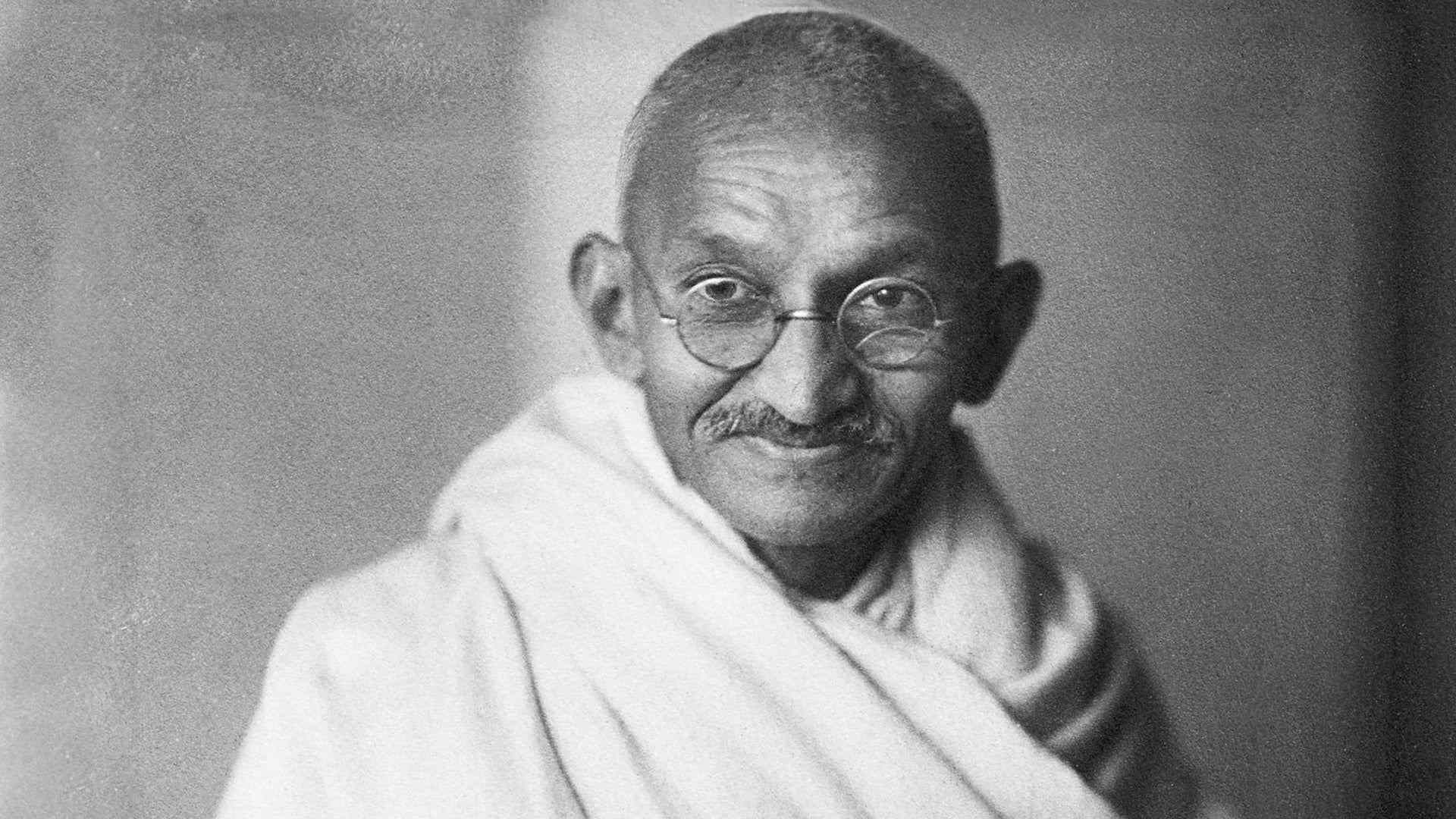
With Original Source References
Editorial note: The source references below point to Gandhi’s own books, speeches, letters, and periodicals such as Young India and Harijan. Minor spelling, punctuation, and typographical differences can occur between editions.
🕊️ A. Truth, Non-Violence & Satyagraha
1.
“Truth and Non-violence are as old as the hills.”
Source: Harijan, 28 March 1936.
2.
“I have nothing new to teach the world.”
Source: Harijan, 28 March 1936.
3.
“I swear by non-violence because I know that it alone conduces to the highest good of mankind.”
Source: Young India, 21 May 1925, p. 178.
4.
“I object to violence because when it appears to do good, the good is only temporary; the evil it does is permanent.”
Source: Young India, 21 May 1925, p. 178.
5.
“Non-violence is the greatest force at the disposal of mankind.”
Source: Harijan, 20 July 1935, p. 180.
6.
“Destruction is not the law of the humans.”
Source: Harijan, 20 July 1935, p. 180.
7.
“Every murder or other injury, no matter for what cause, committed or inflicted on another is a crime against humanity.”
Source: Harijan, 20 July 1935, p. 180.
8.
“Non-violence is a weapon of the strong.”
Source: Young India, 1 October 1931, p. 287.
9.
“Non-violence cannot be preached. It has to be practiced.”
Source: Harijan, 20 March 1937, p. 42.
10.
“Non-violence is not a quality to be evolved or expressed to order. It is an inward growth depending for sustenance upon intense individual effort.”
Source: Young India, 23 April 1938.
11.
“Non-violence is a quality not of the body but of the soul.”
Source: Harijan, 5 November 1938.
12.
“Ahimsa is a weapon of matchless potency.”
Source: Young India, 6 September 1928, p. 301.
13.
“Ahimsa is the attribute of the brave.”
Source: Young India, 6 September 1928, p. 301.
14.
“A man cannot then practice Ahimsa and be a coward at the same time.”
Source: The Modern Review, October 1916.
15.
“Non-violence and cowardice are contradictory terms.”
Source: Young India, 31 October 1929, p. 356.
16.
“Non-violence springs from love, cowardice from hate.”
Source: Young India, 31 October 1929, p. 356.
17.
“Strength does not come from physical capacity. It comes from an indomitable will.”
Source: Young India, 11 August 1920, p. 3.
18.
“Where there is fear there is no religion.”
Source: Young India, 2 September 1926, p. 308.
19.
“Fearlessness is the first requisite of spirituality.”
Source: Young India, 13 October 1921, p. 323.
20.
“Cowards can never be moral.”
Source: Young India, 13 October 1921, p. 323.
✊ B. Satyagraha & Resistance
21.
“My goal is friendship with the world and I can combine the greatest love with the greatest opposition to wrong.”
Source: Young India, 10 March 1920, p. 5.
22.
“Satyagraha is a relentless search for truth and a determination to reach truth.”
Source: Young India, 19 March 1925, p. 95.
23.
“Non-violence is not a resignation from all real fighting against wickedness.”
Source: Young India, 8 October 1925, p. 346.
24.
“The resistance of the soul that I should offer instead would elude him.”
Source: Young India, 8 October 1925, p. 346.
25.
“Having flung aside the sword, there is nothing except the cup of love which I can offer to those who oppose me.”
Source: Young India, 19 March 1925, p. 95.
26.
“Non-violence in its dynamic condition means conscious suffering.”
Source: Young India, 11 August 1920, p. 3.
27.
“There can be no Satyagraha in an unjust cause.”
Source: Young India, 27 April 1921, p. 135.
28.
“The slightest use of violence often defeats a just cause.”
Source: Young India, 27 April 1921.
29.
“Non-violence is the means, the end for every nation is complete independence.”
Source: Harijan, 11 February 1939, p. 8.
30.
“I have often said that if one takes care of the means, the end will take care of itself.”
Source: Harijan, 11 February 1939, p. 8.
🌱 C. Truth, Means & Moral Life
31.
“Impure means result in an impure end.”
Source: The Voice of Truth, “Means and Ends.”
32.
“One cannot reach truth by untruthfulness.”
Source: The Voice of Truth, “Means and Ends.”
33.
“Truthful conduct alone can reach Truth.”
Source: The Voice of Truth, “Means and Ends.”
34.
“Non-violence and Truth are twins.”
Source: The Voice of Truth, “Means and Ends.”
35.
“Non-violence is embedded in Truth and vice versa.”
Source: The Voice of Truth, “Means and Ends.”
36.
“My faith in the wise saying that what is gained by the sword will also be lost by the sword is imperishable.”
Source: Harijan, 2 September 1939, p. 260.
37.
“Success or failure is not in our hands. It is enough we do our part well.”
Source: Harijan, 12 January 1947, p. 490.
38.
“Ours is but to strive.”
Source: Harijan, 12 January 1947, p. 490.
39.
“In the end, it will be as He wishes.”
Source: Harijan, 12 January 1947, p. 490.
40.
“A small body of determined spirit fired by an unquenchable faith in their mission can alter the course of history.”
Source: Harijan, 19 November 1938, p. 343.
🙏 D. Prayer, Faith & Spirituality
41.
“Prayer is not asking. It is longing of the soul.”
Source: Young India, 23 January 1930.
42.
“It is daily admission of one’s weakness.”
Source: Young India, 23 January 1930.
43.
“It is better in prayer to have a heart without words than words without a heart.”
Source: Young India, 23 January 1930.
44.
“Prayer is the very soul and essence of religion.”
Source: Young India, 23 January 1930.
45.
“Prayer must be the very core of the life of man.”
Source: Young India, 23 January 1930.
46.
“Prayer is impossibility without a living faith in the presence of God within.”
Source: Young India, 20 December 1928, p. 420.
47.
“That faith is of little value which can flourish only in fair weather.”
Source: Young India, 25 April 1929, p. 134.
48.
“Faith in order to be of any value has to survive the severest trials.”
Source: Young India, 25 April 1929, p. 134.
49.
“Where love is, there God is also.”
Source: Satyagraha in South Africa, p. 237.
50.
“God can be found only through love, not earthly, but divine.”
Source: Harijan, 23 November 1947, p. 425.
🕊️ E. Religion & Religious Harmony
51.
“There is no religion higher than the Truth and Righteousness.”
Source: Selections from Gandhi, p. 254.
52.
“Religion binds man to God and man to man.”
Source: Harijan, 4 May 1940, p. 117.
53.
“Religion which takes no count of practical affairs and does not help to solve them, is no religion.”
Source: Young India, 7 May 1925, p. 164.
54.
“True religion and true morality are inseparably bound up with each other.”
Source: Selections from Gandhi, p. 255.
55.
“True morality consists, not in following the beaten track, but in finding out the true path for ourselves and in fearlessly following it.”
Source: Selections from Gandhi, p. 254.
56.
“I believe in the fundamental truth of all great religions of the world.”
Source: Harijan, 16 February 1934, pp. 5–6.
57.
“I believe in the truth of all religions of the world.”
Source: Harijan, 16 February 1934, p. 7.
58.
“Each religion has its own contribution to make to human evolution.”
Source: Harijan, 28 January 1939, p. 448.
59.
“For me the different religions are beautiful flowers from the same garden.”
Source: Harijan, 30 January 1937, p. 407.
60.
“It is the duty of everyone to study the scriptures of religions other than his own.”
Source: Harijan, 25 May 1947, p. 166.
🤝 F. Love, Humanity & Relationships
61.
“Man and his deed are two distinct things.”
Source: An Autobiography, p. 206.
62.
“Hate the sin and not the sinner.”
Source: An Autobiography, p. 206.
63.
“Difference of opinion should never mean hostility.”
Source: Young India, 17 March 1927, p. 82.
64.
“For a non-violent person, the whole world is one family.”
Source: Harijan, 21 July 1940, p. 214.
65.
“Love is reckless in giving away, oblivious as to what it gets in return.”
Source: Young India, 1 October 1931, p. 287.
66.
“Love wrestles with the world as with itself, and ultimately gains a mastery over all other feelings.”
Source: Young India, 1 October 1931, p. 287.
67.
“The alphabet of Ahimsa is best learnt in the domestic school.”
Source: Harijan, 21 July 1940, p. 214.
68.
“Non-violence, like charity, must begin at home.”
Source: Harijan, 28 January 1939, p. 441.
69.
“If one has pride and egoism, there is no non-violence.”
Source: Harijan, 28 January 1939, p. 442.
70.
“Non-violence is impossible without humility.”
Source: Harijan, 28 January 1939, p. 442.
📚 G. Education & Learning
71.
“Persistent questioning and healthy inquisitiveness are the first requisite for acquiring learning of any kind.”
Source: Harijan, 8 September 1946, p. 306.
72.
“There can be no knowledge without humility and the will to learn.”
Source: Harijan, 8 September 1946, p. 306.
73.
“Education must be of a new type for the sake of the creation of a new world.”
Source: Harijan, 19 January 1947, p. 494.
74.
“Literary training by itself adds not an inch to one’s moral height.”
Source: Young India, 1 June 1921, p. 172.
75.
“Character-building is independent of literary training.”
Source: Young India, 1 June 1921, p. 172.
76.
“Let students realize that learning without courage is like a waxen statue beautiful to look at but bound to melt at the least touch of a hot substance.”
Source: Young India, 12 July 1928, p. 236.
77.
“The aim of university education should be to turn out true servants of the people.”
Source: Harijan, 25 August 1946, p. 283.
78.
“Real education has to draw out the best from the boys and girls to be educated.”
Source: Harijan, 1 December 1933, p. 3.
79.
“Knowledge includes all training that is useful for the service of mankind.”
Source: Harijan, 10 March 1946, p. 38.
80.
“Our system of Basic education leads to the development of the mind, body and soul.”
Source: Harijan, 9 November 1947, p. 401.
🏛️ H. Democracy, Freedom & Swaraj
81.
“Science of non-violence can alone lead one to pure democracy.”
Source: Young India, 30 June 1920, p. 3.
82.
“Democracy disciplined and enlightened is the finest thing in the world.”
Source: Young India, 30 July 1931, p. 199.
83.
“In true democracy every man and woman is taught to think for himself or herself.”
Source: Harijan, 14 July 1946, p. 220.
84.
“My notion of democracy is that under it the weakest should have the same opportunity as the strongest.”
Source: Mahatma, Vol. V, p. 343.
85.
“Democracy and violence can ill go together.”
Source: Harijan, 12 November 1938, p. 328.
86.
“The golden rule of conduct, therefore, is mutual toleration.”
Source: Young India, 23 September 1926, p. 334.
87.
“Good government is no substitute for self-government.”
Source: Young India, 22 September 1920, p. 1.
88.
“Individual freedom can have the fullest play only under a regime of unadulterated Ahimsa.”
Source: Harijan, 25 May 1939, p. 143.
🌍 I. Humanity, Service & World Community
89.
“Isolated independence is not the goal of the world-states. It is voluntary inter-dependence.”
Source: Young India, 17 July 1924, p. 236.
90.
“There is no limit to extending our service to our neighbours across our State-made frontiers.”
Source: Young India, 31 December 1931, p. 427.
91.
“The structure of a world federation can be raised only on foundation of non-violence.”
Source: Gandhiji’s Correspondence with the Government 1942–44, p. 143.
92.
“Good travels at a snail’s pace.”
Source: Indian Home Rule / selected writings reference in Gandhi’s collected writings.
93.
“Those who want to do good are not selfish, they are not in a hurry.”
Source: Indian Home Rule / selected writings reference.
94.
“I am not visionary. I claim to be a practical idealist.”
Source: Young India, 11 August 1920, p. 3.
95.
“The dignity of man requires obedience to a higher law—to the strength of the spirit.”
Source: Young India, 11 August 1920, p. 3.
96.
“The spirit lies dormant in the brute, and he knows no law but that of physical might.”
Source: Young India, 11 August 1920, p. 3.
97.
“When non-violence is accepted as the Law of Life, it must pervade the whole being.”
Source: Harijan, 5 September 1936, p. 236.
98.
“Whenever there are jars, wherever you are confronted with an opponent, conquer him with love.”
Source: Young India, 1 October 1931, p. 286.
99.
“I have learned this one lesson—that what is impossible with man is child’s play with God.”
Source: Young India, 19 November 1931, p. 361.
100.
“I know the path. It is straight and narrow. It is like the edge of a sword. I rejoice to walk on it.”
Source: Young India, 17 June 1926, p. 215.
📚 Primary Sources & Recommended References
- Selected Works of Mahatma Gandhi — The Voice of Truth: The Mahatma Gandhi Foundation’s online collection contains quotations together with dates and publication/page references.
- Selected Writings of Mahatma Gandhi: Contains extracts from Gandhi’s writings, including Young India, Harijan, his autobiography and other works.
- Mahatma Gandhi’s autobiography, The Story of My Experiments with Truth — an essential primary source for Gandhi’s own account of his life and development.
- Young India — Gandhi’s important English-language journal, published from 1919 to 1932.
- Harijan — Gandhi’s journal, published from 1933 onward.
- Hind Swaraj or Indian Home Rule — Gandhi’s 1909 work on civilisation, modernity, self-rule and political philosophy.
⚠️ A note about famous “Gandhi quotes”
Several quotations that appear constantly on social media are difficult to authenticate or are frequently misattributed. Examples include:
- “Be the change you wish to see in the world.”
- “Live as if you were to die tomorrow. Learn as if you were to live forever.”
- “First they ignore you, then they laugh at you, then they fight you, then you win.”
- “An eye for an eye leaves the whole world blind.”
Leave a Reply