

Introduction
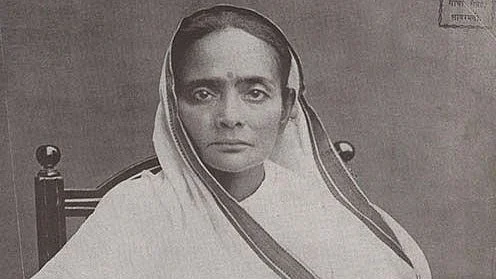
Kasturba Gandhi, affectionately known as “Ba”, was one of the most remarkable women in India’s struggle for independence. Although she is often remembered as the wife of Mahatma Gandhi, Kasturba was much more than a supportive spouse. She was a courageous freedom fighter, social reformer, educator, and advocate for women’s rights who actively participated in India’s national movement.
Throughout her life, she endured imprisonment, hardship, and personal sacrifice while standing firmly beside her husband in the pursuit of justice, equality, and freedom. Her quiet strength, resilience, and unwavering commitment to truth made her an inspiration to countless women across India.
Early Life
Kasturba Gandhi was born as Kastur Kapadia on April 11, 1869, in Porbandar, in present-day Gujarat, into a prosperous merchant family. Her father, Gokuldas Kapadia, was a successful businessman.
Like many girls of her time, Kasturba received little formal education during her childhood. However, she later learned to read and write with encouragement from her husband and developed a deep understanding of social issues through experience and public life.
Marriage to Mohandas Gandhi
At the age of thirteen, Kasturba married Mohandas Karamchand Gandhi, who was also thirteen at the time. Their marriage, arranged according to the customs of the period, evolved over the years into a partnership based on mutual respect and shared ideals.
The early years of their marriage were not without challenges. Gandhi himself later acknowledged that he had been possessive and demanding as a young husband. Over time, both learned from each other, and Kasturba became not only his life companion but also one of his strongest supporters and trusted advisers.
Their relationship reflected growth, mutual learning, and a shared commitment to public service.

Life in South Africa
In 1897, Kasturba joined Gandhi in South Africa, where he was leading campaigns against racial discrimination faced by the Indian community.
During this period, she actively participated in public life and supported community welfare initiatives. She worked in the Phoenix Settlement and later at Tolstoy Farm, helping to establish communities based on simplicity, equality, and self-reliance.
When the South African government introduced discriminatory laws against Indians, Kasturba took part in peaceful protests.
In 1913, she was arrested for participating in the satyagraha movement, becoming one of the first Indian women to be imprisoned in South Africa for political activism.
Return to India
After returning to India in 1915, Kasturba became deeply involved in Gandhi’s campaigns for social reform and national independence.
She traveled extensively across the country, encouraging women to join the freedom movement and promoting ideals of:
- Non-violence.
- Truth.
- Simplicity.
- Self-reliance.
- Community service.
She inspired women from rural and urban communities alike to become active participants in public life.
Participation in the Freedom Movement
Kasturba Gandhi played an active role in many major movements led by Mahatma Gandhi.
Champaran Movement
During the Champaran Satyagraha of 1917, she worked among villagers, promoting hygiene, sanitation, literacy, and women’s education while supporting Gandhi’s campaign for the rights of indigo farmers.
Non-Cooperation Movement
She encouraged women to boycott foreign goods, wear khadi, and support the cause of Indian self-rule.
Civil Disobedience Movement
During the Salt Satyagraha and subsequent civil disobedience campaigns, Kasturba addressed public meetings and inspired women to participate in peaceful resistance against British rule.
Quit India Movement
Following the launch of the Quit India Movement in 1942, Kasturba was arrested along with Gandhi and many other national leaders.
She remained imprisoned despite her declining health, demonstrating extraordinary courage and determination.
Champion of Women’s Rights
Kasturba believed that women had an essential role to play in building a free and just society.
She encouraged women to:
- Pursue education.
- Participate in public life.
- Develop self-confidence.
- Oppose social discrimination.
- Contribute to community welfare.
Through her example rather than public speeches, she inspired thousands of women to step beyond traditional domestic roles and engage in the national movement.
Work for Social Reform
Beyond politics, Kasturba devoted herself to improving the lives of ordinary people.
She worked tirelessly for:
- Women’s education.
- Adult literacy.
- Public health.
- Village sanitation.
- Care of the poor.
- Promotion of khadi and village industries.
- Removal of untouchability.
She believed that true independence required both political freedom and social transformation.
Imprisonment and Final Days
Kasturba Gandhi spent several periods in prison due to her participation in the freedom movement.
Her final imprisonment came after the Quit India Movement, when she was detained with Gandhi at the Aga Khan Palace in Pune.
During imprisonment, her health steadily deteriorated due to chronic illness. Despite receiving medical care, she passed away on February 22, 1944, at the age of seventy-four, while still in detention.
Gandhi remained by her side during her final moments, describing her as his lifelong companion in both family life and public service.
Personality and Character
Kasturba Gandhi was known for her:
- Compassion.
- Patience.
- Quiet determination.
- Moral courage.
- Simplicity.
- Deep faith.
- Dedication to service.
Though naturally reserved, she possessed remarkable inner strength and often stood firm in her convictions, even when she disagreed with Gandhi.
Her courage was demonstrated not through dramatic speeches but through steadfast action and personal sacrifice.
Legacy
Kasturba Gandhi remains one of India’s most respected women freedom fighters.
Several educational institutions, hospitals, social organizations, and charitable trusts have been established in her memory, including the Kasturba Gandhi National Memorial Trust, founded to promote women’s education and rural development.
Her life continues to inspire those working for social justice, women’s empowerment, education, and community service.
Lessons from Her Life
Kasturba Gandhi’s life offers timeless lessons:
- True leadership is often expressed through humility and service.
- Courage can be quiet yet immensely powerful.
- Women play a vital role in shaping society and the nation.
- Education and compassion are powerful instruments of social change.
- Great movements succeed through the dedication of both famous leaders and those who work alongside them.
Conclusion
Kasturba Gandhi was far more than the wife of Mahatma Gandhi. She was a courageous freedom fighter, compassionate social worker, and dedicated advocate of women’s empowerment who made invaluable contributions to India’s struggle for independence.
Her life of simplicity, sacrifice, and unwavering commitment to truth and justice reminds us that history is shaped not only by those who stand in the spotlight but also by those whose quiet strength sustains great causes. Today, Kasturba Gandhi is remembered as one of the most inspiring women of modern India, whose legacy of service, resilience, and compassion continues to inspire generations.
Leave a Reply