

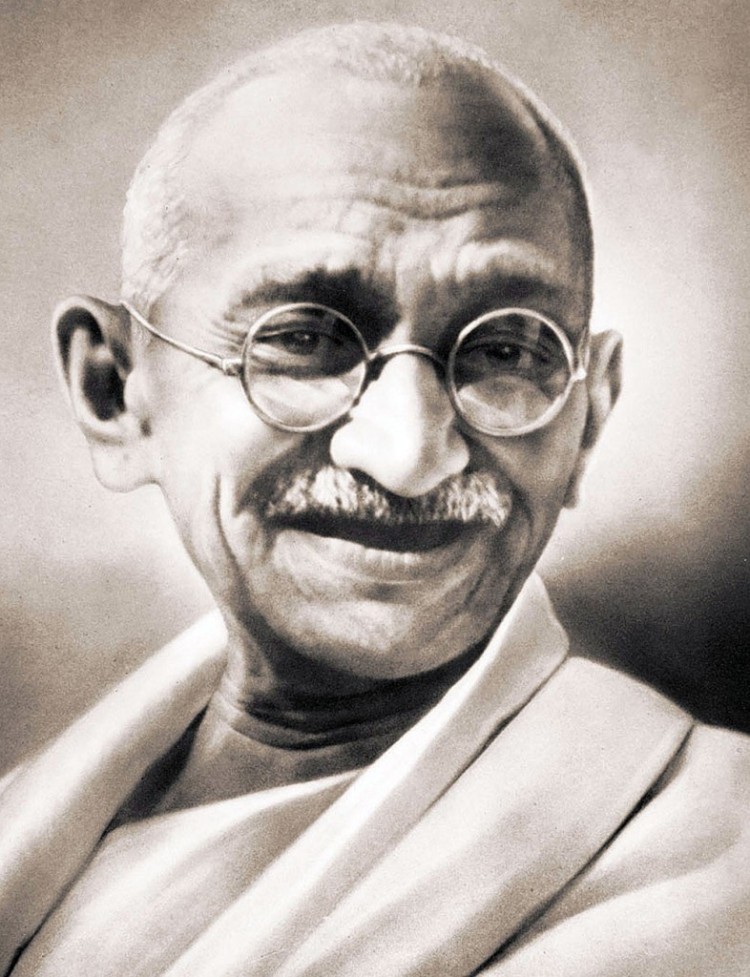
Gandhi Jayanti, observed every year on October 2, commemorates the birth anniversary of Mohandas Karamchand Gandhi (1869–1948), popularly known as Mahatma Gandhi. He became one of the most prominent leaders of India’s independence movement and is internationally associated with non-violent resistance, Satyagraha, civil disobedience and peaceful social transformation.
October 2 is also observed by the United Nations as the International Day of Non-Violence, reflecting Gandhi’s enduring association with the principle of non-violent action.
🕊️ What is Gandhi Jayanti?
Gandhi Jayanti is a national observance in India commemorating the birth of Mahatma Gandhi, who was born on October 2, 1869, in Porbandar, Gujarat.
The day is marked by:
- Prayer meetings
- Tributes at Gandhi memorials
- Educational programmes
- Cleanliness campaigns
- Community-service activities
- Discussions on peace and non-violence
- Cultural programmes
- Activities promoting social harmony
The principal national ceremony takes place at Raj Ghat in New Delhi, Gandhi’s memorial, where tributes are traditionally offered.
👶 Early Life of Mahatma Gandhi
Mohandas Karamchand Gandhi was born on October 2, 1869, in Porbandar, then a princely state in present-day Gujarat.
His father, Karamchand Gandhi, served as a senior administrative official in princely states. His mother, Putlibai, was deeply religious, and Gandhi’s childhood was influenced by values such as self-discipline, compassion, religious tolerance and devotion.
Gandhi later described the influence of his family and early environment as important in shaping his moral outlook.
🎓 Education in India and England
Gandhi studied in Gujarat before travelling to England in 1888 to study law.
He joined the Inner Temple in London and was called to the Bar in 1891.
After returning to India, Gandhi initially struggled to establish himself as a lawyer. His career took a decisive turn when he accepted an opportunity to work in South Africa.
🇿🇦 Gandhi in South Africa
Gandhi travelled to South Africa in 1893 to work on a legal case.
His experiences with racial discrimination profoundly affected him. One famous incident occurred when he was removed from a first-class railway compartment despite holding a valid ticket.
During his approximately two decades in South Africa, Gandhi developed and experimented with methods of non-violent resistance.
It was there that the concept of Satyagraha emerged as an important method of political and social action.
✊ What is Satyagraha?
Satyagraha is commonly translated as “truth-force” or “truth-insistence.”
For Gandhi, Satyagraha was more than simply refusing to obey an unjust law. It involved:
- Commitment to truth
- Non-violence
- Self-discipline
- Willingness to suffer rather than inflict suffering
- Resistance to injustice
- Respect for the humanity of one’s opponent
Gandhi believed that social and political change could be pursued without hatred or physical violence.
🇮🇳 Gandhi Returns to India
Gandhi returned to India from South Africa in 1915.
He soon became increasingly involved in India’s political and social movements.
His early campaigns included struggles concerning farmers and workers, including:
Champaran Satyagraha – 1917
Gandhi supported indigo farmers in Champaran, Bihar, who faced difficult conditions under the colonial system.
The movement became one of Gandhi’s important early campaigns in India.
Ahmedabad Mill Strike – 1918
Gandhi intervened in a dispute involving textile workers in Ahmedabad.
Kheda Satyagraha – 1918
Gandhi supported farmers in Kheda, Gujarat, who were experiencing economic hardship and sought relief from land revenue demands.
These campaigns helped establish Gandhi as an important national political figure.
🇮🇳 Gandhi and the Indian Independence Movement
Gandhi eventually became one of the central leaders of India’s struggle against British colonial rule.
His approach combined political action with ideas of:
- Non-violence
- Mass participation
- Self-reliance
- Swadeshi
- Social reform
- Hindu-Muslim unity
- Rural development
Rather than restricting political activity to educated elites, Gandhi encouraged ordinary people to participate in the independence movement.
🧂 The Non-Cooperation Movement
The Non-Cooperation Movement began in 1920.
Gandhi encouraged Indians to withdraw cooperation from colonial institutions and to promote indigenous goods and institutions.
The movement involved activities such as:
- Boycotting certain British goods
- Promoting khadi
- Leaving some colonial institutions
- Encouraging national education
- Peaceful political mobilisation
Gandhi suspended the movement in 1922 following the Chauri Chaura incident, in which protesters killed police officers.
The decision reflected his insistence that the independence struggle should remain non-violent.
🧂 The Salt March – 1930
One of the most famous episodes of Gandhi’s political career was the Salt March, also called the Dandi March.
Gandhi began the march from Sabarmati Ashram on March 12, 1930, accompanied by selected followers.
After travelling approximately 240 miles, Gandhi reached Dandi on April 6 and symbolically broke the colonial salt law by making salt.
The campaign transformed opposition to the salt laws into a highly visible mass movement.
📜 Civil Disobedience Movement
The Salt March became a major part of the wider Civil Disobedience Movement.
The movement encouraged people to peacefully challenge particular colonial laws and policies.
It attracted large numbers of participants across India and received international attention.
🇮🇳 Quit India Movement – 1942
During World War II, Gandhi and the Indian National Congress launched the Quit India Movement in August 1942.
The movement demanded an end to British rule in India.
Gandhi gave the famous call:
“Do or Die.”
The British authorities arrested Gandhi and many other Congress leaders.
Although the movement faced severe repression, it became an important episode in India’s final phase of the independence struggle.
🇮🇳 India’s Independence – 1947
India became independent on August 15, 1947.
Gandhi, however, did not participate in the celebrations in New Delhi in the way many other national leaders did.
Instead, he was in Bengal, working to promote peace during communal violence surrounding Partition.
His focus during this period was reconciliation and protection of vulnerable communities.
☮️ Gandhi’s Philosophy of Non-Violence
Ahimsa, or non-violence, was central to Gandhi’s philosophy.
For Gandhi, non-violence was not merely the absence of physical violence. It involved attempting to overcome hatred and injustice through peaceful means.
His approach influenced later movements and leaders around the world.
Among those influenced by Gandhian ideas was Martin Luther King Jr., who adapted principles of non-violent resistance during the American Civil Rights Movement.
Gandhi’s ideas have also influenced numerous other movements for civil rights, independence and social justice.
🧵 Gandhi and Khadi
Gandhi promoted khadi, hand-spun and handwoven cloth, as an economic and political symbol.
The spinning wheel, or charkha, became closely associated with his movement.
For Gandhi, spinning and wearing khadi represented:
- Economic self-reliance
- Dignity of labour
- Support for rural communities
- Resistance to dependence on imported textiles
- Simplicity
The charkha eventually became an important symbol associated with India’s independence movement.
🧹 Gandhi and Cleanliness
Gandhi repeatedly emphasized cleanliness, sanitation and personal responsibility.
He regarded sanitation as an important part of social reform and human dignity.
His emphasis on cleanliness has continued to influence public campaigns in India.
The Swachh Bharat Mission, launched in 2014, drew upon Gandhi’s association with cleanliness and sanitation as part of its public messaging.
🏘️ Gandhi’s Vision of Village India
Gandhi placed considerable importance on India’s villages.
He advocated:
- Rural development
- Local self-reliance
- Cottage industries
- Simple living
- Community cooperation
- Decentralisation
- Dignity of labour
His economic ideas were different from both unrestricted industrial capitalism and highly centralised economic systems.
He envisioned communities becoming more self-reliant and socially responsible.
🤝 Gandhi and Social Reform
Gandhi’s activities were not limited to India’s independence struggle.
He campaigned against untouchability and advocated greater dignity and rights for people who were subjected to caste-based discrimination.
He used the term Harijan in his campaigns, although that term is now generally regarded as outdated and is not preferred in contemporary discourse.
Gandhi also promoted:
- Religious harmony
- Women’s participation
- Rural education
- Sanitation
- Social equality
- Constructive community work
🕊️ Gandhi and Religious Harmony
Gandhi drew inspiration from several religious and philosophical traditions.
His thinking was influenced by:
- Hindu traditions
- Jain principles of non-violence
- Christianity
- Islam
- Buddhism
- The Bhagavad Gita
- The writings of thinkers such as Leo Tolstoy and John Ruskin
He repeatedly advocated peaceful coexistence among India’s religious communities.
During the communal violence surrounding Partition, he travelled to affected areas and attempted to promote reconciliation.
📚 Gandhi as a Writer
Gandhi was also a prolific writer.
Among his best-known works is:
The Story of My Experiments with Truth
This autobiography describes his life, experiments with morality, religion, diet, self-discipline and non-violence.
Other important writings include his political and social essays and publications associated with his journals.
Gandhi edited and contributed to publications including:
- Young India
- Navajivan
- Harijan
🗣️ Famous Gandhi Quotes
Gandhi is associated with many quotations, although some quotations commonly attributed to him have uncertain or disputed origins.
Among statements reliably associated with his writings and speeches are ideas emphasizing:
“My life is my message.”
“The weak can never forgive. Forgiveness is the attribute of the strong.”
“An eye for an eye only ends up making the whole world blind.”
His writings repeatedly returned to themes of truth, non-violence, self-discipline, service and moral responsibility.
⚖️ Gandhi: Achievements and Historical Debates
Gandhi remains an enormously influential and also debated historical figure.
His supporters and admirers emphasize his:
- Leadership of mass movements
- Commitment to non-violence
- Role in India’s independence struggle
- Advocacy of social reform
- Influence on global civil-rights movements
- Commitment to interfaith harmony
At the same time, historians and scholars have examined and criticized various aspects of his ideas and political positions, including his views and actions concerning caste, race, industrialisation, gender, political strategy and relations with other Indian political leaders.
Understanding Gandhi historically therefore involves studying both his contributions and the debates surrounding his ideas rather than treating his legacy as free from controversy.
🕯️ Gandhi’s Assassination
Gandhi was assassinated on January 30, 1948, in New Delhi.
He was on his way to a prayer meeting when he was shot.
His death shocked India and generated international mourning.
January 30 is observed in India as Martyrs’ Day (Shaheed Diwas).
🌍 Gandhi’s Global Legacy
Gandhi’s ideas travelled far beyond India.
His methods of non-violent resistance influenced later leaders and movements, including:
Martin Luther King Jr.
The American civil-rights leader studied Gandhian non-violent resistance and incorporated similar principles into the struggle for racial equality in the United States.
Nelson Mandela
South Africa’s anti-apartheid struggle also interacted with traditions of mass resistance and non-violent political action, although Mandela’s political movement and circumstances differed substantially from Gandhi’s.
César Chávez
The American labour and civil-rights activist drew upon traditions of non-violent protest associated with Gandhi and King.
Gandhi’s influence can therefore be found in a broad international history of civil resistance.
🌐 International Day of Non-Violence
The United Nations General Assembly established the International Day of Non-Violence in 2007.
It is observed annually on October 2, Gandhi’s birthday.
The day seeks to promote awareness of the principle of non-violence through education and public awareness.
🇮🇳 Gandhi Jayanti in Modern India
Gandhi Jayanti is observed throughout India.
Typical activities include:
🕊️ Prayer Meetings
Special prayer services and interfaith gatherings are held at Gandhi memorials and institutions.
🧹 Cleanliness Drives
Schools, colleges, government institutions and community organisations frequently conduct cleanliness activities.
📖 Educational Programmes
Schools organise:
- Essay competitions
- Quizzes
- Elocution competitions
- Debates
- Drawing competitions
- Gandhi exhibitions
- Documentary screenings
🤝 Community Service
Voluntary organisations may organise programmes related to:
- Helping disadvantaged communities
- Rural development
- Environmental protection
- Sanitation
- Peace and social harmony
🧒 Gandhi Jayanti for Students
Gandhi Jayanti provides an opportunity for students to reflect on values such as:
Truth → Responsibility → Non-violence → Service → Simplicity → Respect → Peace
Rather than remembering Gandhi only as a historical personality, educational programmes can encourage students to consider how these principles might apply to everyday life.
For example:
- Resolving disagreements peacefully
- Speaking truthfully
- Respecting people with different beliefs
- Helping those in need
- Avoiding discrimination
- Keeping surroundings clean
- Serving the community
📅 Gandhi Jayanti: Important Facts
| Fact | Information |
|---|---|
| Name | Gandhi Jayanti |
| Date | October 2 |
| Celebrates | Birth anniversary of Mahatma Gandhi |
| Born | October 2, 1869 |
| Birthplace | Porbandar, Gujarat |
| Full name | Mohandas Karamchand Gandhi |
| Died | January 30, 1948 |
| Known for | Non-violent resistance and Satyagraha |
| Major movement | Quit India Movement |
| Famous campaign | Salt March |
| Indian observance | National holiday |
| UN observance | International Day of Non-Violence |
| Memorial | Raj Ghat, New Delhi |
🌿 The Continuing Message of Gandhi Jayanti
Gandhi Jayanti is more than a remembrance of a historical personality. It provides an opportunity to reflect on questions that remain relevant in contemporary society:
How can conflicts be resolved without violence?
How can people of different religions and cultures live together peacefully?
How can economic development include the poor and disadvantaged?
How can individuals take responsibility for their communities?
How can truth, compassion and justice influence public life?
These questions help explain why Gandhi’s ideas continue to be studied in India and around the world.
🕊️ Conclusion
Gandhi Jayanti, celebrated on October 2, commemorates the birth of Mahatma Gandhi and his contribution to India’s freedom struggle. His political methods were built around concepts such as Satyagraha, Ahimsa, civil disobedience, self-reliance and constructive social work.
His legacy extends beyond India’s independence movement. His ideas have become part of the wider global history of non-violent resistance and civil rights.
At the same time, Gandhi’s life and ideas continue to be examined critically by historians and scholars. Studying both his contributions and the debates surrounding his views allows Gandhi Jayanti to become not merely a commemorative occasion, but an opportunity for historical understanding, reflection, dialogue and service.
October 2 therefore carries a dual significance: it remembers Gandhi’s birth and invites people to reflect on the possibilities and challenges of non-violence in human society.
Leave a Reply