

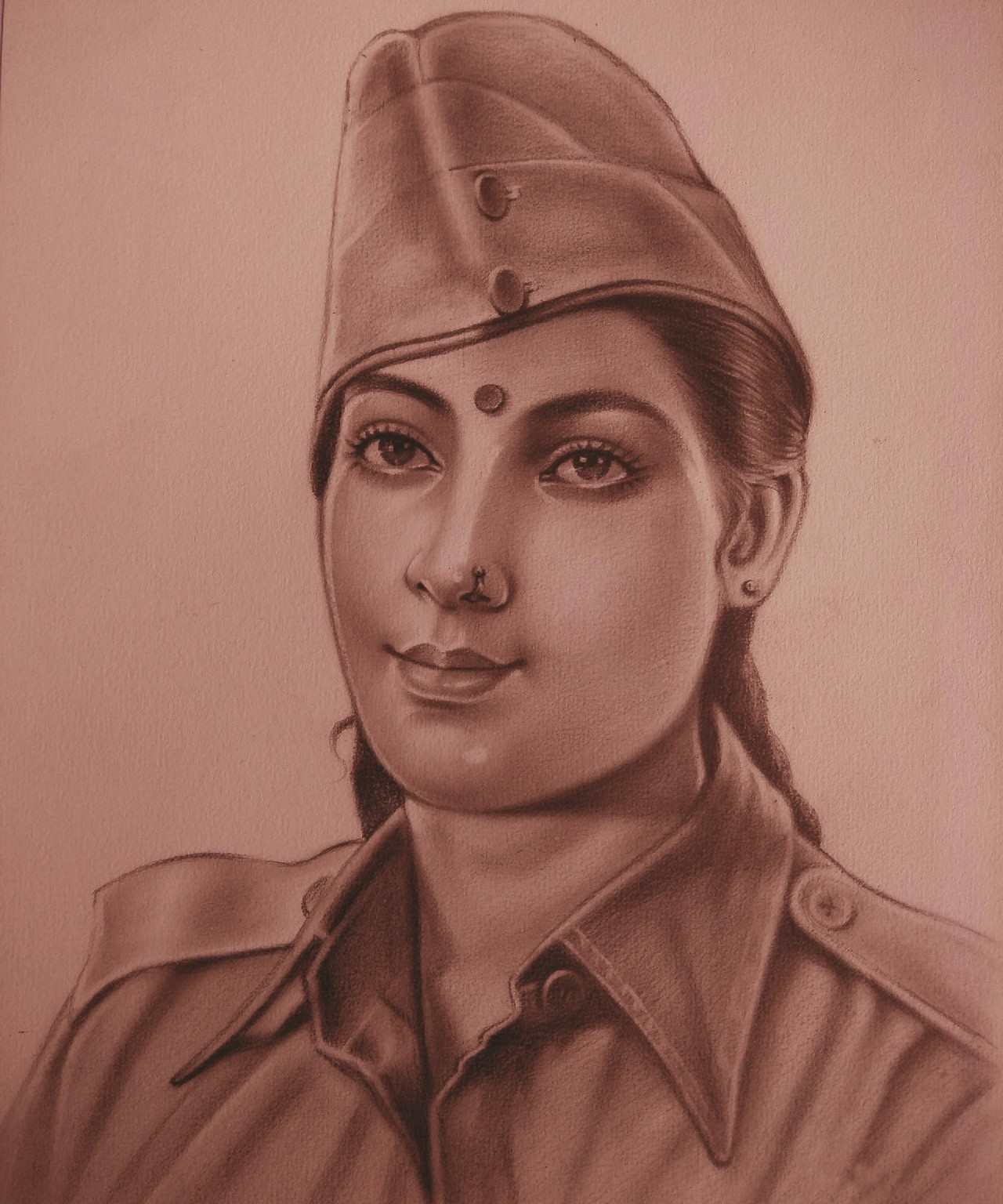
The Unsung Heroine of India’s Freedom Struggle
Born: 5 March 1902
Birthplace: Khekra, present-day Baghpat district, Uttar Pradesh
Died: 26 July 1998, Hyderabad
Known for: Association with the Indian National Army (Azad Hind Fauj) and the Rani Jhansi Regiment
Also remembered as: Neera Nagini
Historical period: Indian Independence Movement
India’s freedom struggle was not shaped only by the names found in school textbooks and monuments. Behind the better-known leaders stood thousands of men and women whose courage, sacrifice and determination contributed to the long struggle against British colonial rule.
Among these lesser-known figures was Neera Arya, a woman associated with Netaji Subhas Chandra Bose’s Indian National Army (INA) and the Rani Jhansi Regiment.
The Government of India’s Azadi Ka Amrit Mahotsav initiative lists Neera Arya among India’s Unsung Heroes, describing her as popularly known as the first woman spy of the Azad Hind Fauj. It records that she was born on March 5, 1902, in Khekra Nagar, Baghpat, Uttar Pradesh, and that she joined the Rani Jhansi Regiment.
Her story is one of patriotism, courage, secrecy, imprisonment and sacrifice—and also a reminder of how many participants in India’s independence movement remained largely unknown after 1947.
1. Early Life
Neera Arya was born on 5 March 1902 at Khekra in the Baghpat region of present-day Uttar Pradesh.
Sources describe her family as prosperous and indicate that her education was connected with Kolkata. The Government of India’s account identifies her father as Seth Chhajjumal, a businessman who ensured that his children received their education in Kolkata.
Growing up during the period of British rule, Neera witnessed an India in which political freedom was increasingly becoming a major concern.
The early twentieth century witnessed the rise of several strands of Indian nationalism:
- constitutional political movements
- revolutionary organizations
- Swadeshi campaigns
- Gandhian mass movements
- revolutionary resistance
- armed movements outside India
Neera eventually became associated with one of the most dramatic chapters of that struggle: the movement led by Subhas Chandra Bose and the Indian National Army.
2. The Call of National Freedom
Neera Arya developed an interest in India’s struggle for independence.
Her path eventually led her away from an ordinary domestic life and toward the revolutionary nationalist movement.
This was a period when many Indians were asking a fundamental question:
How could India become free from British rule?
Different leaders gave different answers.
Mahatma Gandhi emphasized non-violent resistance.
Revolutionaries advocated armed struggle.
Subhas Chandra Bose believed that India’s independence required an organized military force capable of challenging British power.
It was in this environment that the Indian National Army, or Azad Hind Fauj, became an important part of Neera Arya’s story.
3. Netaji Subhas Chandra Bose and the INA
Subhas Chandra Bose, popularly known as Netaji, sought to organize Indians outside British-controlled India into a military force dedicated to the liberation of the country.
The Indian National Army had its origins in Southeast Asia during the Second World War and was reorganized under Bose after his arrival there in 1943.
Bose established the Provisional Government of Free India (Azad Hind) in October 1943.
His famous call,
“Give me blood, and I will give you freedom!”
captured the militant spirit of his movement.
The INA included Indians from many backgrounds.
Among its most remarkable features was the participation of women.
4. The Rani Jhansi Regiment
One of the most important developments under Bose was the creation of the Rani of Jhansi Regiment, an all-women military formation.
It was named after Rani Lakshmibai of Jhansi, the celebrated warrior queen who fought the British during the uprising of 1857.
The regiment was led by Dr. Lakshmi Swaminathan, later widely known as Captain Lakshmi Sahgal.
Historical scholarship estimates that around 1,500 Indian women in Burma, Malaya and Singapore participated in the regiment during 1943–1945. The regiment brought together women from different social and religious backgrounds.
The very existence of the regiment challenged conventional expectations about women’s roles during the independence struggle.
Women were no longer presented merely as supporters of male revolutionaries.
They were becoming participants in the nationalist movement themselves.
Neera Arya became associated with this historic organization.
5. Neera Arya and the Rani Jhansi Regiment
The Government of India’s Unsung Heroes profile states that Neera Arya joined the Rani Jhansi Regiment of the Azad Hind Fauj.
A 2024 scholarly article on Neera Arya likewise places her in the Rani Jhansi Regiment and describes her involvement with the intelligence activities of the INA.
This aspect of her life is particularly significant.
The freedom struggle was not fought only on battlefields.
Information was itself a weapon.
Knowing troop movements, military plans and political developments could be crucial to an underground or wartime organization.
Women associated with the INA participated in intelligence and support activities in addition to military training.
Neera Arya became associated with this clandestine side of the freedom movement.
6. Neera Arya as an Intelligence Operative
Neera Arya is widely remembered as the first woman spy of the Azad Hind Fauj.
The Government of India’s official Azadi Ka Amrit Mahotsav page uses precisely this description.
A recent academic study also describes her participation in the INA’s intelligence activities, placing her alongside other women involved in gathering information for the organization.
Her story illustrates an often-overlooked dimension of India’s freedom movement:
Women also operated in the shadows.
They carried messages.
They gathered information.
They supported underground networks.
They risked imprisonment.
They placed themselves in danger for the independence cause.
Neera Arya’s contribution belongs to this wider history.
7. A Dangerous Marriage
One of the most dramatic episodes associated with Neera Arya concerns her marriage.
According to accounts preserved by the Government of India’s Unsung Heroes project and other biographical sources, Neera was married to Srikant Jai Ranjan Das, who was associated with the British intelligence establishment.
Their political loyalties were fundamentally different.
Neera supported the independence movement associated with Netaji.
Her husband, according to these accounts, was working on behalf of the British authorities.
Their marriage therefore became entangled with the political conflict of the time.
8. The Attempt to Capture Netaji
According to the Indian government profile, Srikant became aware of Neera’s connection with Netaji’s organization and sought information about Bose.
The same account states that he followed Neera when she went to meet Bose and opened fire, killing Bose’s driver.
It further states that Neera then killed Srikant, thereby protecting Bose.
This is the most dramatic episode in Neera Arya’s biography.
However, because much of the detailed narrative comes from later biographical and hagiographical-style accounts rather than a widely accessible contemporary archival record, it is best presented as a reported historical account, rather than treating every detail as independently established fact.
Nevertheless, the Government of India’s own Unsung Heroes profile includes this account.
9. Loyalty to Netaji
The episode became symbolic of Neera Arya’s absolute commitment to the independence movement.
According to the official account, she refused to disclose information about Netaji and other leaders even when she was offered the possibility of leniency.
For her, loyalty to the freedom movement came before personal safety.
This is one of the defining characteristics of her story:
She refused to betray the cause to which she had committed herself.
10. Imprisonment
Following the defeat and surrender of the Indian National Army at the end of the Second World War, members of the INA faced imprisonment and legal proceedings.
Neera Arya was also imprisoned.
The Government of India’s account states that she was sent to the Andaman and Nicobar Islands, where she was imprisoned for her involvement in the killing of her husband.
The Cellular Jail, popularly remembered as Kala Pani, had already become a symbol of British colonial imprisonment.
Many Indian revolutionaries had been confined there under extremely harsh conditions.
For Neera, imprisonment became another test of her commitment.
11. She Refused to Reveal Secrets
One of the most important themes in accounts of Neera Arya is her refusal to provide information about the freedom movement.
The Government of India’s profile states that she was offered inducements to reveal information about leaders, including Netaji, but refused to cooperate.
Her courage was therefore not limited to military service.
It continued during captivity.
For a person involved in intelligence work, silence could be as important as action.
She understood that revealing information could endanger others.
12. The Legend of “Neera Nagini”
Some later accounts say that Neera Arya became known as “Neera Nagini”, associating her with the image of a courageous woman who could strike against danger.
The name appears in modern biographical literature, including a 2024 academic article about her.
However, the exact circumstances surrounding the nickname are not as firmly documented as some of the broader facts of her life.
For that reason, it is best used as a traditional epithet rather than presented as an unquestionable historical fact.
13. A Woman in a Male-Dominated Freedom Movement
Neera Arya’s story is particularly significant because she was a woman operating in an environment dominated by men.
The Indian independence movement had many extraordinary women:
- Rani Lakshmibai
- Sarojini Naidu
- Annie Besant
- Aruna Asaf Ali
- Sucheta Kripalani
- Captain Lakshmi Sahgal
- Usha Mehta
- Matangini Hazra
- Kalpana Dutta
Neera Arya belongs among the lesser-known women who took enormous personal risks.
Her association with the Rani Jhansi Regiment demonstrates that women were prepared to move beyond traditional roles and actively participate in the struggle for national freedom.
14. The Importance of the Rani Jhansi Regiment
The Rani Jhansi Regiment was more than a military formation.
It was also a powerful statement.
Its existence declared that:
Indian women were capable of courage, discipline and sacrifice.
The regiment brought together women of different backgrounds.
Research on the regiment notes that women from different religious and socioeconomic communities served together under the banner of Indian nationalism.
This is an important part of India’s freedom story.
The independence movement could unite people across many social divisions.
15. The End of the INA
The Indian National Army’s military campaign ended with the defeat of Japan and the collapse of the Axis position in Asia in 1945.
The INA could not achieve its military objective of overthrowing British rule.
But its historical impact went beyond the battlefield.
The INA trials at the Red Fort generated enormous public interest and sympathy in India.
The British authorities found that the question of loyalty within the Indian armed forces had become politically significant.
The INA therefore became an important part of the final phase of India’s struggle for independence.
16. Freedom Came—but Recognition Did Not Always Follow
India became independent on 15 August 1947.
For people such as Neera Arya, the dream of freedom had finally become reality.
But independence did not automatically bring fame or recognition to every freedom fighter.
Some became national icons.
Others disappeared into ordinary life.
Neera Arya belonged largely to the second category.
Her story remained relatively obscure for decades.
This is why she is increasingly remembered as an unsung heroine of India’s independence movement.
17. Her Later Life
After independence, Neera Arya eventually settled in Hyderabad.
She lived for many years away from the public spotlight.
Accounts of her later life describe her as living modestly and being known locally as “Pedamma,” a term of affection and respect.
The Government of India’s profile records that she died on 26 July 1998 at Osmania Hospital near the Charminar area of Hyderabad.
She was 96 years old.
A woman who had once risked her life in the struggle for independence had spent her later years far from the national spotlight.
18. Why Was Neera Arya Forgotten?
History is complicated.
The freedom movement included hundreds of organizations, thousands of activists and countless local struggles.
Some individuals left behind extensive writings and documentation.
Others did not.
Women involved in underground activities were especially vulnerable to being overlooked because their contributions were often not recorded in conventional political histories.
Neera Arya’s story demonstrates why remembering history requires more than remembering famous leaders.
A nation must also remember its unknown servants.
19. Her Courage and Its Meaning
Neera Arya’s life raises an important question:
What does patriotism mean?
Patriotism is not merely waving a flag.
It can mean sacrifice.
It can mean accepting hardship.
It can mean remaining loyal to one’s principles when doing so is dangerous.
For Neera Arya, patriotism involved placing the cause of India’s independence above personal comfort.
Whatever one’s assessment of the different strategies adopted during the freedom movement, her courage and determination deserve historical attention.
20. Beyond Violence: Understanding the Context
Some aspects of Neera Arya’s story involve violence, particularly the reported killing of her husband.
It is important to understand this within the context of the anti-colonial struggle and wartime conflict rather than presenting violence itself as a virtue.
India’s independence movement contained many different approaches.
Gandhian non-violence was one.
Revolutionary and armed resistance was another.
The INA represented one of the most prominent attempts to challenge British rule through an organized military force.
Understanding these different strands allows us to appreciate India’s freedom struggle in its full complexity.
21. Neera Arya and Women’s Empowerment
Neera Arya’s life also speaks to the history of women’s empowerment in India.
She lived at a time when many women had limited opportunities for education, employment and public participation.
Yet she became associated with:
- military training
- intelligence work
- political resistance
- national organization
- imprisonment
- sacrifice
Her story demonstrates that Indian women were not passive observers of history.
They helped make history.
22. A Legacy of Courage
The greatest legacy of Neera Arya is perhaps not a single event.
It is the courage to act according to one’s convictions.
She chose a difficult path.
She accepted danger.
She endured imprisonment.
She refused, according to official accounts, to disclose information that could harm the independence movement.
Her story therefore belongs among the many narratives of courage that make up India’s freedom struggle.
23. Lessons for the Younger Generation
The story of Neera Arya can teach today’s young people several lessons.
1. Courage requires conviction
We cannot remain courageous for long if we do not believe in what we stand for.
2. Freedom has a history
The freedoms Indians enjoy today were shaped by generations of struggle.
3. Women have always shaped India’s history
Women’s contributions must be remembered and studied.
4. Not every hero becomes famous
Recognition is not the measure of sacrifice.
5. History must include forgotten voices
A complete history must go beyond the most famous names.
24. Remembering the Unsung Heroes
When we celebrate India’s Independence Day, Republic Day or other national occasions, we often remember a familiar list of leaders.
But alongside those names are thousands of lesser-known people.
Some marched.
Some wrote.
Some organized.
Some went to prison.
Some worked underground.
Some carried messages.
Some provided shelter.
Some gave their lives.
And some, like Neera Arya, entered the dangerous world of intelligence and military resistance.
Their stories deserve to be remembered.
25. Neera Arya’s Place in India’s Freedom Story
Neera Arya should not be remembered merely because of one dramatic incident.
Her importance lies in the larger story.
She represents the women who joined the INA.
She represents those who worked in intelligence.
She represents the prisoners of the independence movement.
She represents the forgotten generation that sacrificed personal security for national freedom.
The Government of India’s decision to include her in its Unsung Heroes initiative is therefore significant.
It helps restore her name to the public memory of India’s independence struggle.
26. A Tribute to Neera Arya
Neera Arya lived through one of the most turbulent periods of Indian history.
She saw India under colonial rule.
She became involved with the movement led by Netaji Subhas Chandra Bose.
She joined the Rani Jhansi Regiment.
She became associated with intelligence activities.
She endured imprisonment.
She lived long enough to see India become free.
Yet she remained largely unknown to the wider public.
Her story reminds us that history is not made only by those whose names appear on monuments.
Sometimes history is made by people whose sacrifices are known only decades later.
27. Conclusion
The story of Neera Arya is a story of courage, loyalty and sacrifice.
She belonged to the generation that refused to accept permanent foreign rule as India’s destiny.
As an associate of the Indian National Army and the Rani Jhansi Regiment, she became part of a remarkable chapter in the history of Indian women and the independence movement.
Her life also reminds us to approach history responsibly.
Some details of her biography are preserved in official commemorative accounts and later research, while other dramatic stories have been repeated in popular literature without the same level of independent documentation.
But the larger historical truth remains important:
Women participated actively in India’s struggle for freedom, and many of their stories still deserve to be recovered.
Neera Arya is one of those women.
She may have lived much of her later life away from fame, but the courage associated with her name deserves remembrance.
Neera Arya — an unsung daughter of India’s freedom struggle.
Her story reminds us: Freedom is precious because generations were willing to sacrifice for it.
Quick Facts About Neera Arya
| Detail | Information |
|---|---|
| Name | Neera Arya |
| Born | 5 March 1902 |
| Birthplace | Khekra, Baghpat, Uttar Pradesh |
| Associated with | Indian National Army (Azad Hind Fauj) |
| Women’s military unit | Rani Jhansi Regiment |
| Known for | Intelligence/espionage activities associated with INA |
| Popularly remembered as | First woman spy of the Azad Hind Fauj |
| Nickname/Epithet | Neera Nagini |
| Imprisoned by | British colonial authorities |
| Later life | Hyderabad |
| Died | 26 July 1998 |
| Age at death | 96 |
| Remembered as | Unsung heroine of India’s freedom struggle |
A Final Tribute
“Some heroes win glory.
Some heroes win freedom.
And some heroes remain forgotten until history remembers them again.”
Neera Arya belongs to that last group.
May her story inspire us to remember not only the famous names of India’s freedom struggle, but also the countless men and women whose courage helped shape a free India.
Leave a Reply