

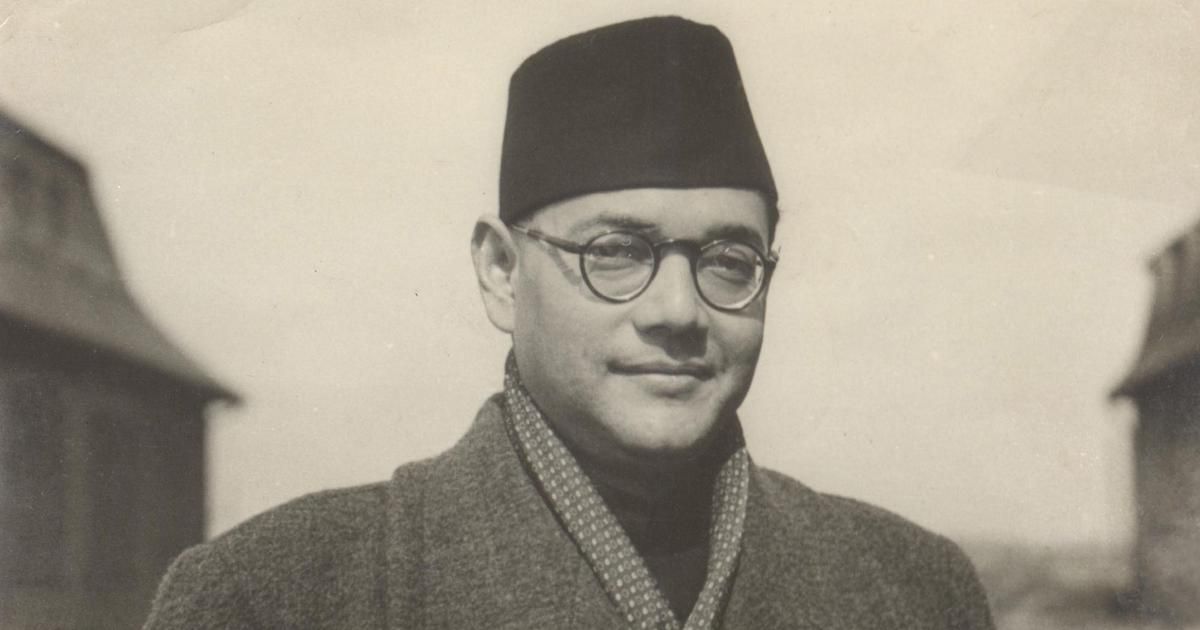
Few leaders in India’s freedom struggle have captured the imagination of the nation as profoundly as Subhas Chandra Bose. Reverently known as Netaji (“Respected Leader”), Bose was a revolutionary nationalist whose courage, determination, and unwavering commitment to India’s independence made him one of the most influential figures of the twentieth century.
While many freedom leaders pursued constitutional reforms and nonviolent resistance, Bose believed that India must be prepared to fight for its freedom through every available means. His leadership of the Indian National Army (INA) and his passionate call of “Give me blood, and I will give you freedom” continue to inspire generations of Indians.
Early Life and Education
Subhas Chandra Bose was born on January 23, 1897, in Cuttack, in present-day Odisha, India. He was the ninth child of Janakinath Bose, a prominent lawyer, and Prabhavati Devi.
From an early age, Bose displayed remarkable intelligence, discipline, and patriotism. He excelled academically and completed his schooling with distinction before attending the prestigious Presidency College and later Scottish Church College in Calcutta (now Kolkata).
In 1919, he traveled to England to prepare for the Indian Civil Service (ICS) examination, one of the most prestigious examinations under British rule. He passed with outstanding results.
However, despite the promising career that awaited him, Bose resigned from the ICS in 1921, declaring that he could not serve a colonial government while his country remained under foreign domination.
Entry into the Freedom Movement
Upon returning to India, Bose joined the Indian nationalist movement and came under the influence of Chittaranjan Das, one of Bengal’s most respected leaders.
Bose quickly gained recognition for his organizational skills, intellectual brilliance, and passionate commitment to independence.
Unlike some leaders who sought gradual reforms, Bose advocated complete independence from British rule. His uncompromising stance often brought him into conflict with colonial authorities, leading to repeated arrests and periods of imprisonment.
Rise in the Indian National Congress
During the 1920s and 1930s, Bose emerged as one of the most prominent leaders of the Indian National Congress.
He was deeply admired by young nationalists who were inspired by his energy and vision for a free and modern India.
In 1938, Bose was elected President of the Indian National Congress. During his presidency, he emphasized:
- Complete independence from British rule.
- Economic planning and industrial development.
- Social justice and national unity.
- Strong national defense.
In 1939, he was re-elected Congress President despite opposition from some senior leaders.
Differences with Mahatma Gandhi
Although Bose deeply respected Mahatma Gandhi, he differed significantly from Gandhi on strategy.
Gandhi advocated nonviolent resistance as the primary means of achieving independence.
Bose believed that while nonviolence had an important role, India should also be prepared to use military force if necessary.
These differences eventually led Bose to resign from the Congress presidency and establish the Forward Bloc in 1939.
The Forward Bloc sought to unite radical and progressive elements within the nationalist movement.
Escape from British Surveillance
The British government regarded Bose as a serious threat and placed him under house arrest.
In one of the most dramatic episodes in India’s freedom struggle, Bose escaped from his home in Calcutta in January 1941.
Disguised and traveling secretly, he made an extraordinary journey through Afghanistan and the Soviet Union before reaching Germany.
His escape demonstrated both his courage and his determination to continue the struggle for independence.
Formation of the Indian National Army
During World War II, Bose sought international support for India’s liberation.
He eventually traveled to Southeast Asia, where he assumed leadership of the Indian National Army, an armed force composed largely of Indian prisoners of war and expatriates.
Under Bose’s leadership, the INA was reorganized and expanded.
He established the Provisional Government of Free India (Azad Hind Government) and declared war against British rule.
“Give Me Blood, and I Will Give You Freedom”
One of Bose’s most famous declarations was:
“Give me blood, and I will give you freedom.”
This slogan became a rallying cry for Indians committed to the cause of independence.
His speeches inspired thousands to join the struggle and reinforced the belief that freedom required sacrifice and courage.
The INA Campaign
The Indian National Army fought alongside Japanese forces in campaigns along India’s northeastern frontier.
INA troops advanced toward Indian territory and participated in battles near Imphal and Kohima.
Although military success ultimately proved unattainable due to changing wartime circumstances, the INA’s efforts had a profound psychological impact.
For many Indians, the INA demonstrated that Indians were willing and able to fight for their own freedom.
Women in the Freedom Struggle
One of Bose’s most progressive initiatives was the formation of the Rani of Jhansi Regiment, an all-women combat unit named after the legendary queen Rani Lakshmibai.
This was one of the earliest examples of women serving in organized military roles in modern Indian history.
Bose strongly believed that women should participate fully in the nation’s struggle and future development.
Bose’s Vision for India
Subhas Chandra Bose envisioned an India that was:
- Politically independent.
- Economically self-reliant.
- Socially just.
- Scientifically advanced.
- Militarily strong.
He emphasized national unity across religious, linguistic, and regional differences and believed that all Indians should work together for the common good.
The Mystery of His Death
One of the most debated questions in modern Indian history concerns Bose’s death.
According to official accounts, Bose died following a plane crash in Taiwan on August 18, 1945.
However, uncertainty surrounding the circumstances gave rise to numerous theories and investigations over the decades.
The mystery continues to fascinate historians and the public alike.
Legacy
Subhas Chandra Bose remains one of India’s most revered national heroes.
His legacy includes:
- Inspiring militant resistance against colonial rule.
- Leading the Indian National Army.
- Promoting national unity and patriotism.
- Encouraging women’s participation in public life.
- Advocating economic modernization and social justice.
Although India’s independence was achieved through the efforts of many leaders employing different methods, Bose’s contribution remains significant and widely respected.
Influence on India’s Independence
Many historians argue that the INA and the subsequent INA trials played an important role in weakening British confidence in maintaining colonial rule.
The widespread public sympathy generated by INA soldiers and officers demonstrated the depth of nationalist sentiment across India.
Even British officials later acknowledged the growing difficulty of relying on Indian armed forces to sustain colonial authority.
Famous Quotes
Subhas Chandra Bose is remembered for many inspiring statements:
“Give me blood, and I shall give you freedom.”
“Freedom is not given—it is taken.”
“No real change in history has ever been achieved by discussions.”
“One individual may die for an idea, but that idea will live on.”
Conclusion
Subhas Chandra Bose stands as one of the most courageous and dynamic leaders of India’s freedom movement. His unwavering patriotism, daring leadership, and willingness to sacrifice everything for the cause of independence earned him the enduring title of Netaji.
Though his methods differed from those of some of his contemporaries, his goal remained the same: a free, strong, and united India. Today, he is remembered not only as a revolutionary leader but also as a symbol of courage, determination, and devotion to the nation.
His life continues to inspire millions, reminding us that the pursuit of freedom often demands extraordinary vision, sacrifice, and unwavering commitment.
“Jai Hind!”—the patriotic salutation popularized by Netaji—remains one of the most cherished expressions of national pride in India.
Leave a Reply